Now Reading: Trekking in Nepal: The Complete Guide to Choosing and Planning Your Himalayan Trek
-
01
Trekking in Nepal: The Complete Guide to Choosing and Planning Your Himalayan Trek
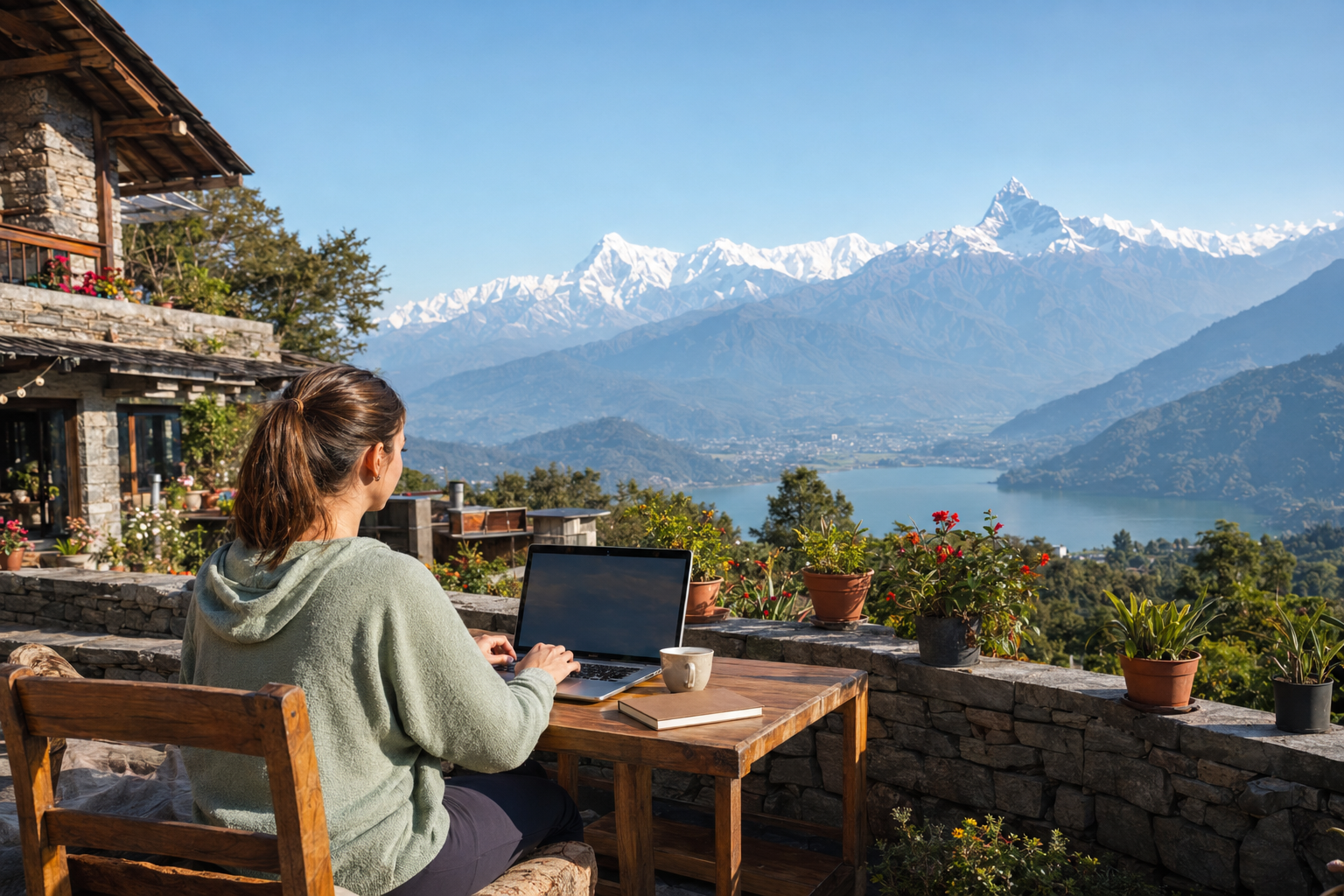

Choose and plan the right Himalayan trek with this complete guide to Nepal’s routes, regions, seasons, difficulty, 2026 permits, guides, costs in USD and NPR, altitude, packing, insurance and teahouse life.
Last checked and updated: 24 July 2026
The first morning on a Nepal trail rarely begins with a summit. It begins with smaller things.
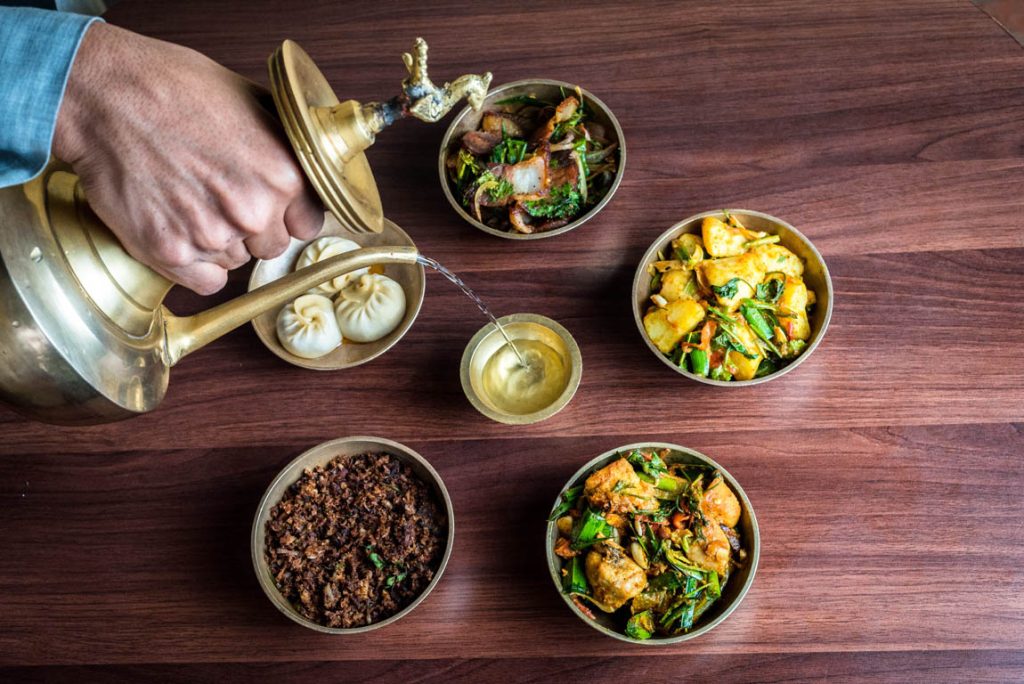
A metal cup of sweet chiya warming your hands. The smell of woodsmoke drifting from a kitchen. A lodge owner sweeping the stone step before sunrise. Somewhere above the roofline, a mule bell moves steadily through the dark. Then the valley begins to appear, layer by layer, and the mountains that felt distant from Kathmandu are suddenly standing at the end of the path.
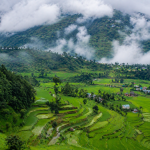
This is trekking in Nepal. It is not simply a long walk towards a famous viewpoint. It is a way of moving through inhabited landscapes, from rice terraces and rhododendron forests to yak pastures, monasteries and high passes. The trail passes through people’s villages, kitchens, fields and sacred places. The mountain is only one part of the journey.
The difficult question is not whether Nepal is worth trekking. It is deciding which trek belongs to you.
Should your first Himalayan journey be four days to Poon Hill or two weeks beneath Everest? Do you want comfort and company, or quieter valleys and longer distances? How much altitude is sensible? Which routes require a licensed guide? What will the trip genuinely cost once permits, food, transport and insurance are included?
This guide answers those questions in the order you need them. It will help you move from dreaming to choosing, then from choosing to preparing safely. When you find the route that fits, follow the links to Backpack to Nepal’s detailed trail guides for day-by-day itineraries, permits and current local costs.
Trekking in Nepal: the quick answer
- Best first short trek: Poon Hill
- Best short trek for dramatic mountain views: Mardi Himal
- Best accessible week-long trek: Langtang Valley
- Best classic first long trek: Everest Base Camp or Annapurna Circuit, depending on your travel style
- Best quieter circuit: Manaslu
- Best cultural rain-shadow trek: Upper Mustang
- Best overall seasons: October to November and March to April
- Guide rule: Nepal Tourism Board lists a licensed guide and agency-issued TIMS card as mandatory on most major routes
- Safest planning principle: Choose the route for your available days, altitude experience and desired pace, not only for the name at the finish
What trekking in Nepal actually feels like
Most classic Nepal treks are teahouse journeys. You walk from settlement to settlement and sleep in locally run lodges rather than carrying a tent and weeks of food. The room may be simple, often two beds, a small window and thin walls, but the dining room becomes the shared heart of the evening.
Boots gather by the door. Wet socks hang near the stove. Someone studies tomorrow’s contour lines while another person orders a second plate of dal bhat. Guides compare weather reports. Porters laugh over their own meal. Outside, the temperature falls quickly, and the mountains disappear into a sky crowded with stars.
Days are usually measured less by distance than by elevation and terrain. Eight kilometres of stone steps can feel harder than eighteen kilometres along a broad valley. A route can begin in humid subtropical air and reach snow within a week. You may cross suspension bridges, walk beside mani walls, share the path with mule trains and wait while a landslide section is checked.
There is discomfort. Showers become less reliable. Food becomes more expensive as everything is carried higher. Bedrooms can be cold. Flights and jeeps are delayed by weather. Yet the simplicity is part of what stays with people: wake, eat, walk, arrive, rest. The world becomes the next village and the changing line of the valley.
Can a beginner trek in Nepal?
Yes. You do not need to be a climber, and trekking is not the same as mountaineering. Many routes require no ropes, ice axe or technical climbing experience. What they do require is the ability to walk for several hours on uneven ground, recover overnight and repeat the effort the next day.
A good beginner route stays lower, allows flexible days and does not force rapid altitude gain. Poon Hill is the clearest introduction. Langtang Valley can suit a fit first-timer who follows a sensible itinerary. Mardi Himal is short but climbs quickly, so it should not be confused with easy. Everest Base Camp and the Annapurna Circuit are possible as first major treks, but they are commitments, not experiments.
Before choosing, ask yourself five honest questions:
- How many complete trekking days do I have, excluding arrival and delay days?
- Can I comfortably walk for six hours on consecutive days?
- Have I ever slept above 3,000 metres?
- How do I feel about cold rooms, simple toilets and limited menus?
- Would I enjoy a popular social trail, or do I need quieter surroundings?
Your answers matter more than how impressive a trek sounds when you tell someone about it.
Nepal trek comparison table
The ranges below are designed for route selection, not as fixed package quotations. Duration varies with start point, acclimatisation days and road access. Budgets are broad planning estimates for a guided trek, excluding international flights, Nepal visa, personal equipment and luxury upgrades.
| Trek | Typical duration | Highest common point | Difficulty | Best for | Broad planning budget |
|---|---|---|---|---|---|
| Poon Hill | 4-5 days | 3,210m | Easy to moderate | First Himalayan experience and limited time | USD 350-700 NPR 54,000-109,000 |
| Mardi Himal | 5-7 days | About 4,500m | Moderate | Short, photogenic ridge trekking | USD 500-950 NPR 78,000-147,000 |
| Langtang Valley | 7-10 days | 4,773m to 4,984m with optional viewpoints | Moderate | Culture, accessibility and a quieter valley | USD 650-1,200 NPR 101,000-186,000 |
| Annapurna Base Camp | 7-12 days | 4,130m | Moderate to challenging | Walking into a high mountain sanctuary | USD 850-1,500 NPR 132,000-233,000 |
| Everest Base Camp | 12-16 days | 5,364m, or 5,545m at Kala Patthar | Challenging | Sherpa culture and the world’s most iconic trail | USD 1,600-2,800 NPR 248,000-434,000 |
| Annapurna Circuit | 12-18 days | 5,416m at Thorong La | Challenging | Landscape variety and a true journey | USD 1,200-2,400 NPR 186,000-372,000 |
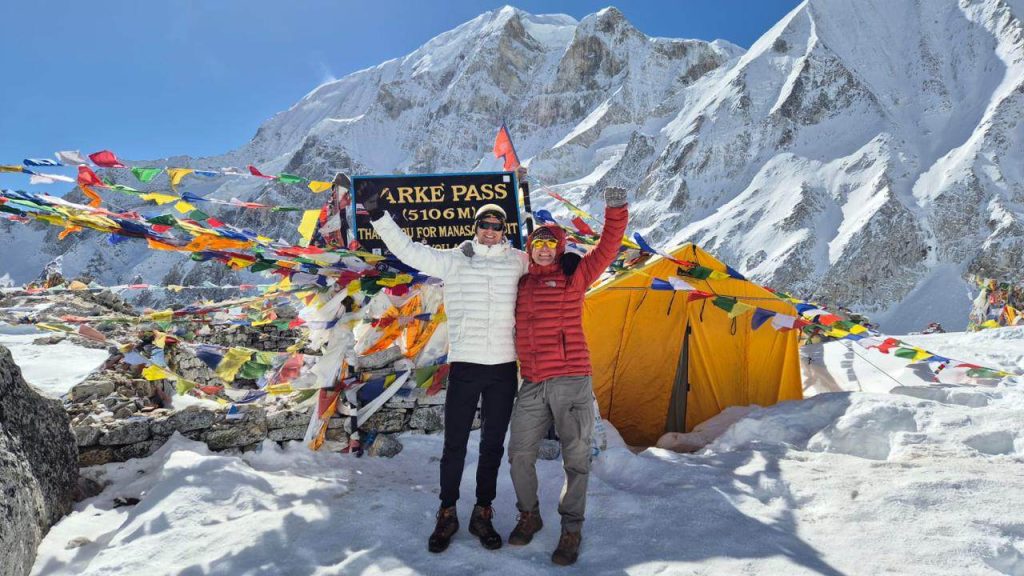
| Manaslu Circuit | 14-18 days | 5,106m at Larkya La | Challenging | Quieter trails and deep cultural immersion | USD 1,500-3,000 NPR 233,000-465,000 |
| Upper Mustang | 10-14 days | Usually around 4,000-4,200m | Moderate, with dry and windy conditions | Tibetan-influenced culture and monsoon-season travel | USD 1,800-3,500 NPR 279,000-543,000 |
Currency conversions use a rounded planning rate of USD 1 = NPR 155. The Nepal Rastra Bank selling rate on 24 July 2026 was close to this figure. Exchange rates and trek prices change.
Choose your trekking region
Everest: iconic mountains and Sherpa culture
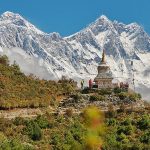
The Everest region gives you names you already know, but the trail is richer than its fame. The journey passes through pine forest, high suspension bridges, carved mani stones and villages shaped by Sherpa history. Tengboche’s monastery, the trading energy of Namche Bazaar and the broad Khumbu Valley matter as much as base camp itself.
Choose Everest if the cultural and emotional pull of the world’s highest mountain is central to your dream. Be ready for altitude, a busy main trail in peak season and the uncertainty of flights to and from Lukla. Everest is not the route to choose because you think it is the only trek in Nepal.
Best-known routes: Everest Base Camp, Gokyo Lakes, Three Passes and Everest View.
Choose it for: Sherpa culture, huge mountain scenery, strong teahouse infrastructure and an unmistakable sense of occasion.
Annapurna: the widest choice for first-time trekkers
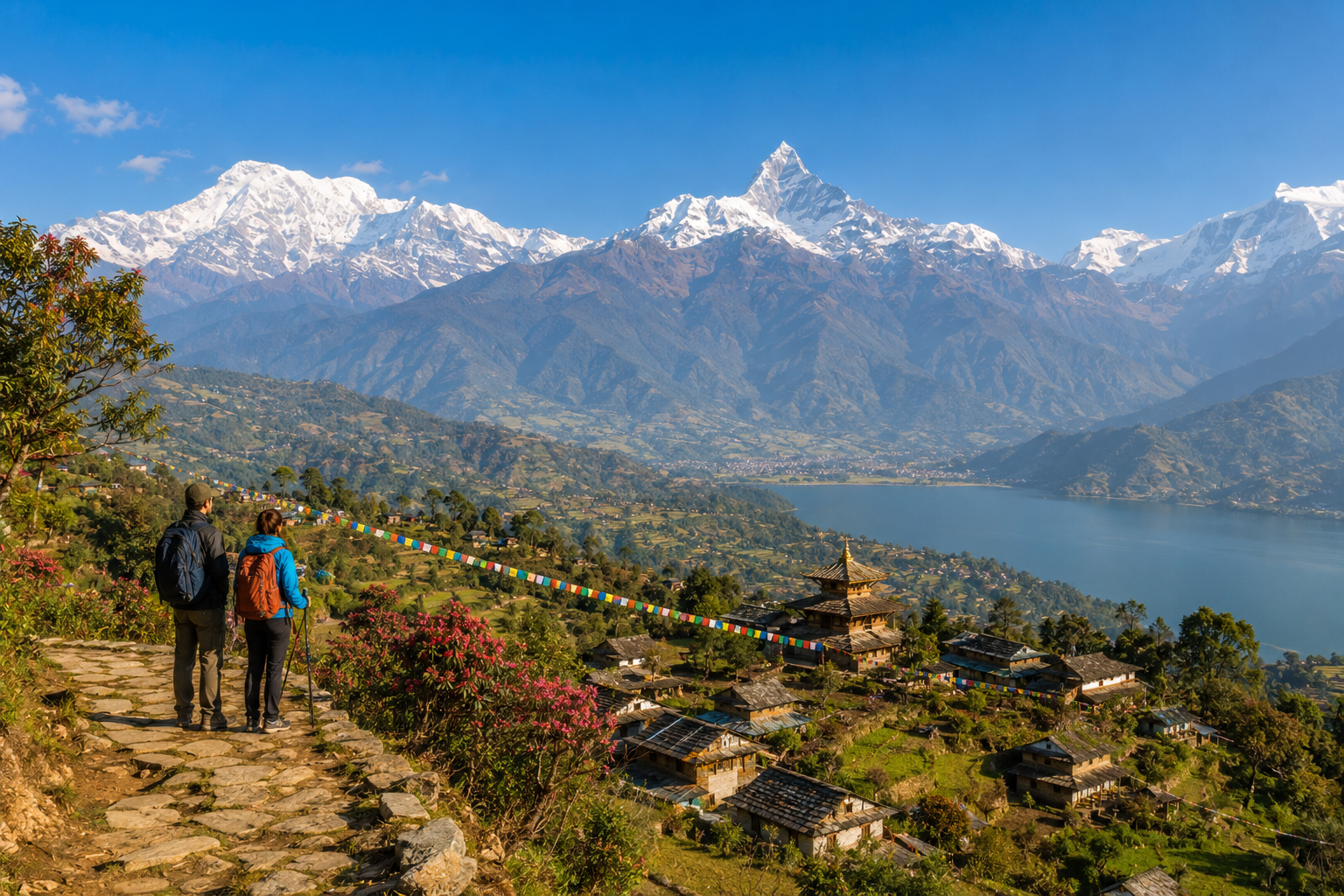
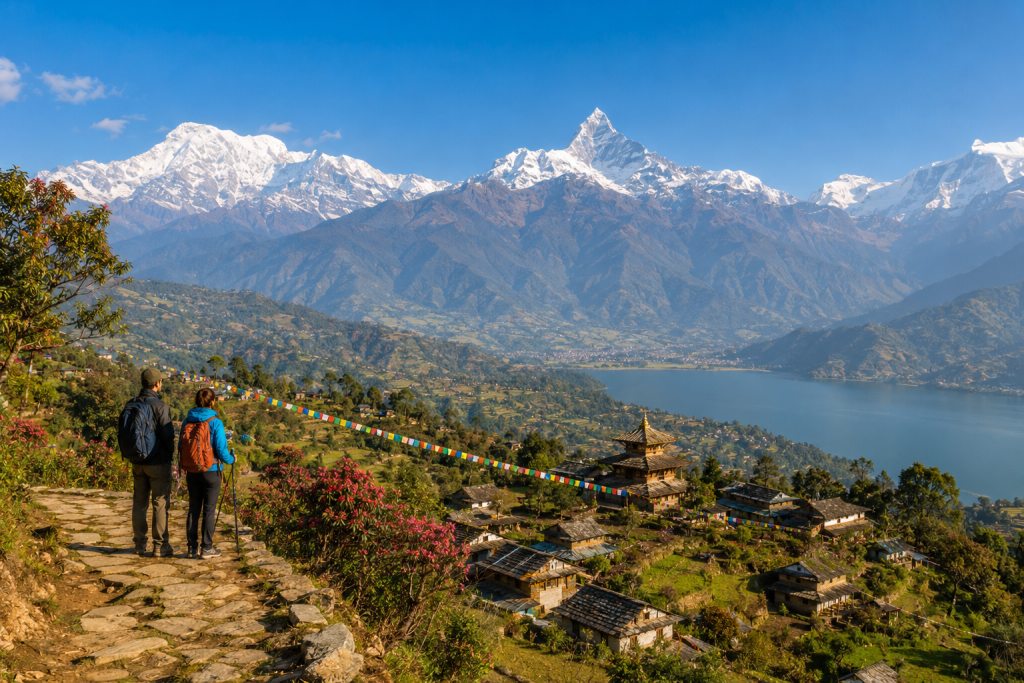
The Annapurna region offers more shapes of trek than anywhere else in Nepal. You can spend four days climbing through Gurung and Magar villages to Poon Hill, walk a narrow ridge towards Mardi Himal, enter the Annapurna Sanctuary or circle the entire massif through changing climate and culture.
Pokhara makes access relatively easy, and the lodge network is well developed. The trade-off is popularity and expanding road access on parts of older routes. A carefully designed itinerary can still find quieter paths and keep the walking experience intact.
Best-known routes: Poon Hill, Mardi Himal, Annapurna Base Camp, Khopra Ridge and Annapurna Circuit.
Choose it for: flexibility, varied durations, strong infrastructure and a first trek that can be tailored to your time.
Langtang: the Himalayan valley close to Kathmandu
Langtang begins with a road journey rather than a mountain flight. From the trailhead, the route follows forest and river into a broad glacial valley, passing communities rebuilt after the 2015 earthquake. There is grief in the landscape, but also resilience, hospitality and a powerful sense of continuity.
It is one of the best choices for travellers with eight to ten days who want genuine high-Himalayan scenery without the longer logistics of Everest or the Annapurna Circuit.
Best-known routes: Langtang Valley, Gosainkunda and Tamang Heritage Trail.
Choose it for: accessibility from Kathmandu, fewer crowds and a strong balance of landscape and culture.
Manaslu: a quieter classic with more structure
The Manaslu Circuit follows the Budhi Gandaki north through changing vegetation and Tibetan-influenced villages before crossing Larkya La. It feels wilder than the main Annapurna routes, yet a growing teahouse network makes it possible without a full camping expedition.
This is a restricted-area trek. Permits must be arranged through a registered agency, and you need the required guide and group structure. The commitment is rewarded with a journey that still feels coherent from beginning to end.
Choose it for: quieter paths, cultural depth and a demanding circuit that has not lost its sense of remoteness.
Mustang: wind, high desert and the old Kingdom of Lo
Mustang lies in the rain shadow beyond the Annapurna and Dhaulagiri ranges. The landscape opens into eroded cliffs, dry riverbeds, cave settlements and whitewashed villages. Upper Mustang is not primarily a trek for close-up snow peaks. It is a cultural journey through a trans-Himalayan world with deep Tibetan Buddhist influence.
Its current restricted-area fee is charged per person per day, so the budget is higher. A licensed guide and registered agency are required. The dry climate makes it one of Nepal’s most important summer trekking options.
Choose it for: culture, archaeology, stark landscapes and a trek during months when monsoon rain affects much of the country.
Dolpo and western Nepal: distance, silence and expedition thinking
Dolpo, Humla, Rara and the far west ask more from a traveller. Flights are less predictable, road approaches can be long, permits are more complex and some itineraries need camping support. These are not sensible routes to choose simply because you dislike crowds.
They reward experienced trekkers with immense space, distinctive cultures and landscapes that feel far removed from Nepal’s better-known corridors. Read about the wider protected landscape in our guide to Nepal’s national parks.
Choose the west for: remoteness, long itineraries and a journey where logistics are part of the expedition.
Eastern Nepal: Kanchenjunga and Makalu
Eastern Nepal holds some of the country’s greatest mountain journeys, but they receive far fewer visitors. Kanchenjunga and Makalu are long, remote treks with challenging access and limited lodge infrastructure in places. They suit people who already understand multi-day trekking and are ready for weather delays, longer approaches and fewer comforts.
Choose the east for: scale, biodiversity, remoteness and the satisfaction of walking beyond Nepal’s most familiar routes.
Which Nepal trek matches your travel style?
| If you want… | Start by considering… | Why |
|---|---|---|
| Your first taste of the Himalaya | Poon Hill | Short, lower and supported by a strong lodge network |
| The biggest views in less than a week | Mardi Himal | A dramatic ridge with close views of Machhapuchhre |
| A week-long valley journey | Langtang Valley | Accessible from Kathmandu with culture and optional high viewpoints |
| An iconic life-list trek | Everest Base Camp | World-famous landscape and Sherpa cultural heartland |
| The greatest variety in one route | Annapurna Circuit | Subtropical valleys, high desert, Buddhist villages and Thorong La |
| A quieter demanding circuit | Manaslu | Fewer trekkers, powerful landscape and strong cultural continuity |
| A cultural trek in the monsoon period | Upper Mustang | Rain-shadow terrain and the old Kingdom of Lo |
| A family-friendly introduction | A slow Poon Hill itinerary or lower Annapurna village trek | Flexible days, lower altitude and frequent lodges |
| A winter route | Poon Hill, lower Annapurna or selected lower-elevation trails | Less exposure to snowbound high passes |
| A remote expedition | Dolpo, Kanchenjunga or Makalu | Long approaches, limited infrastructure and deep wilderness |
If none of those descriptions feels right, browse our shorter overview of the five best-known trekking routes in Nepal, then return here to compare practical demands.
How much time do you really need?
Do not use every day of your Nepal holiday as a trekking day. Mountain transport is affected by cloud, rain, snow, landslides, road conditions and ordinary mechanical delays. Build breathing space around the trail.
- One week in Nepal: choose a short Annapurna trek or a lower trail close to Kathmandu.
- Ten days in Nepal: Langtang Valley, Mardi Himal or a relaxed Poon Hill route can work.
- Two weeks in Nepal: Everest Base Camp is possible only with efficient logistics; Annapurna Base Camp or a shortened circuit may be more forgiving.
- Three weeks in Nepal: the Annapurna Circuit, Manaslu Circuit or a slower EBC itinerary fits more comfortably.
- Four weeks or more: remote regions, extensions such as Tsum Valley or a trek combined with meaningful time elsewhere in Nepal become realistic.
For any trek involving a mountain flight, protect at least one full day before your international departure. Two is better. A rigid return flight is a poor reason to walk faster at altitude.
Best time to trek in Nepal
Nepal does not have one trekking season. The best month depends on region, altitude and what kind of experience you value.
| Period | What it feels like | Best use | Main caution |
|---|---|---|---|
| October-November | Clearer air, stable weather and lively trails | Most classic routes | Busy lodges and higher demand |
| December-February | Cold, crisp and quieter | Lower treks and experienced winter travel | Snow, closed lodges and dangerous high passes |
| March-April | Warmer days, spring flowers and active trail life | Most classic routes | Haze can build before the monsoon |
| May | Warm, increasingly humid and transitional | Earlier departures and selected high routes | Heat, haze and pre-monsoon storms |
| June-September | Green, wet and quieter | Upper Mustang, Dolpo and carefully chosen rain-shadow routes | Landslides, leeches, cloud and transport delays |
Autumn is popular because the monsoon has washed dust from the sky. Spring brings rhododendron forests into colour. Winter can be extraordinary on the right route, but it is not simply autumn with fewer people. Read our dedicated guide to winter trekking in Nepal before considering a high itinerary.
For detailed monthly conditions, festivals and regional differences, use our month-by-month guide to the best time to visit Nepal.
Guides, TIMS cards and permits in 2026
Nepal’s current trekking framework is more structured than much of the old advice online suggests.
The Nepal Tourism Board states that trekkers on specified routes must be accompanied by a licensed trekking guide and carry a TIMS card issued through a registered trekking agency. Its current list includes the major Everest, Annapurna, Langtang, Manaslu, Mustang, Dolpo, Kanchenjunga and Makalu routes, among others.
The published TIMS charge is NPR 2,000 for most international visitors and NPR 1,000 for citizens of SAARC countries. Route-specific conservation-area, national-park, local-government and restricted-area fees are separate.
The permit layers you may encounter
- TIMS card: trekker registration for routes covered by the revised provision
- National park or conservation-area entry: required for the protected landscape you enter
- Local entry fee: charged in some trekking municipalities or rural municipalities
- Restricted Area Permit: required for controlled border regions such as Upper Mustang and Manaslu
- Additional permit: needed for side areas such as Tsum Valley, Nar Phu or other controlled zones
- Mountaineering permit: separate from a trekking permit if you attempt a designated trekking peak or climb
For example, the National Trust for Nature Conservation currently lists its conservation-area entry fee at NPR 3,000 for foreign nationals and NPR 1,000 for SAARC nationals. It warns that permits bought at a check-post can be charged at double the normal fee.
Restricted-area prices vary sharply. Current official guidance lists Upper Mustang at USD 50 per person per day. Manaslu is USD 100 for the first week from September to November, then USD 15 per extra day; from December to August it is USD 75 for the first week, then USD 10 per extra day.
Rules can change and route interpretation matters. Confirm everything with the Nepal Tourism Board TIMS page, the official restricted-area permit schedule and your registered agency before paying.
Our detailed article on Nepal’s 2026 trekking rules explains the guide requirement, agency process and current permit structure in greater depth.
Choosing a guide and porter ethically
A good guide does much more than point at the path. They interpret weather, manage permits, adjust the pace, notice the early signs of illness and help you understand the villages through which you are walking. Their judgement becomes most valuable on the day your original plan no longer works.
Choose a government-registered trekking agency and ask direct questions:
- Is the guide currently licensed for trekking?
- How many times have they completed this exact route?
- What first-aid and altitude training do they hold?
- What is the emergency and communication plan?
- Who pays for the guide’s insurance, equipment, food, transport and accommodation?
- What happens to staff pay if weather shortens the trek?
- What is the maximum load assigned to each porter?
- Will I meet the guide before departure?
A low quotation can hide poor staff pay or missing insurance. Ethical trekking means your comfort is not created by someone else carrying an unsafe load in inadequate shoes. Pay the agreed wage through a transparent agency arrangement, tip directly and fairly, and treat porters as skilled members of the team rather than invisible luggage transport.
Guide, porter or guide-porter?
A guide leads and manages the journey. A porter carries an agreed load. A guide-porter combines limited guiding responsibilities with carrying, usually at a different level of experience from a senior guide. Make sure the job title reflects what you actually need, especially on remote or high routes.
How much does trekking in Nepal cost?
The old idea that every Nepal trek costs USD 20 a day ignores guide requirements, permits, rising food prices and transport. Nepal can still offer excellent value, but a realistic budget protects both your safety and the people working on your trek.
| Typical expense | Planning range in USD | Planning range in NPR |
|---|---|---|
| Licensed guide per day | USD 30-45 | NPR 4,650-7,000 |
| Porter per day | USD 22-30 | NPR 3,400-4,650 |
| Simple teahouse room | USD 5-20 | NPR 775-3,100 |
| Meals and hot drinks per day | USD 25-45 | NPR 3,900-7,000 |
| Charging, WiFi and hot shower | USD 5-15 | NPR 775-2,325 |
| TIMS for most non-SAARC visitors | About USD 13 | NPR 2,000 |
| Common conservation-area entry for foreign nationals | About USD 19 | NPR 3,000 |
Flights to Lukla, private jeeps, restricted-area permits, premium lodges, single-room supplements and emergency changes sit outside these basic daily figures. Food and bottled drinks become more expensive with altitude because every item must travel farther.
What a package price should make clear
- Airport and trailhead transport
- Domestic flights and baggage allowance
- All required permits
- Guide and porter wages, insurance and equipment
- Accommodation before, during and after the trek
- Which meals and drinks are included
- Charging, WiFi, showers and drinking water
- Emergency administration and evacuation support
- Taxes and agency charges
- Cancellation, delay and itinerary-change terms
Compare like with like. A cheaper quote that excludes meals, flights and permits may cost more by the end.
Fitness: train for repeated days, not one heroic day
Trekking fitness is the ability to walk again tomorrow. A single fast hike proves less than three steady days with a loaded daypack.
Begin training eight to twelve weeks before a longer trek if your current activity level is low. Build gradually around:
- Long walks on uneven ground
- Hill or stair sessions
- Back-to-back walking days
- Leg and core strength
- Balance and ankle stability
- Carrying the daypack weight you expect on the trail
Wear your trekking footwear during training. Discovering a blister problem in the rain above Namche is unnecessarily expensive knowledge.
Fitness does not protect you from altitude sickness. A marathon runner can become ill while a slower walker acclimatises well. The mountain responds to ascent rate and individual physiology, not pride.
Altitude and acclimatisation
Altitude is the central safety issue on Nepal’s high treks. The risk begins when the body has insufficient time to adjust to lower oxygen levels. It cannot be defeated by determination.
Once above 3,000 metres, the US Centers for Disease Control and Prevention advises increasing sleeping altitude by no more than 500 metres per day and adding an acclimatisation day for each additional 1,000 metres of sleeping elevation gained. A route should be designed around where you sleep, not only the highest point you touch during the day.
Common early symptoms
- Headache
- Nausea or loss of appetite
- Unusual tiredness
- Dizziness
- Poor sleep
Do not ascend to sleep higher when symptoms are worsening. Severe breathlessness at rest, confusion, loss of coordination or a wet cough can signal life-threatening illness. Descend and seek urgent medical help. Medication and oxygen can support treatment, but they do not make continued ascent safe.
Build acclimatisation days into the written itinerary before you arrive. Do not allow a flight date, group pressure or prepaid lodge to overrule symptoms. Read our full guide to recognising and preventing altitude sickness in Nepal, and discuss your health and any preventive medication with a qualified clinician before travel.
Medical note: This article provides general travel information, not individual medical advice. Pre-existing heart, lung, blood or neurological conditions, pregnancy, age and medication can change what is safe for you.
What to pack without carrying your wardrobe
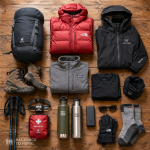
Nepal’s trails stack several climates on top of each other. The answer is a flexible layering system, not one very heavy outfit.
The essential system
- Moisture-managing base layers
- Warm mid-layer or fleece
- Insulated jacket suitable for your season and altitude
- Waterproof and windproof outer shell
- Trekking trousers and thermal leggings
- Broken-in footwear with suitable grip
- Warm hat, sun hat, gloves and neck protection
- Sleeping bag rated for expected overnight temperatures
- Daypack, waterproof liner and rain cover
- Two refillable water bottles or bottle and hydration system
- Water-treatment method
- Headlamp and spare power
- Sun protection, sunglasses and lip balm
- Personal first-aid and prescribed medication
- Passport copies, permits, cash and insurance details
Pack for the actual route. A December crossing of Thorong La and an April Poon Hill trek do not need the same sleeping bag. Our complete Nepal trekking packing and layering guide explains what to bring from home, what can be rented or bought in Kathmandu, and how to avoid overpacking.
Teahouses, food, water, charging and connectivity
Rooms
Teahouse rooms are usually simple. Expect twin beds, blankets, a small table and shared bathrooms on many routes. Insulation is limited, and the dining room may be the only heated space. A sleeping bag is still valuable even when blankets are provided.
Food
Dal bhat is the dependable centre of trail life: rice, lentils, vegetables, pickle and often refills. Menus may also include noodles, fried rice, potatoes, soups, momos, porridge, eggs and simple pasta. The range narrows with altitude.
Eat enough carbohydrate, keep familiar snacks for low-appetite moments and tell the agency about allergies before the trek. Our guide to essential trekking snacks explains what is worth carrying even on well-serviced routes.
Water
Avoid creating a trail of discarded plastic bottles. Use boiled, filtered or correctly treated water. Safe-water stations exist on some routes, but availability is not universal. Bring a system you understand before reaching the trail.
Charging and WiFi
Electricity and mobile coverage are common on popular routes but become less predictable higher up. Charging and WiFi may cost extra per device, and solar systems can struggle after several cloudy days. Carry a power bank, keep your phone warm at night and download maps, documents and entertainment for offline use.
Connectivity should never be part of the emergency plan by itself. Your guide should know the communication gaps and alternative response procedures.
Insurance and mountain rescue
Ordinary travel insurance often excludes the very activity you are coming to Nepal to do. Read the policy wording line by line.
Your cover should match:
- The highest elevation on your complete itinerary, including optional viewpoints
- Trekking as an insured activity
- Helicopter evacuation where medically necessary
- Search and rescue where available
- Hospital treatment and repatriation
- Pre-existing medical conditions declared correctly
- Trip interruption caused by illness, injury or severe weather
- Any added activity, such as paragliding, climbing or a trekking peak
Do not assume “adventure cover” includes 5,000 metres. Everest Base Camp is 5,364 metres, Kala Patthar 5,545 metres, Thorong La 5,416 metres and Larkya La 5,106 metres. A policy capped at 4,000 metres does not cover these routes.
Keep the policy number, emergency telephone number and proof of cover available offline. Make sure your guide and a contact at home can find them. Our detailed guide to trekking insurance for Nepal explains altitude limits, helicopter evacuation and the exclusions that matter.
Arriving, organising and reaching the trail
Most international journeys begin in Kathmandu. Give yourself at least two nights before a major trek. This allows time to recover from the flight, meet your guide, check permits, adjust equipment and solve missing details without panic.
Pokhara is the main gateway for the Annapurna region. Everest routes commonly use flights to Lukla, although weather can shift departures to alternative airports or create long delays. Langtang begins with a road journey. Manaslu, Mustang, Dolpo and eastern routes have their own combinations of jeep, bus and domestic flight.
Our 2026 Kathmandu airport arrival guide walks you through visa on arrival, SIM cards, money and your first taxi.
Your pre-departure meeting should confirm
- Final day-by-day itinerary and sleeping altitudes
- Weather forecast and known trail changes
- Guide and porter names and contact details
- Permit copies
- Transport tickets and baggage limits
- Emergency contacts and evacuation process
- What the guide carries
- What you carry
- Cash needed on the trail
- Rules for changing or ending the itinerary
Responsible trekking: the trail is somebody’s home
Nepal’s trekking routes cross living communities and protected landscapes. The lodge is a family business. The field beside the path feeds a household. The monastery is not decoration. Responsible trekking begins when you stop seeing the trail as a product made only for visitors.
- Carry out batteries, wipes and difficult waste.
- Refill and treat water instead of buying single-use bottles where possible.
- Do not use campfires or demand wood-fuelled heating.
- Stay on the established path and avoid erosion-causing shortcuts.
- Ask before photographing people, ceremonies or homes.
- Walk clockwise around Buddhist stupas, chortens and mani walls.
- Keep noise low in villages and shared lodges.
- Buy local food and services at fair prices.
- Never fly a drone without the required permissions.
- Respect wildlife and do not collect plants, stones or cultural objects.
The National Trust for Nature Conservation asks trekkers to reduce firewood use, carry out rubbish, avoid bottled water where safe alternatives exist and respect local culture. These are not decorative sustainability statements. They are the minimum cost of being welcomed into fragile mountain landscapes.
Before and after the trek
Do not let Nepal become only an airport, a gear shop and a trail. The mountains make more sense when you understand something of the country below them.
Before trekking, spend time in Kathmandu or Patan. Walk through an old neighbourhood, visit a stupa in the morning and learn how Hindu and Buddhist traditions share the valley. After an Annapurna trek, give Pokhara a day that is not merely a transport connection. Let your legs recover beside the lake.
Keep at least one post-trek buffer day for delays and another if you want the journey to end gently. Laundry, a hot shower and a long meal feel better when they are not squeezed between a mountain flight and an international check-in.
A step-by-step Nepal trekking plan
- Set the true time available. Remove international travel, preparation and delay days.
- Choose your maximum sensible altitude. Base this on experience, health and itinerary pace.
- Select two or three routes. Compare culture, scenery, crowds, access and comfort.
- Match the route to the season. Do not force a famous pass into unsafe weather.
- Check current rules and permits. Use official sources and a registered agency.
- Compare transparent quotations. Make sure each includes the same services.
- Buy appropriate insurance. Verify altitude and evacuation in writing.
- Train for repeated walking days. Use your actual footwear and daypack.
- Review health with a professional. Discuss altitude, vaccinations and personal medication.
- Pack as a system. Test every critical item before flying.
- Arrive early. Meet the guide, inspect gear and confirm the route.
- Walk more slowly than your excitement wants. The aim is not merely to arrive, but to arrive well.
Frequently asked questions
What is the best trek in Nepal for a first-time visitor?
Poon Hill is the clearest short introduction. Langtang Valley suits a fit beginner with more time, while Everest Base Camp or the Annapurna Circuit can work as a first long trek if the itinerary is conservative and preparation is serious.
Do I need a guide to trek in Nepal?
For most major routes, current Nepal Tourism Board guidance requires a licensed trekking guide and an agency-issued TIMS card. Restricted areas have additional guide, agency and permit conditions. Confirm the exact route before booking because requirements are route-specific.
How difficult is trekking in Nepal?
Difficulty ranges from four-day lower-elevation walks to remote three-week expeditions. Daily elevation change, altitude, cold, trail condition and consecutive walking days matter more than distance alone.
What is the best month for trekking in Nepal?
October and November are the strongest all-round months for clear views and stable conditions. March and April are warmer and bring spring colour. Winter suits selected lower routes, while Upper Mustang and parts of Dolpo can work during the summer monsoon.
How much does a Nepal trek cost?
A short guided trek may begin around USD 350, approximately NPR 54,000, while classic two-week routes commonly cost USD 1,200 to 3,000, approximately NPR 186,000 to 465,000. Restricted permits, domestic flights, comfort level and staff support create large differences.
Is Everest Base Camp harder than the Annapurna Circuit?
Both are challenging. Everest Base Camp involves sustained high sleeping altitudes and Lukla flight logistics. The Annapurna Circuit has greater landscape variation and the very high Thorong La crossing. The safer choice depends on itinerary length, experience and how your body acclimatises.
Can children trek in Nepal?
Some lower, flexible routes can suit healthy children who enjoy walking, but altitude affects children as well as adults and symptoms can be harder for them to describe. Choose conservative sleeping elevations, plan short days and seek specialist medical advice. Our Nepal with Kids guide covers broader family planning.
Can I trek during Nepal’s monsoon?
Yes, but route choice is critical. Upper Mustang and some trans-Himalayan areas lie in the rain shadow. Elsewhere, heavy rain can bring leeches, cloud, landslides, swollen rivers and transport delays.
Do I need technical climbing skills?
Not for standard teahouse treks such as Poon Hill, Langtang Valley, Everest Base Camp or the Annapurna Circuit. Trekking peaks and mountaineering routes are different activities requiring additional equipment, permits and skills.
How much cash should I carry?
Carry enough Nepalese rupees for meals, drinks, charging, showers, tips and contingency costs not included in your package. ATMs are uncommon or unreliable on many trails. Your agency should give a route-specific estimate before departure.
The trek you choose becomes your Nepal
There is no single best trek in Nepal. There is only the trek that fits your time, body, curiosity and willingness to meet the mountains on their own terms.
For one traveller, Nepal will always be the blue hour above Namche, when lights begin appearing beneath the dark shape of the Khumbu. For another, it will be the first sight of Langtang’s open valley after days in the forest. Someone else will remember the dry wind outside Lo Manthang, or a plate of dal bhat in a Manaslu lodge while snow closes the pass for a day.
Choose slowly. Leave room for acclimatisation and delay. Pay the people who support you fairly. Carry less plastic, less hurry and less need to prove anything.
Then, when the first morning comes, drink your chiya while it is hot. Listen for the mule bells. The mountain will still be there when you begin walking.
Related Posts
Stay Informed With the Latest & Most Important News
Previous Post
Next Post
- Kathmandu Travel Guide: What to See, Where to Stay, Eat and How to Get Around
- From Mustang to the World: Shinta Mani Mustang Named the No. 1 Luxury Hotel on Earth
- Best Places to Visit in Nepal: A Complete Region-by-Region Guide for Every Traveller
- Trekking in Nepal: The Complete Guide to Choosing and Planning Your Himalayan Trek
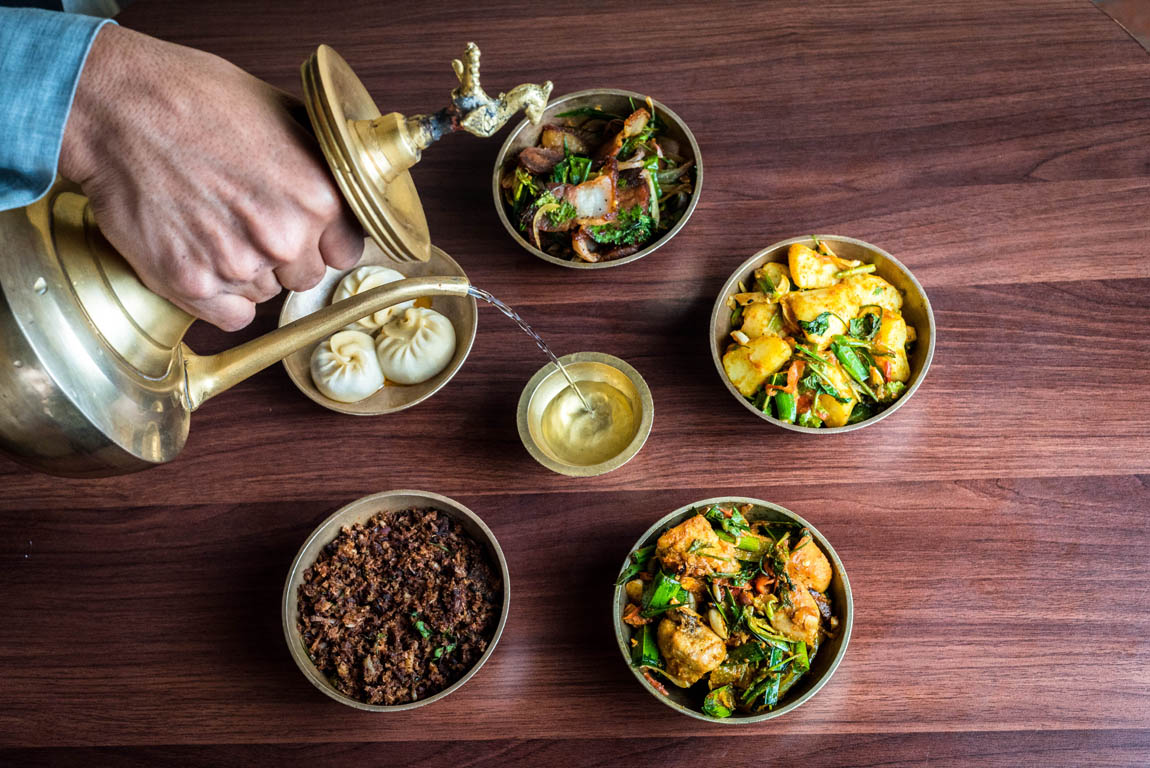
- Beyond the Mountains: Why Nepal Could Become One of the World’s Great Food Destinations