Now Reading: Kathmandu Travel Guide: What to See, Where to Stay, Eat and How to Get Around
-
01
Kathmandu Travel Guide: What to See, Where to Stay, Eat and How to Get Around
Kathmandu Travel Guide: What to See, Where to Stay, Eat and How to Get Around

Plan Kathmandu with this complete guide to neighbourhoods, UNESCO sites, food, transport, costs, itineraries and day trips across the valley.
There is a moment, usually on your first morning, when Kathmandu stops feeling like an arrival hall and begins to feel like a city.
A metal shutter rattles upwards. Someone sweeps yesterday’s dust from a shopfront. Chiya steams beside a stack of newspapers. Bells ring inside a courtyard shrine that you nearly walked past. A scooter squeezes through a lane already claimed by schoolchildren, vegetable sellers, dogs and a man carrying marigold garlands wider than his shoulders.
Then, above the wires and rooftops, a pair of painted Buddha eyes appears on a distant stupa.
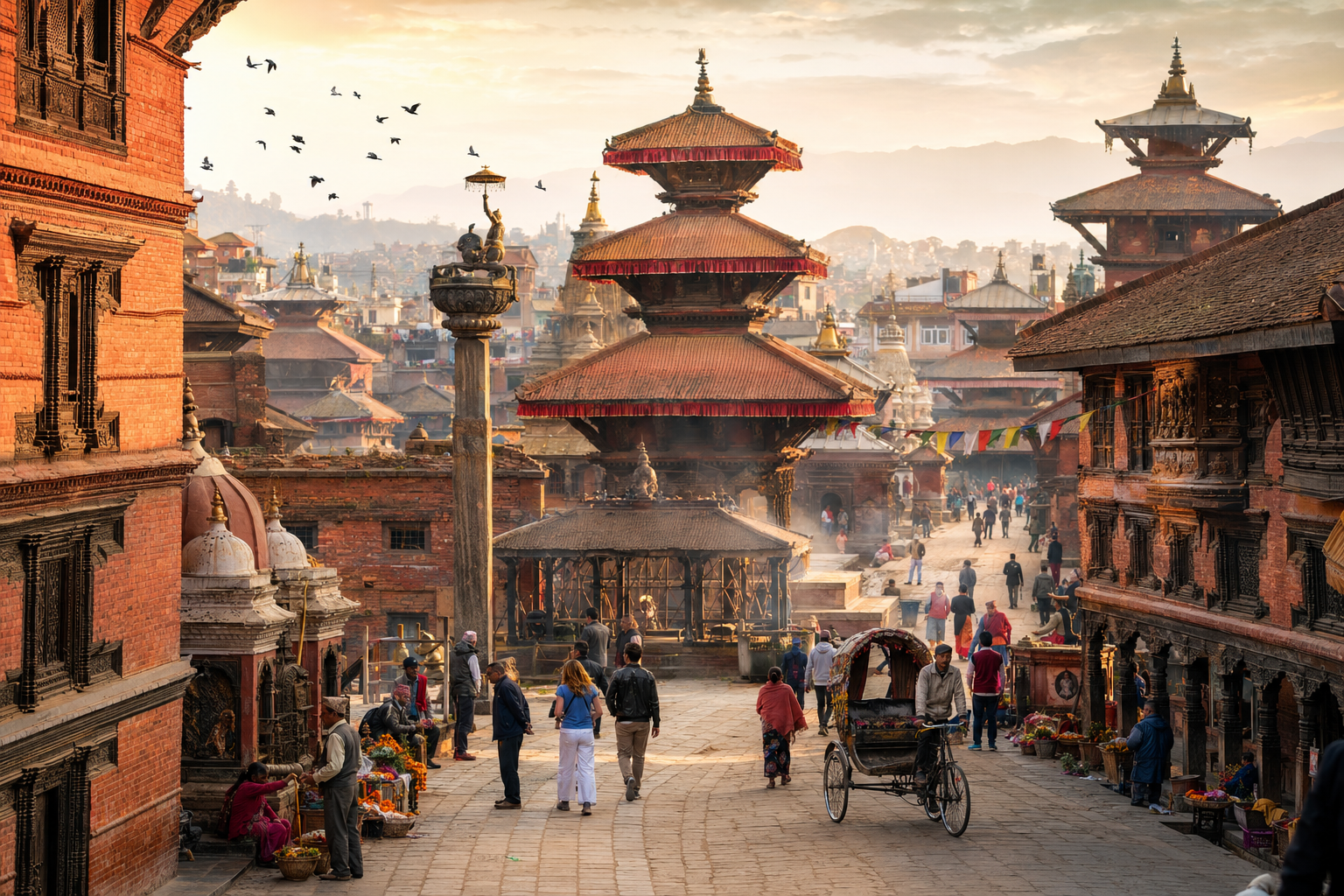
Kathmandu is often treated as the place you pass through before the Himalayas. That is a mistake. The capital is not a waiting room for Everest or Annapurna. It is one of South Asia’s great living heritage cities, layered with Newar courtyards, Hindu temples, Buddhist stupas, crowded bazaars, royal squares, rooftop cafés and neighbourhoods that change character within a few streets.
It can also be tiring. Traffic is slow. Pavements appear and disappear. Dust and monsoon mud are part of the experience. Famous sites are spread across a valley containing three historic cities, not arranged along one tidy tourist boulevard.
This Kathmandu travel guide helps you make sense of it all. It covers where to stay, how many days you need, the essential places to visit, current heritage fees, local food, transport, realistic costs, day trips and itineraries for one to five days. More importantly, it shows you how to experience the city without rushing past the life that makes it memorable.
Last checked and updated: 8 August 2026
Kathmandu travel guide: the quick answer
- Ideal stay: three full days for the city, Patan, Boudha and Pashupatinath; four or five days if you want Bhaktapur and a quieter valley day.
- Best areas for a first visit: Thamel for convenience, Patan for heritage and calmer evenings, Boudha for a spiritual atmosphere, or Jhamsikhel for cafés and longer stays.
- Do not miss: Kathmandu Durbar Square, the walk through Asan and Indra Chowk, Swayambhunath, Boudhanath, Pashupatinath, Patan and Bhaktapur.
- Best months: October and November for clearer skies; March and April for warmer spring days; December and January for crisp mornings and cold evenings.
- Getting around: walk within neighbourhoods, then use taxis or verified ride-hailing cars between them.
- Planning budget: about USD 35 to 55 per person per day for a careful budget trip, or USD 75 to 140 for a comfortable mid-range visit, excluding major shopping and onward travel.
- Most important advice: plan by area, not by a long list of attractions. Kathmandu traffic can turn a short distance into a slow journey.
First, understand what “Kathmandu” means
Travellers use Kathmandu to mean several different places.
Kathmandu city contains Thamel, Asan, Indra Chowk, Kathmandu Durbar Square and Swayambhunath. Lalitpur, usually called Patan, lies across the Bagmati River and has its own Durbar Square, old lanes and contemporary café culture. Bhaktapur is a separate historic city east of the centre. Boudhanath and Pashupatinath sit on the eastern side of the urban area, close to the airport but well away from old Kathmandu.
Together, Kathmandu, Patan and Bhaktapur form the historic core of Kathmandu Valley. Seven monument zones across the valley make up one UNESCO World Heritage property. That is why a map can be deceptive. “Seeing Kathmandu” may mean travelling between three cities and several distinct sacred landscapes.
The best approach is to give each part of the valley enough time to reveal its own rhythm.
| Area | What it feels like | Allow |
|---|---|---|
| Old Kathmandu, Asan and Durbar Square | Bazaars, courtyards, temples and dense street life | Half to one full day |
| Swayambhunath | Hilltop stupa, prayer flags and valley views | 2 to 3 hours |
| Patan | Newar heritage, museum, workshops and calmer lanes | Half to one full day |
| Boudha and Pashupatinath | Tibetan Buddhist and Hindu sacred life | Half to one full day |
| Bhaktapur and Changu Narayan | Royal squares, brick lanes and valley-edge history | One full day |
How many days do you need in Kathmandu?
Three full days is the sensible minimum for a first visit. That gives you one day in old Kathmandu, one split between Swayambhunath and Patan, and one around Boudha and Pashupatinath.
Four days lets you add Bhaktapur without compressing everything else. Five days creates room for Changu Narayan, Kirtipur, a food-focused afternoon, a valley walk or simply an unplanned morning.
If you have only one night before a trek, resist the temptation to race through four UNESCO sites. Choose one neighbourhood walk and one major monument. Kathmandu is much better when you notice the carved window above a pharmacy or the tiny Ganesh shrine crowded with morning offerings, rather than collecting photographs from the back seat of a taxi.
For a ready-made short plan, use our Kathmandu in 2 to 3 days backpacker itinerary. The guide you are reading now is the wider planning page that helps you adapt that route to your own pace.
When is the best time to visit Kathmandu?
October and November: the strongest all-round months
Autumn usually brings clearer skies, comfortable daytime temperatures and the best chance of Himalayan views from the valley rim. The city can be busy, accommodation prices rise, and popular heritage sites receive more tour groups. Festival dates can also transform normal transport and opening patterns.
December to February: clear mornings and cold rooms
Winter days can be bright and rewarding, but mornings and evenings feel cold in unheated buildings. Kathmandu sits at roughly 1,400 metres, and many budget hotels are better at keeping out rain than winter air. Pack a warm layer even if the afternoon forecast looks gentle.
March and April: spring colour and growing haze
Spring is lively, warm and popular with trekkers. Flowers brighten gardens and courtyards, while pre-monsoon haze can reduce long-distance views. This is still an excellent time for street life, festivals and cultural exploration.
May to September: monsoon atmosphere
Rain usually builds from June and can arrive as intense afternoon or evening downpours. The valley becomes greener, temple courtyards shine after rain, and visitor numbers fall. Roads may flood, flights can be delayed and walking requires patience. If you come prepared, the monsoon has a beauty that dry-season photographs rarely capture. Read our guide to Nepal in the monsoon before deciding against it.
For a country-wide comparison, see our month-by-month guide to the best time to visit Nepal.
Where to stay in Kathmandu
Your neighbourhood will shape your Kathmandu experience more than the number of stars beside your hotel.
Thamel: easiest for a first visit
Thamel has the widest choice of hotels, hostels, restaurants, trekking shops, money changers and travel agencies. It is convenient, social and easy to navigate after dark. It is also noisy in places and can feel detached from everyday Kathmandu if you never walk beyond its tourist streets.
Stay here if you have a short visit, want to meet other travellers or need to organise trekking equipment and transport.
Patan: best for heritage and slower evenings
In old Patan, you wake near brick courtyards, metal workshops and temple squares rather than trekking shops. Heritage guesthouses and boutique stays fit naturally into the old city. The area feels especially rewarding early in the morning and after day visitors leave.
Stay here if architecture, food and neighbourhood atmosphere matter more than nightlife.
Boudha: best for spiritual atmosphere
Around Boudhanath, pilgrims circle the stupa from before sunrise until evening. Monasteries, Tibetan restaurants and rooftop terraces give the neighbourhood a rhythm found nowhere else in the valley. It is also convenient for the airport.
Stay here if you prefer contemplative mornings, Tibetan Buddhist culture and a base away from central Thamel.
Jhamsikhel: best for cafés and longer stays
South of central Patan, Jhamsikhel has modern restaurants, coffee shops, serviced apartments and a large international community. It is comfortable and useful for a longer stay, though less atmospheric than sleeping inside old Patan.
Bhaktapur: best for quiet heritage mornings
Most visitors see Bhaktapur as a day trip. Staying overnight changes the experience. Tour groups leave, shop shutters close, and the brick lanes return to local life. Choose it for one or two nights rather than as the most convenient base for the whole valley.
Our complete Kathmandu neighbourhood guide compares Thamel, Patan, Boudha, Bhaktapur, Jhamsikhel and Nagarkot with detailed price bands.
The essential places to visit in Kathmandu
1. Walk from Asan to Kathmandu Durbar Square
This is the walk that introduces Kathmandu properly.
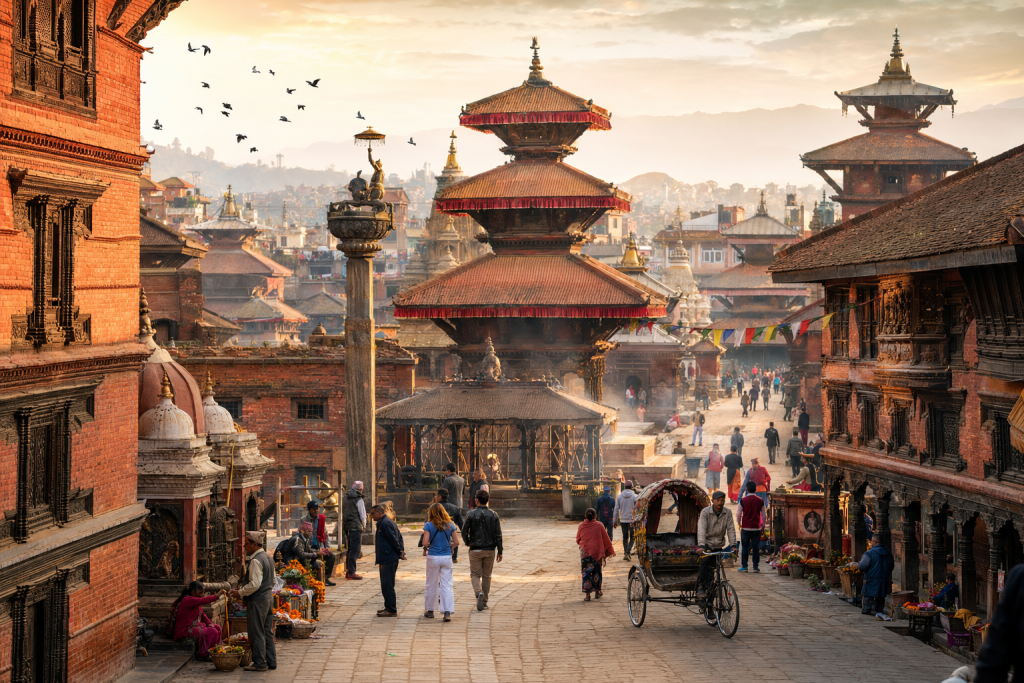
Begin at Asan, where six streets meet around the Annapurna temple. Vegetables spill from baskets, spice shops open into dark interiors, and worshippers step between traders as if commerce and devotion have always shared the same few metres. Continue through Indra Chowk, past fabric sellers and the Akash Bhairav temple, then follow the lanes towards Kathmandu Durbar Square.
The square contains palace courtyards, shrines, the Kumari Ghar and the rebuilt Kasthamandap. Do not treat it as an isolated ticketed compound. Its meaning comes partly from the streets flowing into it and the daily city continuing around it.
Allow at least half a day for the route. Our Kathmandu Durbar Square guide explains the royal history, major buildings and details worth looking for.
2. Climb to Swayambhunath in the morning
Swayambhunath rises on a wooded hill west of central Kathmandu. If you approach by the eastern staircase, the climb arrives in a long, steep sequence beneath trees and resident monkeys. At the top, the white dome and gilded spire appear almost at once, surrounded by prayer wheels, shrines, lamps and views across the valley.
Go early for cooler air and a gentler atmosphere. Walk clockwise around the stupa and give worshippers space. Keep food inside your bag because the monkeys are fast, confident and not interested in negotiation.
Our full Swayambhunath guide explores the site’s Buddhist and Hindu layers.
3. Circle Boudhanath at dusk
Boudhanath is most powerful when it is moving. Monks, families, elderly pilgrims and visitors flow clockwise around the vast white dome. Prayer wheels turn. Butter lamps glow in side rooms. Pigeons rise suddenly above the square before settling again on the surrounding roofs.
Visit once in daylight to see the details, but stay into the evening if you can. Find a respectful rooftop position for tea, then return to ground level and join the kora without hurrying.
Read our Boudhanath guide before you go.
4. Approach Pashupatinath with humility
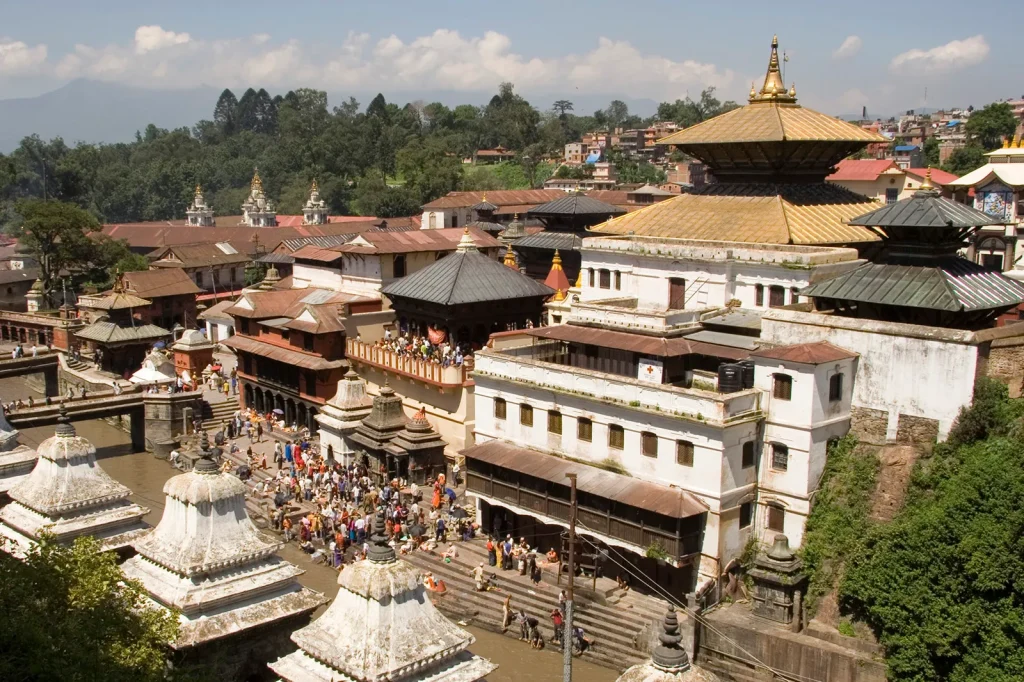
Pashupatinath is not simply an attraction. It is one of Hinduism’s most sacred Shiva temple complexes and an active place of worship, mourning and cremation on the Bagmati River.
Non-Hindu visitors cannot enter the inner temple, but the wider complex, riverbanks, shrines and viewpoints are extensive. Cremations may be visible from across the river. Watch quietly, keep your distance and never turn another family’s grief into a posed photograph.
The site rewards time and context. A knowledgeable local guide can help explain what you are seeing without reducing the experience to spectacle. Our Pashupatinath guide provides essential cultural background.
5. Give Patan more than a quick taxi stop
Patan Durbar Square is among the most coherent historic spaces in the valley, but the museum and surrounding lanes are equally important. The Patan Museum, housed within the former royal palace, gives clear context to Hindu and Buddhist sacred art. Outside, metalworkers, woodcarvers and small courtyard shrines show that Newar craftsmanship is still a living practice.
Stay for lunch. Wander beyond the square. The city becomes quieter within a few turns, and some of its loveliest details are found above eye level.
Use our detailed Patan Durbar Square guide to plan the visit.
6. Spend a full day in Bhaktapur
Bhaktapur is not one square. It is a connected historic city of royal courtyards, brick lanes, wells, pottery spaces, temples and neighbourhood shrines.
Durbar Square introduces the old kingdom, but continue towards Taumadhi Square and the five-storey Nyatapola Temple, then walk on to Dattatreya Square. Leave time for juju dhau, the thick local yoghurt traditionally served in clay bowls.
Arrive early or stay overnight to experience the city before and after the busiest day-trip hours. Our Bhaktapur guide follows the history across its major squares.
7. Continue to Changu Narayan if time allows
Changu Narayan sits on a ridge beyond Bhaktapur and is traditionally regarded as one of the valley’s oldest temple sites. The compact complex contains important stone, metal and woodwork, while the approach passes a village landscape very different from central Kathmandu.
Combine it with Bhaktapur by car, or use it as the beginning or end of a longer valley walk arranged with a guide. Check road and trail conditions during the monsoon.
For the wider heritage story, see our complete guide to Nepal’s UNESCO World Heritage Sites.
Kathmandu heritage entrance fees in 2026
The following prices are the official foreign-national fees listed by Nepal Tourism Board when checked on 8 August 2026. SAARC, BIMSTEC, Chinese and Nepali visitors may pay different rates. Children receive free or reduced entry at some sites.
| Heritage site | Foreign-national fee | Approx. USD |
|---|---|---|
| Kathmandu Durbar Square, including Tribhuvan Museum | NPR 1,000 | USD 6.60 |
| Patan Durbar Square, including Patan Museum | NPR 1,000 | USD 6.60 |
| Bhaktapur Durbar Square | NPR 1,800 or USD 18 | USD 11.80 if paying NPR |
| Swayambhunath | NPR 200 | USD 1.30 |
| Boudhanath | NPR 400 | USD 2.60 |
| Pashupatinath | NPR 1,000 per entry | USD 6.60 |
| Changu Narayan | NPR 300 | USD 2.00 |
Bhaktapur’s official listing gives both USD 18 and NPR 1,800, although those amounts are no longer equivalent at the current exchange rate. Confirm the accepted payment options at the ticket counter and pay in Nepalese rupees if the published NPR fee is available.
USD conversions use a rounded planning rate of USD 1 = NPR 152. Nepal Rastra Bank listed a USD buying rate of NPR 152.04 on 8 August 2026. Your bank, card or money changer will use its own rate.
Fees and access conditions can change. Recheck the official Nepal Tourism Board heritage-fee page shortly before your visit, and keep your ticket while inside each monument zone.
A first-time Kathmandu itinerary
Day 1: Old Kathmandu on foot
Begin gently. Walk from Thamel or the edge of the old city towards Asan, Indra Chowk and Kathmandu Durbar Square. Eat lunch in or near the old city, then let the afternoon remain loose. A rooftop tea, a courtyard you did not plan to find and an early dinner are better than forcing another major site into the day.
Day 2: Swayambhunath and Patan
Visit Swayambhunath early, then travel to Patan before lunch. Give the museum and square proper time, followed by a slow walk through the old lanes. Stay for dinner in Patan or Jhamsikhel rather than crossing the city at peak traffic.
Day 3: Pashupatinath and Boudha
Begin at Pashupatinath when the complex is active but the day is still cool. Continue to Boudha for lunch, visit nearby monasteries that welcome visitors, and remain around the stupa into dusk.
Day 4: Bhaktapur and Changu Narayan
Leave early for Bhaktapur and walk through all three principal squares rather than stopping only at Durbar Square. Add Changu Narayan in the afternoon if your energy, transport and weather allow. Otherwise, spend the whole day in Bhaktapur and return without rushing.
Day 5: Choose your own Kathmandu
Use the final day according to what held your attention:
- For food: join a thoughtful local food walk or explore Newar dishes with a guide.
- For village and valley views: visit Kirtipur or arrange a walk near the valley rim.
- For nature: spend the morning in Shivapuri-Nagarjun National Park with suitable route planning.
- For rest: return to Boudha, book a massage, sit in a courtyard or do absolutely nothing ambitious.
A rest day is not a wasted day, especially before or after a high-altitude trek.
What to eat in Kathmandu
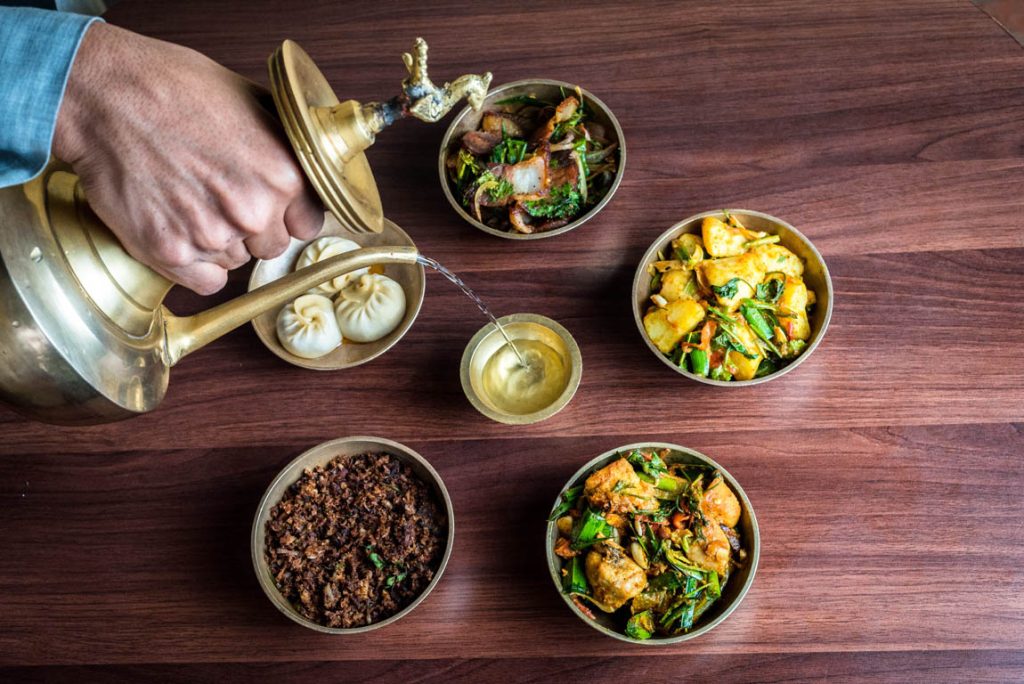
Kathmandu’s food is not one cuisine. The valley is the historic home of Newar culture, while migration from every part of Nepal has filled the city with regional kitchens. Tibetan and Himalayan dishes are especially visible around Boudha, and Thamel offers almost every international comfort food a tired traveller could request.
Start with these dishes
- Dal bhat: rice, lentils, vegetables, pickle and often meat, built as a balanced everyday meal rather than a single fixed recipe.
- Momo: steamed or fried dumplings filled with meat, vegetables or paneer, served with achar.
- Newari khaja set: beaten rice with a changing collection of meat, beans, greens, potato, pickle and other small dishes.
- Yomari: steamed rice-flour dumplings traditionally filled with sweet chaku and sesame.
- Bara or wo: savoury lentil pancakes associated with Newar cooking.
- Thukpa and thenthuk: warming Himalayan noodle soups, particularly easy to find around Boudha.
- Juju dhau: Bhaktapur’s rich, sweet yoghurt.
- Chiya: sweet milk tea that belongs to bus stops, homes, shop counters and cold mornings.
Old Kathmandu and Patan are natural places to explore Newar food. Boudha is best for Tibetan and Himalayan kitchens. Thamel works when a group wants several different cuisines or when your stomach asks for something familiar.
Choose busy restaurants where food is cooked fresh. Drink sealed, filtered or properly treated water, and be more cautious with raw salads, cut fruit and food that has been standing uncovered. Caution does not mean avoiding local food. It means choosing where and when you eat with some care.
Go deeper with our traveller’s guide to the foods of Nepal, our guide to the Newari feast and our story of a day of eating like locals.
How to get around Kathmandu
Walk within each neighbourhood
Walking is the best way to experience old Kathmandu, Patan, Boudha and Bhaktapur. It is not always relaxing. Pavements can be uneven or absent, traffic passes close, and road crossing requires steady attention. Wear closed shoes with good grip and keep your phone away while negotiating busy junctions.
Use taxis between areas
Small taxis are plentiful. Ask for the meter, or agree the full fare in Nepalese rupees before departure. Show the driver a map pin and a local phone number when your destination is a small guesthouse inside a lane.
Use verified ride-hailing cars
Pathao and inDrive are commonly used in the valley. Availability, pricing and pickup points vary. Check the vehicle registration and driver details before entering, and do not assume the cheapest option will be the easiest during rain or peak traffic.
Try local buses after you understand the city
Local buses and microbuses are inexpensive and useful, but route information is not always obvious to a first-time visitor. Ask your hotel which stop and vehicle to use, carry small notes, and confirm the destination with the conductor. Avoid attempting your first local-bus journey with large luggage.
Plan around traffic, not kilometres
A short journey can take much longer during the morning and evening peaks, rain, roadworks, festivals or political events. Keep Boudha and Pashupatinath together, combine old Kathmandu sights on foot, and treat Patan or Bhaktapur as substantial destinations rather than quick detours.
If you are arriving by air, our Kathmandu airport arrival guide covers visas, SIM cards, money, prepaid taxis and your first 24 hours step by step.
How much does Kathmandu cost?
Kathmandu can be very affordable, but your actual daily cost depends heavily on accommodation, restaurants, private transport and how many heritage sites you visit.
| Travel style | Planning range per person, per day | What it usually covers |
|---|---|---|
| Careful budget | NPR 5,300 to 8,400 USD 35 to 55 |
Dorm or simple room, local meals, walking and shared transport, one or two paid sights |
| Comfortable mid-range | NPR 11,400 to 21,300 USD 75 to 140 |
Good hotel, varied restaurants, taxis or ride-hailing, several sights |
| High comfort or boutique | From NPR 24,300 From USD 160 |
Boutique or luxury stay, private transport, guided visits and higher-end dining |
These are planning ranges, not fixed package prices. A solo traveller pays the whole room and taxi, while two people can share both. Heritage entry fees can add NPR 2,000 to 4,000 to a busy sightseeing day. Alcohol, imported food, nightlife, shopping and guided tours increase the total quickly.
Carry some cash. International cards work at many hotels and larger restaurants, but small cafés, taxis, market stalls and local buses may be cash only. Use licensed money changers or bank facilities and count your cash before leaving the counter.
For a wider country budget, read how far USD 100 goes in Nepal.
Practical advice that makes Kathmandu easier
Air quality and dust
Air quality can be poor, especially during dry periods and heavy traffic. Carry a well-fitting particulate mask if you are sensitive to pollution, have a respiratory condition or will spend long periods beside busy roads. Choose side streets for walking when possible.
Water and food safety
Do not drink untreated tap water. Use sealed, filtered or properly treated water, including when brushing your teeth if your accommodation advises it. Wash or sanitise your hands before eating.
Traffic and road crossing
Vehicles may approach from directions that are not obvious, and zebra crossings do not create the same certainty visitors expect in some countries. Cross steadily with local pedestrians when possible and keep children close.
Money and valuables
Kathmandu is generally manageable for visitors, but crowded markets and tourist streets deserve normal precautions. Keep phones and wallets secure, use hotel storage thoughtfully and avoid displaying large amounts of cash. Photograph important documents and keep the copies separate from the originals.
Power and connectivity
Most established accommodation has Wi-Fi, but speed and reliability vary. A local SIM makes maps, hotel calls and ride-hailing much easier. Download an offline map before long days out.
Clothing
Dress in a way that works for heat, dust and sacred spaces. Shoulders and knees covered is a respectful default for temples and monasteries. Carry socks that are easy to remove because shoes must come off in some places.
Photography
Ask before photographing people closely. Look for signs inside temples and museums. At Pashupatinath, be especially careful around cremation ghats and mourners. A long lens does not make an intrusive photograph respectful.
Temple and stupa etiquette
Walk clockwise around stupas and mani walls. Do not touch offerings or sacred objects. Never step over someone, food or a religious text. Remove shoes where required and follow the behaviour of worshippers without imitating rituals you do not understand.
Read our guide to respectful travel in Nepal before visiting sacred and residential communities.
Kathmandu with children or limited mobility
Kathmandu can be fascinating for children, but the practical challenges are real. Traffic, uneven paving, stairs, open courtyards, dogs and crowded streets require closer supervision than a controlled attraction at home. Carry snacks, water, wipes and a light layer, and plan fewer sites per day.
Accessibility varies greatly. Patan Museum and some major hotels may be easier than hilltop sites, old-city lanes or temple staircases, but historic architecture often includes thresholds, narrow passages and uneven surfaces. Contact individual sites and accommodation before travelling, especially if step-free access is essential.
Families should use our practical guide to Nepal with children for health, food, transport and altitude planning.
The best day trips from Kathmandu
Bhaktapur
The strongest cultural day trip, although it deserves an overnight stay if your schedule allows.
Nagarkot
A valley-rim escape known for sunrise and Himalayan views. The mountains are never guaranteed, so treat the landscape and slower pace as part of the reason to go.
Dhulikhel
A historic town with ridge views and access to village walks. It suits travellers who want a quieter alternative to a simple viewpoint stop.
Kirtipur
Close to central Kathmandu but culturally distinct, Kirtipur offers old Newar streets, temples, views and excellent local food. It can be visited in half a day without the long drive required by other valley trips.
Shivapuri-Nagarjun National Park
The green hills above the city offer forest walks, religious sites and relief from traffic. Choose the route carefully, check park requirements and begin early. For context, read our guide to Shivapuri-Nagarjun National Park.
Our weekend escapes from Kathmandu guide compares Nagarkot, Dhulikhel and Bandipur in more detail.
Common Kathmandu mistakes
- Staying only in Thamel: it is useful, but it is not the whole city.
- Planning sites by distance alone: traffic matters more than the map suggests.
- Visiting Bhaktapur for one hour: the old city deserves most of a day.
- Treating sacred places as scenery: Pashupatinath, Boudha and Swayambhunath are living religious spaces.
- Drinking untreated tap water: use sealed, filtered or properly treated water.
- Booking a packed first afternoon: immigration, baggage and traffic can consume more time and energy than expected.
- Assuming every room is warm in winter: ask about heating before you book.
- Ignoring festival dates: they can create extraordinary experiences as well as closures, crowds and transport changes.
- Leaving no unscheduled time: Kathmandu’s smaller discoveries are often the ones you remember.
Frequently asked questions
Is Kathmandu worth visiting if I am going trekking?
Yes. Allow at least two or three full days if your itinerary permits. Kathmandu provides cultural and historical context that changes how you understand the villages, temples and traditions encountered elsewhere in Nepal.
Is three days enough for Kathmandu?
Three days is enough for a strong first visit covering old Kathmandu, Swayambhunath, Patan, Boudha and Pashupatinath. Add a fourth day for Bhaktapur.
Can I walk everywhere in Kathmandu?
You can and should walk within old Kathmandu, Patan, Boudha and Bhaktapur. The main areas are too spread out to connect entirely on foot during a short trip, so use taxis or ride-hailing between them.
Do I need a guide?
A guide is not essential for ordinary city sightseeing, but a skilled local guide adds real value at Durbar Squares and sacred sites. Choose someone who explains living culture and contemporary life, not only dates and legends.
What is the best neighbourhood for first-time visitors?
Thamel is the easiest all-round choice for a short first visit. Patan is better for heritage and quieter evenings, while Boudha is ideal for spiritual atmosphere and proximity to the airport.
Is Kathmandu safe at night?
Busy visitor areas are generally straightforward with normal precautions, but street lighting and pavements vary. Use a registered taxi or verified ride-hailing car late at night, avoid isolated lanes when alone and keep valuables secure.
Can I see the Himalayas from Kathmandu?
On clear days, parts of the Himalayan range can be visible from the valley and surrounding ridges. Autumn and crisp winter mornings offer better chances, but haze and cloud can hide the mountains completely. Do not build a tight itinerary around a guaranteed view.
Should I stay in Kathmandu before flying home?
Yes. Return to the valley at least one day before an international flight, and allow more margin after weather-sensitive domestic flights or remote road journeys.
A final thought: let Kathmandu interrupt the plan
Kathmandu rarely behaves like a city designed for efficient sightseeing. A procession blocks the road. Rain begins while you are crossing a square. A museum takes twice as long as expected. Someone points you towards a courtyard you cannot find on the map.
Let some of that happen.
Walk through Asan before breakfast. Sit at Boudha until the lamps begin to glow. Stay in Patan after the day visitors leave. Listen to the temple bells without immediately reaching for your phone. The valley’s great monuments matter, but they are held together by ordinary life: shopkeepers raising shutters, children feeding pigeons, artisans tapping metal behind half-open doors, and families turning the same prayer wheels their grandparents turned.
Kathmandu is not the pause before Nepal begins.
It is where the journey first learns to breathe.
Related Posts
Stay Informed With the Latest & Most Important News
Previous Post
Next Post
- Kathmandu Travel Guide: What to See, Where to Stay, Eat and How to Get Around
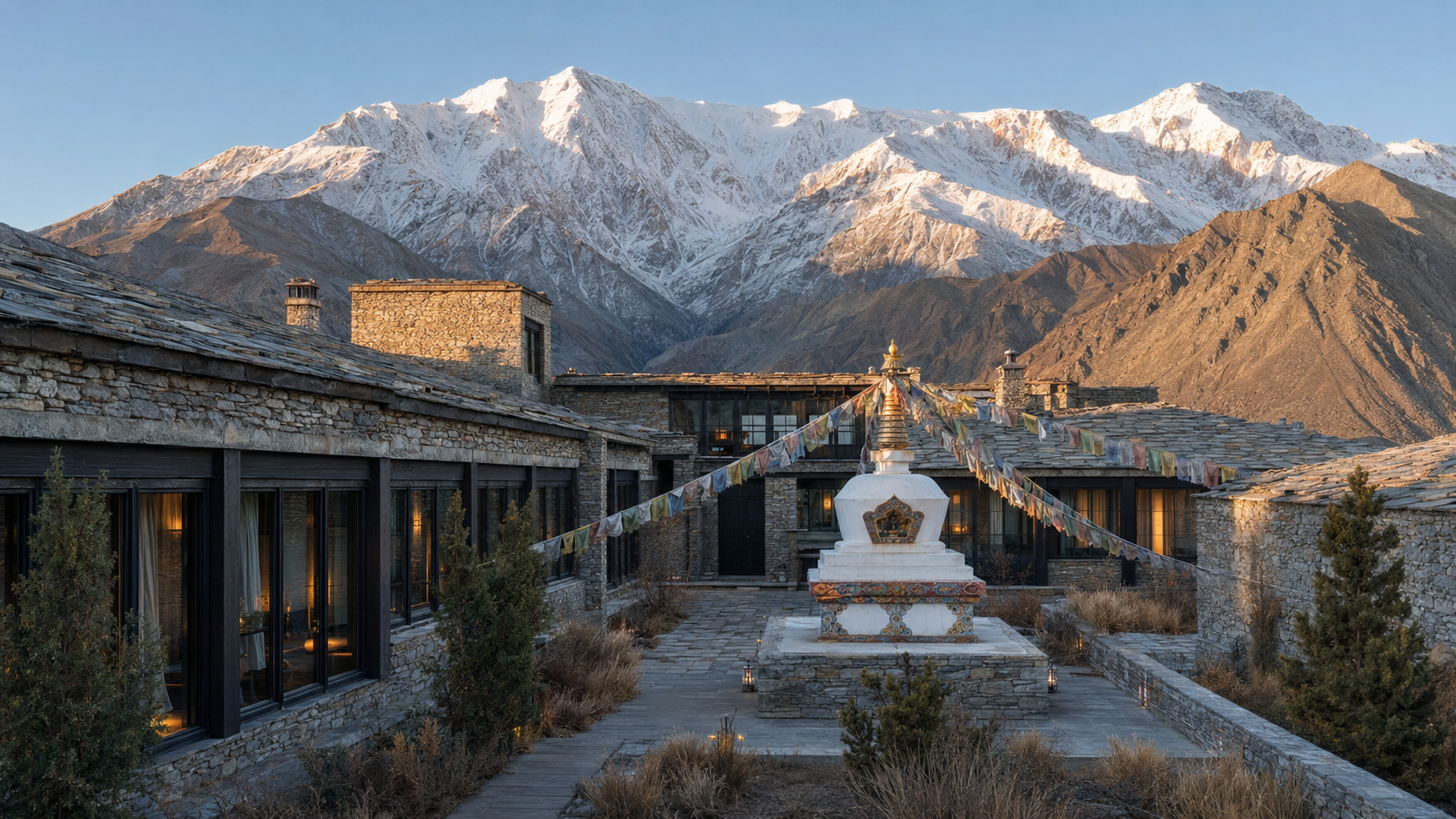
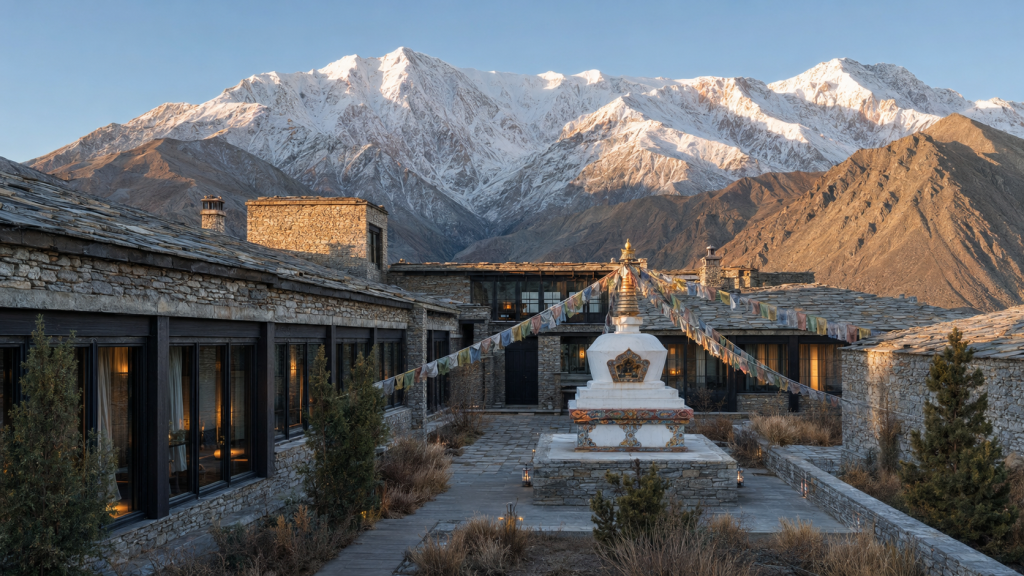
- From Mustang to the World: Shinta Mani Mustang Named the No. 1 Luxury Hotel on Earth
- Best Places to Visit in Nepal: A Complete Region-by-Region Guide for Every Traveller
- Trekking in Nepal: The Complete Guide to Choosing and Planning Your Himalayan Trek
- Beyond the Mountains: Why Nepal Could Become One of the World’s Great Food Destinations