Now Reading: Nepal with Kids: A Practical Family Travel Guide for Parents
-
01
Nepal with Kids: A Practical Family Travel Guide for Parents
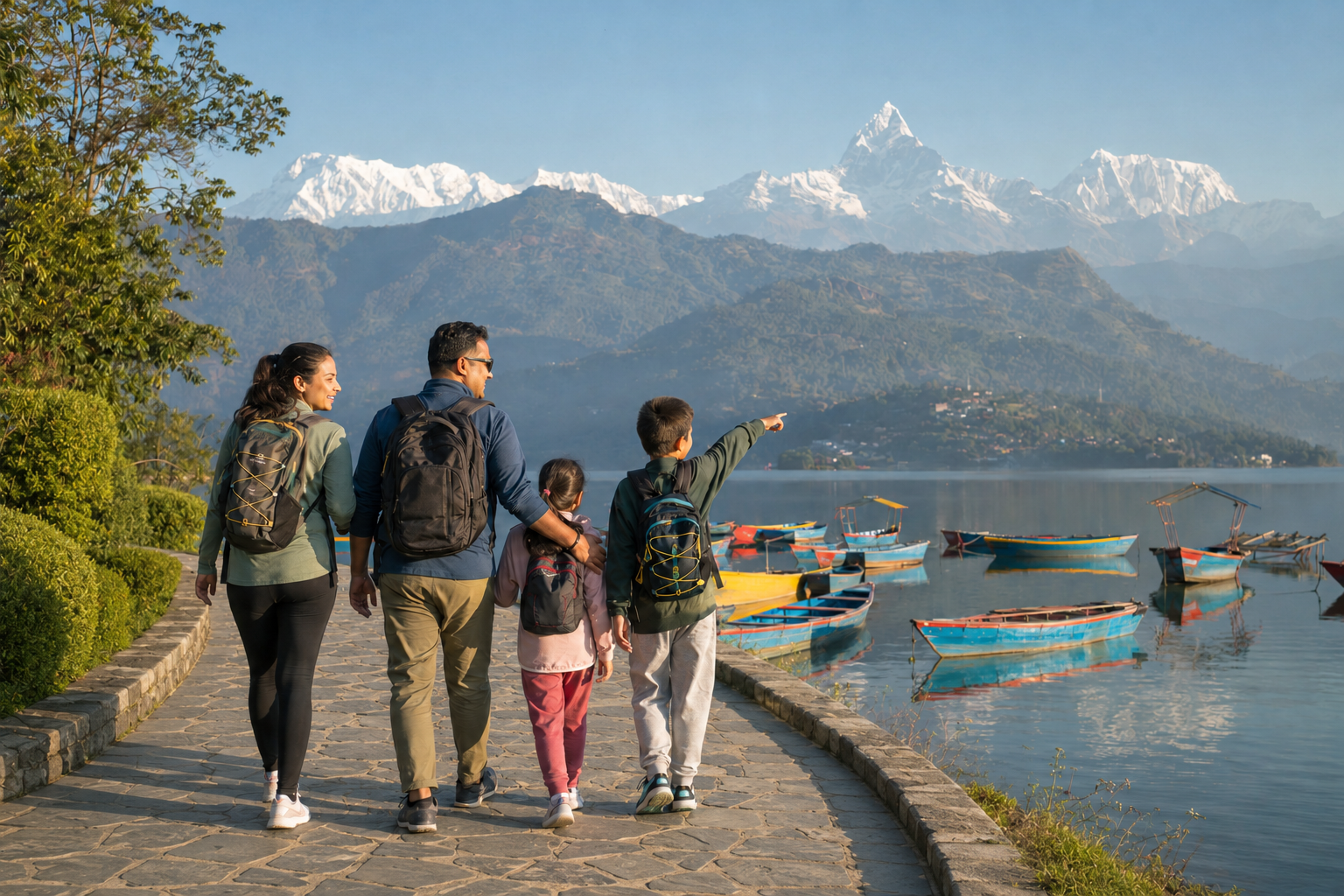

Planning a family trip to Nepal? This practical guide covers the best places, itineraries, health, food, altitude, transport, accommodation, safety and honest advice for travelling Nepal with children.
There is a particular moment when Nepal begins to make sense to a child.
It may happen beside the enormous prayer wheels at Boudhanath, when small hands discover that a gentle push can set a whole cylinder of prayers turning. It may happen in Bhaktapur, where pigeons rise from the square all at once and the carved wooden windows look as though they belong in a storybook. Or perhaps it happens in Chitwan, when a rhinoceros steps quietly out of the tall grass and every member of the family forgets to speak.
Nepal can be extraordinary with children. It is colourful without being manufactured, educational without feeling like a lesson, and adventurous without requiring every family to climb a mountain. Children are often welcomed warmly. Restaurant staff may find an extra cushion, hotel owners may remember a child’s favourite breakfast, and strangers may smile, wave and ask their name.
But travelling in Nepal as a family also asks for patience. Pavements can disappear. Journeys that look short on a map may take most of the day. Car seats are not standard. Clean public toilets are not always nearby. Mountain weather can disrupt a carefully arranged plan, and a child who happily walked for hours yesterday may refuse to take another step today.
This guide is for parents who want the honest version. It will help you decide whether Nepal suits your family, choose an age-appropriate itinerary, prepare for health and altitude, manage food and transport, and travel with enough flexibility to enjoy the country rather than simply survive the schedule.
Is Nepal a Good Family Destination?
For many families, yes. Nepal is especially rewarding for curious children who enjoy animals, stories, outdoor spaces, different foods and the small surprises of everyday life. A family trip might include temple courtyards, gentle walks, pottery workshops, canoe rides, village stays, jungle safaris and clear morning views of the Himalaya.
Nepal is not, however, a completely effortless destination. It works best for parents who can accept that comfort will vary and plans may change. You do not need to be an adventurous family, but you do need to leave more time than you think you need.
Nepal may suit your family particularly well if:
- You prefer meaningful experiences to theme-park convenience.
- Your children enjoy nature, wildlife, history or meeting people.
- You are willing to travel slowly and schedule rest.
- You can remain calm when a road journey runs late or a flight is delayed.
- You are happy to pay a little more for a safer vehicle, a better-located hotel or a private guide.
You may want to postpone or simplify the trip if a child has a health condition that makes altitude, air pollution, heat, gastrointestinal illness or limited access to specialist care particularly risky. In that situation, discuss the itinerary with your child’s clinician or a specialist travel-health professional before booking.
What Is the Best Age to Take Children to Nepal?
There is no perfect age. Nepalese families raise babies and children in every part of the country, from the Terai plains to high Himalayan settlements. For visiting families, the right age depends more on the itinerary, the parents’ confidence and the child’s health and temperament than on a single number.
Babies and toddlers
Travel with a baby can be beautiful because local people are often wonderfully responsive to young children. It can also be physically demanding. A robust baby carrier is usually more useful than a pushchair (stroller) on broken pavements, temple steps and village paths. You will need to think carefully about safe water for formula, nappy disposal, heat, sun, sleep and long road journeys.
Keep the itinerary simple. Kathmandu Valley and Pokhara are more manageable than a multi-stop journey. Avoid high-altitude ambitions. Choose accommodation with heating or air conditioning as the season requires, confirm that a cot is genuinely available, and carry enough familiar baby supplies for delays.
Children aged four to seven
This can be a magical age for Nepal. Prayer flags, monkeys, boats, cable cars, pottery and jungle animals provide constant interest. Young children tire quickly, however, and may struggle with long museum-style visits or consecutive travel days. Build each day around one main activity and let everything else be optional.
Children aged eight to twelve
For many families, this is the easiest window. Children are old enough to understand cultural stories, walk moderate distances, carry a small daypack and describe how they feel. They can enjoy a short low-altitude trek, help order momo, learn a few Nepali words and remember the journey vividly.
Teenagers
Teenagers can take on more substantial hikes, rafting with a reputable operator, community experiences and photography. Give them a role in planning. Let them choose a food tour, a sunrise walk, a craft class or one challenging activity. Nepal becomes much more engaging when they feel they are participants rather than passengers.
When to Visit Nepal with Children
For a first family visit, October to November and March to April are usually the easiest periods. The weather is generally more suitable for outdoor days and the mountain regions are more accessible. October and November bring clearer skies and major festivals, but popular places can be busy. March and April bring warmer days and flowering hillsides, although the air may become hazier later in spring.
Autumn: late September to November
This is the classic season for clear Himalayan views, trekking and festivals. Days are often pleasant, while mornings and evenings become cool. Book family rooms, guides and popular flights early. Dashain and Tihar can be culturally wonderful, but domestic transport fills quickly and some businesses close or operate reduced hours.
Winter: December to February
Winter can work very well for Kathmandu, Pokhara, Bandipur, Lumbini and Chitwan. Skies are often clear and visitor numbers lower. Nights can be cold, and many buildings lack central heating. Confirm room heating before booking rather than assuming that a hotel described as comfortable will be warm.
Spring: March to May
March and April are lively, colourful months. Lower-altitude walking is pleasant, rhododendrons bloom in the hills and the days grow warmer. May can become hot in Kathmandu and very hot in the Terai, which matters when travelling with small children.
Monsoon: June to August
The monsoon turns Nepal green and beautiful. There are fewer visitors, fields glow after rain and mornings can feel wonderfully fresh. Yet heavy rain can cause landslides, road disruption and flight delays. Leeches appear on wet trails, humidity rises and mosquitoes become more noticeable. A culturally focused Kathmandu Valley and Pokhara trip is still possible, but keep the plan loose and avoid tight international connections after domestic travel.
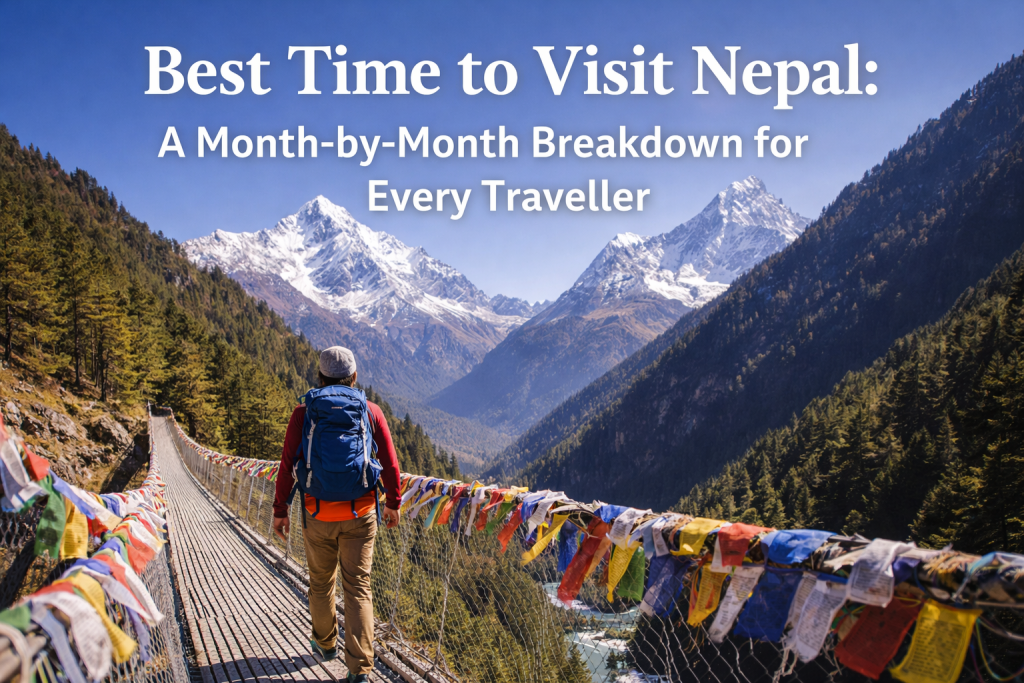
Our month-by-month guide to the best time to visit Nepal explains the seasons in greater depth.
The Best Places in Nepal for Families
Kathmandu Valley: history that children can touch and see
Kathmandu can feel intense on the first day. There are horns, dust, motorbikes, temple bells, incense, dogs sleeping in doorways and more visual detail than a tired child can absorb. Begin gently.
Boudhanath is one of the easiest major heritage sites for families. The great white stupa creates a broad, mostly pedestrian space where children can walk with the clockwise flow, spin prayer wheels and watch pigeons sweep over the dome. Nearby rooftop cafés offer a valuable pause.
Swayambhunath is memorable for its hilltop view and resident monkeys, but parents should keep food hidden and children close. Monkeys are wild animals. Do not let children feed, touch or tease them.
Patan Durbar Square can be paired with a quieter lane walk, a courtyard lunch or a metalwork demonstration. Bhaktapur rewards a slower day, especially if children can watch potters work or try shaping clay. Kathmandu Durbar Square carries layers of royal and living tradition, though the surrounding streets are busier.
Pashupatinath requires parental judgement. It is one of Nepal’s most sacred Hindu sites and open-air cremations take place beside the Bagmati River. Older children may understand a calm, respectful explanation of death and ritual. Younger or sensitive children may find the experience confusing or distressing. Families can visit other parts of the complex without lingering at the cremation ghats.
Stay in a quieter part of Patan, Boudha, Lazimpat or the calmer edges of Thamel if noise affects sleep. Wherever you stay, proximity matters. A hotel that reduces daily time in traffic can be more valuable than a larger room far from the places you plan to visit.
Pokhara: the easiest place to slow down
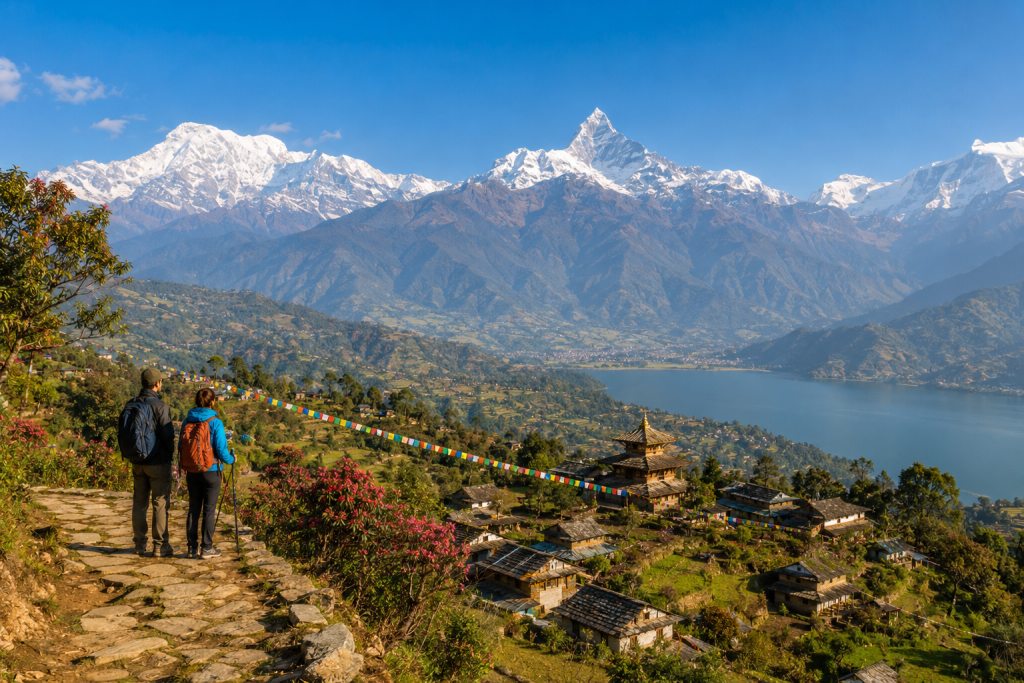
Pokhara often feels like an exhale after Kathmandu. Mornings begin softly beside Phewa Lake. Boats cross the water, paragliders drift above the hills and, when the sky is clear, the Annapurna range appears almost impossibly close.
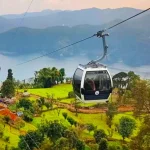
Families can take a life-jacketed boat ride, walk short sections of the lakeside, visit the International Mountain Museum, explore the quieter northern end of the lake and take a sunrise trip to Sarangkot if everyone can tolerate the early start. The cable car offers another way to gain height without a demanding climb.
Waterfalls and caves can be slippery, crowded and poorly guarded in places, so supervise children closely. Adventure activities should be booked only with reputable, properly insured operators that provide child-sized safety equipment and apply clear age, weight and weather restrictions.
See our Pokhara itinerary and activity guide for more ideas.
Chitwan: wildlife, rivers and warm lowland evenings
Chitwan can become the story children tell first when they return home. The landscape is entirely different from the Himalaya: tall grass, riverbanks, sal forest, dusty village lanes and warm evenings filled with insect sound.
A responsible family programme might include a jeep safari, birdwatching, a short canoe trip when conditions are safe, a guided village walk and time by the river. Ask lodges exactly how they manage child safety. Life jackets should fit, vehicles should not be overcrowded, and guides should set realistic expectations around wildlife sightings.
We recommend avoiding elephant-back safaris and entertainment that depends on captive animal performance. Observing wildlife from a respectful distance gives children a far better lesson about conservation.
The Terai can be very hot, and mosquitoes require consistent bite prevention. Read our complete guide to Chitwan National Park before choosing a lodge and season.
Bandipur: a manageable hill-town pause
Bandipur’s old bazaar, traffic-light centre and ridge views make it a pleasant break between Kathmandu and Pokhara. Children can wander more freely than in the capital, and families have time to notice ordinary things: corn drying under eaves, schoolchildren returning home and mist moving through the valley.
There are steep drops and uneven paths around the town, so small children still need close supervision. One or two nights are usually enough.
Lumbini: space, stillness and a global story
Lumbini, revered as the birthplace of Siddhartha Gautama Buddha, offers spacious gardens and monasteries built by Buddhist communities from many countries. Older children may enjoy comparing the architecture and learning how one life story travelled across cultures. The sacred garden asks for quiet behaviour, and distances within the wider monastic zone can be tiring in heat. Bicycles or e-rickshaws make exploration easier.
Can You Trek in Nepal with Children?
Yes, but family trekking should be designed around the child, not around an adult’s bucket list.
A successful family trek is not the one that reaches the highest point. It is the one on which the child remains warm, hydrated, interested and well enough to enjoy the next morning. Lower-altitude routes, short walking days and good accommodation are sensible starting points.
Possible options for active families include short walks around the Kathmandu Valley, gentle village hikes near Pokhara, Australian Camp and Dhampus, or a carefully paced section of a lower Annapurna route. The Poon Hill trek can suit experienced walking families with older children, but it includes long stone staircases, cold mornings and sleeping elevations close to 3,000 metres. It is not an effortless family stroll.
Altitude deserves respect
Children can develop altitude illness just as adults can. The difficulty is that a young child may not clearly describe a headache, nausea or unusual fatigue. Unexplained irritability, poor appetite, disturbed sleep, reduced playfulness or unusual quietness may be clues. The UK’s TravelHealthPro guidance for children stresses that symptoms can be hard to recognise, especially in very young children.
Never push a child upward because accommodation has been booked or the group wants to reach a viewpoint. If symptoms suggest altitude illness, stop ascending, seek qualified medical advice and descend when advised. Severe symptoms are an emergency.
For a family trek:
- Use a licensed, experienced guide who has genuinely led families before.
- Keep daily distances short and include spare days.
- Do not make rapid gains in sleeping altitude.
- Check that every lodge can provide suitable bedding and warmth.
- Carry child-appropriate sun protection, water treatment and a medical kit agreed with a clinician.
- Make sure insurance covers the exact altitude, trekking activity and emergency evacuation for every family member.
- Turn back early when weather, health or morale deteriorates.
Remote high passes, Everest Base Camp and other serious altitude itineraries should never be treated as ordinary family holidays. They require specialist planning, careful acclimatisation and an honest assessment of each child’s maturity and health.
Health Preparation Before You Travel
Arrange a travel-health appointment well before departure, ideally at least six to eight weeks ahead. Recommendations depend on the child’s age, vaccination history, medical conditions, season, trip length and whether you will visit urban, rural, lowland or high-altitude areas.
All travellers should be up to date with routine vaccinations. Nepal-specific advice can change, so use an authoritative source such as TravelHealthPro’s Nepal page and discuss the final decision with a qualified professional. TravelHealthPro identifies a low malaria risk in areas below 1,500 metres, particularly parts of the Terai, while noting no malaria risk in Kathmandu or on typical Himalayan treks. Because infants and young children can be more vulnerable to severe complications, families visiting the Terai should seek personalised advice and use careful mosquito-bite prevention.
Build a sensible family medical kit
Ask your doctor or pharmacist what is appropriate for your children. A typical kit may include:
- Regular prescription medicine in original packaging, plus extra for delays.
- Child-appropriate pain and fever medicine with a measuring syringe.
- Oral rehydration salts.
- Plasters, sterile dressings and antiseptic.
- Thermometer.
- Age-appropriate insect repellent.
- High-factor sunscreen and lip balm.
- Hand sanitiser and disinfecting wipes.
- Any clinician-recommended medicine for allergies, travel sickness or diarrhoea.
Do not guess children’s doses or share adult medication. Carry a written summary of significant medical conditions, allergies and medicines. Store essential medicine in hand luggage, not only in checked bags.
Healthcare and insurance
Kathmandu and Pokhara have private hospitals and clinics, but specialist paediatric care and emergency response become more limited in remote areas. Cash or upfront payment may be requested. Comprehensive travel insurance should include medical treatment, repatriation, cancellation and any planned activities. If trekking, confirm the maximum covered altitude in writing.
Save your insurer’s assistance number, your country’s embassy or consular details, and the contact details of suitable clinics before travelling. Nepal’s general police number is 100 and ambulance services can be reached on 102, but response and availability vary. Your hotel, guide or insurer may be the fastest practical source of help.
Food, Water and Sensitive Stomachs
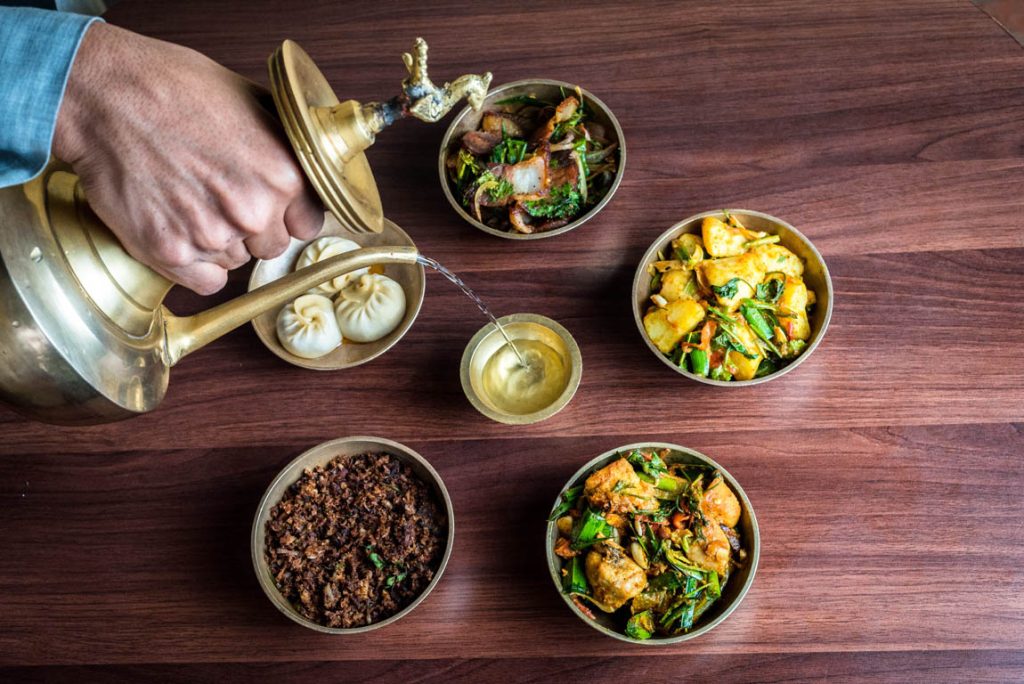
Food is often one of the easiest ways for children to connect with Nepal. Momo are familiar enough to feel safe and different enough to feel exciting. Dal bhat can be served mildly, with rice, lentils and vegetables separated on the plate. Fried rice, noodle soup, roti, eggs, yoghurt, fruit and simple potato dishes are widely available.
Tell restaurant staff clearly if a child cannot tolerate chilli. Saying “not spicy” may still produce more heat than a child expects, so ask for food without chilli and taste it first.
Use sealed bottled water from a reliable source or properly treated water. Check that the seal is intact. Avoid ice unless you trust the water source. Wash or peel fruit, and choose busy restaurants where food is cooked fresh and served hot. Buffets that have sat lukewarm for hours are less reassuring than a simple freshly cooked meal.
Carry familiar snacks for road journeys and trekking days. A hungry child in traffic is not the best moment to begin a family conversation about cultural openness. Familiar food is not a failure. It is a small piece of stability that helps children remain curious about everything else.
If a child develops diarrhoea, preventing dehydration is the first priority. Seek medical advice promptly for a baby or young child, blood in the stool, persistent vomiting, high fever, severe pain, unusual sleepiness, reduced urination or signs of dehydration.
Getting Around Nepal Safely as a Family
Transport is where parents need the most realistic expectations.
Private cars and drivers
For families, a private vehicle with a trusted driver is often worth the additional cost. It gives you control over stops, luggage, motion sickness and tired children. Ask specifically about seat belts. Do not assume every seating position has a functioning belt.
Child car seats are not routinely supplied. If a suitable restraint is essential to your decision, bring your own compatible seat or arrange one in advance with a reputable specialist operator and obtain clear confirmation. Road conditions and driving norms differ significantly from those in the UK, Europe, North America or Australia.
Tourist buses
Tourist buses connect Kathmandu with Pokhara, Chitwan and other popular destinations. They are economical, but journeys are long and toilets are generally available only at scheduled stops. Choose a reputable operator, take snacks and water, keep wipes and spare clothes accessible, and bring any clinician-approved motion-sickness remedy. Our guide to transport in Nepal compares the main options.
Domestic flights
Flights save time but are vulnerable to weather, visibility and operational delays. Keep medicine, one change of clothes and essential child supplies in cabin baggage. Do not schedule a domestic arrival immediately before an international departure. A buffer night in Kathmandu is a wise final investment.
Walking in towns
Footpaths can be uneven, obstructed or absent. Traffic may approach from unexpected directions and pedestrian priority is limited. Hold younger children’s hands, place an adult on the road-facing side and use pedestrian crossings where available without assuming vehicles will stop. A baby carrier is often more practical than a pushchair (stroller).
Taxis and ride-hailing
Hotels can arrange taxis, and app-based services operate in larger cities. Vehicle condition varies. Confirm the destination, fare method and available seat belts before setting off. Children should not ride on motorcycles.
Where to Stay with Children
The best family hotel is not necessarily the grandest. It is the one that solves the small problems before they become large ones.
Before booking, ask:
- Is the family room genuinely large enough for the stated occupancy?
- Are there connecting rooms, cots or extra beds?
- Does the room have reliable heating or air conditioning?
- Is hot water available all day?
- Are windows, balconies and stairways safe for young children?
- Is there backup power?
- Can the kitchen prepare simple food early or late?
- Is the hotel on a quiet lane or beside a noisy road or nightclub?
- How many stairs are involved, and is there a working lift?
- Can the hotel safely store medicine that needs refrigeration?
A courtyard, garden or rooftop with safe barriers gives children somewhere to decompress. Laundry service is more valuable than packing twice as many clothes. In winter, request a heater before arrival. In the Terai, mosquito screens or intact nets matter.
Toilets, Nappies and Everyday Practicalities
Western-style toilets are common in better hotels, restaurants and tourist attractions, but squat toilets remain part of everyday Nepal. Public facilities may lack paper, soap or a dry floor. Keep a small toilet kit with tissue, wipes, hand sanitiser and a sealable bag.
Nappies are available in Kathmandu, Pokhara and larger towns, but preferred brands and sizes may not be. Bring enough for the first days and extra for remote travel. Changing tables are uncommon. A foldable mat makes almost any private, clean surface workable.
Periods should also be planned for. Pads are widely available in towns, while particular tampon or menstrual-cup products may be harder to replace. Pack preferred supplies and sealable disposal bags.
Electricity cuts are less disruptive than they once were but can still occur locally, and remote lodges have limited charging. Carry a power bank, head torch and any required plug adaptor. Nepal generally uses 230V electricity, with sockets that may accept several plug shapes, but fit can be inconsistent.
Culture, Temples and Respectful Family Travel
Nepal gives parents countless opportunities to teach respect without turning every day into a lecture.
Before entering a temple or monastery, look for signs, follow local guidance and remove shoes where required. Walk clockwise around Buddhist stupas and mani walls. Dress with reasonable modesty at sacred places. Ask before photographing people, especially children, monks and worshippers. Never photograph cremations as spectacle.
Teach children not to climb on shrines, ring ritual bells repeatedly for entertainment, point their feet towards sacred objects or touch offerings. At the same time, do not make them frightened of doing something wrong. A gentle question and an observant pause are usually enough.
Some Hindu temple interiors are restricted to Hindus. Accept this without argument. There is still much to observe respectfully from permitted areas.
Nepali people may ask a child’s name, age or school, and may want to take a photograph. Most interactions are warm and curious, but parents can always decline. Teach children that cultural openness never removes their right to personal boundaries.
A few Nepali words children can use
- Namaste: hello, offered with palms together.
- Dhanyabad: thank you.
- Mitho chha: it is delicious.
- Pugyo: enough, useful when someone is generously adding more food.
The attempt matters more than perfect pronunciation.
A Realistic Two-Week Nepal Itinerary with Kids
This itinerary works best for a first visit with school-age children. Families with babies or toddlers may prefer to remove one destination and stay longer in each place.
Days 1 to 4: Kathmandu Valley
Use the first day for sleep, a gentle neighbourhood walk and an early meal. On the following days, visit Boudhanath and Pashupatinath on one side of the city, then Patan or Bhaktapur on a separate day. Keep one afternoon free. A pottery activity, momo-making class or short guided heritage walk can help children engage.
Days 5 to 7: Chitwan
Travel to Chitwan and allow the first afternoon to settle in. Choose one main wildlife activity per half-day rather than filling every hour. Combine a jeep safari or canoe excursion with pool or garden time, an early dinner and sleep.
Days 8 to 11: Pokhara
Travel to Pokhara, then slow down. Take a boat ride, explore the lakeside, visit the mountain museum and choose either Sarangkot or a cable-car viewpoint. Active families can add a gentle day hike. Keep one day completely unplanned in case rain, tiredness or a favourite activity changes the rhythm.
Days 12 to 13: Bandipur or an extra Pokhara day
Bandipur adds a quieter hill-town experience, but it also adds another hotel change. Families who dislike packing should remain in Pokhara. Fewer destinations often create better memories.
Day 14: Return to Kathmandu
Return with a buffer before the international flight. Do not make a long road journey or weather-dependent domestic flight on the same day as your departure from Nepal.
If you want a broader framework, our two-week Nepal itinerary offers more alternatives.
How Much Does a Family Trip to Nepal Cost?
Nepal can be affordable, but family travel has different economics from solo backpacking. A private car, larger room, reliable heating, convenient location and well-run activities are worth budgeting for.
Prices change with season, exchange rates and standards, so treat any online figure as a planning estimate rather than a promise. The largest variables are international flights, accommodation, private transport, internal flights, guides and organised wildlife or adventure activities.
Families can control costs without making the journey harder:
- Stay longer in fewer places.
- Use a good tourist bus on suitable routes and private transport only where it adds real value.
- Book rooms that include breakfast.
- Mix heritage days with free walks, playground time and lakeside afternoons.
- Travel just outside the busiest October and November weeks.
- Use laundry services and pack less.
Do not cut costs on insurance, reputable activity operators, qualified trekking guides, safe vehicles or necessary medical advice.
Family Packing List for Nepal
Pack for layers, not for a single idea of Nepal. Kathmandu may be mild while a hill viewpoint is cold and Chitwan is hot.
Documents and money
- Passports with the required validity and blank pages.
- Visa documents and passport photographs if currently required.
- Travel-insurance policy and emergency contacts.
- Copies of prescriptions and medical information.
- Consent or custody documentation where relevant for a child travelling with one parent or another adult.
- Printed and digital copies of key bookings.
- More than one payment method and some accessible cash.
Clothing and equipment
- Light layers, warm mid-layer and weatherproof outer layer.
- Comfortable, broken-in shoes with grip.
- Sun hats, warm hats and gloves as the itinerary requires.
- Child carrier for babies or toddlers.
- Compact travel towel and reusable water bottles.
- Small daypacks for older children.
- Head torches and power bank.
- Swimming clothes if the accommodation has a pool.
For calm journeys
- Familiar snacks.
- Refillable water bottles.
- Offline games, books, drawing materials and headphones.
- A comfort toy or familiar bedtime item.
- Spare clothes in the day bag.
- Resealable bags for wet or dirty clothing.
Let school-age children carry one small bag, but parents should control passports, medicine and water treatment.
Entry Rules and Visas for Children
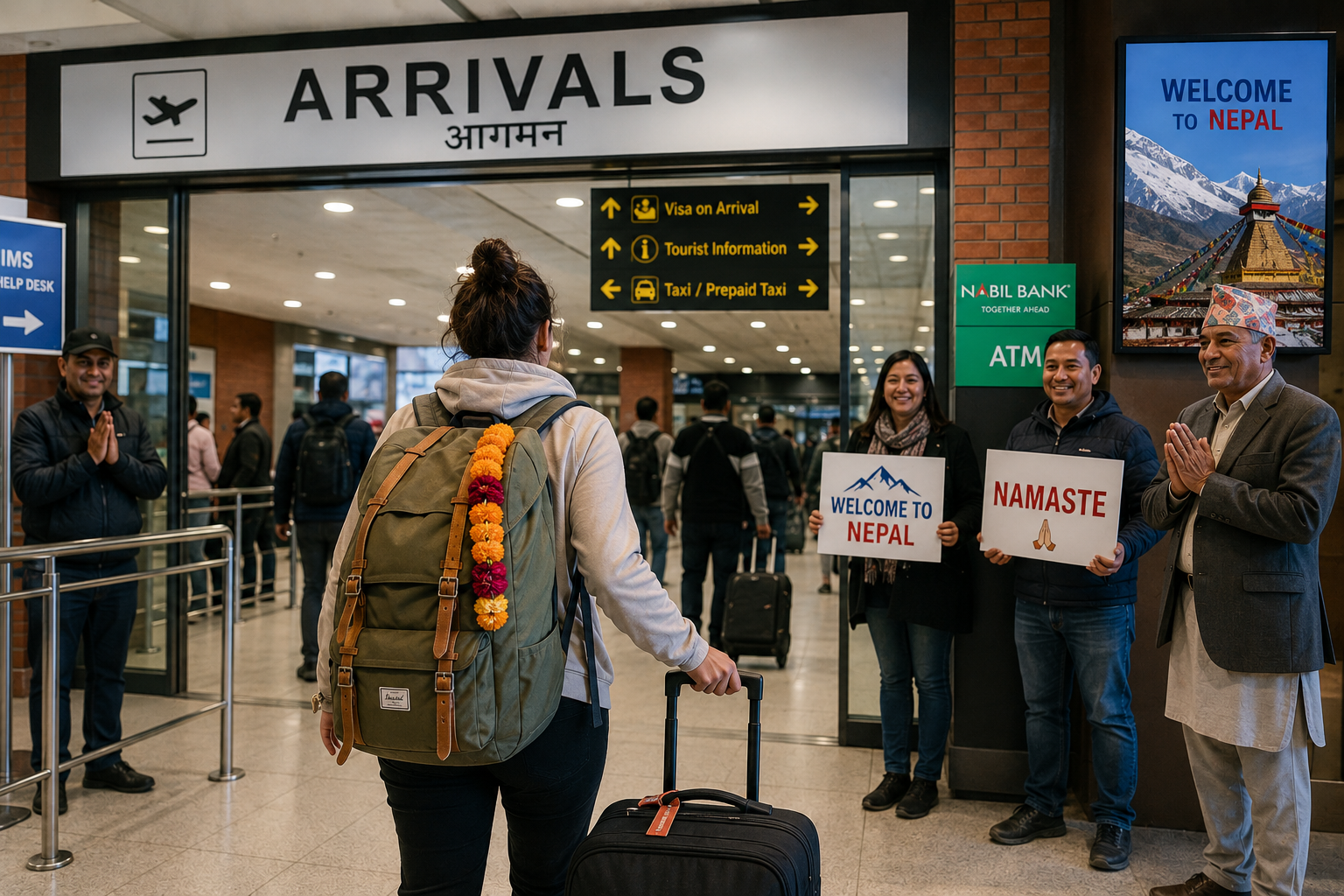
Every child needs their own valid travel document. Many nationalities can obtain a tourist visa on arrival, while rules differ by passport and may change. Nepal’s Department of Immigration currently lists tourist visa fees of US$30 for 15 days, US$50 for 30 days and US$125 for 90 days. It also states that children under ten, except US citizens, may qualify for a gratis visa for up to 30 days. Check the latest rules directly with the Nepal Department of Immigration or the nearest Nepali embassy before travel.
Do not rely on an old blog post for entry requirements. Rules about passport validity, online applications, vaccination certificates and payment processes can change. If one parent is travelling alone with a child, check airline, transit-country and destination requirements for parental consent documentation.
Safety Issues Parents Should Take Seriously
Nepal is often warm and welcoming, and serious crime rates are relatively low. Normal precautions still matter. The UK government’s Nepal safety advice warns about pickpocketing in airports, buses and popular visitor areas, and notes that protests and strikes can begin at short notice and disrupt transport.
- Keep children close in crowds, heritage squares and transport hubs.
- Store passports and excess cash securely.
- Avoid demonstrations and follow local instructions.
- Do not let children approach monkeys, street dogs or other animals.
- Seek prompt medical advice after any animal bite or scratch.
- Use life jackets around rivers and lakes.
- Never leave children unsupervised on balconies, rooftops or beside open water.
- Check current weather, road and trail conditions during monsoon or winter.
- Keep a family meeting point and contact card for each child.
Earthquakes are part of Nepal’s geography. Familiarise yourself with basic “drop, cover and hold on” guidance, identify exits, and keep shoes, a torch and essential items accessible at night. During the monsoon, landslides and flooding can affect roads and trails. Local knowledge matters more than determination.
How to Make Nepal Enjoyable Rather Than Exhausting
The secret is not packing more into the trip. It is creating enough space for Nepal to reach your children naturally.
Plan one important experience each day. Alternate busy cultural days with open outdoor days. Protect sleep. Eat before everyone becomes irritable. Stop for sweet milk tea for the adults and fresh juice or a snack for the children. Return to the same café twice if the staff make your family feel at home.
Let children collect experiences rather than objects. They might keep a notebook of Nepali words, count prayer flags, sketch carved windows, compare momo shapes or record the birds seen in Chitwan. Give them a small daily budget for choosing fruit, postcards or a handmade item.
Most importantly, listen when they have had enough. A missed temple rarely damages a family holiday. An exhausted afternoon forced forward can colour the next two days.
Frequently Asked Questions About Nepal with Kids
Is Nepal safe for children?
Nepal can be a safe and rewarding family destination with sensible preparation. The main practical risks include road travel, gastrointestinal illness, air pollution, altitude, animal contact, uneven walking surfaces and delayed access to care in remote areas. Choose an age-appropriate itinerary and monitor current official travel advice.
Can you take a pushchair (stroller) to Nepal?
You can, especially for airports, hotels and parts of Pokhara, but it will be awkward on many pavements, temple steps and heritage lanes. A sturdy, compact pushchair (stroller) plus a supportive baby carrier gives families the most flexibility.
Is Nepal suitable for toddlers?
Yes, if the route is slow and simple. Focus on one or two bases, use private transport where possible, avoid high altitude, choose safe accommodation and carry familiar food and essential supplies.
Can children eat Nepali food?
Most can find plenty to enjoy. Momo, rice, lentils, roti, eggs, noodles, yoghurt, potatoes and fruit are easy starting points. Ask for no chilli, choose freshly cooked food and use safe drinking water.
Do children need a visa for Nepal?
Children require their own passport and must meet Nepal’s entry rules. Some children under ten may qualify for a gratis tourist visa depending on nationality. Confirm current eligibility and documentation with Nepal’s Department of Immigration before departure.
What is the best family itinerary in Nepal?
For a first two-week trip, Kathmandu Valley, Chitwan and Pokhara form a balanced route. It combines culture, wildlife and mountain scenery without requiring a high-altitude trek. Add Bandipur only if your family handles hotel changes well.
Should families hire a guide?
A good guide can turn carvings, rituals and landscapes into stories children understand. A guide is especially valuable in heritage sites, national parks and on any trek. Check experience, licence, safeguarding awareness and whether they have previously worked with families.
The Family Memories Nepal Gives Back
Parents often begin planning Nepal by asking what might go wrong. Will the children eat? Will the roads be too much? Will they understand the temples? Will everyone become tired?
These are sensible questions. Preparation matters here. Yet somewhere along the way, the practical worries usually make room for smaller, brighter memories.
Your child may remember the grandmother who showed them how to shape a dumpling. They may remember waking before sunrise, wrapped in a jacket, and seeing a white mountain turn pink. They may remember a rhinoceros footprint in wet earth, the sound of monks chanting behind a courtyard wall, or a shopkeeper who patiently taught them to say dhanyabad.
Nepal does not need to be made child-friendly by stripping away everything unfamiliar. Its gift is the unfamiliar, approached slowly and safely. Give your family time. Choose fewer places. Build comfort where it matters. Leave room for curiosity.
Then let Nepal do what it does best: turn an ordinary family day into a story that will be told for years.
Practical information, fees and regulations were checked in July 2026 but can change. Always confirm current entry, health, weather, trekking and safety advice before departure.
Related Posts
Stay Informed With the Latest & Most Important News
Previous Post
Next Post
- Kathmandu Travel Guide: What to See, Where to Stay, Eat and How to Get Around
- From Mustang to the World: Shinta Mani Mustang Named the No. 1 Luxury Hotel on Earth
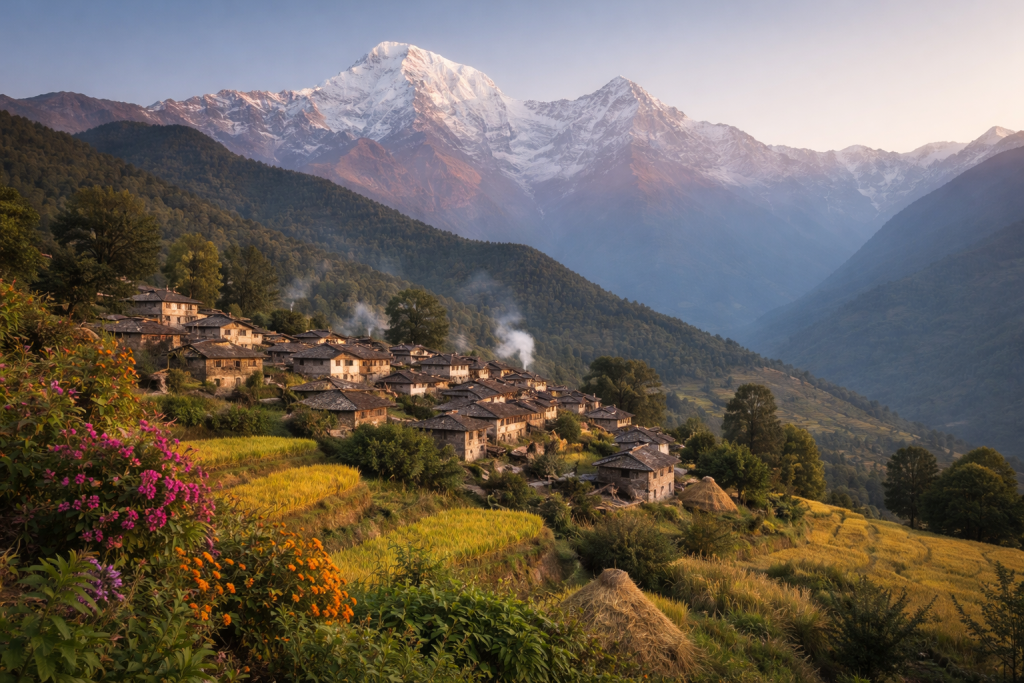
- Best Places to Visit in Nepal: A Complete Region-by-Region Guide for Every Traveller
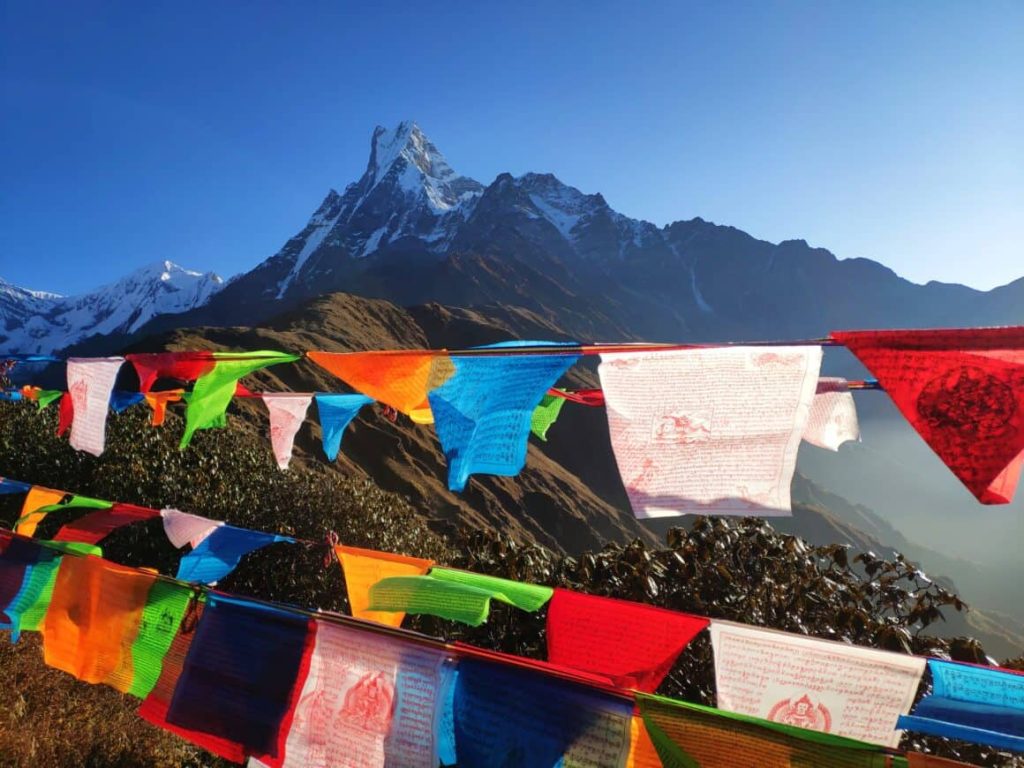
- Trekking in Nepal: The Complete Guide to Choosing and Planning Your Himalayan Trek
- Beyond the Mountains: Why Nepal Could Become One of the World’s Great Food Destinations