Now Reading: Langtang Valley Trek: The Complete Guide to Nepal’s Valley of Glaciers
-
01
Langtang Valley Trek: The Complete Guide to Nepal’s Valley of Glaciers
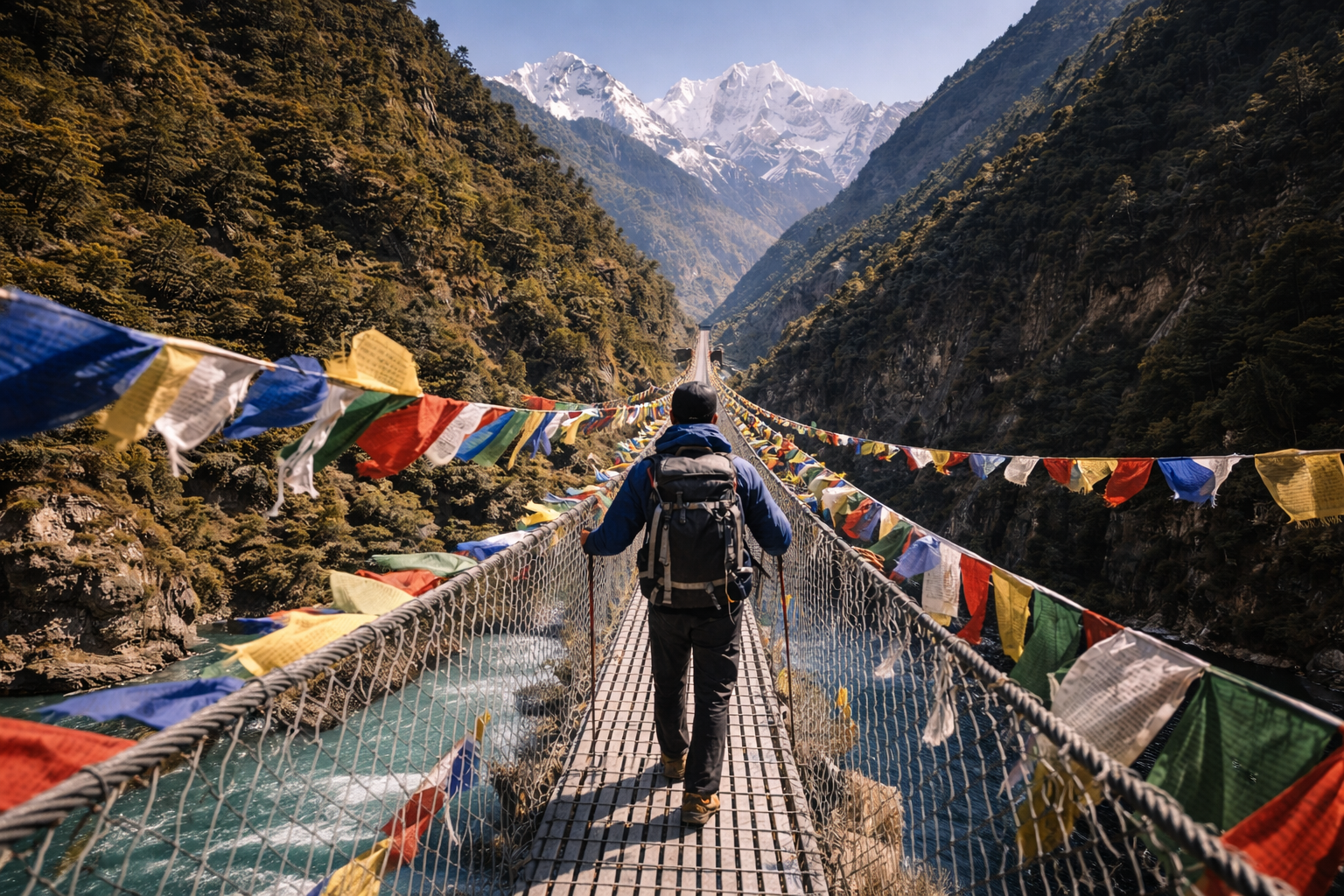

Your complete 2026 guide to the Langtang Valley Trek: 7 to 10 day itinerary, permits under the new rules, altitude advice, and honest costs.
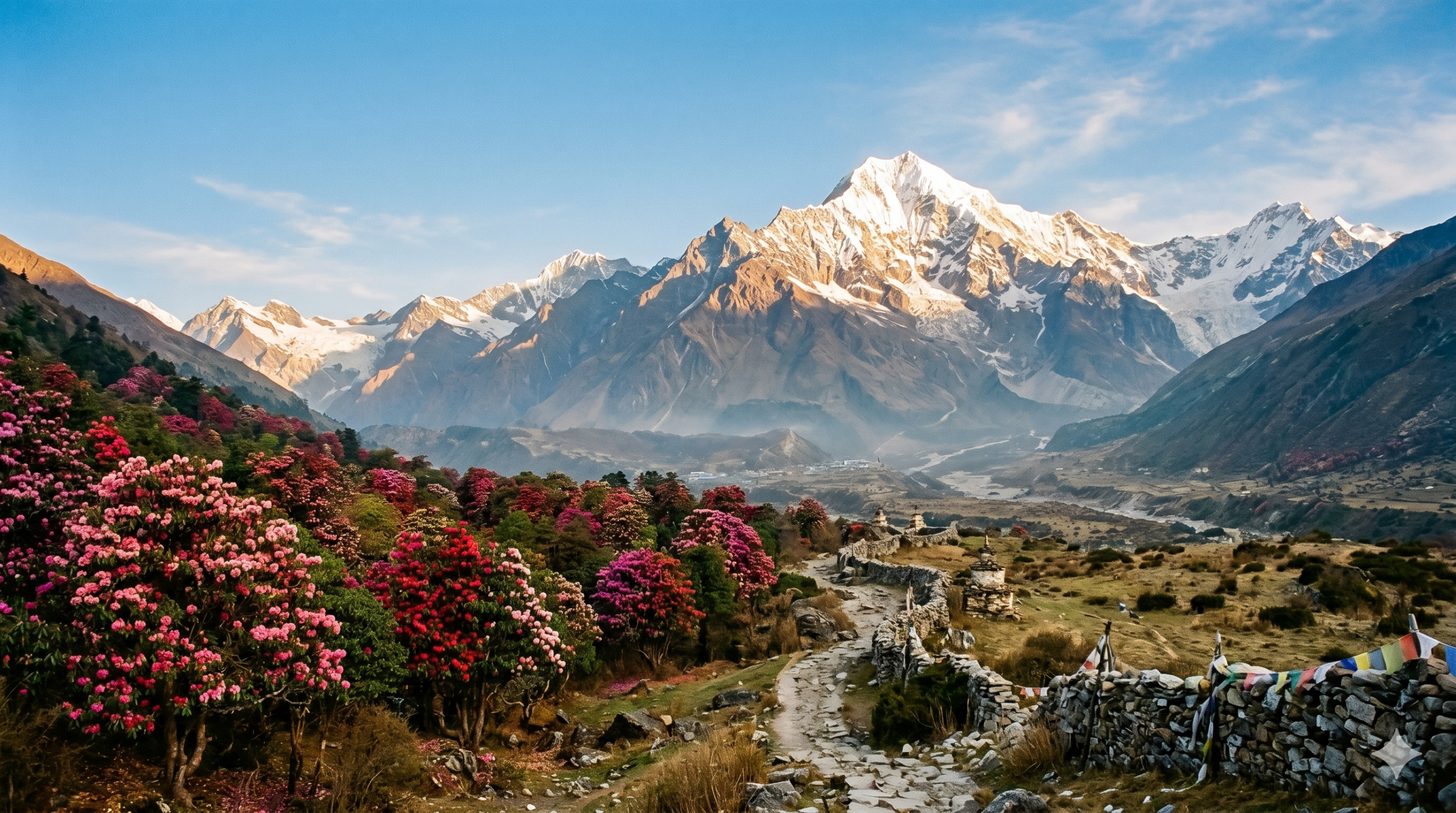
There is a moment on the Langtang trail, somewhere between the rhododendron forests and the first wide glimpse of snow, when you realise this trek is not going to perform for you. It is not the greatest-hits trail with a hundred trekkers filing past every hour. It is quieter, rougher around the edges, still finding its shape after what happened here in 2015. And that is exactly the reason to come.
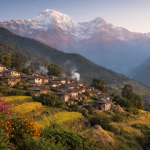
Langtang sits just north of Kathmandu, close enough that you can be on the trail the morning after you land. Yet it feels a world away from the Everest corridor or the Annapurna loops. You get high Himalayan scenery without the altitude punishment of the bigger treks. You walk through villages rebuilt with stone and sweat, past yak pastures where the air smells of juniper smoke. And you finish most evenings with a plate of dal bhat and a quiet valley full of stars.
This is your complete guide to the Langtang Valley Trek in 2026. Permits, route, altitude, costs, difficulty, and the honest stuff about what to expect along the way.
Recommended Read: Langtang National Park: Culture, Forests, and Slow Trekking in Nepal’s Closest Himalayan Sanctuary
Why Langtang, and Why Now
The Langtang region had the worst of the 2015 earthquake. The original Langtang village was buried by a landslide triggered by the tremor, and hundreds of people, locals and trekkers, did not make it out. The valley shut down almost completely for a few seasons.
What has happened since is quiet and remarkable. The Tamang families who call this valley home rebuilt their villages, usually in new locations slightly off the old footprints. Teahouses were constructed from scratch, often with better insulation and cleaner kitchens than what existed before. The monastery at Kyanjin Gompa was restored. And the trails were reopened, walked in, and eventually added back to every trekker’s shortlist.
When you trek here today, you are walking through a landscape that is still writing its next chapter. The permits you pay for, the dal bhat you order, the teahouse beds you fill: all of it feeds directly into a recovery economy that matters. It is not the only reason to come, but it is a good one.
How Langtang Compares to EBC and Annapurna
If you are choosing between Nepal’s major treks, here is the honest short version. Everest Base Camp is iconic and demanding, with real altitude risk and two weeks minimum. The Annapurna Circuit is the variety show, with more landscape diversity than anything else in Nepal but a longer commitment. Langtang is the trek for people who have a week or so to spare, want real high-Himalayan terrain without the altitude danger, and prefer quieter trails. The highest point on the standard route is Kyanjin Gompa at around 3,870 metres, and the optional hike to Kyanjin Ri or Tserko Ri tops out at roughly 4,700 to 5,000 metres. That is significant altitude, but well below the 5,364 metres of EBC.
The Route, Day by Day
Most trekkers do Langtang as a 7 to 10 day loop, with actual trekking days averaging five to seven. The classic itinerary looks something like this.
Day 1: Kathmandu to Syabrubesi
You leave Kathmandu early, usually in a shared jeep or a local bus, and drive seven or eight hours through the hills. The road follows the Trisuli River for a long stretch, then climbs up into Rasuwa district. It is a rough ride, sometimes bumpy enough that you will laugh at your own attempts to read a book, but the scenery shifts beautifully from paddy terraces to cloud forest. You overnight in Syabrubesi at around 1,500 metres.
Day 2: Syabrubesi to Lama Hotel
The first full trekking day takes you through dense woodland along the Langtang River. Bamboo, oak, and rhododendron line the path, and the sound of water is constant. There are monkeys overhead if you are watching. The ascent is steady rather than brutal, and you reach Lama Hotel (around 2,470 metres) in five to six hours. Do not expect an actual hotel. Lama Hotel is a cluster of teahouses with basic rooms.
Day 3: Lama Hotel to Langtang Village
This is the day the valley opens up. The forest thins, the sky widens, and you get your first real views of the peaks. You pass through Ghodatabela, a permit checkpoint, and continue on through the new Langtang village at 3,430 metres. The feel here is different, quieter, the buildings noticeably newer. You are now above the treeline proper.
Day 4: Langtang Village to Kyanjin Gompa
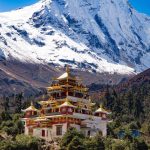
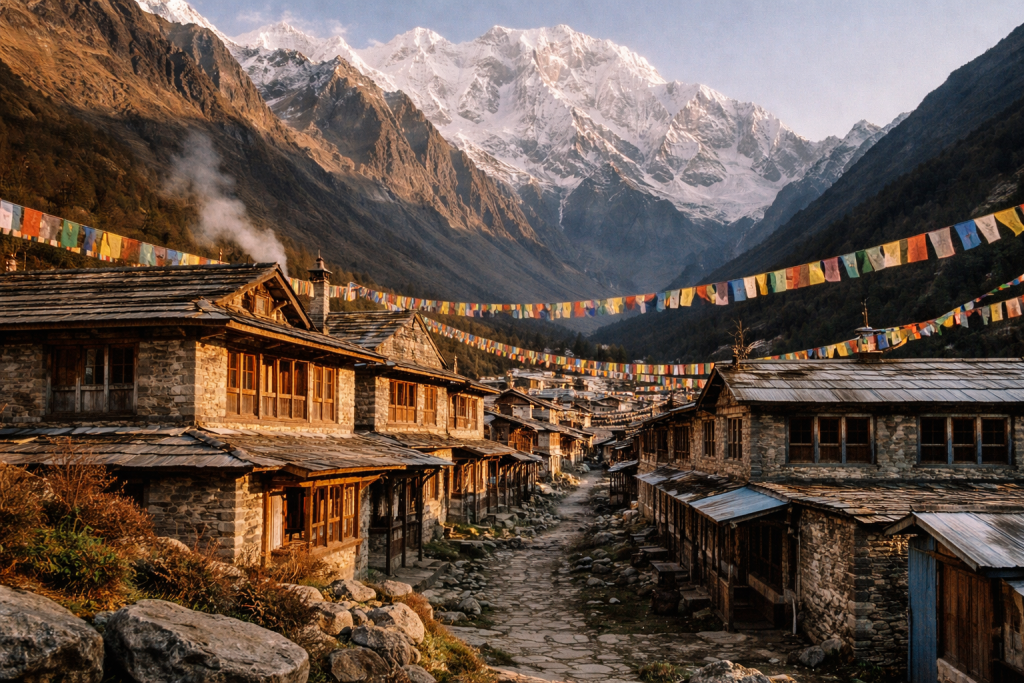
A short walking day, only three or four hours, but the scenery justifies every slow step. The valley widens into a glacial basin, and you pass mani walls, prayer wheels, and yak pastures. Kyanjin Gompa sits at 3,870 metres and has the feel of a mountain hamlet more than a trekking stop. The monastery itself is worth the time, and the local cheese factory has been operating here for decades.
Day 5: Acclimatisation and Side Hikes
You will want a full rest-and-explore day at Kyanjin. Kyanjin Ri, the viewpoint at around 4,750 metres, is the classic morning hike. Tserko Ri pushes higher, around 5,000 metres, and involves a committed seven-hour round trip. Both reward you with a 360-degree wall of peaks: Langtang Lirung, Langtang II, Dorje Lakpa, and the Tibet frontier stretching east. Pace yourself, drink water constantly, and descend for lunch.
Days 6 and 7: Return to Syabrubesi and Kathmandu
You retrace your steps down the valley, usually overnighting at Lama Hotel or Rimche, then continuing back to Syabrubesi the following day. The descent is fast compared to the climb, and there is a different pleasure in walking a trail you now recognise. The bus or jeep back to Kathmandu closes the loop.
Permits and the 2026 Rules
You need two permits for Langtang.
The first is the Langtang National Park Entry Permit, which costs around NPR 3,000 for foreign nationals (roughly USD 22), and a reduced rate for SAARC citizens. The second is the TIMS card, which runs another NPR 2,000 or so. Both are issued by the Nepal Tourism Board in Kathmandu, or you can have a registered trekking agency handle them.
Here is the important change for 2026. Under Nepal’s national trekking rules that came into force in 2025, you cannot trek in Langtang National Park without a licensed guide. This is not negotiable, and it applies to foreign and Nepali trekkers alike. Checkpoints at Dhunche and Ghodatabela will ask for your permits and your guide. If you were planning to do this as a fully independent solo trek, you will need to adjust your plans and budget accordingly.
On the upside, a good guide transforms the trek. They know which teahouse has the best dal bhat, which families are worth stopping with for chiya, and they can read altitude symptoms on your face long before you notice them yourself.
Altitude, Difficulty, and Who This Trek Is For
Langtang is rated as moderate. You are walking five to seven hours most days on varied terrain, with stretches of stone stairs, forest path, and some steep-ish ascents. There is no technical climbing and no high pass on the standard itinerary.
The altitude is the thing to respect. The risk is lower than on EBC or the Thorong La pass, but 3,870 metres at Kyanjin is still high enough to produce headaches, nausea, and broken sleep if you push too hard. The optional hikes to Kyanjin Ri and Tserko Ri take you well into altitude sickness territory. Build in at least one acclimatisation day. Drink far more water than feels necessary. Skip alcohol at altitude. And if you feel genuinely unwell, descending fast is always the right call.
This trek suits you if:
- You have 8 to 10 days in Nepal and want real Himalayan terrain.
- You are moderately fit, able to walk six hours a day with a daypack.
- You want something less crowded than Everest or Annapurna but more substantial than Poon Hill.
- You care about walking through a landscape with a recent, meaningful story.
Accommodation and Food on the Trail
Langtang runs on the teahouse system. Family-run lodges offer simple twin rooms with wooden beds, foam mattresses, heavy blankets, and shared bathrooms. Expect to pay NPR 300 to 800 per night for a room, with the unspoken understanding that you eat your dinner and breakfast at the same teahouse.
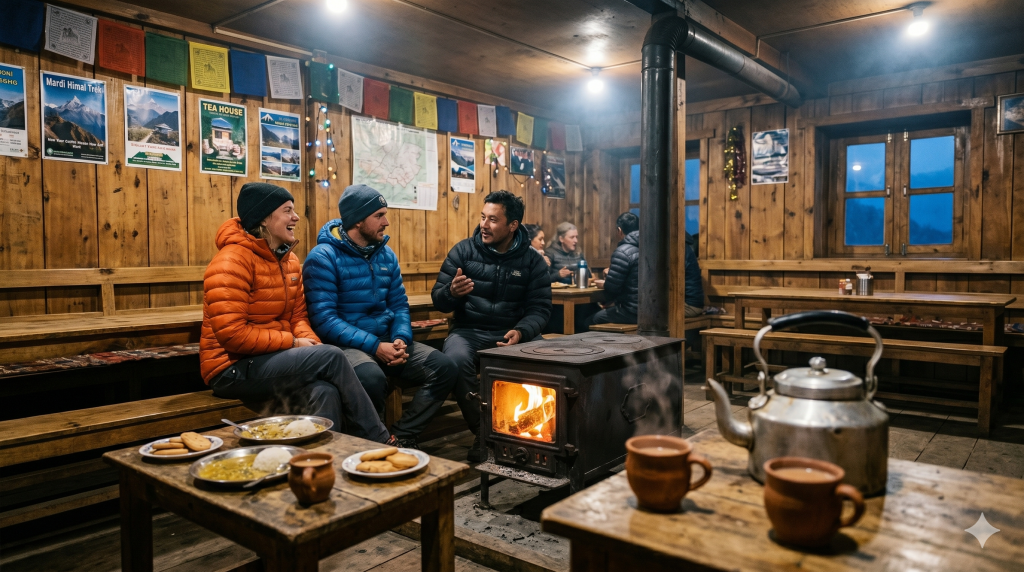
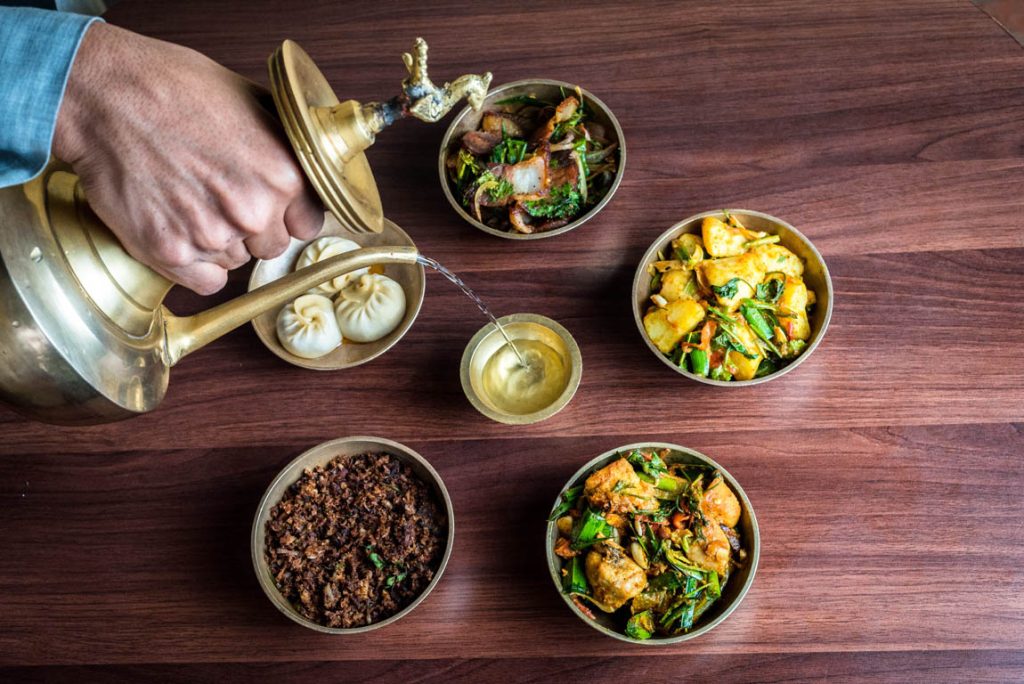
Food prices climb with altitude. A plate of dal bhat at Syabrubesi might be NPR 400. At Kyanjin, it is closer to NPR 700 or 800. This is not a rip-off. Everything has been carried up on the back of a porter or the back of a yak, and the price reflects that. Stick with dal bhat when you can. It is the most energy-dense meal on the menu, and the refills are unlimited. The cheese at Kyanjin, made locally for generations, is worth ordering at least once.
When to Go
The two clear windows are autumn (late September to November) and spring (March to May). Autumn gives you the clearest skies and the firmest views, which is why it draws the biggest numbers. Spring trades some crisp clarity for something else entirely: rhododendron blooms lighting up the forest in pink and red, especially through the lower valley.
Winter (December to February) is possible but cold, with some teahouses closing and trail conditions variable. Monsoon (June to early September) is generally skipped in Langtang, as the road to Syabrubesi is prone to landslides and the views are cloud-bound.
Budget Ranges
As a rough guide for 2026, a Langtang trek arranged through a local Nepali agency with a licensed guide comes in at roughly USD 600 to 900 per person for a standard 7 to 8 day package. This usually includes permits, guide, transport, accommodation, and meals. Adding a porter (highly recommended, both for your knees and for the local employment it supports) runs another USD 15 to 20 per day.
International agencies will charge substantially more for the same service. Booking locally once you are in Kathmandu, either online in advance or in person through a reputable Thamel agency, almost always gets you a better price.
What to Pack
You do not need Everest-grade gear for Langtang, but you do need the right layering. The essentials:
- Moisture-wicking base layers, top and bottom
- Fleece or mid-layer insulation
- A good down jacket for evenings and the higher days
- Waterproof shell, both jacket and trousers
- Broken-in waterproof trekking boots
- Trekking poles, which your knees will thank you for on the descent
- Sleeping bag rated to at least minus 10 Celsius
- Headlamp, sunglasses with proper UV protection, SPF 50 sunscreen
- Water purification, either tablets or a filter
- Small first aid kit with altitude medication if your doctor approves
Most of this you can source in Thamel if you did not pack it at home, though fit and quality vary.
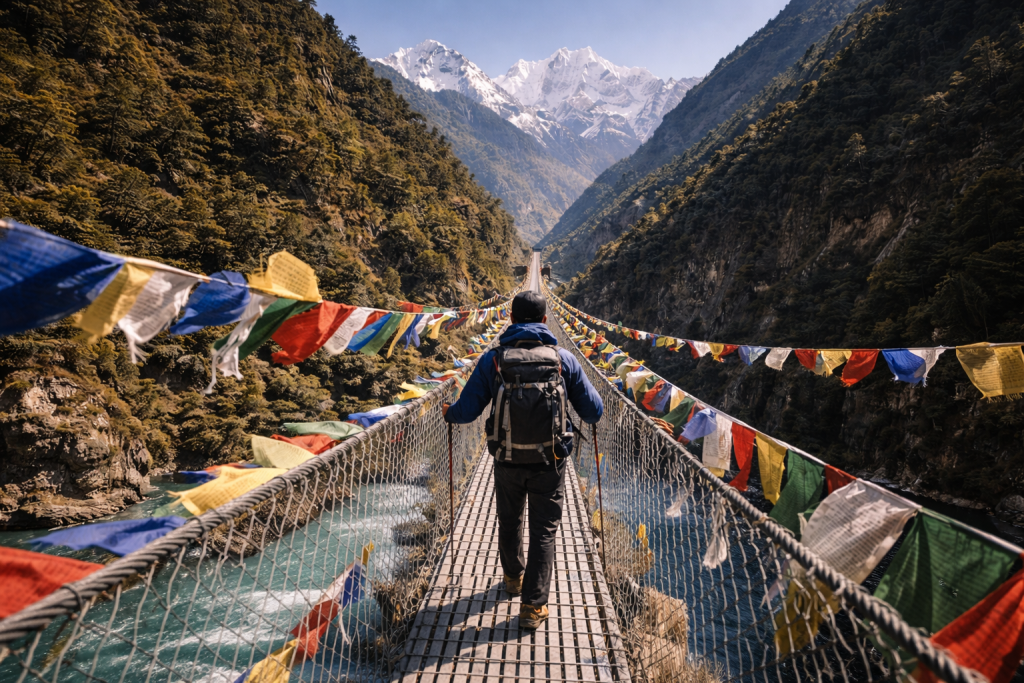
Responsible Trekking in Langtang
This valley is still rebuilding. Every rupee you spend locally, every porter you employ, every teahouse meal you take, matters more here than it does on more established trails. A few simple habits go a long way: refuse single-use plastic bottles and refill from purification instead, pay your porter fairly and insist they are insured, eat where you sleep, and tip honestly.
The Tamang people who run the valley’s teahouses are patient with trekkers, generous with their time, and quietly proud of what they have built back. A small amount of cultural awareness returns the favour. Ask before photographing people, remove your shoes at the monastery, walk clockwise around mani walls and stupas.
Start Planning Your Langtang Trek
Langtang is not Nepal’s most famous trek, and that is precisely its gift. You walk into a valley that has been through a great deal and come out the other side. You finish each day with your muscles tired in a good way, a full plate of food, and a night sky that reminds you how rare genuine darkness has become.
If you have a spare week or ten days, a moderate fitness level, and a pull toward the Himalaya that you have been putting off, Langtang should be the trek that answers the call. Start with the permits, pick a reputable local agency, choose your season, and book your flight. The valley is ready for you.
Related Posts
Stay Informed With the Latest & Most Important News
Previous Post
Next Post
- Kathmandu Travel Guide: What to See, Where to Stay, Eat and How to Get Around
- From Mustang to the World: Shinta Mani Mustang Named the No. 1 Luxury Hotel on Earth
- Best Places to Visit in Nepal: A Complete Region-by-Region Guide for Every Traveller
- Trekking in Nepal: The Complete Guide to Choosing and Planning Your Himalayan Trek
- Beyond the Mountains: Why Nepal Could Become One of the World’s Great Food Destinations