Now Reading: Nepal in the Monsoon: Why June to August is the Season Most Travellers Get Wrong
-
01
Nepal in the Monsoon: Why June to August is the Season Most Travellers Get Wrong

Think Nepal monsoon means mud, leeches, and cancelled plans? Think again. Here is why June to August might be the smartest time to visit Nepal.
Ask most travellers when to visit Nepal and they will give you the same answer almost instantly: October, or maybe March. Clear skies, stable trails, perfect mountain views. It is solid advice, and for good reason. But somewhere along the way, the monsoon months of June through August got written off entirely, lumped in with floods and cancelled flights and ruined trekking plans. That reputation is only partly deserved.
The truth is more interesting. Nepal in the monsoon is lush, affordable, alive with colour, and emptier than you might ever experience it otherwise. If you understand which regions stay accessible, what genuinely becomes risky, and how to prepare for the wet, you will find a version of Nepal that most visitors never see at all.
This guide is for the curious, the flexible, and the travellers who want something more than a postcard. Let us talk about what Nepal in the monsoon actually looks and feels like.
What the Monsoon Actually Feels Like on the Ground
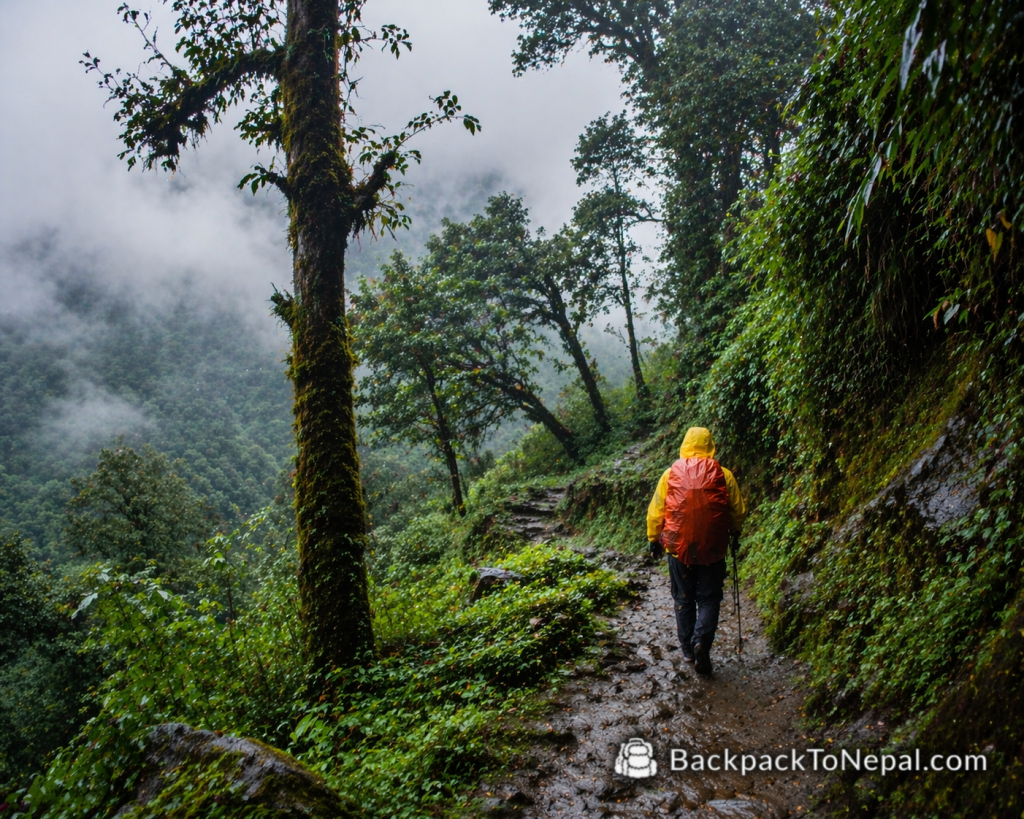
Forget the image of solid grey skies and relentless downpours. Nepal’s monsoon is more theatrical than that. Most days follow a rhythm: mornings are often clear and warm, clouds build through the afternoon, and by mid to late afternoon the rain arrives in earnest. Then it passes. Evenings can be surprisingly pleasant, the air scrubbed clean and cool, the hillsides steaming softly as the light fades.
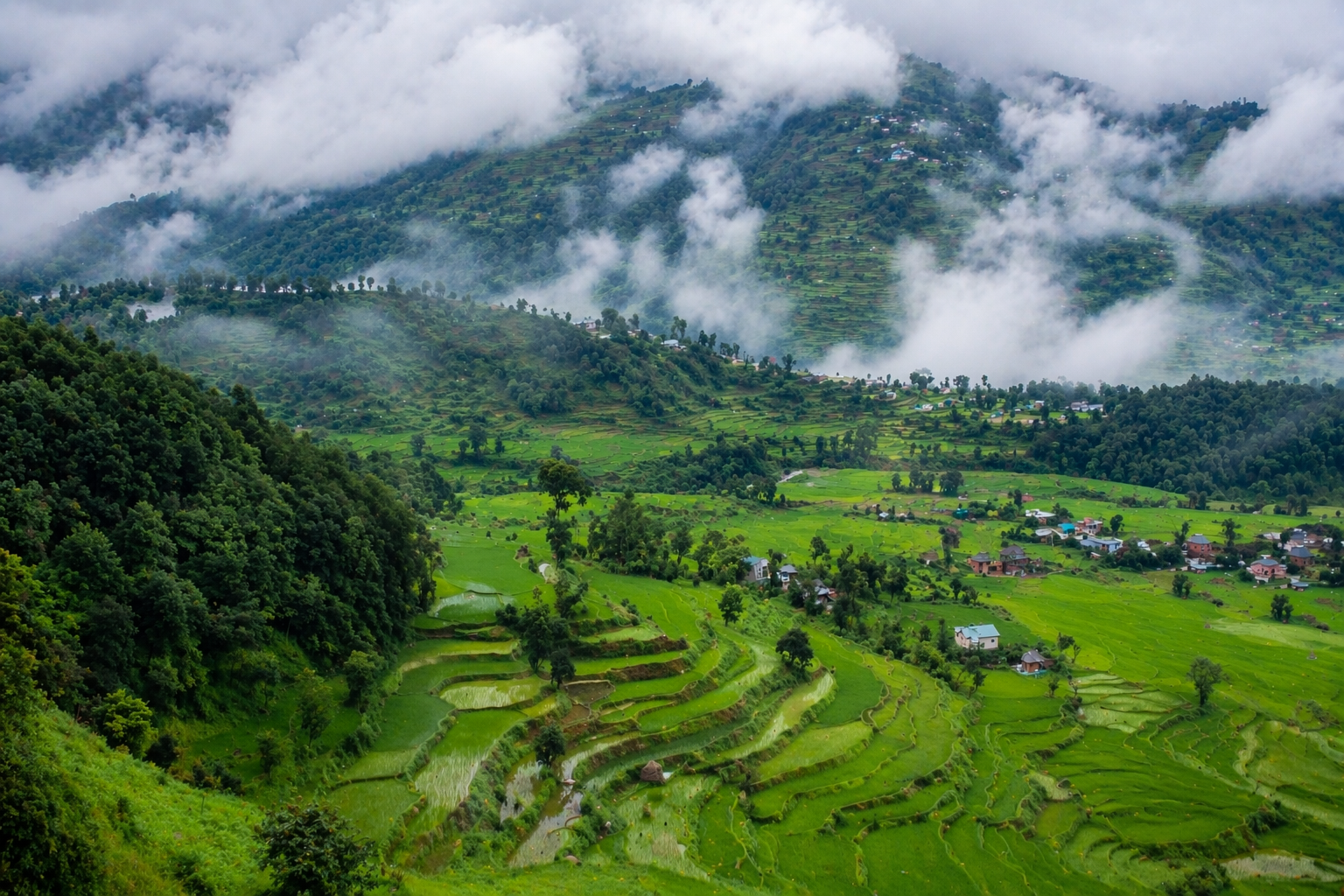
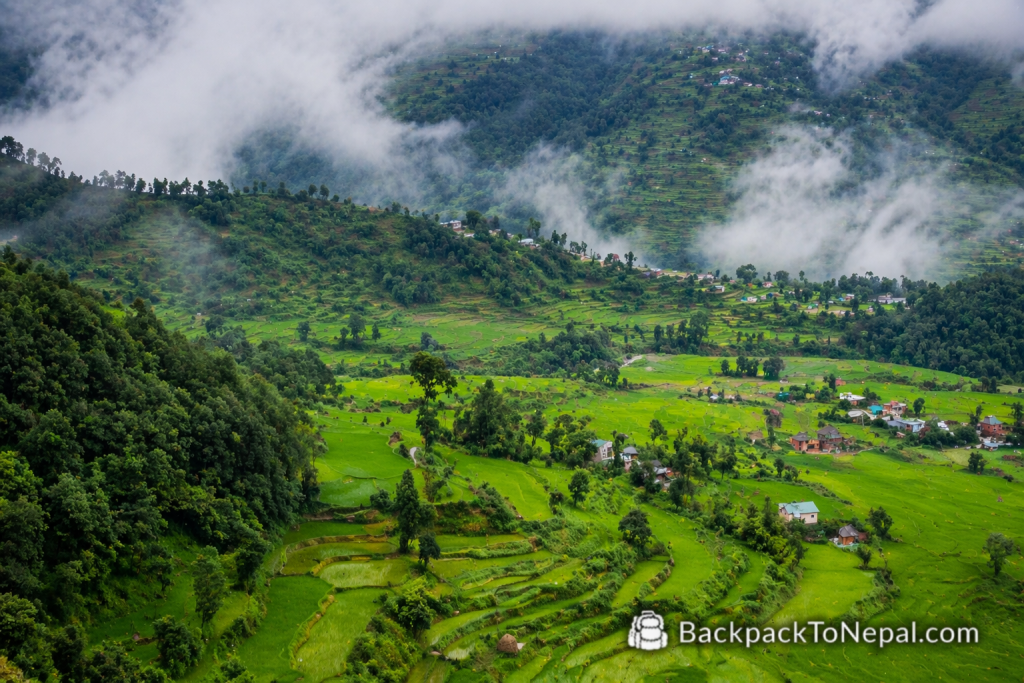
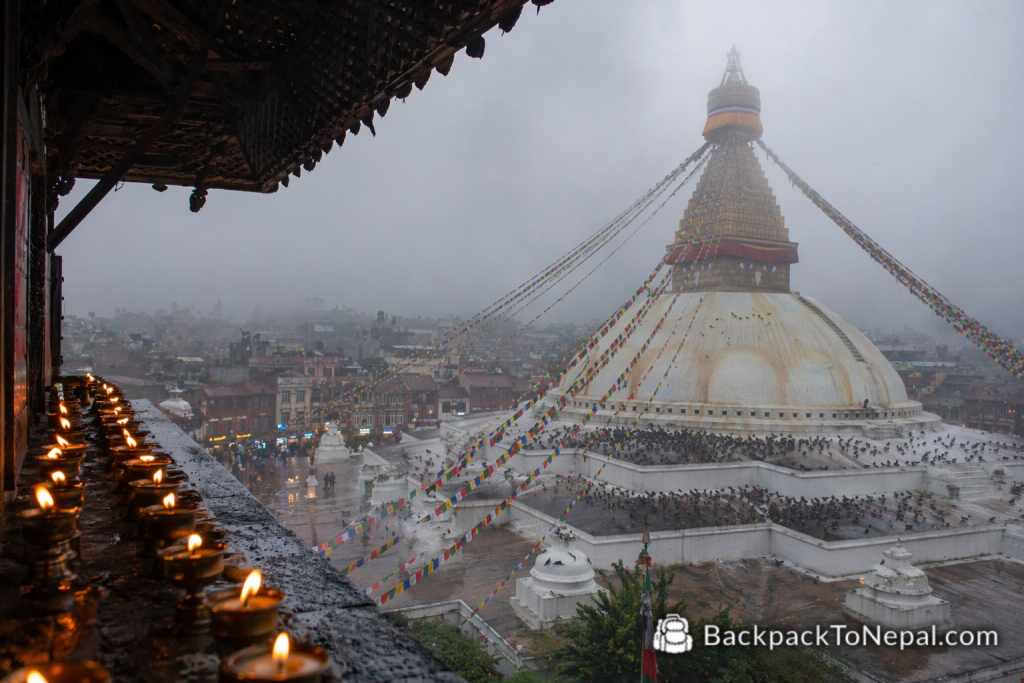
In Kathmandu, the monsoon brings humidity and occasional flooding in low-lying areas, but the city keeps moving. Temples get quieter, the golden pagodas of Durbar Square glisten in the rain, and the streets smell of wet stone and marigolds. In the hills, the transformation is even more striking. Rice paddies that were dry terraces in April become brilliant sheets of green, cascading down the hillsides in tiers that look almost impossibly picturesque. Waterfalls appear on cliff faces where there was nothing before. The forests drip and hum.
What you will notice most is the colour. Nepal in October is beautiful but earthy, dusty, golden. Nepal in July is almost aggressively green, every surface pushing with growth, rivers running white and fast through gorges that were dry trickles in spring.
The Regions That Come Into Their Own in the Rain
Upper Mustang and the Rain-Shadow North
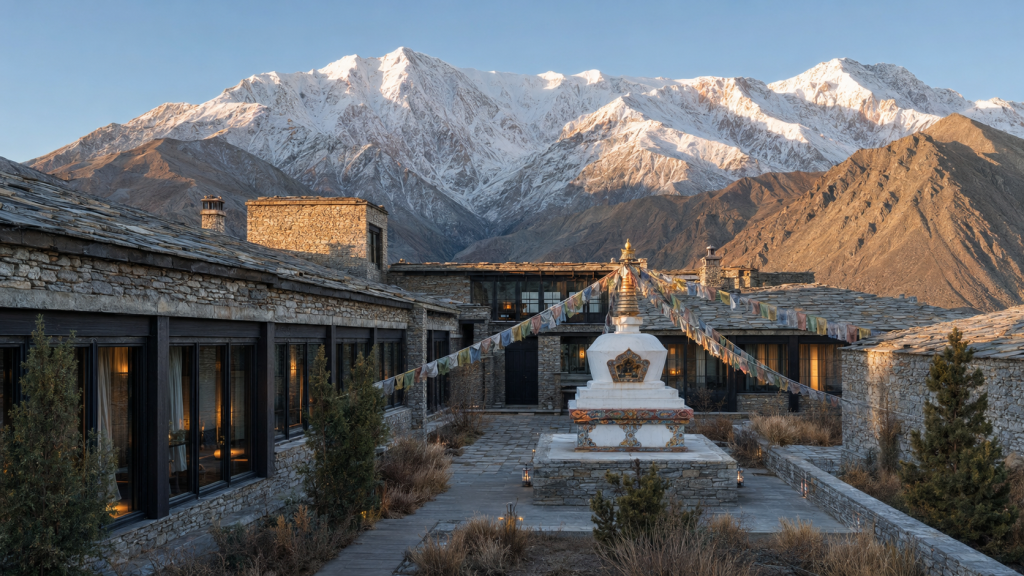
This is the open secret of Nepal monsoon travel. The high desert regions north of the main Himalayan range sit in a meteorological blind spot: the monsoon clouds dump their moisture on the southern slopes and simply cannot cross the mountains in any meaningful volume. Upper Mustang, Dolpo, and the area around Manang all stay remarkably dry while the rest of the country is soaking.
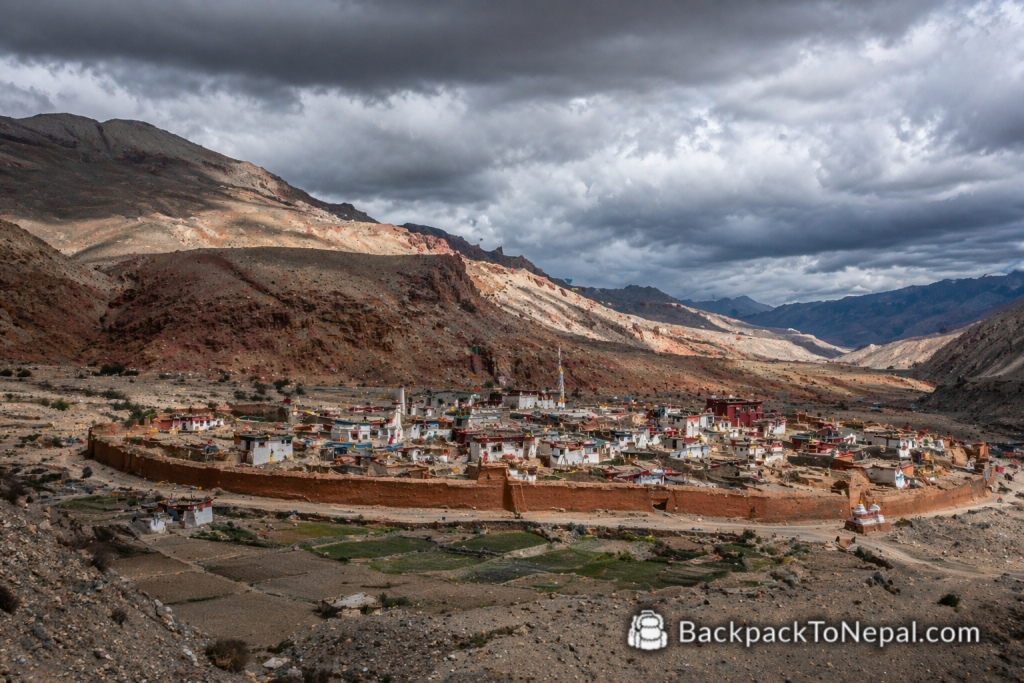
Upper Mustang is the standout. The ancient walled city of Lo Manthang, its whitewashed buildings stacked against ochre cliffs, sits at over 3,700 metres in a landscape that looks more like Tibet than the Nepal most people picture. During June, July, and August, trekkers who might otherwise compete for teahouse beds on the Annapurna Circuit have the trails here almost entirely to themselves. The permit system keeps numbers low year-round, but in monsoon season, the trails feel genuinely remote.
The light in this region during the monsoon is extraordinary. Dramatic clouds build and break over the southern peaks without ever fully arriving, creating constantly shifting shadow and sun across the red rock valleys. Photographers who make it here during the wet season often say it produces their best work.
Bear in mind that Upper Mustang requires a special restricted area permit on top of the standard TIMS card, and access is via Jomsom after a flight from Pokhara. The flight schedule can be disrupted by monsoon weather, so build flexibility into your itinerary.
The Terai: Jungle and Wildlife in Peak Green
Nepal’s lowland Terai is hot and humid in the monsoon, but it has something the trekking zones cannot offer: wildlife watching in genuinely spectacular surroundings. Chitwan National Park and Bardia National Park are both accessible during the monsoon months, and while some operators reduce their schedules, the parks themselves are open and rewarding.
The sal forests turn an almost luminous green. Rivers run high and dramatic. The one-horned rhinoceros, which you can approach on foot or by canoe, goes about its business entirely unbothered by the season. Bardia in particular feels wonderfully wild in the rain, far less visited than Chitwan and home to healthy populations of tigers, elephants, and gharial crocodiles.
If you are combining a wildlife visit with a cultural itinerary, the Terai works well as a base before heading to Lumbini, the birthplace of the Buddha. The pilgrimage site stays open year-round, and in the quieter monsoon months you can wander the sacred garden and the monasteries built by Buddhist nations from around the world with a rare sense of stillness.
Kathmandu’s Cultural Circuit
The capital earns its place on the monsoon itinerary. While the Himalayan views are largely hidden behind cloud, Kathmandu’s riches are not mountain-dependent. The temples of Pashupatinath, the stupa at Boudhanath, the living goddess courtyard at Kumari Ghar in Durbar Square: these are all best experienced without the crowds of peak season pressing in from every direction.
Monsoon also brings some of Nepal’s most spectacular festivals. Indra Jatra falls in late August or September and takes over the streets of Kathmandu with masked dances, chariot processions, and the public appearance of the living Kumari. Gai Jatra, the festival of cows, follows the first full moon after the monsoon begins in earnest and fills the old city with colour and noise. If your dates align, these events alone justify the trip.
Patan and Bhaktapur, Kathmandu Valley’s quieter neighbouring cities, are genuinely wonderful in the rain. The medieval courtyards fill with the sound of falling water, the carved wooden windows and peacock fountains look exactly as they should, and the tourist volume drops to a level where you can actually stop and absorb what you are looking at.
What Becomes Genuinely Difficult and Dangerous
Honesty matters here. The monsoon creates real hazards in certain parts of Nepal, and dismissing them would do you a disservice.
The classic high-altitude trekking routes, particularly the Annapurna Circuit, Everest Base Camp, and the Langtang Valley, become significantly more challenging and in some sections genuinely dangerous. Landslides are the primary concern. The steep hillsides that line these trails are destabilised by weeks of heavy rain, and landslide events can close routes, wash out bridges, and cut off villages for days at a time. Flash flooding in river gorges adds to the risk. Leeches are an unavoidable reality on any low to mid-altitude trail in the rain; they are harmless but relentless and most hikers find them deeply unpleasant.
Mountain flights to Lukla, the gateway to Everest trekking, are frequently cancelled or delayed during the monsoon due to cloud cover. If Everest is your goal, the monsoon months are not the right time.
Road travel between major towns can also be disrupted. The Prithvi Highway between Kathmandu and Pokhara is prone to landslide closures during heavy rain events. If you are road-tripping, check conditions, give yourself buffer days, and consider domestic flights for critical connections.
None of this should scare you off. It should inform your planning. Stick to the right regions, watch the weather, and travel with the flexibility that monsoon Nepal genuinely requires.
Prices, Crowds, and the Practical Upside
The off-season economics are real and significant. Hotel rates in Kathmandu, Pokhara, and tourist hub towns drop by anywhere from 30 to 50 percent compared to peak October. Teahouses on popular trekking routes often drop their prices further still, and negotiating a deal is far easier when they have empty beds to fill.
Domestic flights, guided tours, and rafting operators all tend to offer lower rates in the monsoon window. For budget-conscious travellers or those doing extended trips, this price difference across several weeks adds up quickly.
The crowd reduction is arguably even more valuable. Boudhanath without four tour groups circling simultaneously. The Pokhara lakeside without the main street choked with stalls and noise. Trails where you might walk for an hour without seeing another trekker. If solitude and space matter to you, the monsoon delivers both in abundance.
What to Pack for Wet-Season Nepal
Your kit list needs to shift from the standard Nepal packing guide if you are travelling in the monsoon. These are the essentials that will make the difference between a miserable wet week and a genuinely comfortable adventure.
Waterproof everything: A quality rain jacket with a hood you can actually see out of is non-negotiable. Pack a second, lighter waterproof layer for lower elevations where the temperature stays warm. Waterproof bags or dry sacks for your electronics, passport, and a change of clothes are essential; a wet passport at a remote teahouse is a deeply unpleasant problem.
Footwear: Waterproof trekking boots if you are heading into the hills, and a pair of quick-dry sandals for town days and teahouse evenings. Your boots will get wet regardless; quick-dry socks in a material like merino wool or synthetic will keep you far more comfortable than cotton.
Leech socks: If you are trekking at low to mid altitude, these tight-weave socks that tuck over your trousers are a revelation. Pick up a pair in Kathmandu’s Thamel district before you head out.
Layers not bulk: The monsoon is warm at lower elevations but cold at altitude, especially when wet. Lightweight merino base layers, a fleece mid-layer, and your waterproof shell cover most scenarios without taking up half your pack.
A compact umbrella: Locals use them constantly, and for good reason. In Kathmandu and Pokhara especially, a small umbrella is more practical than constantly pulling on a rain jacket for short city showers.
The Experiences You Can Only Have in the Monsoon
This is what the skip-the-monsoon crowd misses entirely. Some of Nepal’s most memorable moments are locked behind the rainy season door.
The waterfalls along the Pokhara valley become genuinely jaw-dropping. Devi’s Falls, which trickles politely in the dry season, transforms into a roaring chasm of white water that you can feel in your chest. The unnamed falls that appear on cliff faces above the Fewa Lake road are simply not there in October. You will find yourself stopping the taxi and getting out just to stare.
The rice planting and harvest cycle in the Kathmandu Valley and the hill villages turns the landscape into a living painting. Farmers work the flooded paddies in groups, the terraces are bright with new shoots, and the whole countryside smells of wet earth and green growing things. It is one of the most beautiful agricultural scenes you will find anywhere in Asia, and almost no tourists are there to see it.
For birders, the monsoon is prime season. Many resident species are breeding, migratory species pass through, and the lush vegetation pushes activity into the open. Chitwan and Bardia are exceptional, but even the gardens of Kathmandu’s guesthouses produce surprising sightings in June and July.
And then there is the simple pleasure of having Nepal a little bit to yourself. Sitting on a teahouse porch in Bandipur as the rain sweeps across the valley below, drinking tea, watching the clouds come and go over a landscape so green it almost hurts to look at. No crowds. No noise. Just Nepal, doing exactly what it does.
Start Planning Your Monsoon Nepal Trip
The monsoon does not suit every style of travel, and that is fine. But if you are the kind of traveller who values authenticity over convenience, who finds beauty in moody skies as easily as blue ones, who would rather have a teahouse to yourself than queue for a bunk, this season deserves a serious look.
Pair Kathmandu’s cultural circuit with a few days in Upper Mustang for dry-sky trekking. Spend a week in Bardia watching the jungle come alive. Walk the rice terraces of the Kathmandu Valley and let the rain catch you somewhere beautiful. Then tell the October crowd what they are missing.
Nepal in the monsoon is not the consolation prize. For the right traveller, it is the whole point. Start planning, pack your rain jacket, and go find it for yourself.
Related Posts
Stay Informed With the Latest & Most Important News
Previous Post
Next Post
- Kathmandu Travel Guide: What to See, Where to Stay, Eat and How to Get Around
- From Mustang to the World: Shinta Mani Mustang Named the No. 1 Luxury Hotel on Earth
- Best Places to Visit in Nepal: A Complete Region-by-Region Guide for Every Traveller
- Trekking in Nepal: The Complete Guide to Choosing and Planning Your Himalayan Trek
- Beyond the Mountains: Why Nepal Could Become One of the World’s Great Food Destinations