Now Reading: What to Pack for Trekking in Nepal: The Complete Layering System and Gear Guide
-
01
What to Pack for Trekking in Nepal: The Complete Layering System and Gear Guide
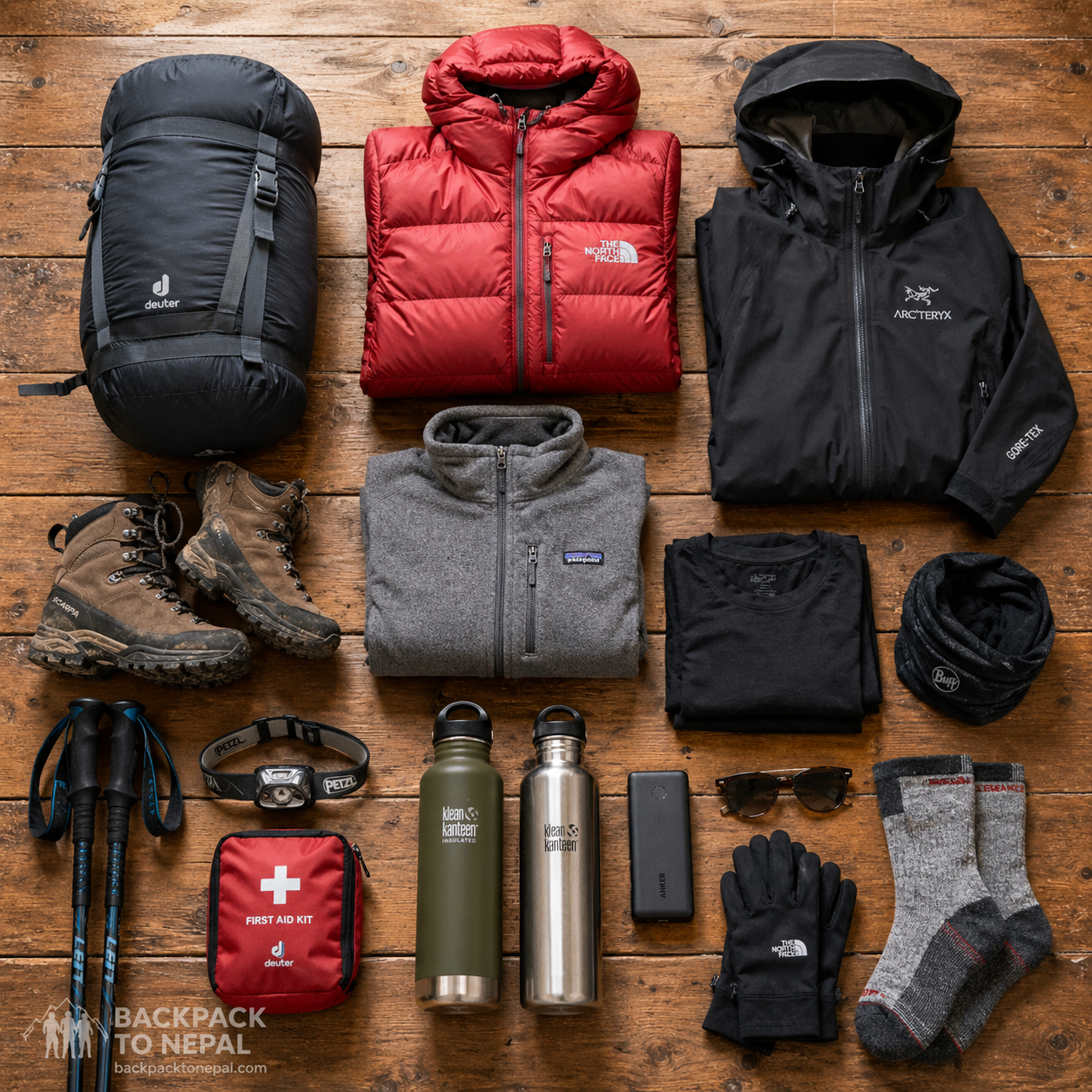

The complete Nepal trekking packing list: layering system, boots, sleeping gear, daypack essentials, and what to buy in Thamel versus bring from home.
Packing for a Nepal trek is the thing most people either overthink or under-think, and both of them cost you. Over-pack and you are hauling unnecessary weight up every stone staircase from Lukla to Kyanjin. Under-pack and you are shivering through a night at 4,000 metres wishing you had listened when someone told you to bring the down jacket.
The goal is a layering system that adapts. Nepal’s trekking routes can have you sweating in a t-shirt at 2,000 metres in the morning and reaching for your puffy by late afternoon at 4,200 metres. You are not packing for one climate. You are packing for a stack of them, and the way you do that is with a system, not a random collection of gear.
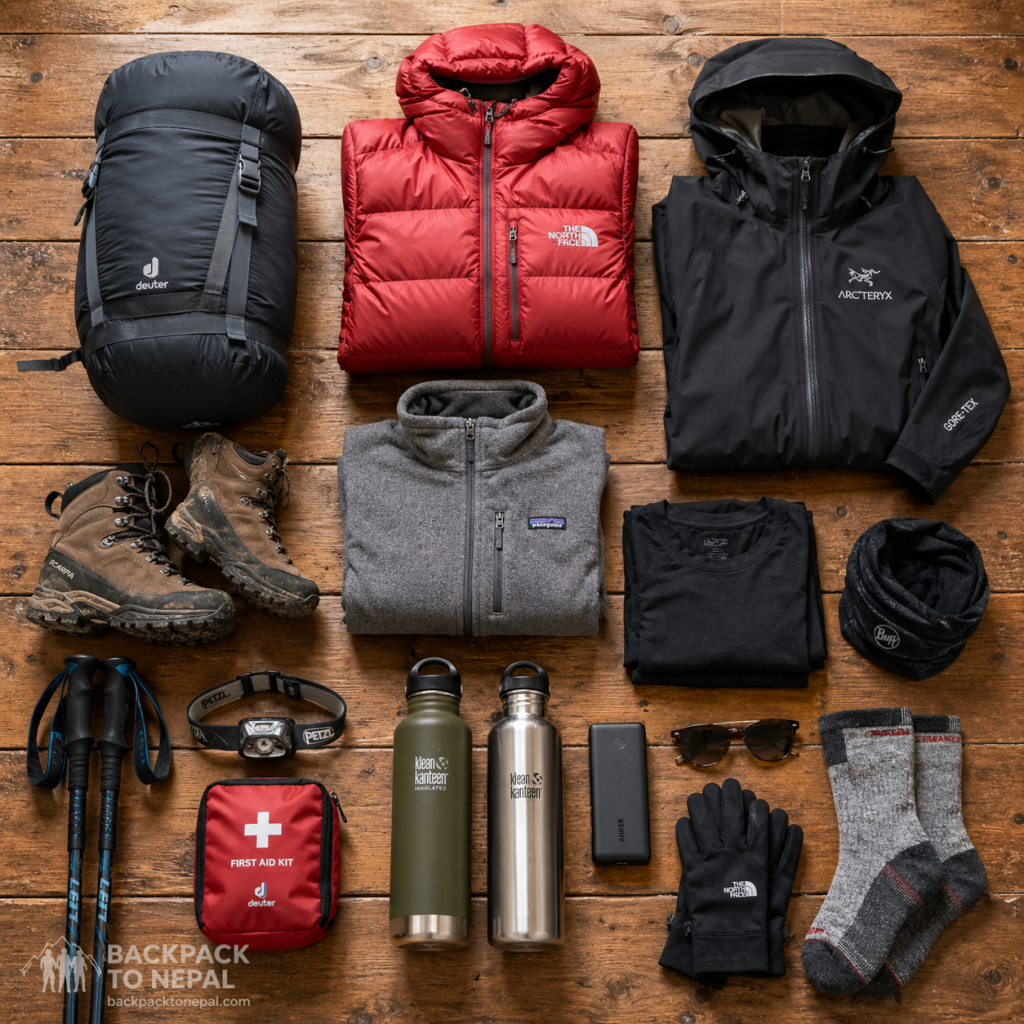
This guide covers the complete layering system, boots and footwear, sleeping gear, daypack essentials, and what you can safely pick up in Thamel if you arrived without it. If you have come from our snacks guide or the Langtang and Annapurna Circuit pages, this is the companion piece that ties it all together.
The Three-Layer Principle
Everything worn on your upper body should fit into one of three jobs: managing sweat, holding warmth, or keeping weather out. That is the layering system in one sentence.
Base Layer: Managing Moisture
Your base layer sits against your skin, and its only job is to pull sweat away from you. When you stop for a break at altitude, a cotton t-shirt becomes a wet, cold blanket. A proper moisture-wicking base layer stays dry and keeps you warm even during rest stops.
The choice is essentially synthetic or merino wool. Merino is naturally odour-resistant, which matters when you will not be doing laundry for eight days. Synthetic dries faster and costs less. Either works. Pack two tops and two pairs of bottoms so you can rotate while one dries overnight.
Mid Layer: Holding Warmth
This is your insulation. For most Nepal treks, a good fleece is the right answer: lighter than a down jacket, more breathable, and warm enough for the walking day itself. A microfleece handles the middle hours, and a heavier fleece is useful if you run cold.
For treks above 4,000 metres, you want a second insulation piece for camp and evenings: a down jacket, or a synthetic-fill alternative if you are travelling in wet conditions. The puffy jacket stays in your pack while you walk and comes out the minute you stop.
Outer Layer: Weather Protection
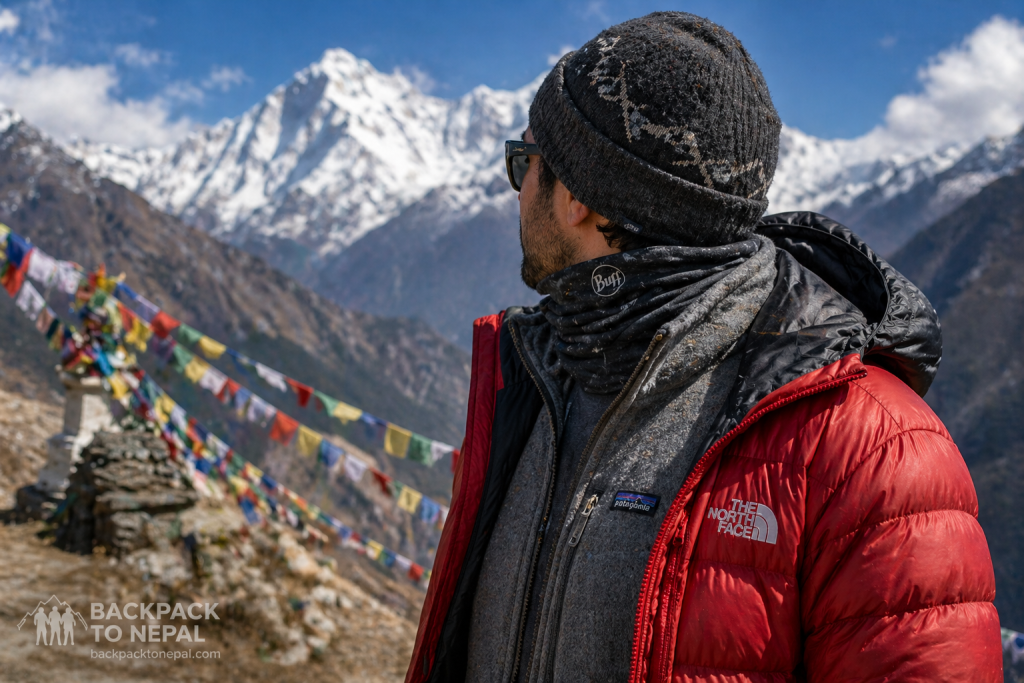
A proper waterproof shell jacket is non-negotiable. Nepal’s spring and autumn trekking seasons both include afternoon showers, and at altitude those can shift into snow flurries. A cheap plastic poncho will fail you the moment the wind picks up. Invest in a proper three-layer waterproof with pit zips, a decent hood, and taped seams.
Waterproof trousers are useful but not always essential. If you are going in a shoulder season like May or October, pack them. If you are going in dry autumn, you can often get away without.
Lower Body
Trekking trousers are your main workhorse. Quick-drying, lightweight, with at least one zipped pocket. Two pairs is usually enough for a week to two weeks on the trail. Zip-off convertibles are an option if you are going to be in warmer lower-altitude stretches. Pack thermal leggings for cold evenings and as a second base layer at higher camps.
Avoid cotton completely. Jeans are the classic mistake. They hold moisture, take forever to dry, and get heavy and cold.
Boots and Footwear
Your boots matter more than almost anything else you will carry. A brand new pair of boots that have not been broken in are a blister machine, and there is no quick fix for trail-born blisters. Buy them months ahead of your trip, wear them on weekend walks and hills at home, and bring the same pair to Nepal.
For most classic treks (Poon Hill, Mardi Himal, Langtang, Annapurna Base Camp), a mid-cut waterproof trekking boot is the right choice. For higher-altitude treks (EBC, Three Passes, Manaslu Circuit, Upper Mustang), a stiffer, more supportive boot is worth the weight. Gore-Tex lining is standard and worth having.
Socks
Bring four to five pairs of proper trekking socks, either merino or synthetic trekking-specific. A liner sock underneath helps prevent blisters by reducing friction. Cotton socks are not acceptable. Change socks daily, wash them when you can, hang them off your pack to dry during the next day’s walk.
Camp Shoes
Something light to put on in the teahouse evenings gives your feet a rest. Lightweight trainers, lightweight down booties, or even Crocs-style sandals with socks will do. You will be grateful for them the moment you peel your boots off after a long day.
Sleeping Gear
Most Nepal teahouse treks provide blankets, but the quality is variable and they are not always warm enough for higher altitudes. A good sleeping bag is worth every gram.
Temperature Ratings
For standard teahouse treks topping out around 4,000 metres, a bag rated to minus 5 Celsius comfort is usually sufficient. For higher treks reaching 5,000 metres or more, you want minus 10 to minus 15 Celsius comfort. Down bags are lighter and more compressible; synthetic bags are cheaper and stay warm if wet. For teahouse trekking, down is the standard choice.
A sleeping bag liner adds another few degrees of warmth and keeps your bag cleaner. A silk or fleece liner folds down to almost nothing in your pack.
Renting in Kathmandu
If you do not want to bring a sleeping bag from home, Thamel is full of rental shops. Expect to pay around USD 1 to 2 per day for a decent bag. Inspect it carefully. Smell it, check the zip, check the fill for clumping. A proper down bag should feel lofty, not flat.
Your Daypack Essentials
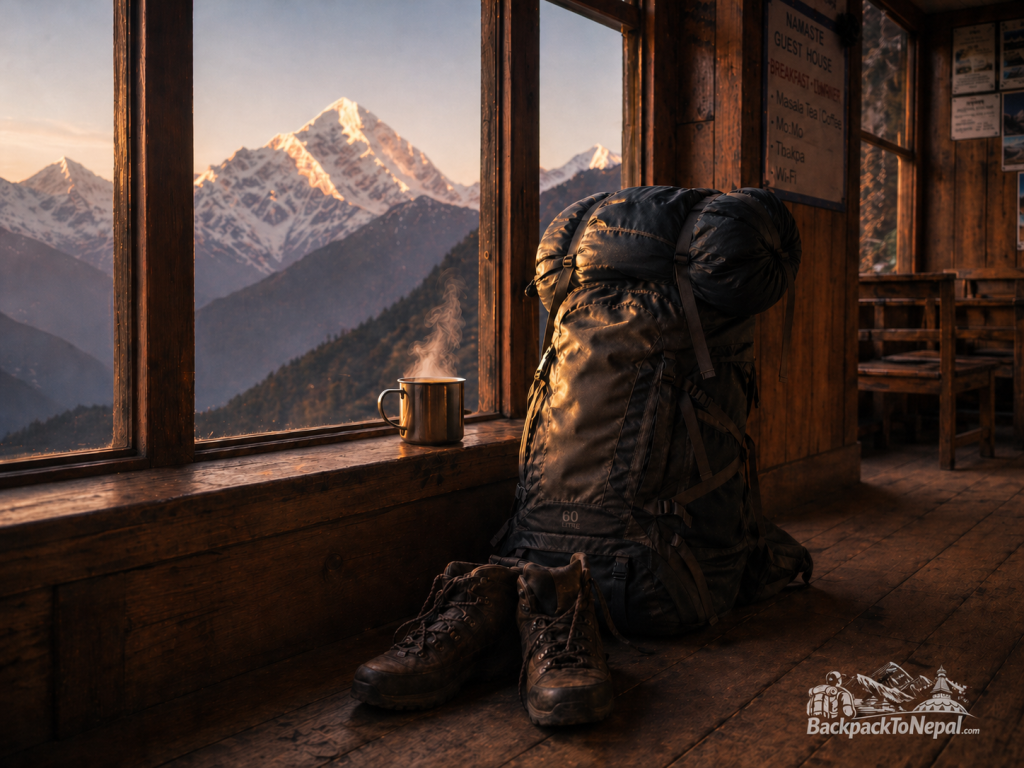
Even if you have a porter carrying your main pack, you need a daypack (20 to 30 litres) with you during every walking day. Weather can change in minutes, and you do not want your porter ahead of you with your jacket while you are caught in rain.
What goes in your daypack every morning:
- Waterproof jacket and rain cover for the pack
- An extra fleece or insulation layer
- Two litres of water, either in bottles or a hydration bladder
- Water purification tablets or filter
- Snacks (see our snacks guide for specifics)
- Sunscreen SPF 50, lip balm with SPF
- Sunglasses with UV protection
- Small first aid kit
- Passport and permits in a waterproof pouch
- Cash in small denominations
- Camera or phone, spare battery
- Toilet paper and a small ziplock for used paper
First Aid and Medication
You do not need a clinic in your pack. You need the essentials to handle the common issues on a Nepal trek.
- Plasters (band-aids) in various sizes, and blister treatment like Compeed
- Tape for preventing blisters on hot spots
- Ibuprofen or paracetamol for headaches and muscle aches
- Rehydration salts (oral rehydration sachets)
- Antidiarrhoeal medication and antibiotics as recommended by your travel doctor
- Altitude sickness medication if your doctor has prescribed it
- Antiseptic wipes
- Tweezers and small scissors
- Any personal medications, with copies of prescriptions
Speak with a travel medicine specialist before your trip about altitude medication, typhoid vaccination, and any region-specific advice.
Electronics and Power
Teahouses at altitude charge for electricity, usually NPR 200 to 500 to charge a phone or camera battery. A proper power bank (10,000 mAh minimum) keeps you independent for a few days.
Bring a universal travel adapter; Nepal uses a mix of Type C, D, and M plugs. A head torch is essential: you will need it for early starts, late-night toilet runs, and any teahouse after lights-out. Pack spare batteries or a rechargeable with a backup.
Solar panels are generally more trouble than they are worth on standard teahouse treks. A good power bank is lighter and more reliable.
Toiletries and Personal Care
Pack small. Decant from big bottles into travel-sized containers. Essentials:
- Toothbrush and small toothpaste
- Biodegradable soap and shampoo in small bottles
- Quick-drying microfibre towel
- Hand sanitiser (multiple small bottles, use constantly)
- Wet wipes for trail-based hygiene
- Deodorant
- Sunscreen SPF 50 (travel size)
- Lip balm with SPF
- Nail clippers
- Any menstrual supplies you might need for the duration
Shower availability drops sharply above 3,000 metres, and hot showers often cost extra. Plan for baby wipes and cold-water rinses for the higher sections.
What You Can Buy in Thamel
If you arrived under-packed, Thamel will sell you almost anything. The caveat is that quality and authenticity vary. The trekking gear market is a mix of genuine export-quality stock, local copies, and everything in between. Here is what is safe to buy on the ground:
- Down jackets: Decent local-brand fill, often excellent value
- Fleeces: Reliable quality, good prices
- Trekking poles: Workable budget options
- Sleeping bag liners: Cheap and plentiful
- Trekking socks: Variable quality, inspect the stitching
- Hats, gloves, buffs: Easy to find
- Water bottles and purification tablets: Widely stocked
What is worth bringing from home: your boots, your proper waterproof shell, your base layers, and any technical gear you trust. The fake-versus-real question is not worth solving on a gear piece that protects you from weather or injury.
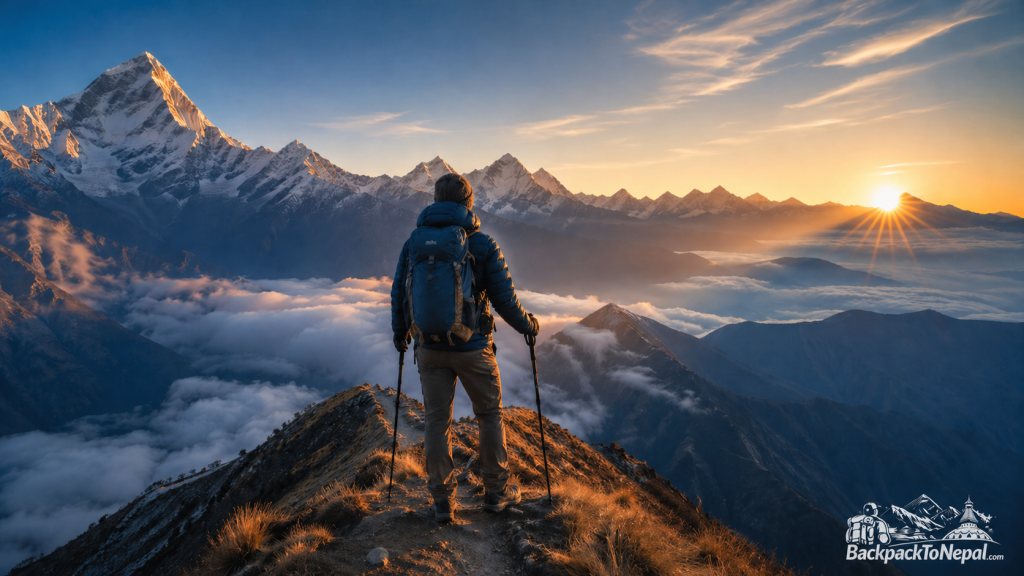
Packing List Summary
For a standard 7 to 14 day Nepal teahouse trek, here is the consolidated list:
- Base layers: 2 tops, 2 bottoms
- Trekking trousers: 2 pairs
- Fleece mid-layer
- Down or synthetic puffy jacket
- Waterproof shell jacket
- Waterproof trousers (seasonal)
- Trekking boots, broken in
- Trekking socks: 4-5 pairs plus liners
- Camp shoes
- Hat (sun), hat (warm), gloves, buff
- Sunglasses with UV protection
- Sleeping bag rated to minus 5 to minus 15 Celsius depending on altitude
- Sleeping bag liner
- Daypack 20-30 litres with rain cover
- Water bottles or hydration bladder, 2 litre capacity
- Water purification
- Head torch with spare batteries
- Power bank 10,000 mAh minimum
- Universal adapter
- First aid kit
- Personal medications
- Toiletries kit (small)
- Wet wipes and hand sanitiser
- Sunscreen SPF 50, lip balm with SPF
- Passport, permits, insurance docs in waterproof pouch
- Cash in small denominations
- Snacks and electrolyte tablets
- Travel insurance with trekking and helicopter evacuation cover
The Last Word on Weight
Every item in your pack should justify its weight. If you are using a porter, the general limit is around 10 to 12 kg; anything you want them to carry should fit inside that. Your own daypack should not exceed 5 to 7 kg, ideally less. Weigh your packed bag at home before you travel and think hard about anything that has not earned its place.
A well-packed trek is a light one. A light trek is a happy one. Start with this list, adjust for your specific route and season, and you will be walking into Nepal prepared rather than punished. The mountains reward the trekker who came ready. Start building your gear list now, test everything before you fly, and set yourself up for the trek you actually want to have.
Related Posts
Stay Informed With the Latest & Most Important News
Previous Post
Next Post
- Kathmandu Travel Guide: What to See, Where to Stay, Eat and How to Get Around
- From Mustang to the World: Shinta Mani Mustang Named the No. 1 Luxury Hotel on Earth
- Best Places to Visit in Nepal: A Complete Region-by-Region Guide for Every Traveller
- Trekking in Nepal: The Complete Guide to Choosing and Planning Your Himalayan Trek
- Beyond the Mountains: Why Nepal Could Become One of the World’s Great Food Destinations