Now Reading: Paragliding in Pokhara: Everything You Need to Know Before You Fly
-
01
Paragliding in Pokhara: Everything You Need to Know Before You Fly

Everything you need to know about paragliding in Pokhara: costs, seasons, operators, safety tips, and how to fit a flight into your Pokhara itinerary.
There is a moment, right after your feet leave the ridge at Sarangkot, when the whole world goes quiet. The huff and bustle of Pokhara vanishes below you. The Annapurna range fills the horizon in a wall of snow-streaked rock. Phewa Lake shimmers like a mirror thousands of feet beneath your boots. And then it hits you: you are actually flying.
Paragliding in Pokhara is one of those bucket-list experiences that genuinely lives up to the hype, which is a rare thing in travel. Whether you have been dreaming about it for years or decided on a whim after watching someone glide overhead from a lakeside cafe, this guide covers everything you need to know before you take the leap.
What the Experience Actually Feels Like
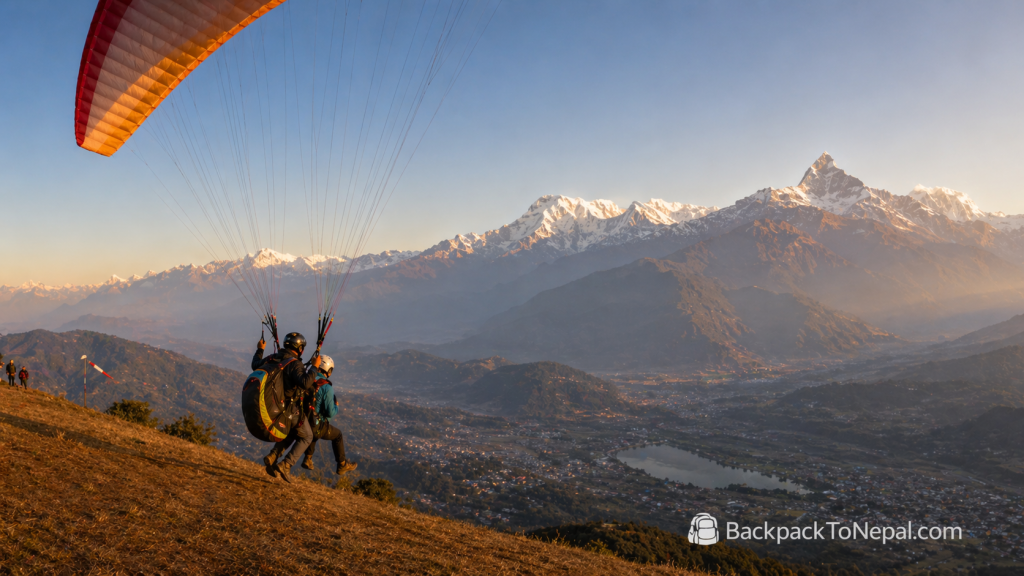
Let’s start with the part no one really tells you: the takeoff is the most intense thirty seconds of the whole flight. You and your pilot will run together down a short grassy slope, and then suddenly, without drama, the ground simply falls away. There is no violent lurch, no stomach-dropping plunge. It feels more like the earth deciding it no longer needs you.
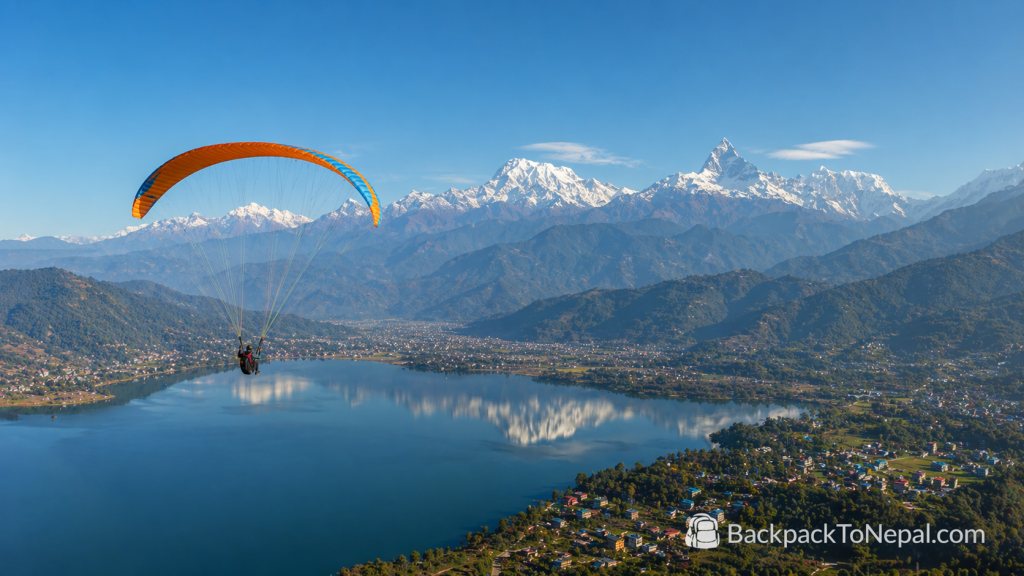
From Sarangkot, the standard launch point sitting at around 1,600 metres above sea level, you rise quickly on thermal currents. Your pilot will guide you through gentle turns, banking the glider to catch rising air and keep you aloft longer. On a good day, you can stay up for 30 to 45 minutes, drifting south over terraced hillsides, rice paddies, and the sprawling lakeside strip before touching down at the landing field near Pardi, just a short walk from Phewa Lake.
The views are the main event. Machhapuchhre, the fishtail mountain, seems close enough to touch. On a clear morning, you can spot Annapurna South, Hiunchuli, and Dhaulagiri stretching across the horizon. Below, the red and ochre rooftops of Pokhara’s Old Bazaar cluster along the lakeshore. It is cinematic in a way that photographs never quite capture.
Most people expect to feel terrified and instead feel completely calm. The harness holds you snugly in a seated position, almost like a hammock, so there is no sense of dangling or falling. The air up there is cool and clean, carrying the faint smell of pine from the forests below. If your pilot is chatty, you will swap life stories over the Himalayas. If you prefer silence, most will read the cue and let you soak it in.
Tandem vs Solo: Which Option Is Right for You?
For the vast majority of visitors, tandem paragliding is the only realistic option, and honestly, it is the right call. You fly with a certified pilot who handles all the controls, reads the thermals, and lands the glider. Your only job is to run on takeoff, sit back, and enjoy the ride. No prior experience is needed whatsoever.
Solo paragliding in Pokhara requires a proper licence, which means completing a certified training course spanning at least five to seven days of ground school and progressive flights. A handful of schools in Pokhara, including the well-regarded Pokhara Paragliding School, offer this training, but it is a serious commitment of time, money, and effort. If you are thinking about pursuing paragliding as a hobby, Pokhara is actually a brilliant place to learn: the conditions are forgiving for beginners and the instructors are world-class. Just do not expect to go solo on a single holiday afternoon.
For tandem flights, some operators also offer an acrobatic upgrade. This involves your pilot executing spirals, wingovers, and loops over the lake. It is not for the faint-hearted, and you should be honest with yourself about your stomach before saying yes. The standard scenic flight is thrilling enough for most people.
The Best Seasons to Fly and Why
Pokhara’s paragliding calendar has two sweet spots, and choosing the right one will make a real difference to your experience.
October to December: The Post-Monsoon Window
This is widely considered the best time to fly. The monsoon washes the atmosphere clean, leaving visibility that can stretch for over 200 kilometres on a good day. The skies are a deep, cloudless blue, thermals are strong and consistent, and the Annapurna range is draped in fresh snow. October in particular is magical: the air is warm enough to be comfortable, the crowds have not yet peaked, and the light in the morning has that amber, just-washed quality that makes everything look like a painting.
February to May: The Spring Season
Spring brings its own rewards. Rhododendrons are in bloom across the hillsides, temperatures are pleasant, and pilots often catch longer flights on the building thermals of pre-monsoon afternoons. Visibility is slightly hazier than autumn due to dust and haze building up before the rains, but flights are still spectacular. April and May can get busy, especially around the Annapurna trekking season, so book your slot a day in advance if you can.
When to Avoid
The monsoon months, June through September, make flying unreliable and frequently impossible. Rain, low cloud, and unpredictable winds ground most operators for days at a time. If you find yourself in Pokhara during the wet season, keep your expectations flexible and check conditions daily rather than booking in advance.
How Much Does Paragliding in Pokhara Cost in 2026?
Pricing has settled into a fairly predictable range, though you will find variation depending on the operator, the flight type, and what extras you add.
A standard 30-minute tandem scenic flight typically costs between USD 80 and USD 110. Most reputable operators price at the upper end of that range and include a GoPro video of your flight, which is genuinely worth having as a souvenir. If your pilot is using older equipment or quoting significantly below that range, treat it as a flag worth investigating.
Acrobatic flights with loops and spirals sit higher, usually USD 120 to USD 150. Extended flights of 45 minutes to an hour, where pilots chase thermals to stay aloft longer, can reach USD 150 to USD 180.
Transport to Sarangkot and back to Lakeside is generally included in the package price. Always confirm this before booking so you are not surprised by a taxi charge at the top of the hill.
Bargaining hard on price is not something we would encourage here. Paragliding is an activity where you genuinely want the operator to have the budget to maintain their equipment properly and pay their pilots well. The difference between the cheapest and the best is often just USD 20 to 30, and that delta is worth it.
Choosing a Reputable Operator
Pokhara has dozens of paragliding companies, and quality varies. Here is what to look for when choosing yours.
PPAGC accreditation is your first filter. The Pokhara Paragliding Association of Gear and Certified Pilots sets minimum safety standards for equipment and pilot certification. Any operator worth your business should be able to show their current membership without hesitation.
Among the consistently well-reviewed operators in 2026, Sunrise Paragliding, Blue Sky Paragliding, and Temple Tiger Paragliding regularly appear at the top of traveller feedback for professionalism, equipment condition, and pilot communication. Booking directly through their offices or verified websites is better than going through a third-party tour desk, which adds a commission layer and sometimes obscures which actual company is flying you.
Ask to see your pilot’s licence before you walk to the launch point. Any experienced professional will hand it over without a second thought. Also ask how recently the harness and glider were inspected. The answer you want is “within the last three months.”
What to Wear (and What to Leave Behind)
You do not need specialist gear. What you wear on a normal active sightseeing day in Pokhara will work fine, with a few adjustments.
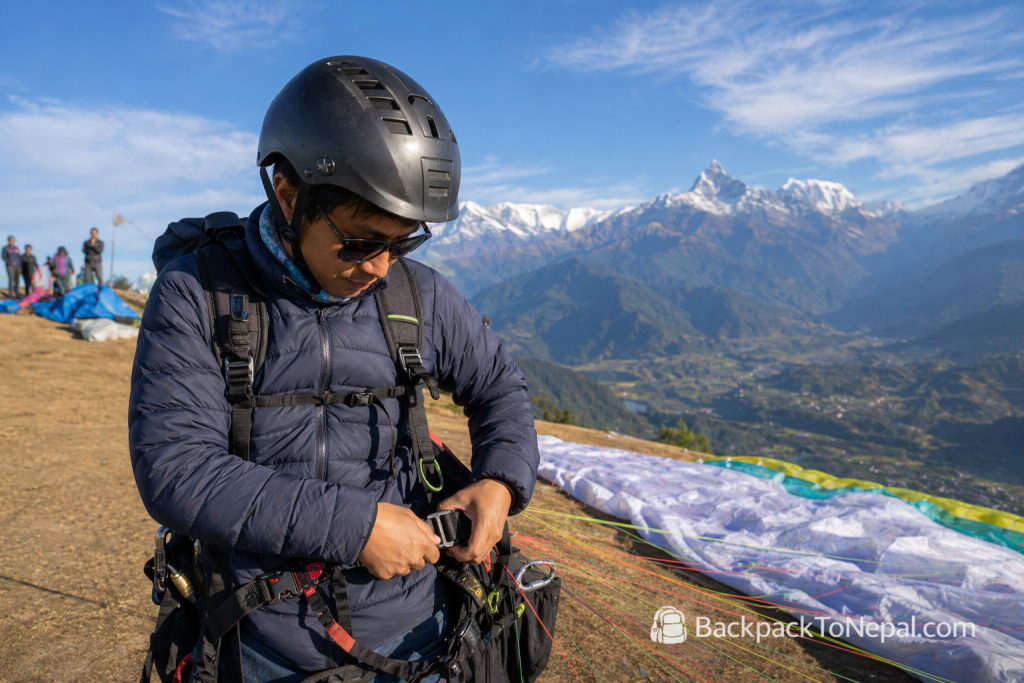
Layers are your friend. Ground temperatures at Sarangkot in the morning can be noticeably cooler than at the lakeside, and at altitude the wind chill adds another layer of cold. A light fleece or softshell jacket over a base layer is usually enough. Your operator will often have a spare jacket you can borrow if you forget yours, but do not count on this.
Wear closed-toe shoes, ideally something with a decent sole. You will need to run a few steps on takeoff and walk across uneven ground. Sandals and flip-flops are a bad idea. Trainers or light hiking shoes are ideal.
Sunglasses are essential. The glare at altitude is intense, especially if you are flying toward the snow peaks in the morning light. Bring sunscreen too; it is easy to underestimate UV exposure when you are that high up and having a wonderful time.
Leave bulky items and large bags at your hotel. Your operator will usually store a small daypack at the landing zone, but you do not want loose items flying around at 1,500 metres. Pockets with zips are better than open pockets for your phone and wallet.
Safety Questions to Ask Your Pilot
Good pilots welcome safety questions. Here are a few worth asking before you leave the ground:
- How long have you been flying tandem here? Look for pilots with several years of experience on the Sarangkot route specifically, not just total hours elsewhere.
- When was this glider last inspected? Equipment should be checked and certified regularly.
- What happens if conditions change mid-flight? A confident, clear answer here is reassuring. Your pilot should have a plan for reading and responding to shifting thermals.
- Is there a weight limit? Most operators set a limit of around 100 to 110 kg for tandem flights. Some can accommodate heavier passengers with specialist equipment; ask in advance rather than at the launch point.
- What is the communication plan during the flight? Your pilot should brief you clearly on any cues or instructions before takeoff.
If a pilot seems dismissive of questions or hurried, take that seriously. The best pilots treat a five-minute safety conversation as part of the experience, not an obstacle to it.
Combining Paragliding with a Broader Pokhara Itinerary
Flights typically launch in the morning, between roughly 8am and 11am, when thermals are building and the air is clearest. This means you can be back at Lakeside by late morning with the rest of your day wide open.
Consider pairing your flight day with a boat ride on Phewa Lake in the afternoon: hire a wooden rowboat and drift out to the Tal Barahi Temple on its small island for a quiet, contemplative contrast to the high-altitude rush of the morning. Sunset from the lake, with the Annapurna peaks turning pink in the fading light, is one of Pokhara’s great free pleasures.
The day before your flight is a good day for the World Peace Pagoda hike, a steady 45-minute climb through forest to the white stupa perched above the southern lake. You will get a clear sense of the terrain you will be flying over, and you can scout Sarangkot from below, which makes the whole launch feel more grounded when you are standing at the top.
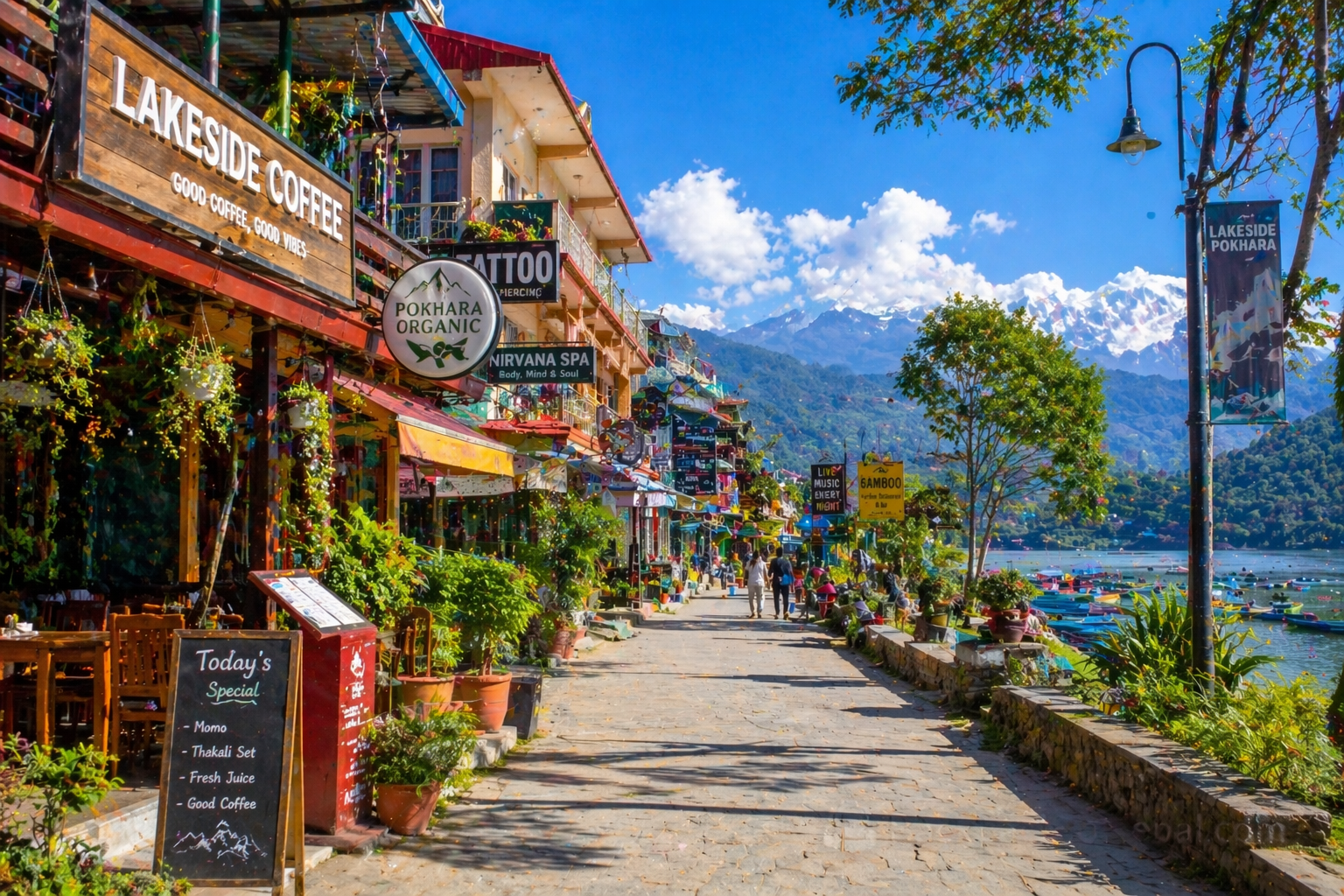
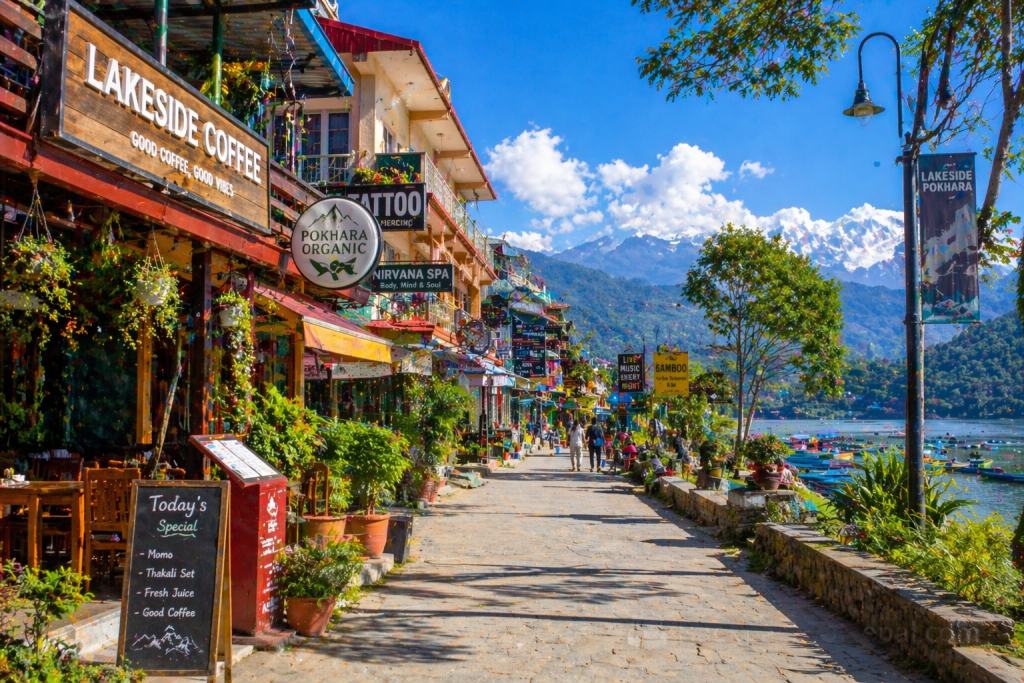
Pokhara’s Lakeside strip has a cheerful glut of cafes and restaurants that cater well to post-flight appetites. Momos and a cold Everest beer at one of the open-fronted terraces facing the lake make an excellent landing celebration. You have earned it.
A Few Final Practicalities
Book your flight the day before, not months in advance. Conditions in Pokhara can change, and reputable operators will reschedule you if the weather is not suitable on your chosen day. A day’s notice gives you flexibility without losing your slot.
Bring cash in Nepali rupees. Most operators accept it happily and some offer a small discount over card payment. There are ATMs in Lakeside, though they occasionally run low during high season, so withdraw the night before.
If you are arriving from Kathmandu and heading straight to Pokhara for paragliding, give yourself a day to acclimatise, not to altitude (Pokhara sits at just 822 metres), but to the pace and sensory shift of travelling in Nepal. You will enjoy the flight more if you are rested and relaxed than if you have just stepped off a long bus ride.
Ready to Jump?
Paragliding in Pokhara is one of those experiences you carry with you long after you leave. The moment you bank over Phewa Lake with the Himalayas framing the sky in every direction, something shifts. Nepal has a way of doing that: handing you a moment so beautiful it almost feels like it belongs to someone else’s life, until you realise it is yours.
Start planning your Pokhara adventure now. Look up the operators, check the season, pack a fleece, and go. The sky over the Annapurnas is waiting for you.
Related Posts
Stay Informed With the Latest & Most Important News
Previous Post
Next Post
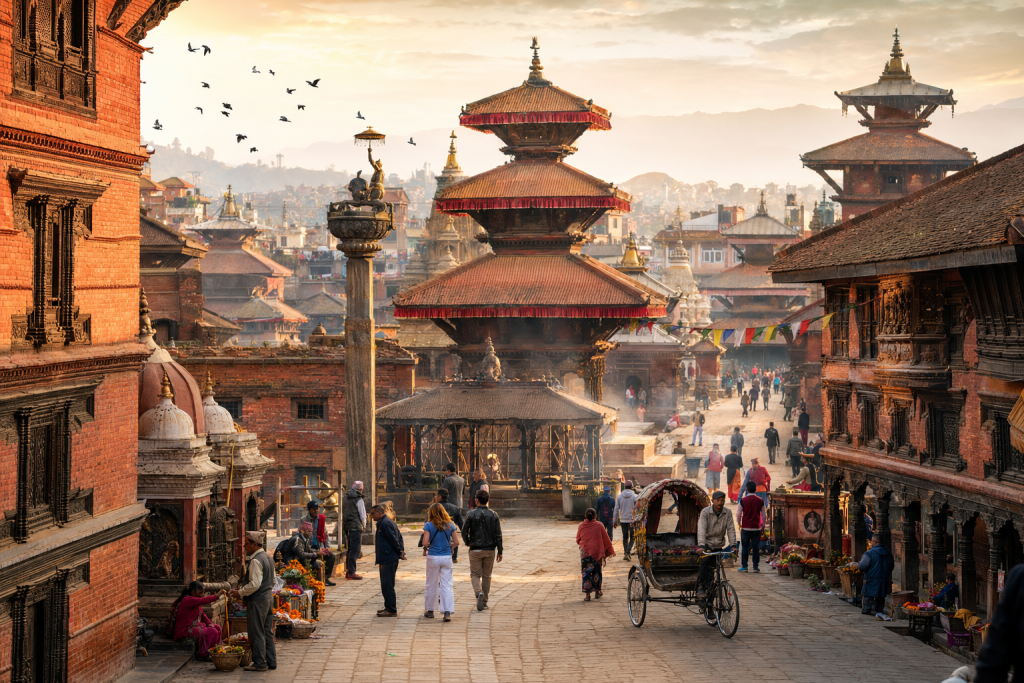
- Kathmandu Travel Guide: What to See, Where to Stay, Eat and How to Get Around
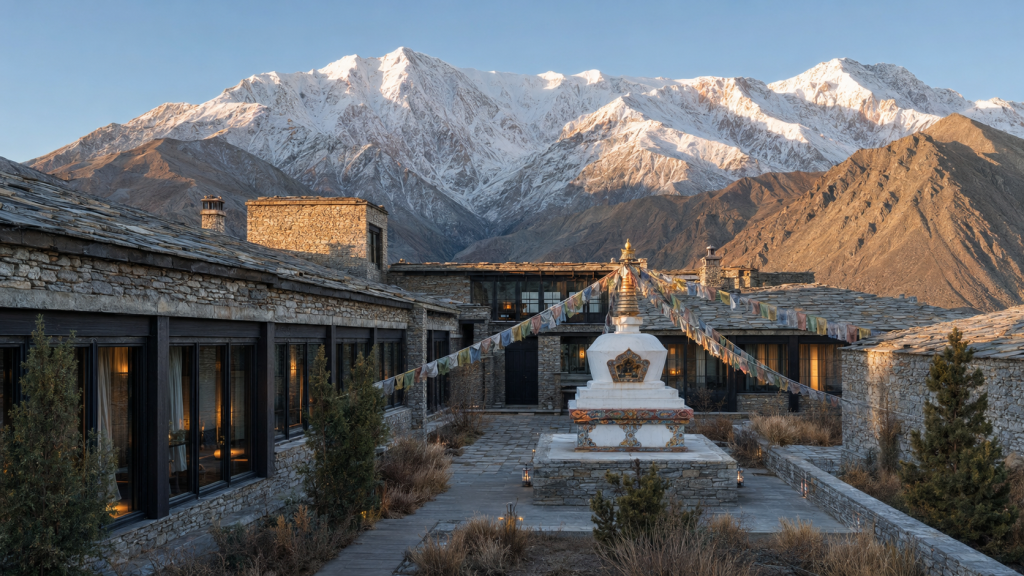
- From Mustang to the World: Shinta Mani Mustang Named the No. 1 Luxury Hotel on Earth
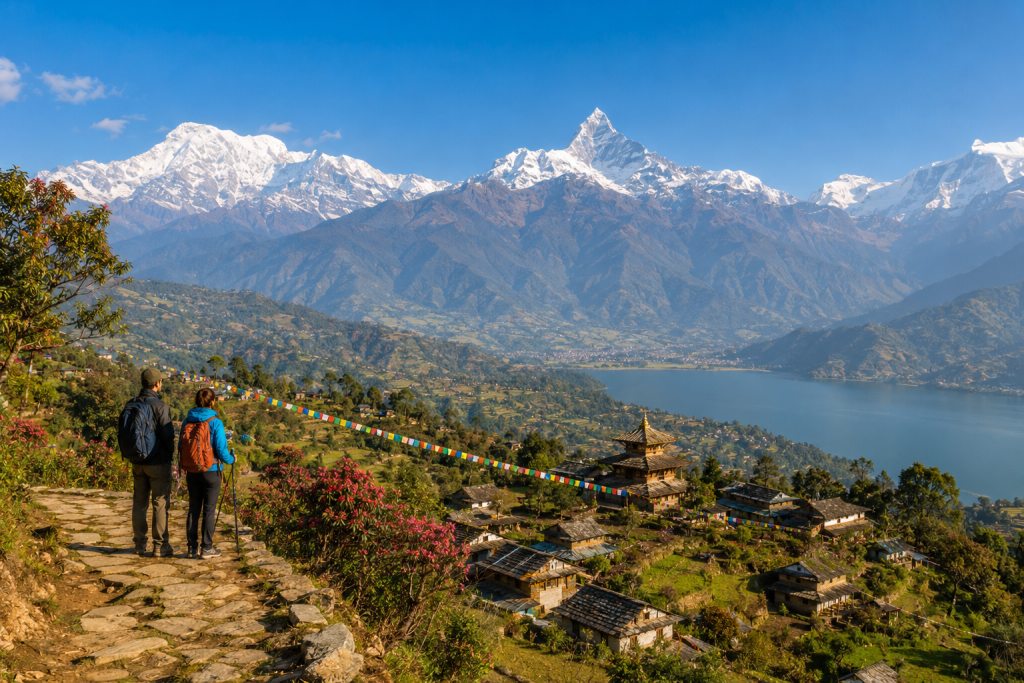
- Best Places to Visit in Nepal: A Complete Region-by-Region Guide for Every Traveller
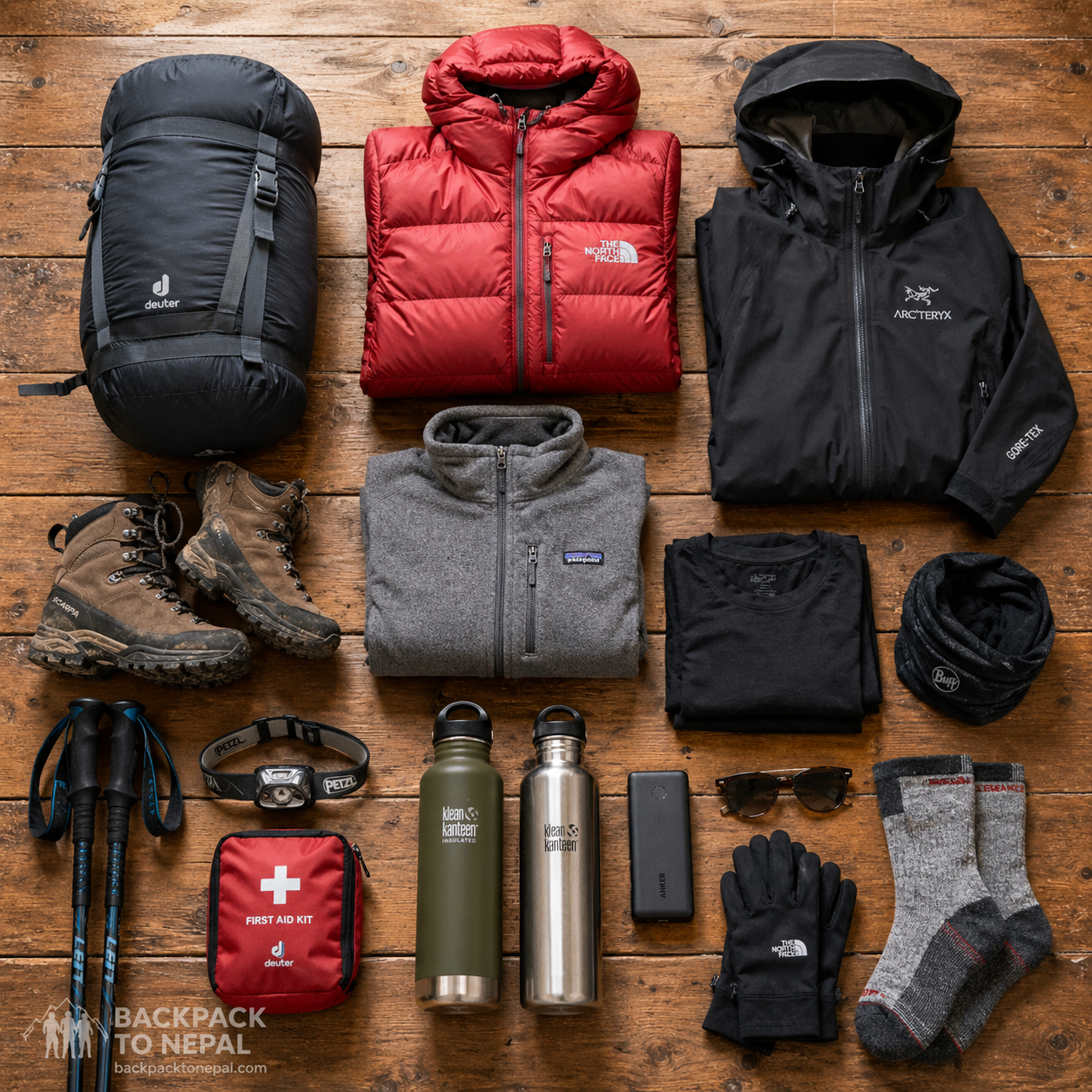
- Trekking in Nepal: The Complete Guide to Choosing and Planning Your Himalayan Trek
- Beyond the Mountains: Why Nepal Could Become One of the World’s Great Food Destinations