Now Reading: From Mustang to the World: Shinta Mani Mustang Named the No. 1 Luxury Hotel on Earth
-
01
From Mustang to the World: Shinta Mani Mustang Named the No. 1 Luxury Hotel on Earth
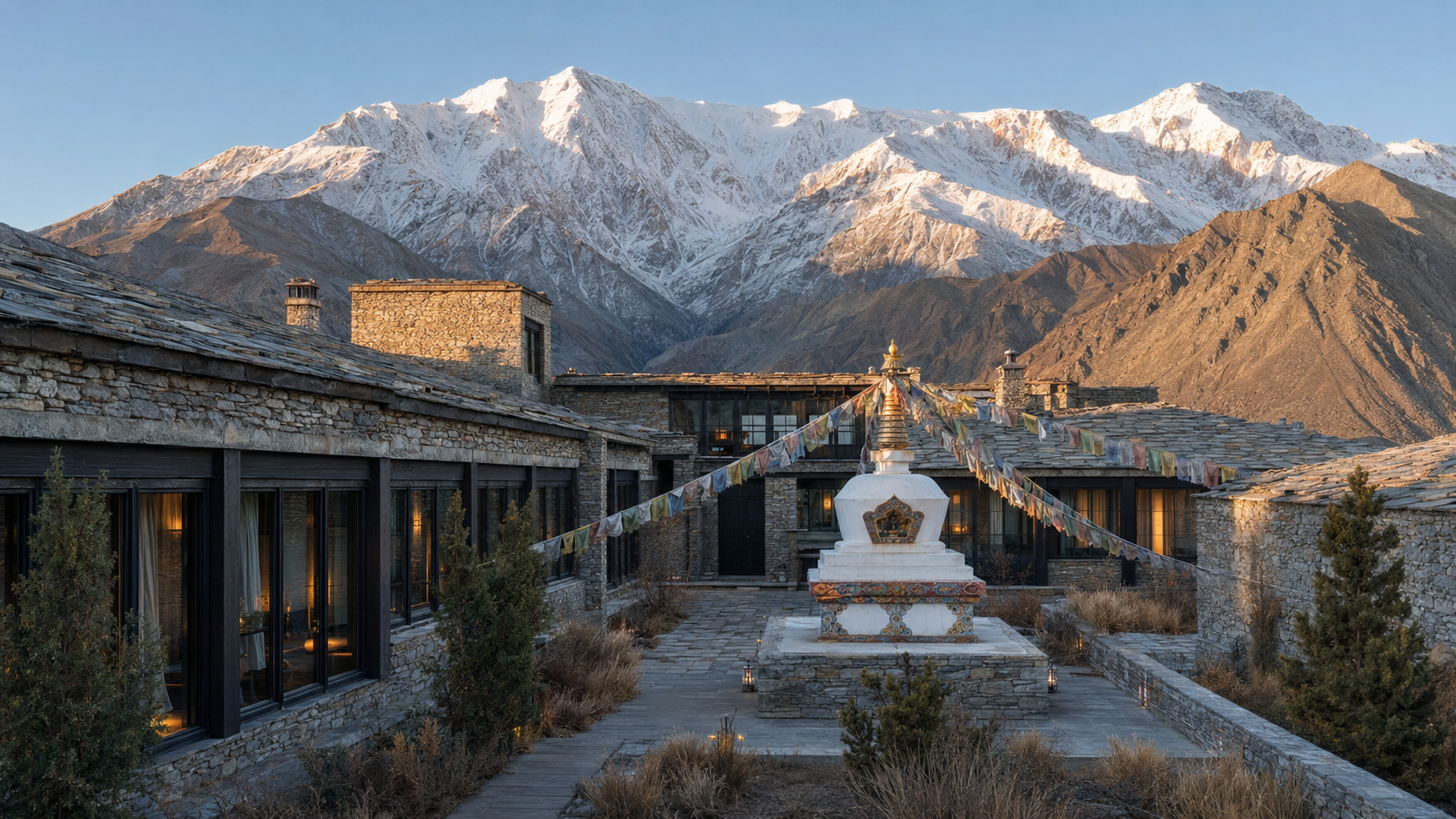

Shinta Mani Mustang has been ranked No. 1 in Robb Report’s 2026 list of the 50 Greatest Luxury Hotels on Earth. Here is why Nepal’s only hotel on the list represents far more than an award.
There is a particular moment in Mustang when the scale of the place becomes difficult to hold in your mind.
The morning light reaches the Nilgiri peaks first. Below them, the Kali Gandaki Valley is still cool and shadowed. Stone villages sit quietly against slopes shaped by wind, while the river follows an ancient trade corridor between the high Himalaya and the Tibetan plateau.
On a hillside above Jomsom, guests at Shinta Mani Mustang can watch that light arrive through windows stretching from floor to ceiling. In July 2026, this remote Himalayan retreat found itself in another kind of spotlight.
Robb Report has ranked Shinta Mani Mustang No. 1 in its 2026 list of the 50 Greatest Luxury Hotels on Earth. It is the only hotel from Nepal on the list, and it sits right at the top.
For the property, this is an extraordinary international honour. For Nepal, it is something larger: a sign that the country can lead the world not only in mountains and adventure, but also in thoughtful, place-rooted hospitality.
A Nepali Hotel at the Top of a Global List
The Robb Report ranking was selected by 24 of the publication’s Travel Masters, a panel of luxury travel advisers who design journeys for some of the world’s most discerning travellers.
Shinta Mani Mustang was placed ahead of celebrated hotels and remote retreats across Europe, Africa, Asia and beyond. That context matters. This is not a separate prize for the best hotel in Nepal, the Himalaya or South Asia. It is first place in a worldwide ranking.
The achievement has also come remarkably quickly. Shinta Mani Mustang opened in August 2023. In 2024, it reached No. 6 on Robb Report’s global hotel list. In 2025, the publication recognised it as the Best Luxury Adventure Hotel. One year later, it has climbed to No. 1.
Yet the most compelling part of this rise is not simply its speed. It is that the hotel has earned international attention from a place many travellers still imagine as unreachable.
Why Shinta Mani Mustang Feels Different
Luxury can be reproduced almost anywhere. Marble can be imported. Linen can be standardised. A menu, a fragrance and even a style of service can be carried from one continent to another.
Mustang cannot.
The wind in the Kali Gandaki gorge, the pale cliffs, the smell of juniper smoke near a monastery, the apple orchards around Marpha and the blue-white wall of Nilgiri belong to this valley alone. Shinta Mani Mustang succeeds because it does not try to separate guests from that landscape. It places the landscape at the centre of the stay.
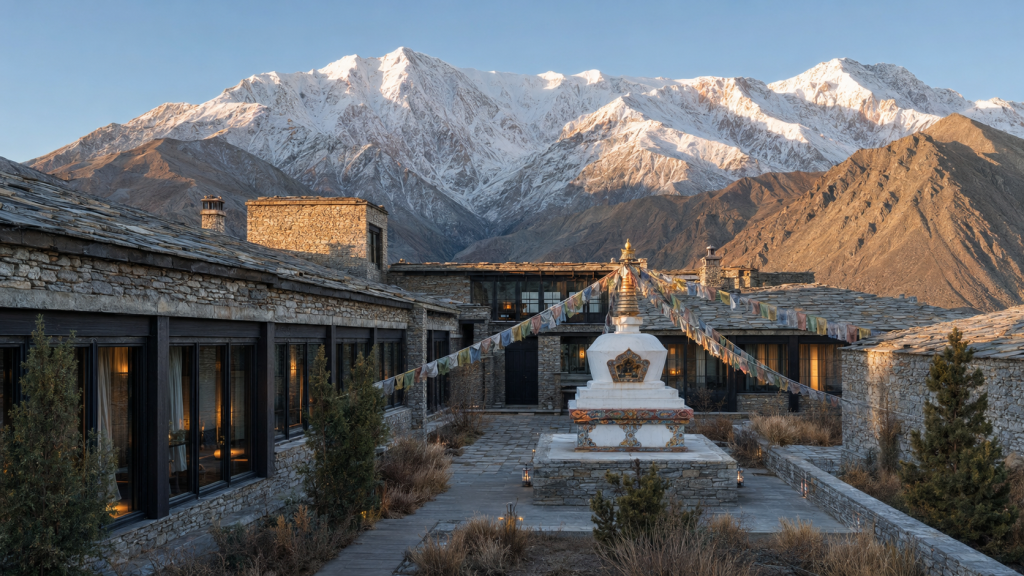
The resort stands at around 3,000 metres above sea level in Lower Mustang, above Jomsom and between the Annapurna and Dhaulagiri massifs. Its 29 spacious suites face the Nilgiri range through enormous windows. The result is quietly theatrical. You wake, draw the curtains and find the Himalaya already waiting.
The original building was designed by Nepali architect Prabal Thapa using Baglung stone and timber, drawing from the traditional architecture of the Thakali region. Designer Bill Bensley then brought his richly layered visual language to the interiors, where carved wood, textiles, art, antiques and Himalayan references give the rooms warmth and personality.
There is drama here, certainly. But the greatest design decision may be the simplest one: allowing the valley to remain more powerful than the hotel.
The Real Experience Begins Outside the Suite
A beautiful room can make a hotel memorable. Mustang requires something deeper.
Shinta Mani operates as an all-inclusive journey rather than merely a place to sleep. Days can lead towards Kagbeni, where old lanes gather above the Kali Gandaki; to Muktinath, sacred to both Hindus and Buddhists; or through Jharkot and Jhong, where monasteries, orchards and earthen homes hold the memory of the old trans-Himalayan world.
Guests may walk to Lubra, an approximately 800-year-old village and one of the remaining centres of the Bon tradition. Other experiences include guided wilderness walks, horse riding, archery and journeys through the Jomsom Valley. These are not decorative activities added to fill an itinerary. At their best, they help travellers understand that Mustang is a living place rather than an exotic backdrop.
Wellness is grounded in that same landscape. The resort works with Tsewang Gyurme Gurung, an 11th-generation Amchi practitioner, to offer consultations and treatments informed by Sowa Rigpa, the traditional Himalayan system of medicine. Local plants, inherited knowledge and the stillness of the high valley become part of the experience.
For travellers wanting to continue farther north, our complete Upper Mustang trekking guide follows the route beyond Kagbeni towards the walled city of Lo Manthang.
This Recognition Is Bigger Than One Hotel
Nepal has long been admired internationally, but often through a narrow frame.
The country is known as the home of Everest, the birthplace of the Buddha and one of the world’s great trekking destinations. Those identities are deserved, but they are not complete. Nepal also carries sophisticated regional cuisines, extraordinary craft traditions, living pilgrimage routes, historic trading cultures and a deep instinct for hospitality.
Shinta Mani Mustang’s No. 1 ranking widens that frame.
It tells the international travel market that Nepal can deliver an experience that is remote without feeling inaccessible, luxurious without becoming culturally anonymous, and carefully designed without drowning out the place that inspired it.
That matters economically too. Nepal does not need to measure tourism success only through ever-increasing arrival numbers. High-value, low-impact travel can encourage visitors to stay longer, travel more slowly, employ skilled local guides, buy regional produce and crafts, and spend in communities beyond the best-known city centres.
Mustang is particularly suited to this approach. Its environment is fragile, its water limited and its cultural heritage precious. The goal should never be volume for its own sake. The greater opportunity is to welcome fewer travellers more thoughtfully, create meaningful local value and protect the very qualities that make the region worth crossing the world to experience.
A Victory for Nepali Hospitality and the People Behind It
A global hotel ranking may show photographs of suites, mountain views and beautifully set tables. What it cannot easily show is the human work behind them.
Remote hospitality is difficult. Supplies travel farther. Weather reshapes plans. Flights can be delayed. Staff must deliver polished service while helping guests adjust to altitude, wind, cold and the unpredictability of the mountains.
That is why this recognition belongs as much to the hotel’s Nepali and Mustang-based team as it does to its architecture or location. It also reflects the ambition of Sherpa Hospitality Group, the Nepali hospitality company behind the property, to present the Himalaya with confidence rather than imitate a generic international resort.
The message is an encouraging one for Nepal’s tourism industry: local knowledge is not something to hide beneath imported luxury. It can be the foundation of world-leading luxury.
What This Could Mean for Mustang
International attention can open doors, but it also brings responsibility.
A No. 1 ranking will place Mustang on the wish lists of travellers who may never previously have considered Nepal. That visibility can support local employment, guiding, farming, transport, crafts and conservation. It can also inspire other Nepali hotels to invest in service, design and experiences that grow from their own surroundings.
But success must remain connected to the people who live in the valley. Growth should respect water availability, waste management, local architecture, sacred spaces and the rhythms of village life. Cultural encounters must be based on consent and dignity, not staged simply for a visitor’s camera.
The best outcome would be for Shinta Mani Mustang to become more than an exceptional property. It can be evidence that Nepal’s tourism future lies in protecting character, rewarding local skill and making every journey count.
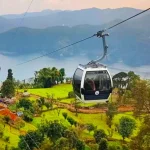
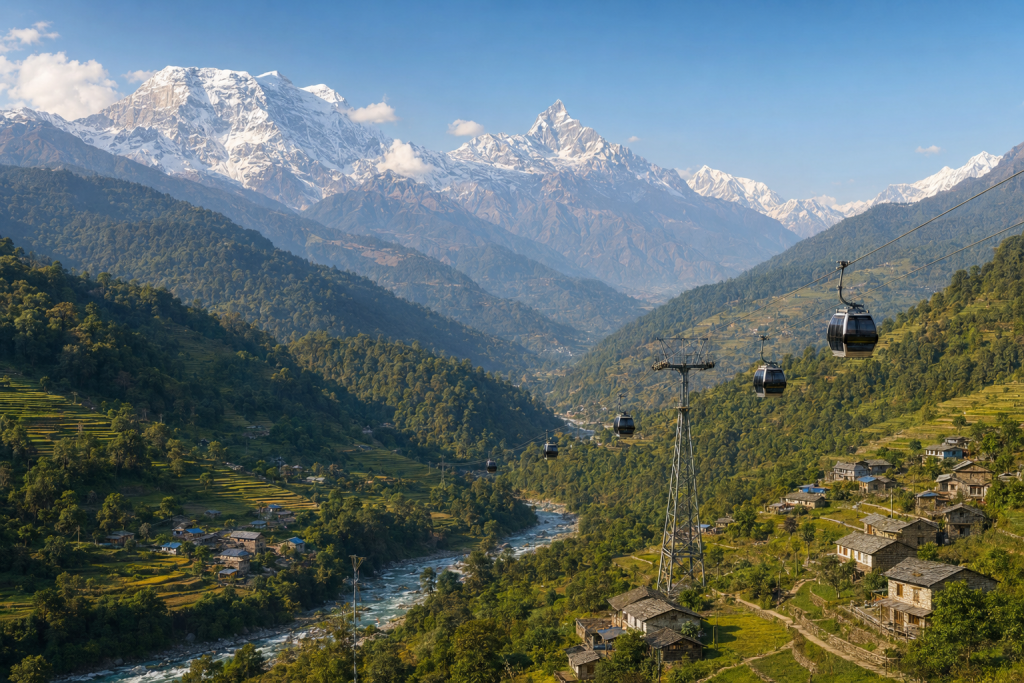
This same question of access and responsible growth will become even more important if the proposed Pokhara to Muktinath cable-car vision ever moves from plan to reality.
Planning a Stay at Shinta Mani Mustang
Shinta Mani Mustang is not a conventional city hotel, and it should not be planned like one.
- Location: The resort sits above Jomsom in Lower Mustang, in the Kali Gandaki Valley.
- Style of stay: It offers an all-inclusive experience built around accommodation, meals, guided exploration and wellness. Confirm the exact inclusions for your chosen package directly with the hotel.
- Getting there: Most journeys begin through Kathmandu and Pokhara before continuing to Jomsom. Mountain flights are weather-dependent, so keep some flexibility in your wider Nepal itinerary.
- When to go: Spring and autumn offer comfortable conditions and strong mountain views. Winter can be wonderfully quiet but cold. The resort says it closes during July and August because monsoon conditions can make local roads difficult.
- How long to stay: Mustang rewards time. A stay of several nights allows the altitude and pace of the valley to settle around you, rather than turning the experience into a hurried arrival and departure.
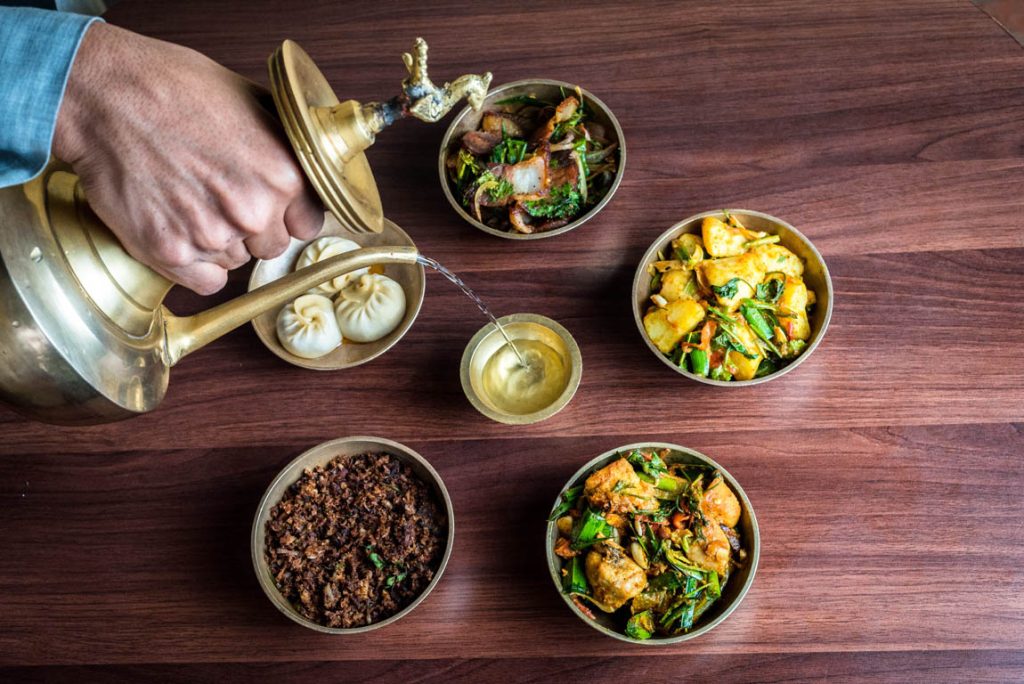
Before fixing your dates, use our month-by-month guide to the best time to visit Nepal. Travellers who are curious about the flavours of the region can also explore our feature on Nepal’s emerging food tourism story, including the Thakali food traditions of Lower Mustang.
For current packages, seasonal opening dates and journey arrangements, visit the official Shinta Mani Mustang website.
Nepal Did Not Reach the Top by Becoming Somewhere Else
Perhaps that is the most satisfying part of this story.
The world’s No. 1 luxury hotel, according to Robb Report’s 2026 ranking, is not on a famous European boulevard or a private tropical island. It is above Jomsom, in a valley where the afternoon wind still rushes between Annapurna and Dhaulagiri and centuries-old villages continue to face the high desert sun.
Shinta Mani Mustang did not reach the top by making Mustang feel like somewhere else. It reached the top by allowing travellers to feel where they truly are.
For Nepal, that is both a proud moment and a useful lesson. The country’s greatest luxury has never been excess. It is access to places, people and ways of life that remain profoundly themselves.
And now, at least on one of the most closely watched lists in luxury travel, the rest of the world has noticed.
Information checked on 27 July 2026. Rankings, seasonal operations and travel arrangements may change; confirm current details before booking.
Stay Informed With the Latest & Most Important News
Previous Post
Next Post
- Kathmandu Travel Guide: What to See, Where to Stay, Eat and How to Get Around
- From Mustang to the World: Shinta Mani Mustang Named the No. 1 Luxury Hotel on Earth
- Best Places to Visit in Nepal: A Complete Region-by-Region Guide for Every Traveller
- Trekking in Nepal: The Complete Guide to Choosing and Planning Your Himalayan Trek
- Beyond the Mountains: Why Nepal Could Become One of the World’s Great Food Destinations