Now Reading: Best Places to Visit in Nepal: A Complete Region-by-Region Guide for Every Traveller
-
01
Best Places to Visit in Nepal: A Complete Region-by-Region Guide for Every Traveller
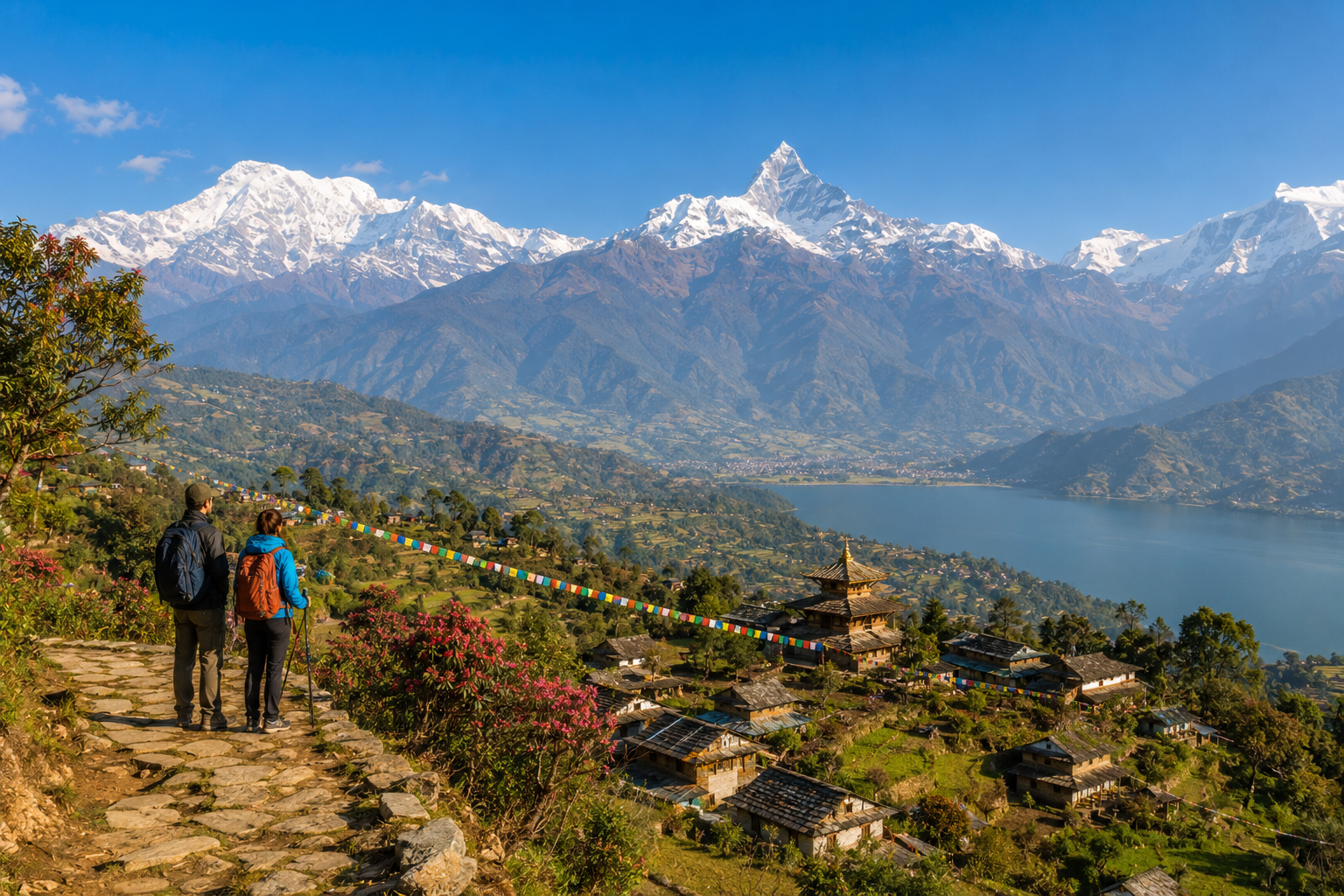

Discover the best places to visit in Nepal region by region, with honest advice on Kathmandu, Pokhara, Chitwan, Lumbini, Janakpur and beyond.
Last checked and updated: 25 July 2026
The best places to visit in Nepal do not all reveal themselves in the same way.
Kathmandu arrives through sound: temple bells, motorcycle horns, a vendor calling from a lane and pigeons lifting suddenly above an old palace square. Pokhara feels softer. A wooden boat slides across Phewa Lake while Machhapuchhre appears between clouds. In Chitwan, the evening is warm and full of insect song. Farther west, Rara holds the sky in blue water, while in Upper Mustang the wind moves across cliffs the colour of old copper.
All of this exists within one small country. That is what makes planning Nepal so exciting, and so easy to get wrong.
The question is rarely, “Is there enough to see?” It is, “Which version of Nepal belongs in this particular journey?” A first-time visitor with ten days needs a different route from a returning traveller seeking quiet valleys. A family should not move at the pace of an expedition trekker. Someone arriving during the monsoon needs to think differently from someone travelling beneath the clear October sky.
This guide brings Nepal together region by region. It will help you choose where to go, understand what each place feels like, decide how long to stay and follow the links into Backpack to Nepal’s detailed destination guides. It is a starting map, but one with enough space left for the unplanned cup of chiya, the festival procession you did not expect and the village where you decide to remain another night.
Best places to visit in Nepal: the quick answer
- Best first journey: Kathmandu Valley, Pokhara and Chitwan
- Best for living heritage: Kathmandu, Patan, Bhaktapur, Janakpur and Lumbini
- Best for mountain views without a major trek: Pokhara, Nagarkot, Dhulikhel and Bandipur
- Best for trekking: the Annapurna, Everest, Langtang, Manaslu and Mustang regions
- Best for wildlife: Chitwan for accessibility and Bardia for a quieter, wilder experience
- Best for families: Kathmandu Valley, Pokhara, Chitwan and Bandipur
- Best for a quieter second visit: Eastern Nepal, Khaptad, Rara, Bardia and Dolpo
- Best during the summer monsoon: Upper Mustang and parts of Dolpo, with carefully planned logistics
- Best overall length for a first trip: 10 to 14 days
If you want a shorter cultural portrait rather than a full planning guide, begin with 10 Places in Nepal That Define Its Regions, Culture, and Soul. This article goes wider, helping you turn those possibilities into a realistic route.
Nepal’s main travel regions at a glance
| Region or base | Best for | Sensible minimum | Strongest seasons | Start with |
|---|---|---|---|---|
| Kathmandu Valley | Heritage, food, faith and first arrival | 3 to 4 days | October to April, though possible year-round | UNESCO World Heritage Sites in Nepal |
| Pokhara and the Annapurna foothills | Lakes, mountain views, gentle adventure and trekking | 3 to 5 days, longer with a trek | October to November and March to April | Complete Pokhara travel guide |
| Chitwan and the central Terai | Wildlife, forest, rivers and Tharu culture | 2 to 3 nights | October to March | Chitwan National Park guide |
| Lumbini and the western Terai | Buddhist heritage, pilgrimage and stillness | 2 days | October to March | Nepal’s UNESCO guide |
| Janakpur and Madhesh | Mithila culture, temples, art and festivals | 2 to 3 days | October to March | Complete Janakpur guide |
| Eastern Nepal | Tea country, hill towns, biodiversity and fewer visitors | 7 to 14 days | October to November and March to April | Eastern Nepal regional itinerary |
| Karnali and the far west | Remote lakes, plateaus, wildlife and slow travel | 7 to 14 days or more | April to May and September to November | Far-Western Nepal guide |
| Mustang and Dolpo | High desert, Tibetan-influenced culture and expedition travel | 10 days to 3 weeks | May to October, depending on the route | Upper Mustang guide |
These are planning ranges, not targets to rush through. Nepal looks compact on a map, but hill roads, weather, domestic-flight delays and the simple pleasure of staying longer can all change the rhythm.
1. Kathmandu Valley: where Nepal introduces itself
Most journeys begin in Kathmandu, but the capital should not be treated only as an airport beside the Himalayas. Give it time.
Early in the morning, before the traffic thickens, shop shutters rise along old lanes. A woman touches marigolds to a small shrine. Tea steams from a metal pot. The smell of incense meets frying sel roti, and above the street a carved wooden window has been watching the same corner for centuries.
Kathmandu Valley contains seven monument zones within one UNESCO World Heritage property, alongside neighbourhoods where heritage is not sealed behind museum glass. People still worship, trade, cook, argue, celebrate and raise families around these places.
Kathmandu city
Begin with Kathmandu Durbar Square, then allow the lanes around Asan, Indra Chowk and the old city to carry you away from a fixed route. The square tells the story of kings and the living Kumari tradition, but the streets around it reveal how the old city still works.
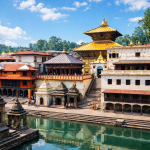
On another morning, climb to Swayambhunath while the air is cool. Prayer flags move over the hill and the valley spreads beneath you. Later, join the clockwise flow around Boudhanath Stupa. Stay until evening if you can, when butter lamps appear and the white dome begins to glow against a deepening sky.
Pashupatinath is more solemn. It is a living Hindu pilgrimage and cremation site, not a theatrical attraction. Visit with a respectful guide, observe restrictions and never turn private grief into a photograph.
Patan and Bhaktapur
Across the Bagmati River, Patan Durbar Square feels dense with metalwork, courtyards and Newar craftsmanship. It works beautifully as a full day rather than a hurried stop. Eat in a courtyard, visit the museum and wander beyond the formal square into residential lanes.
Bhaktapur Durbar Square rewards an even slower pace. Potters turn clay in open courtyards, yoghurt is served in small earthen bowls and long brick streets lead towards neighbourhood shrines. Staying overnight lets you experience the city before day visitors arrive and after they leave.
How long to stay in Kathmandu Valley
- Two days: only the essentials, with one old-city day and one eastern-valley day
- Three to four days: Kathmandu, Patan, Bhaktapur and room for Boudhanath or Pashupatinath without rushing
- Five to seven days: add neighbourhood walks and a hill-town escape
For a breath beyond the ring road, use our guide to Nagarkot, Dhulikhel and Bandipur. These are not substitutes for the high Himalayas, but on a clear morning the mountain line can still stop a conversation mid-sentence.
Best for: first-time visitors, culture, food, architecture and spiritual life.
Main caution: traffic and air quality can make overfilled days exhausting. Group nearby sites together and leave time to walk.
2. Pokhara and the Annapurna foothills: Nepal at a gentler pace
Pokhara often feels like an exhale.
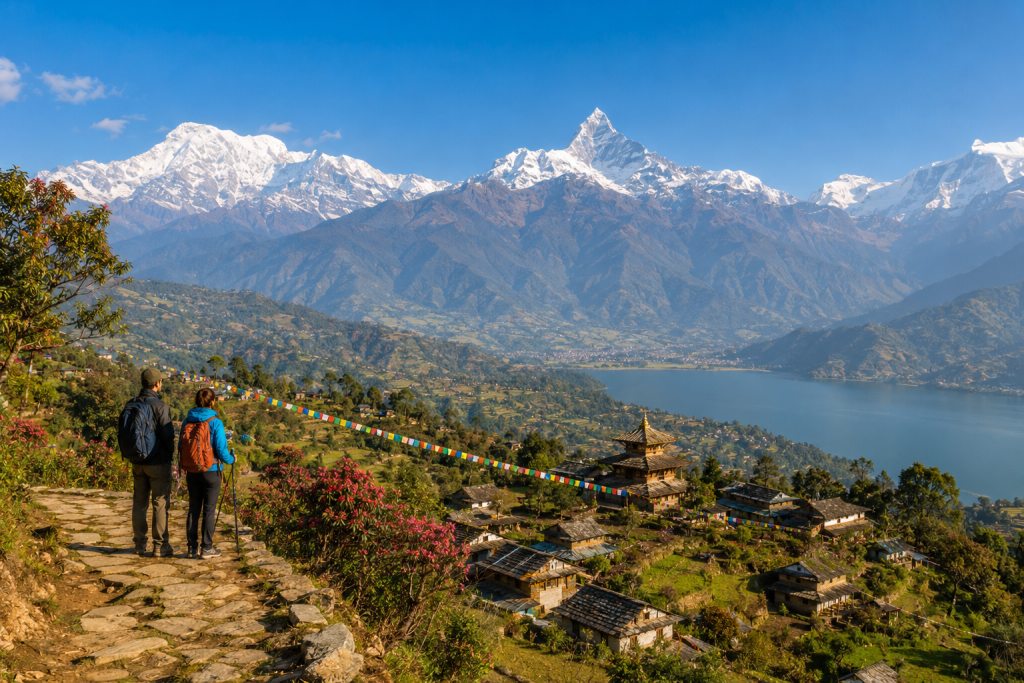
After Kathmandu, the lake seems impossibly open. Boats knock softly against the shore. Paragliders hang above Sarangkot, and when the sky clears, the Annapurna range rises so suddenly that it looks less like a view than a wall of light.
The city is Nepal’s most comfortable base for combining rest, accessible adventure and the mountains. Use the complete Pokhara guide to plan Phewa Lake, Sarangkot, the World Peace Pagoda, museums, caves, food and a practical three-day stay. If lakes are the thread you want to follow across the country, our guide to the best lakes in Nepal opens the map much farther.
What to do around Pokhara
- Take a rowing boat onto Phewa Lake in the calm of morning.
- Watch sunrise from Sarangkot when visibility is good.
- Walk or travel to the World Peace Pagoda for a wide view across the valley.
- Explore the old bazaar and eat away from the Lakeside strip at least once.
- Add a village walk, a responsible adventure activity or a short trek.
Pokhara as a trekking gateway
Pokhara opens directly into the Annapurna region. A first-time walker may choose the Poon Hill trek for villages, rhododendron forest and a famous sunrise. Someone wanting a steeper, more dramatic ridge might choose Mardi Himal.
Before choosing any Himalayan route, read Trekking in Nepal: The Complete Guide to Choosing and Planning Your Himalayan Trek. It compares regions, seasons, difficulty, costs, permits, altitude, guides and teahouse life in one place.
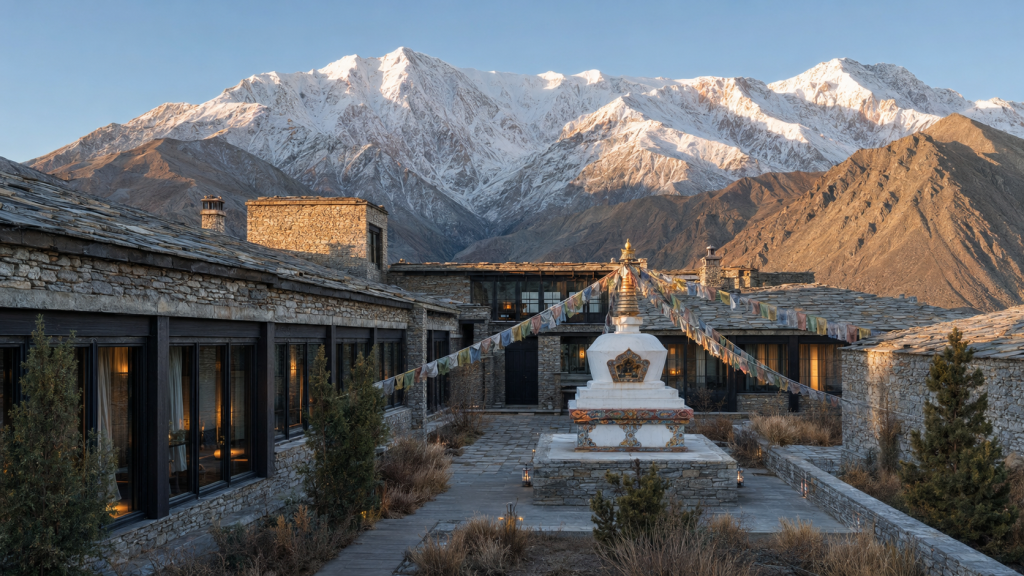
Farther north, the landscape changes again. Upper Mustang replaces wet green hills with eroded cliffs, cave settlements, whitewashed villages and the walled town of Lo Manthang. This is a higher-cost, restricted-area journey requiring more time and formal arrangements, but it is one of Nepal’s most distinctive cultural landscapes.
How long to stay: three or four days in the city, one week with day trips, or longer if trekking.
Best for: couples, families, first-time visitors, mountain views, soft adventure and post-trek rest.
Main caution: haze and cloud can hide the mountains. Give yourself more than one morning rather than building the entire visit around a single sunrise.
3. Chitwan: forests, rivers and the warm heart of the Terai
The road descends from the hills and the air changes. It becomes warmer, flatter and heavier with the smell of earth. Sal forest replaces the mountain skyline. Near the river at dusk, birds settle noisily into trees and the long grass holds more life than you can see.
Chitwan gives a first Nepal itinerary an entirely different texture. It is the country’s most accessible wildlife destination and an important home for one-horned rhinoceros, gharial crocodiles, deer, birdlife and, more elusively, Bengal tigers.
Our complete Chitwan National Park guide explains the landscapes, responsible activities, accommodation and timing. Choose programmes centred on jeep safaris, guided walks, canoe trips where conditions are safe, birdwatching and respectful community visits. Avoid entertainment that depends on captive-animal performance.
Chitwan also offers an opportunity to learn about Tharu culture, but the quality of that encounter depends on how it is arranged. Look for locally led experiences that explain farming, architecture, food and relationship with the landscape, not a performance detached from community life.
Chitwan or Bardia?
| Choose Chitwan if… | Choose Bardia if… |
|---|---|
| This is your first Nepal trip. | You have more time and accept longer logistics. |
| You are travelling between Kathmandu and Pokhara. | You want a quieter safari landscape. |
| You need a wider choice of lodges. | Wildness matters more than convenience. |
| You have two or three nights. | You can stay for at least three or four nights. |
Read the Bardia National Park guide before making the longer journey west. For the national picture, including high-altitude and lowland protected areas, use our guide to all of Nepal’s national parks.
How long to stay: two or three nights in Chitwan, longer in Bardia.
Best for: wildlife, families, birdwatching and a change from the hills.
Main caution: the Terai becomes extremely hot before the monsoon. Wildlife sightings can never be guaranteed.
4. Lumbini: a landscape built around one quiet beginning
Lumbini is revered as the birthplace of Siddhartha Gautama, who became the Buddha. Yet the experience is not contained in a single monument. The Sacred Garden, Maya Devi Temple, Ashokan Pillar, monastic zones and long water channels together form a broad landscape of pilgrimage.
The mood changes through the day. Morning may bring groups of monks chanting under trees. By afternoon, bicycles and e-rickshaws move between monasteries built by Buddhist communities from many countries, each carrying a different architectural language into the same plain.
Do not try to walk every corner in the midday heat. Begin early, pause often and give the Maya Devi area the quiet it deserves. The distances inside the wider development zone are greater than many first-time visitors expect.
Lumbini fits naturally into a longer journey between Chitwan, Tansen, Pokhara and the western Terai. It can also stand alone as the centre of a Buddhist heritage trip. Our complete guide to Nepal’s UNESCO World Heritage Sites places Lumbini within the country’s wider cultural and natural story.
How long to stay: one full day at minimum, preferably two nights.
Best for: Buddhist heritage, pilgrimage, architecture and reflective travel.
Main caution: heat and scale. Arrange bicycles, e-rickshaws or a vehicle rather than assuming the entire site is a short walk.
5. Janakpur and Madhesh: colour, devotion and the culture of the plains
Janakpur feels different from the hill cities before you have even left the station or airport. The streets are flatter, the colours brighter and the cultural pull of the Mithila region unmistakable.
At the centre stands Janaki Mandir, a luminous palace-like temple associated with Sita, known here as Janaki, and the Ramayana tradition. Yet Janakpur is not only one famous building. Ponds, smaller shrines, sweet shops, painted walls, wedding traditions and the everyday life of Madhesh make the city worth more than a rushed pilgrimage stop.
Use our complete Janakpur destination guide for attractions, food and accommodation. If your dates are flexible, check the Nepal festival calendar. Vivah Panchami and Chhath can transform the region, but festival travel also requires earlier booking, patience with crowds and respectful behaviour around worship.
Janakpur is one of the most important places for travellers who want to understand that Nepal is not culturally defined by Kathmandu and the high Himalayas alone. Language, landscape, food, clothing and ritual all shift as you enter the plains.
How long to stay: two days, or three during a major festival.
Best for: Hindu pilgrimage, Mithila art, regional food, photography and cultural depth.
Main caution: summer heat can be severe. Dress respectfully and ask before photographing ceremonies or people.
6. Eastern Nepal: tea gardens, hill towns and a slower route
Eastern Nepal does not hand itself to you as one famous attraction. Its reward is the journey between places.
You may wake among Ilam’s tea gardens with mist caught between rows of clipped green bushes. Farther south, the plains move with trade and daily life. Dharan carries the energy of a hill gateway, while the routes towards Makalu and Kanchenjunga lead into some of Nepal’s largest and least casually visited mountain landscapes.
This is where to go when you have already seen the classic triangle, or when the classic triangle was never what you wanted. Our Eastern Nepal Without the Crowds itinerary builds a complete regional journey rather than treating the east as a single side trip.
Eastern Nepal suits travellers who enjoy local buses or carefully planned private transport, ordinary towns, food that changes from district to district and days whose value is not measured by a famous landmark. It also offers gateways into remote trekking and conservation landscapes, but those journeys require more time, permits, guides and weather flexibility.
For more ideas beyond the familiar circuit, read 5 Places in Nepal That Still Feel Undiscovered.
How long to stay: at least one week, ideally 10 to 14 days.
Best for: returning visitors, tea country, regional culture, quieter roads and deeper travel.
Main caution: do not add “the east” as a two-day extension. Distances and road conditions need a route of their own.
7. Karnali and Far-Western Nepal: distance as part of the journey
Western Nepal asks for a different kind of attention. The journeys are longer. Flights can be less predictable. Roads may be demanding. The places at the end feel more powerful precisely because arrival was not effortless.
Rara, Nepal’s largest lake, sits among forested hills beneath an enormous sky. Its blue changes with the weather, sometimes bright and glassy, sometimes almost steel. Khaptad offers rolling grasslands, forest, silence and a spiritual landscape very different from the sharp drama of the high peaks.
Farther into the western Terai, Bardia offers riverine forest and wildlife with fewer visitors than Chitwan. In Dolpo, the land rises into a trans-Himalayan world of wind, high passes, Bon and Buddhist traditions and the extraordinary colour of Phoksundo Lake. Read our Shey Phoksundo guide before treating Dolpo as an ordinary trekking extension. It is a serious remote journey.
The Far-Western Nepal travel guide is the best place to begin connecting these possibilities. Choose one western focus rather than collecting names across a huge area.
How long to stay: one to three weeks depending on the destination.
Best for: experienced travellers, wild landscapes, long-form journeys and places beyond Nepal’s busiest corridors.
Main caution: build buffer days, carry cash, verify seasonal access and arrange local expertise. Convenience cannot be assumed.
8. Upper Mustang and Dolpo: Nepal beyond the monsoon clouds
When rain clouds gather against the southern Himalayas, the trans-Himalayan regions beyond the main range can remain comparatively dry. This gives Upper Mustang and parts of Dolpo a travel season that does not follow the same pattern as Pokhara, Chitwan or the middle hills.
Upper Mustang is the more established of the two. Trails and roads move through high desert towards Lo Manthang, passing caves, monasteries and villages built to resist the wind. Dolpo is more remote, with longer logistics and expedition-style thinking on many routes.
Neither should be chosen simply because you dislike crowds. Restricted-area permits, licensed guides, transport uncertainty, altitude and cost all matter. These are culturally sensitive border landscapes, not empty wilderness waiting to be consumed.
Begin with the Upper Mustang trekking guide, the Shey Phoksundo and Dolpo guide and the main Nepal trekking planning guide. Confirm current rules through a registered agency before committing money.
How long to stay: around two weeks for Upper Mustang and longer for major Dolpo routes.
Best for: cultural landscapes, experienced trekkers, photography and carefully planned summer travel.
Main caution: altitude, permits, cost and limited services make these poor choices for a spontaneous first visit.
Which place in Nepal matches your travel style?
| If you want… | Start with… | Why |
|---|---|---|
| A balanced first visit | Kathmandu, Pokhara and Chitwan | Culture, mountains and wildlife without remote logistics |
| Deep heritage | Kathmandu Valley, Lumbini and Janakpur | Living Hindu and Buddhist traditions across different regions |
| Mountains without a long trek | Pokhara, Bandipur, Nagarkot and Dhulikhel | Viewpoints, walks and comfortable bases |
| A first Himalayan trek | Poon Hill or Langtang Valley | Manageable durations with established lodge networks |
| Wildlife | Chitwan, or Bardia with more time | Accessible safari experiences or a quieter western alternative |
| A family journey | Kathmandu Valley, Pokhara, Chitwan and Bandipur | Variety without serious altitude or expedition logistics |
| Fewer visitors | Eastern Nepal, Khaptad, Rara or Bardia | More regional depth and less concentration around the classic route |
| Summer travel | Upper Mustang or selected Dolpo routes | Rain-shadow landscapes, subject to route and access conditions |
Families should also use Nepal with Kids: A Practical Family Travel Guide for Parents. It covers health, food, transport, altitude, accommodation and age-appropriate itineraries in much greater detail.
How to build a realistic Nepal itinerary
If you have 7 days
Keep the trip simple.
- Days 1 to 3: Kathmandu Valley
- Days 4 to 6: Pokhara
- Day 7: return to Kathmandu with a safe buffer before an international departure
Chitwan can replace part of Pokhara, but squeezing all three into one week turns too much of the journey into packing and transport.
If you have 10 days
- Days 1 to 3: Kathmandu Valley
- Days 4 to 5: Chitwan
- Days 6 to 9: Pokhara
- Day 10: Kathmandu or departure buffer
This is the classic first-time route because every stop changes the landscape and mood.
If you have 14 days
Choose one direction rather than adding everything.
- Classic and varied: Kathmandu, Chitwan, Pokhara and Bandipur or Lumbini
- Culture and pilgrimage: Kathmandu Valley, Janakpur, Lumbini and a slower hill-town stop
- Mountains: Kathmandu, Pokhara and a short or medium trek
- Beyond the crowds: give the full journey to Eastern Nepal
Our complete two-week Nepal itinerary provides a fuller day-by-day framework.
If you have three weeks or more
This is when Nepal begins to open beyond the standard route. Add a meaningful trek, travel east, make a western journey or spend several days learning one place rather than merely extending the checklist.
The most common planning mistake is not choosing the wrong destination. It is refusing to leave anything out.
When to visit each part of Nepal
Nepal’s weather is shaped by altitude as much as season. A warm afternoon in Chitwan and a freezing night on a mountain trail can occur within the same itinerary.
October to November
The strongest all-round period for clearer skies, trekking, heritage cities and comfortable travel. It is also busy. Book popular lodges, domestic flights and well-located accommodation early.
December to February
Excellent for Kathmandu Valley, Pokhara, Bandipur, Lumbini, Janakpur and wildlife areas if you prepare for cold evenings in the hills. High passes may be dangerous or closed.
March to April
A beautiful period for spring colour, walking and mixed itineraries. Rhododendrons bloom in the hills, while the Terai becomes progressively hotter towards May.
May
Warm, increasingly humid and often hazy before the monsoon. Start outdoor days early and think carefully before taking children or heat-sensitive travellers into the plains.
June to September
The monsoon makes the country green and deeply atmospheric, but landslides, flooding, leeches, cloud and transport delays affect many regions. Kathmandu and Pokhara remain possible with flexibility. Upper Mustang and parts of Dolpo can be stronger choices because they sit in the rain shadow, although access still needs careful planning.
Use our month-by-month guide to the best time to visit Nepal before fixing your route.
What does travelling around Nepal cost?
Nepal can offer excellent value, but “cheap” should never become the organising idea of the trip. Road comfort, safe transport, good guides, well-run wildlife activities and appropriate insurance are worth paying for.
| Travel style | Broad daily range in USD | Broad daily range in NPR | What it generally allows |
|---|---|---|---|
| Budget | USD 25 to 45 | NPR 3,900 to 7,000 | Simple guesthouse, local meals and shared ground transport |
| Comfortable independent | USD 60 to 120 | NPR 9,300 to 18,600 | Comfortable hotels, varied meals, some taxis and paid activities |
| Higher comfort | USD 150 and above | NPR 23,250 and above | Better hotels, private transport, specialist guides and premium experiences |
These are planning estimates per person and exclude international flights, major treks, restricted-area permits, premium jungle lodges and expensive domestic-flight combinations. The NPR figures use a rounded planning rate of USD 1 to NPR 155. Exchange rates and prices change, so confirm current costs before booking.
Moving more slowly often improves both the budget and the experience. Every extra destination creates another ticket, transfer, hotel change and day partly lost to the road.
Getting between Nepal’s regions
Kathmandu remains the main international arrival point and domestic transport hub. Read our Kathmandu airport arrival guide for visa on arrival, SIM cards, money and the first taxi.
- Kathmandu to Pokhara: a short domestic flight or a full road journey, depending on traffic and road conditions
- Kathmandu to Chitwan: tourist bus, private car or domestic flight with onward transfer
- Pokhara to Chitwan: road transport, allowing most of a day
- Kathmandu to Janakpur: domestic flight or a longer road journey
- Eastern and western Nepal: combinations of domestic flights, buses, jeeps and private vehicles
- Remote mountain regions: route-specific road, flight and trekking logistics arranged with local expertise
Do not schedule a weather-dependent domestic flight or a long hill-road journey on the same day as your international departure. One final buffer night in Kathmandu is rarely wasted.
Travel in a way that keeps these places alive
Nepal’s most memorable places are not sets constructed for visitors. The lodge is a family livelihood. The temple is used before you arrive and after you leave. The footpath may cross somebody’s field. A festival is an act of faith, not background colour for a video.
- Ask before photographing people, ceremonies, homes or workshops.
- Never photograph cremations as spectacle.
- Dress with reasonable modesty at sacred places and follow access restrictions.
- Walk clockwise around Buddhist stupas, chortens and mani walls.
- Choose locally owned accommodation, guides and food businesses where practical.
- Refill and treat water rather than creating unnecessary plastic waste.
- Keep distance from wildlife and reject captive-animal entertainment.
- Do not bargain until a small local business loses the dignity of a fair price.
- Leave remote places with everything you carried in.
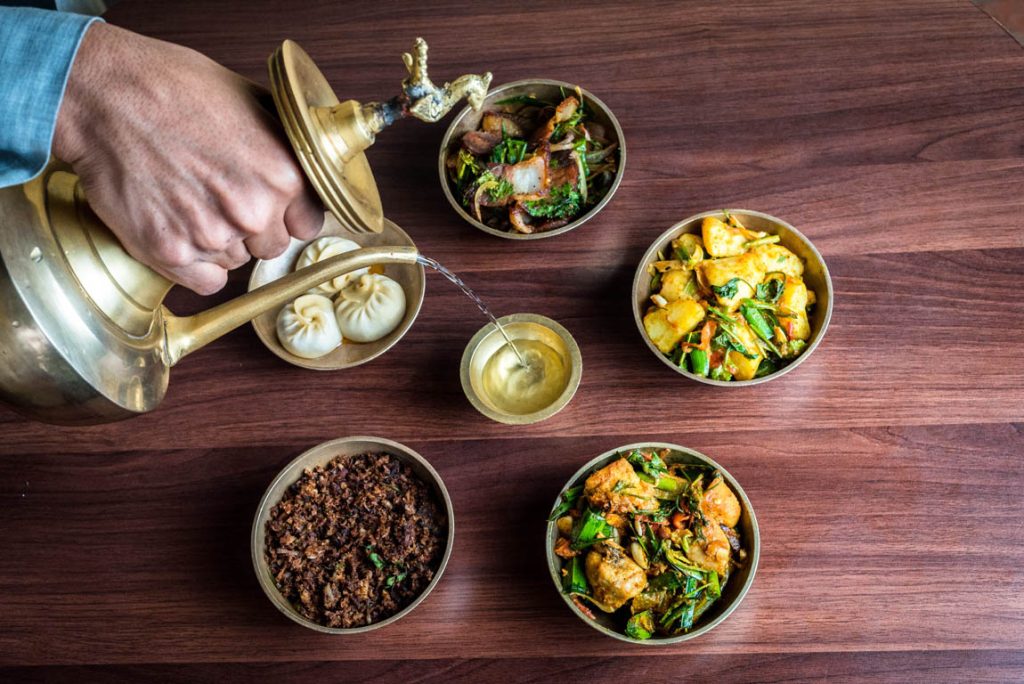
Read Respect Nepal: What Responsible Visitors Must Know and The Unwritten Rules of Travelling in Nepal before you go. For one of the easiest ways to understand regional identity, follow the food through our traveller’s guide to the foods of Nepal.
Frequently asked questions
What are the five best places to visit in Nepal for a first trip?
Kathmandu Valley, Pokhara, Chitwan, Lumbini and either Bandipur or Janakpur form a strong first-time list. You do not need to visit all five. With ten days, Kathmandu, Pokhara and Chitwan create the most balanced route.
How many days do I need in Nepal?
Seven days can cover Kathmandu and Pokhara. Ten days allows Kathmandu, Pokhara and Chitwan at a reasonable pace. Fourteen days is better because it creates space for delays, a short trek or one additional region.
Can I enjoy Nepal without trekking?
Absolutely. Kathmandu Valley, Pokhara, Chitwan, Lumbini, Janakpur, Bandipur and the Terai can fill a rich journey without a multi-day trek. Nepal’s heritage, food, wildlife and daily life are not secondary to the mountains.
Which place has the best Himalayan views without a long trek?
Pokhara offers the best combination of close mountain views, accommodation and easy activities. Nagarkot, Dhulikhel and Bandipur can also offer wide Himalayan panoramas on clear mornings. Visibility is never guaranteed, so allow more than one opportunity.
Where should families go in Nepal?
Kathmandu Valley, Pokhara, Chitwan and Bandipur work well for many families. They provide wildlife, boats, heritage, gentle walks and cultural experiences without demanding high-altitude travel. Move slowly and choose age-appropriate activities.
Where should I go in Nepal to avoid crowds?
Eastern Nepal, Bardia, Khaptad and selected far-western routes receive fewer visitors than Kathmandu, Pokhara and the most famous trekking corridors. Remoteness brings longer travel and fewer services, so quiet should be chosen with realistic preparation.
Which places are best during the monsoon?
Upper Mustang and parts of Dolpo are the strongest specialist choices because they lie in the Himalayan rain shadow. Kathmandu Valley and Pokhara are still possible for flexible cultural trips, but rain, cloud, road disruption and flight delays must be expected.
Is Nepal expensive to travel around?
Nepal can be affordable, particularly when using local guesthouses, meals and shared transport. Trekking permits, domestic flights, private vehicles, premium lodges and remote-region logistics can raise the budget quickly. Travel style and number of stops matter more than a single national daily average.
The best place in Nepal may be the one you give enough time
Nepal rarely stays inside the itinerary you made at home.
You may remember the great white dome of Boudhanath, but also the woman who quietly showed you which way to walk. You may remember sunrise over Annapurna, but also the boatman waiting while the lake changed colour. Chitwan may stay with you because of a rhinoceros in the grass, or because of the smell of the river at dusk. In Janakpur, it might be the temple. It might also be a cup of sweet tea shared beneath a painted wall.
Choose fewer places than your excitement first suggests. Let the regions change gradually around you. Leave room for weather, conversation and rest.
The best places to visit in Nepal are not simply the ones with the biggest names. They are the places you enter with enough attention to notice what is already happening there.
Stay Informed With the Latest & Most Important News
Previous Post
Next Post
- Kathmandu Travel Guide: What to See, Where to Stay, Eat and How to Get Around
- From Mustang to the World: Shinta Mani Mustang Named the No. 1 Luxury Hotel on Earth
- Best Places to Visit in Nepal: A Complete Region-by-Region Guide for Every Traveller
- Trekking in Nepal: The Complete Guide to Choosing and Planning Your Himalayan Trek
- Beyond the Mountains: Why Nepal Could Become One of the World’s Great Food Destinations