Now Reading: Beyond the Mountains: Why Nepal Could Become One of the World’s Great Food Destinations
-
01
Beyond the Mountains: Why Nepal Could Become One of the World’s Great Food Destinations
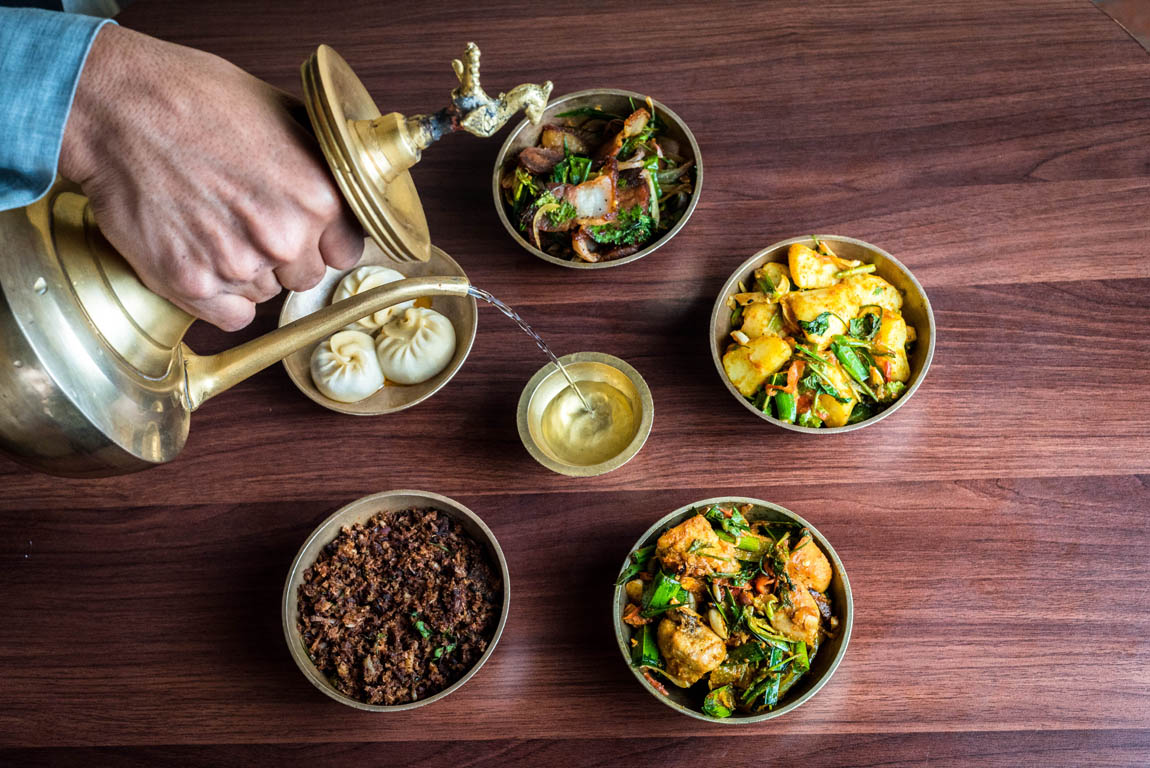
Beyond the Mountains: Why Nepal Could Become One of the World’s Great Food Destinations

Nepal is famous for mountains, but its regional cuisines could become the country’s next great tourism story. Explore the food landscapes, a proposed national culinary trail and a responsible roadmap for making Nepal one of the world’s memorable food destinations.
Before Nepal appears on a plate, it appears in the air.
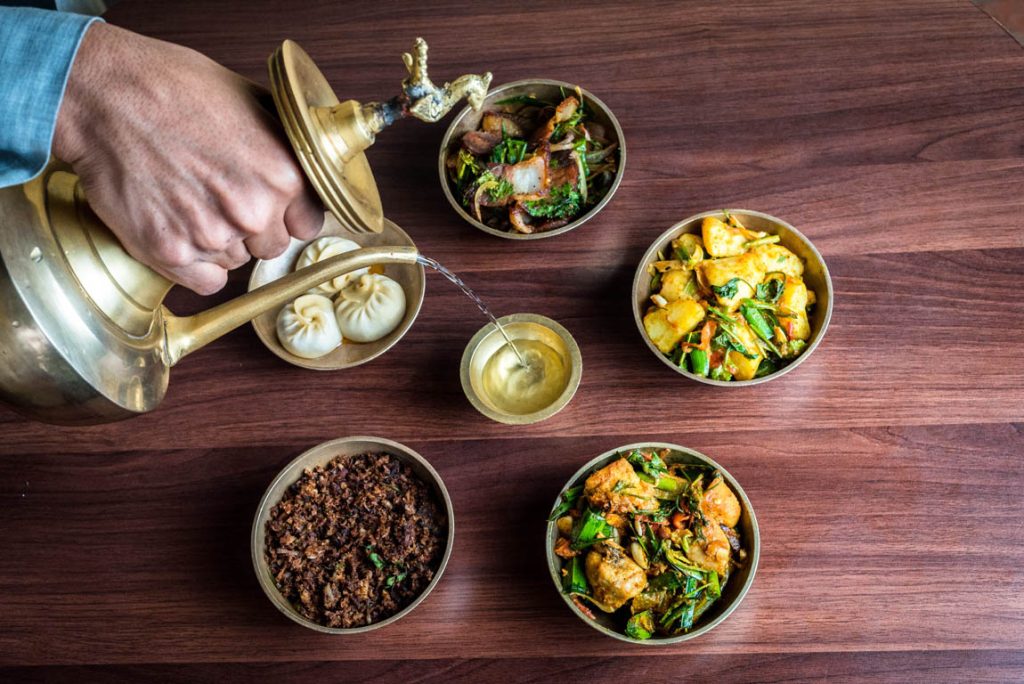
There is the nutty smell of soybeans roasting in a blackened pan. The warm, sour breath of gundruk rising from a kitchen. Steam escaping from a stack of momo trays. Mustard oil catching the back of your throat in a crowded market. A stone grinder turning garlic, chilli and timur into an achar that tastes brighter than anything poured from a bottle.
Then the plate arrives. Perhaps it is a leaf plate in a Newar courtyard, crowded with beaten rice, choila, beans, egg and pickles. Perhaps it is a steel thali beside the old salt route in Mustang, with black lentils, greens, buckwheat and a spoonful of something sharply fermented. Perhaps it is dhikri and river fish in a Tharu homestay, or kinema and pork in the eastern hills, followed by tea grown on slopes disappearing into mist.
For generations, Nepal has invited the world to look up. At Everest. At Annapurna. At prayer flags strung across high passes and temples rising above medieval squares. It was the right invitation, but it was never the whole story.
Nepal could now ask travellers to do something else: sit down, stay longer and taste the country properly.
This is not another list of dishes to tick off between a trek and a flight home. We already have a detailed traveller’s guide to the foods of Nepal, and we have followed the rhythm of local appetite from morning chiya to midnight momos. This is a bigger argument.
It is an argument that Nepal has the ingredients to become one of the world’s memorable food destinations. Not by copying another country’s night markets, tasting menus or television-friendly food tours, but by recognising what already exists in its farms, festivals, family kitchens, roadside bhattis and regional traditions.
That is the promise of Nepal food tourism at its best: not a new identity invented for visitors, but a richer way of seeing the country that is already here.
The mountains may be Nepal’s most famous invitation. Food could become the reason travellers go further, travel slower and return.
Nepal Does Not Have One Cuisine, and That Is Its Greatest Strength
Ask for “Nepali food” in many restaurants and you will be offered dal bhat, momo or a Thakali set. All three deserve their popularity. None can carry the full weight of the country.
Nepal rises from subtropical plains to the highest mountains on Earth within a remarkably short north-to-south distance. Its food changes with altitude, rainfall, soil, religion, migration, trade and season. Rice thrives in warmer lowlands and valleys. Millet, buckwheat, barley and hardy beans become more important where the land climbs and the growing season shortens. Fresh fish makes sense beside southern rivers. Fermentation and drying make sense where winter once demanded that every harvest be stretched.
Geography is only the beginning. Newar, Maithil, Tharu, Thakali, Tamang, Gurung, Magar, Sherpa, Rai, Limbu and many other communities have carried distinct knowledge through generations. A spice can have a geography. A grain can hold a family history. A feast can explain social relationships more clearly than a museum label ever could.
The Nepal Tourism Board’s own overview of food and culinary travel recognises that food habits differ by region, ethnicity, culture and climate. Its heritage cuisine initiative has also argued that gastronomy can help Nepal attract travellers looking for more than mountains. The raw material for a serious food destination is already here.
What is missing is not flavour. It is connection. Travellers need a clearer way to understand what belongs where, why it matters, who keeps it alive and how to experience it respectfully.
A culinary map of Nepal
No table can represent every community or household. Think of this as an invitation to explore, not a final classification.
| Food landscape | Places to begin | Flavours and traditions to seek | What the food reveals |
|---|---|---|---|
| Kathmandu Valley | Kathmandu, Patan, Bhaktapur and Kirtipur | Samay baji, bara or wo, choila, chatamari, yomari, kwati, juju dhau and traditional Newar drinks | Urban civilisation, ritual, seasonal festivals, trade and the social architecture of the feast |
| Madhesh and the eastern Terai | Janakpur and surrounding towns and villages | Maithil thali, taruwa, lentils, fish, curd, pickles and milk-based sweets | Fertile plains, Mithila hospitality, borderland exchange and food closely tied to ceremony |
| Central and western Terai | Chitwan, Nawalparasi, Dang and Bardia | Tharu dhikri, river fish, seasonal greens, snails where locally eaten, rice dishes and smoky village cooking | Wetlands, forests, farming cycles and Indigenous knowledge of the lowlands |
| Middle hills | Bandipur, Gorkha, Kavre and villages around Pokhara | Dhido, gundruk, sisnu, roasted maize, millet breads, legumes, goat and community-specific dishes | Terrace farming, preservation, seasonal scarcity and hospitality built around what the land can provide |
| Trans-Himalayan and high mountain regions | Thak Khola, Lower Mustang, Solukhumbu, Manang and mountain settlements | Thakali meals, buckwheat, barley, beans, dried foods, jimbu, chhurpi, noodle soups and butter tea | Altitude, cold, caravan routes, Buddhist cultures and the intelligence of storing food for winter |
| Eastern hills | Dharan, Dhankuta, Ilam and nearby Rai and Limbu areas | Kinema, yangben, pork preparations, akabare chilli, tongba, chhurpi and Ilam tea | Fermentation, forest ingredients, Kirati food traditions and a food culture still underrepresented in mainstream itineraries |
| Karnali and the far west | Jumla, Surkhet, Nepalgunj and the western hills | Marsi rice, millet, buckwheat, beans, potatoes, nettles and robust seasonal cooking | Resilient crops, long winters, difficult transport and food systems adapted to demanding landscapes |
The important word in that table is “begin”. Nepal’s food map becomes more detailed the closer you look. Two neighbouring villages may prepare the same grain differently. A festival version of a dish may bear little resemblance to the weekday one. A recipe may change according to caste, faith, season or the person cooking it.
That complexity is not a branding problem. It is the attraction.
Why Nepal Is Ready for Food Tourism
Food tourism is not simply travelling somewhere and needing lunch. It is travel motivated by taste, production, story and place. It can include a market walk, a farm visit, a cooking lesson, a festival meal, a conversation with a brewer, a tea tasting or a journey planned around regional kitchens.
UN Tourism identifies gastronomy as a way to diversify tourism, support local economic development and involve many parts of a community. That matters in Nepal, where international tourism is still heavily concentrated around a few cities, trekking corridors and wildlife destinations.
A food traveller does not need a summit. They need time, curiosity and access. They can travel in seasons when a high pass is closed. They can spend money with farmers, home cooks, guides, drivers, market vendors, ceramic makers and small restaurants. They can find meaning in towns that rarely appear on a conventional first-time itinerary.
The diversity is real, not reconstructed for visitors
Nepal’s strongest culinary experiences are still part of ordinary life. Dal dries on rooftops. Pickles mature in the sun. Families grind spice pastes on stone. Sel roti appears around festivals because the calendar asks for it, not because a hotel has declared a themed evening.
This gives Nepal something precious: living food heritage. The challenge is to welcome travellers without flattening that heritage into a performance.
The country already understands hospitality through food
In a Nepali home, generosity often arrives with a serving spoon. Rice is added before your plate is empty. The best piece of meat may be quietly turned towards the guest. Tea appears even when the visit was meant to last ten minutes.
That instinct cannot be manufactured through a tourism campaign. It already exists. The work is to build experiences in which hosts are paid fairly, guests understand the context and hospitality is not mistaken for unlimited access.
Fermentation gives Nepal a modern story with ancient roots
Long before fermentation became fashionable in international restaurants, Nepali households were drying leafy greens into gundruk, preserving radish as sinki, fermenting soybeans into kinema and turning grains into community-specific drinks. These practices are practical responses to season and landscape, but they also create deep sourness, aroma and savoury intensity.
Presented carefully, this is a compelling global food story. It connects tradition with contemporary interest in preservation, low-waste cooking and microbial flavour without pretending that village knowledge needs outside validation.
Nepal’s tea, coffee and spices can lead travellers into the landscape
A cup can become a route. Tea can take a traveller into the green folds of Ilam. Coffee can lead towards small farms in the middle hills. Timur can open a conversation about altitude, aroma and local trade. Jimbu can explain why a dried Himalayan herb makes a bowl of lentils smell like a particular place.
These are not souvenirs added at the end of a holiday. They are ways of reading the land.
A Great Nepal Food Trail: What It Could Look Like
Nepal does not currently have one official national food trail. Perhaps it should.
Imagine a flexible network rather than a single painted line on a map. Travellers could follow a core route and add regional branches according to season, time and appetite. Each stop would connect meals with markets, farms, heritage, festivals and the people who produce the food.
The purpose would not be to declare one restaurant the “most authentic”. It would be to help visitors understand why food changes as Nepal changes around them.
| Suggested stage | Time | Experience | Deeper connection |
|---|---|---|---|
| Kathmandu and Patan | 2 days | Walk through Asan, taste seasonal snacks, visit a spice seller and join a small cooking session | See how the capital gathers ingredients and communities from across Nepal |
| Kirtipur and Bhaktapur | 2 days | Share a Newar meal, taste juju dhau and learn how feast foods connect with ritual and place | Pair the table with the living heritage of old Newar cities |
| Janakpur | 2 days | Explore a Maithil meal, local sweets, curd, pickles and a household or community cooking experience | Connect food with Mithila art, pilgrimage and the rhythms of the plains |
| Chitwan or Nawalparasi | 2 days | Stay in a community-based Tharu homestay and eat foods shaped by rivers, fields and forest edges | Move beyond a safari-only understanding of the Terai |
| Pokhara and nearby hills | 2 days | Visit a market, seek Gurung and Magar food traditions through a responsible local experience and taste hill-grown coffee | Understand Pokhara as a meeting point between the plains, hills and Annapurna region |
| Thak Khola and Lower Mustang | 3 to 4 days | Follow the landscape north through Tukuche, Marpha and Jomsom, tasting buckwheat, beans, dried foods and Thakali cooking close to its roots | Read the old salt-trade corridor through ingredients, storage and hospitality |
| Return and reflection | 1 day | Finish with a modern Nepali meal that treats regional ingredients thoughtfully | See how tradition can evolve without being erased |
This core journey would need about two weeks and sensible travel buffers. Road delays and mountain weather are part of Nepal, especially on the way to Mustang. Travellers with less time could focus entirely on the Kathmandu Valley and still encounter extraordinary depth.
The eastern branch
Dharan, Dhankuta and Ilam could form one of Nepal’s most distinctive food journeys. The route brings together Kirati food traditions, pork, kinema, yangben, akabare chilli, tongba, chhurpi and tea landscapes. It also rewards slower travel through a region that receives far fewer international visitors than the central circuit.
Our Eastern Nepal itinerary already provides a practical route through Ilam, Dharan, Dhankuta, Tinjure and Koshi Tappu. A food-focused version could stay longer in markets, farms and community kitchens.
The western branch
Nepalgunj, Dang, Bardia, Surkhet and Jumla could tell a different story: Tharu foodways, plains trade, Muslim culinary influence, Karnali grains, Marsi rice, beans and crops bred for difficult climates. This route would demand more time and stronger local partnerships, which is precisely why it could spread the benefits of tourism beyond familiar destinations.
A visit to Bardia National Park, for example, becomes richer when the journey includes the culture and food of the communities around the forest, rather than treating the lodge only as a place to sleep between safaris.
The trail would not need to be completed in one trip. In fact, it would be better if it gave travellers a reason to return.
What Nepal Must Build Around the Food It Already Has
Declaring Nepal a food destination is easy. Building one responsibly is harder.
The goal should not be to make every meal look identical, place every recipe in a luxury restaurant or turn home kitchens into unregulated attractions. It should be to create the conditions in which culinary knowledge is valued, hosts benefit and travellers can find meaningful experiences with confidence.
1. Create a living national food map
Nepal needs a multilingual digital map of regional dishes, ingredients, festivals, markets, farms, cooks and culinary experiences. The map should be built with communities, historians, food researchers and local governments, not written entirely from Kathmandu.
It should accept variation instead of forcing one official recipe. The value of gundruk, achar or sel roti lies partly in the fact that families do not make them in exactly the same way.
2. Make community hosts partners, not decoration
If a hotel sells a village meal, the village should not receive the smallest share. Community cooks need transparent payment, manageable group sizes, booking systems, hygiene support and the right to say no. Women hold much of Nepal’s culinary knowledge, yet promotional stories too often celebrate the food without naming or rewarding the people who produced it.
A serious food-tourism model would make those cooks visible as experts.
3. Train regional food guides
A good food guide does more than point to a plate and name its ingredients. They understand the market, the community, religious sensitivities, seasonal availability and the difference between a restaurant adaptation and a household tradition. Nepal could train local guides in culinary interpretation while allowing each region to tell its own story.
4. Treat markets as cultural spaces
Asan, Janakpur’s bazaars, Pokhara’s produce markets, Dharan’s food streets and weekly haat bazaars across the country are already visitor experiences. They need clean water, waste management, sensible signage and safe walking routes, but they do not need to be sanitised until they lose their life.
The sound of bargaining, the seasonality of produce and the sight of a vendor knowing exactly which chilli a customer wants are part of the story.
5. Improve food safety without erasing small vendors
Travellers need clean kitchens, safe water, honest allergen information and responsible alcohol service. Small businesses need training and affordable infrastructure, not standards designed only for large hotels. A visible voluntary hygiene scheme, combined with practical support, could build trust while keeping local eateries in the tourism economy.
6. Link restaurants to farms and producers
A menu that names Jumla beans, Ilam tea, hill coffee, Mustang buckwheat or a local pickle maker turns an ingredient into a place. It also gives producers a stronger route to market. Hotels and restaurants should be encouraged to buy regionally, name their sources and explain seasonality rather than offering the same menu from Mechi to Mahakali.
7. Build a festival calendar around food that is genuinely seasonal
Yomari Punhi, Janai Purnima and kwati, Teej, Dashain, Tihar and sel roti, Maghe Sankranti, harvest celebrations and community-specific festivals already create a culinary calendar. Tourism promotion should explain when foods appear and why, while protecting ceremonies that are not meant to become public spectacles.
The point is not to serve every festival dish every day of the year. Seasonality gives food meaning.
8. Let contemporary Nepali chefs participate without asking them to freeze tradition
Heritage survives through use, not glass cases. Young chefs should be free to work creatively with local grains, ferments, herbs and regional recipes, provided they acknowledge sources and do not present borrowed community knowledge as personal invention.
Nepal needs both the grandmother who knows the correct texture of a festival batter by touch and the chef who can introduce that grain to a new audience. One does not have to replace the other.
How Travellers Can Explore Nepal Through Food Right Now
You do not need to wait for a national trail or a government campaign. The food journey already exists. It simply requires a different way of travelling.
Choose depth over the longest possible checklist
Four thoughtful days in the Kathmandu Valley can teach you more than racing across six regions. Spend one morning in a market, one afternoon cooking, one evening sharing a Newar meal and one day in Bhaktapur or Kirtipur. Read our guide to the traditional Newari feast before you go so the plate arrives with context.
Ask what is seasonal and local
Instead of asking only, “What is the most famous dish?”, ask what people are eating this month. Ask which greens have arrived, which pickle was made at home and whether the grain came from nearby. The answer may not be famous. It may be far more memorable.
Use homestays selectively and responsibly
A genuine community homestay can offer something a restaurant cannot: the pace of preparation, the family story and the relationship between food and daily work. Choose programmes with clear local ownership and fair payment. Do not treat a host’s kitchen as a photography set. Ask before taking close-up images of people, cooking spaces or ceremonies.
Learn to recognise adaptation without judging it
Restaurant food changes for many reasons. Ingredients may be unavailable. Diners may expect less chilli. A dish may have moved with a community and evolved. “Authentic” is useful only when it encourages questions. It becomes harmful when travellers use it to lecture the people whose food they are eating.
Travel with appetite, but also with care
Choose busy places where food is cooked fresh and served hot. Drink sealed or properly treated water. Be cautious with raw salads, ice and food that has been sitting lukewarm. If you have a serious allergy, carry a translated allergy card and do not rely on the phrase “a little is fine”. Kitchens may use shared oil, utensils and grinding equipment.
Vegetarian travellers will find abundant everyday options, but should still ask whether a dish contains ghee, curd, meat stock or shared cooking fat. Vegan travellers can begin with the Nepal Tourism Board’s vegan food overview and explain their needs clearly.
Budget for experiences, not only meals
Food in Nepal can still be remarkably affordable, but the cheapest plate is not always the fairest or most revealing experience. Pay for the market guide, the cook’s time and the transport to a farm. That spending is part of what allows culinary tourism to benefit more people.
| Food experience | Indicative price in NPR | Approximate USD |
|---|---|---|
| Local breakfast or street snack | NPR 150–350 | US$1–2 |
| Fresh local set meal | NPR 400–900 | US$3–6 |
| Regional specialist restaurant meal | NPR 800–1,800 | US$5–12 |
| Contemporary or premium Nepali tasting experience | NPR 2,500–6,000 | US$16–39 |
| Market visit and hands-on cooking class | NPR 3,000–8,000 | US$19–52 |
| Comfortable daily food budget | NPR 1,500–4,500 | US$10–29 |
These are broad planning ranges, not fixed prices. Tourist areas, remote transport, premium ingredients, group size and alcohol can change the cost considerably. Dollar conversions are rounded using the Nepal Rastra Bank selling rate of approximately NPR 154.81 to US$1 on 23 July 2026. Check the current official rate before travelling.
Drink with context
Aila, raksi, tongba and chhyang belong to different communities and occasions. They are not interchangeable novelty shots. Learn what you are being offered, drink moderately and respect a host’s customs. Our guide to traditional drinks of Nepal is a useful starting point.
What Nepal Must Not Lose in the Rush to Promote It
Food tourism can preserve knowledge, create livelihoods and encourage travellers to visit overlooked places. It can also do the opposite.
A recipe can be separated from the people who sustained it. A sacred or seasonal food can become an all-day menu item stripped of meaning. A community can be photographed, branded and sold while receiving little of the income. A beautifully presented plate can hide the fact that the farmer was paid almost nothing.
Nepal should resist the urge to package its food too neatly. Not every flavour needs to be softened for visitors. Not every dish needs an English nickname. Not every kitchen needs to become public. Not every tradition needs to be converted into a product.
The strongest version of Nepali food tourism would be proud but not defensive, modern but not rootless, welcoming but not extractive. It would allow local people to decide what they share and how they are represented.
Most importantly, it would recognise culinary knowledge as knowledge. The person who can judge fermentation by smell, stretch a harvest through winter, balance an achar without measuring or prepare a feast for an entire neighbourhood is not merely providing atmosphere. They are carrying expertise.
Nepal’s Next Great Tourism Story May Be Waiting in the Kitchen
Nepal will always be a mountain destination. It should be. There are mornings when the first light reaches Machhapuchhre, evenings when Everest turns briefly gold and high valleys where the scale of the land rearranges something inside you.
But a country cannot be understood only from its viewpoints.
It is also understood at ground level, beside the stove, while someone tears greens, pours tea or presses another helping onto your plate. It is understood in the patience of fermentation, the economy of a hill kitchen, the abundance of a festival feast and the quiet pride with which a cook tells you that this is how their mother made it.
Nepal does not need to invent a food identity. It needs to notice the many identities it already has, protect them and make it easier for curious travellers to meet them.
A national culinary map. Community-owned food experiences. Regional guides. Better markets. Fairer links between farms and restaurants. A great food trail stretching from the plains to the high Himalaya. None of these ideas is beyond reach.
The world may first come to Nepal for the mountains.
One day, it may come hungry.
Plan a Deeper Nepal Journey
If this article has changed the way you see Nepal, continue with our two-week Nepal itinerary, then add time for the tables, markets and conversations that ordinary itineraries hurry past. Nepal rewards the traveller who leaves space between the sights.
Stay Informed With the Latest & Most Important News
Previous Post
Next Post
- Kathmandu Travel Guide: What to See, Where to Stay, Eat and How to Get Around
- From Mustang to the World: Shinta Mani Mustang Named the No. 1 Luxury Hotel on Earth
- Best Places to Visit in Nepal: A Complete Region-by-Region Guide for Every Traveller
- Trekking in Nepal: The Complete Guide to Choosing and Planning Your Himalayan Trek
- Beyond the Mountains: Why Nepal Could Become One of the World’s Great Food Destinations