Now Reading: Altitude Sickness in Nepal: How to Spot It, Prevent It, and When to Turn Back
-
01
Altitude Sickness in Nepal: How to Spot It, Prevent It, and When to Turn Back

Altitude sickness in Nepal: how to spot AMS, HAPE and HACE, how to prevent it, and the one rule that keeps trekkers safe.
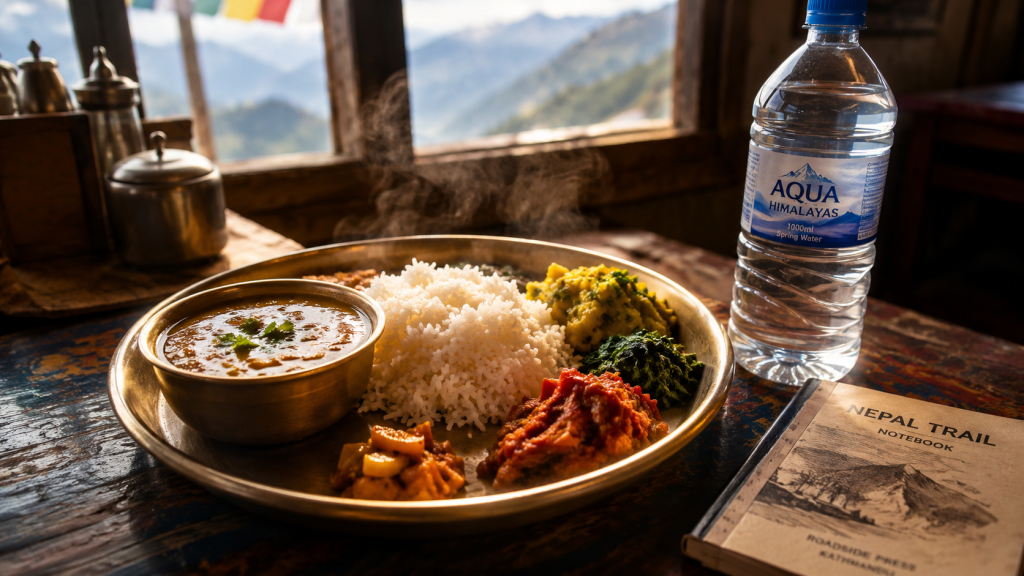
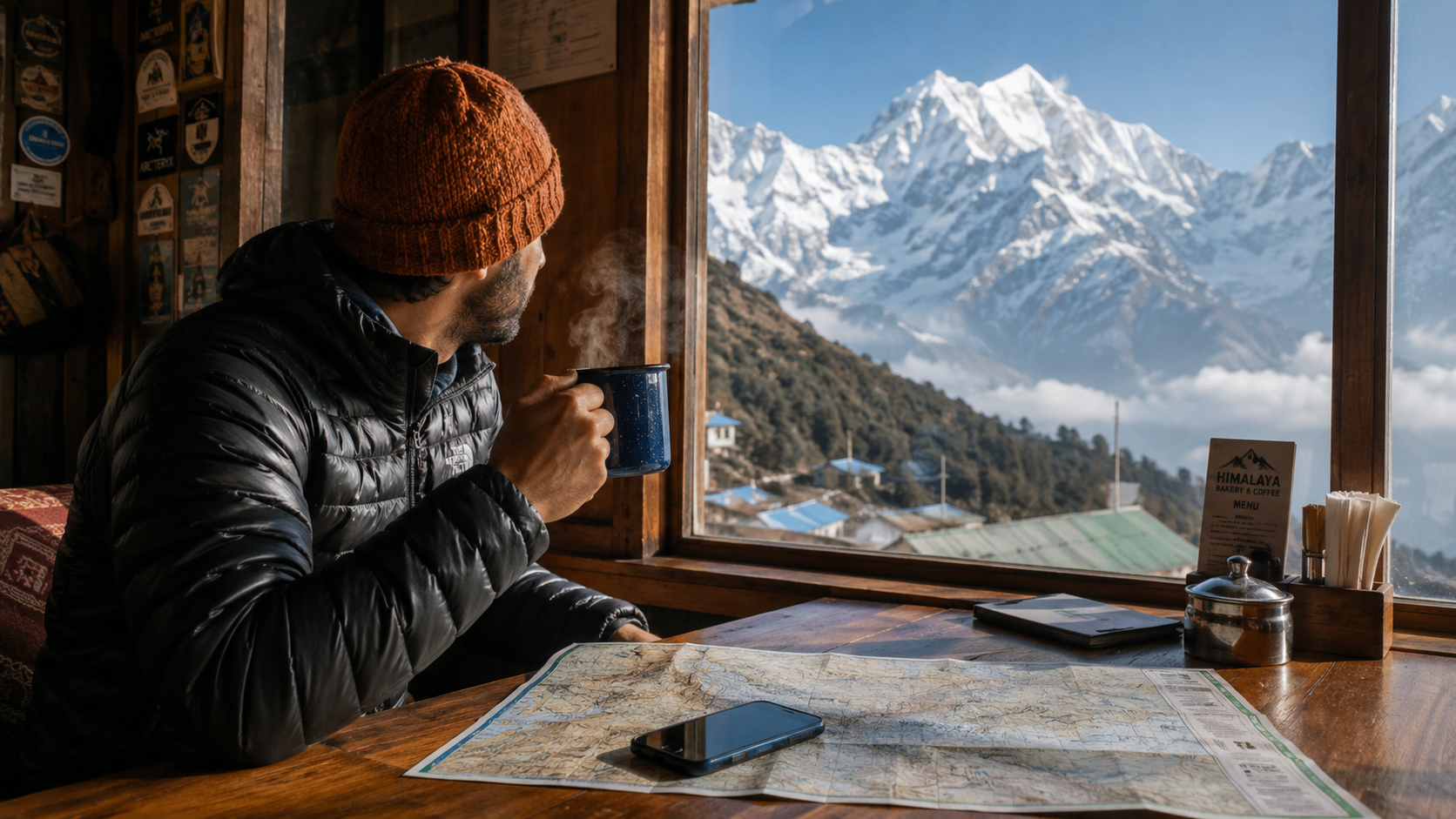
It usually begins quietly. You have walked all day through air that feels somehow thinner and brighter, the kind that makes distant ridges look close enough to touch. You reach the teahouse as the light turns gold on the peaks, peel off your boots, and order a plate of dal bhat and a pot of sweet, milky tea. And then, somewhere between the first sip and the second, you notice it. A dull ache behind your eyes. A faint queasiness you had put down to the climb. A strange reluctance to finish the food in front of you, even though you have not eaten properly in hours.
That quiet ache has a name, and learning to listen to it is one of the most important things you will ever do on a high trek in Nepal. So here is the honest guide to altitude sickness: what it feels like, why it happens, how to keep it from spoiling your trip, and the single rule that keeps trekkers safe when it does turn up.
What altitude sickness actually is
Let us clear something up straight away. Altitude sickness is not a sign that you are unfit, soft, or doing something wrong. It is simply your body meeting a problem it was never built for: thinner air, and less oxygen in every breath.
As you climb, the air thins out. By the time you reach Everest Base Camp or stand on top of a high Himalayan pass, each lungful carries roughly half the oxygen you are used to at sea level. Your body is wonderfully clever, and given time it adapts, making more red blood cells, breathing deeper, quietly working to keep you supplied. Acute mountain sickness, or AMS, is what happens when you climb faster than your body can keep pace with. It is the gap between where you are standing and where your body is ready to be.
The reassuring part is that AMS is common, usually mild, and almost always manageable if you treat it with respect. The dangerous part is never really the illness itself. It is the temptation to ignore it.
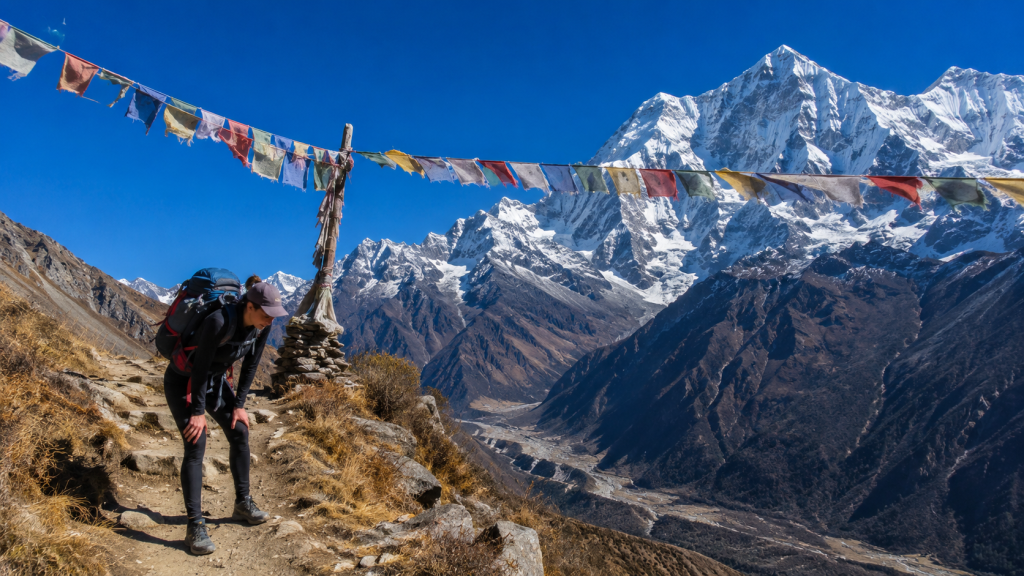
The myth worth getting rid of first
Here is the belief that lands more trekkers in trouble than any other: the idea that being fit will protect you. It will not.
Altitude does not care how many marathons you have run or how strong your legs feel on the climb. Some of the fittest, most determined people are the ones who push hardest, brush off the early warnings, and end up in the worst trouble, precisely because their bodies can power through signals that should have stopped them in their tracks. Meanwhile, the quiet trekker who takes it slow and treats a headache seriously often drifts over the pass without a flicker of bother.
So let go of any notion that getting sick would mean you had failed. Anyone can get altitude sickness, at any age and any fitness level. The trekkers who stay safe are simply the ones who pay attention.
Learning to read the signs
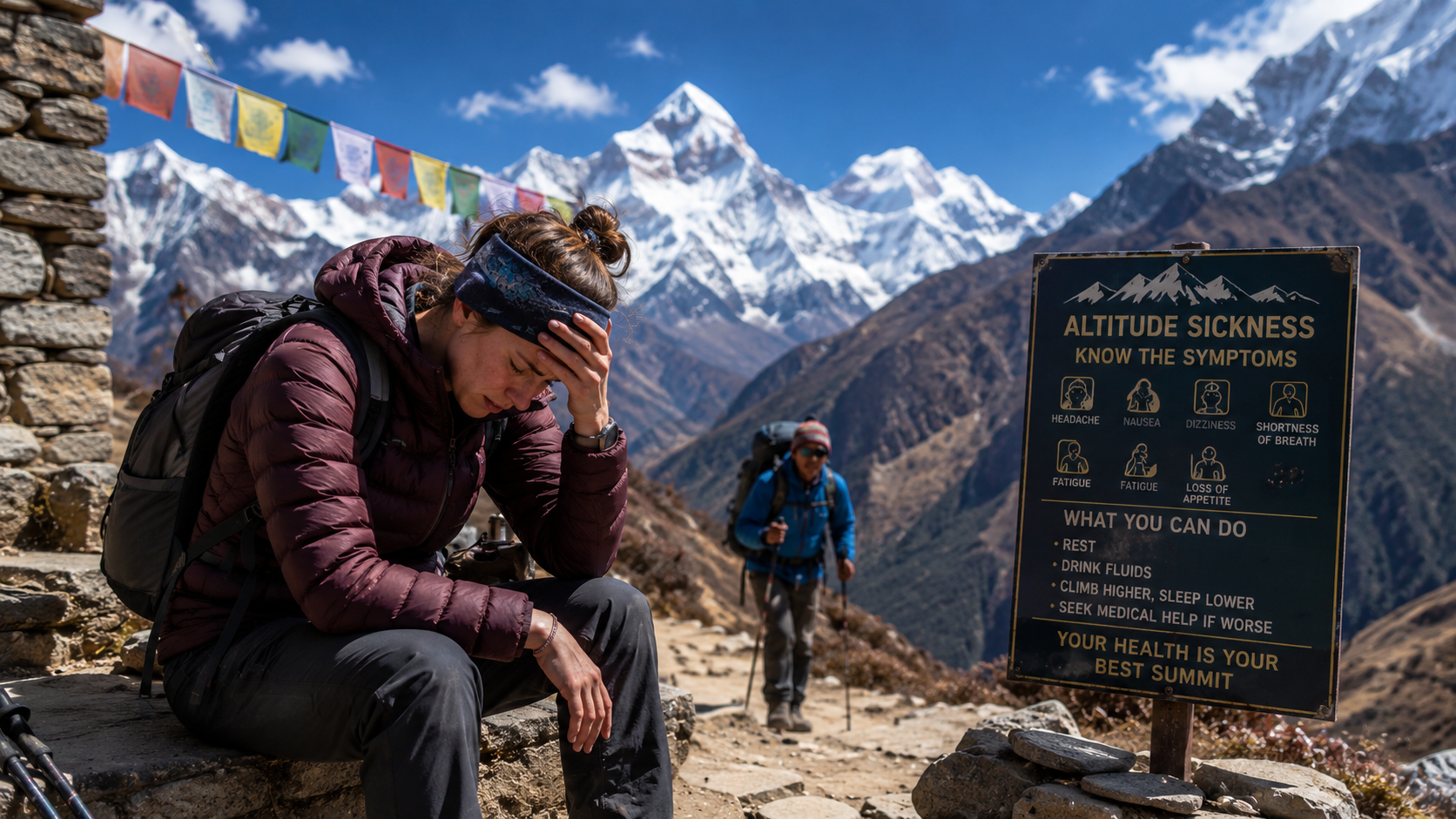
AMS tends to announce itself in ways that are easy to wave away, especially when you are tired, exhilarated, and surrounded by some of the most beautiful scenery on earth. The classic signs are a headache, usually the first and most honest clue; nausea or a sudden loss of appetite, that odd unwillingness to touch your food; a heavy fatigue that feels out of proportion to the day’s walking; dizziness or light-headedness; and a restless, broken night where sleep simply refuses to come.
If you feel hungover without having touched a drop, that is a useful way to picture mild AMS. On its own, it is not an emergency. It is a message, and the message is gentle but firm: you are high enough for now, so let your body catch up before you go any higher.
When it turns serious
Most AMS never travels beyond that grumbling headache. On rare occasions, though, it can tip into something genuinely dangerous, and these are the two conditions you must never, under any circumstances, ignore.
HAPE, when the lungs begin to fill
High altitude pulmonary edema, or HAPE, is fluid gathering in the lungs. It can creep in even while the headache still seems manageable. The warning signs are breathlessness that will not settle even when you are sitting still, a persistent cough that may turn wet or crackly, a tight or congested chest, and a sudden, frightening collapse in energy, where a handful of steps leaves you gasping. If you, or anyone in your group, is fighting for breath while resting in a teahouse, treat it as the emergency it is.
HACE, when the brain swells
High altitude cerebral edema, or HACE, is swelling in the brain, and it is the most serious of the three. The giveaway is a change in how someone thinks and moves. They may stagger as though drunk, unable to walk a straight line. They may turn confused, unusually drowsy, strangely out of character, or struggle with simple decisions. A classic field test is to ask the person to walk heel to toe along an imaginary line: if they cannot manage it, you do not wait and see what the morning brings. You act.
With both HAPE and HACE, there is no debate, no pressing on to the next village, no hoping it settles overnight. The answer is to go down, straight away, and to get help. Which brings us neatly to the rule that matters more than every other piece of advice combined.
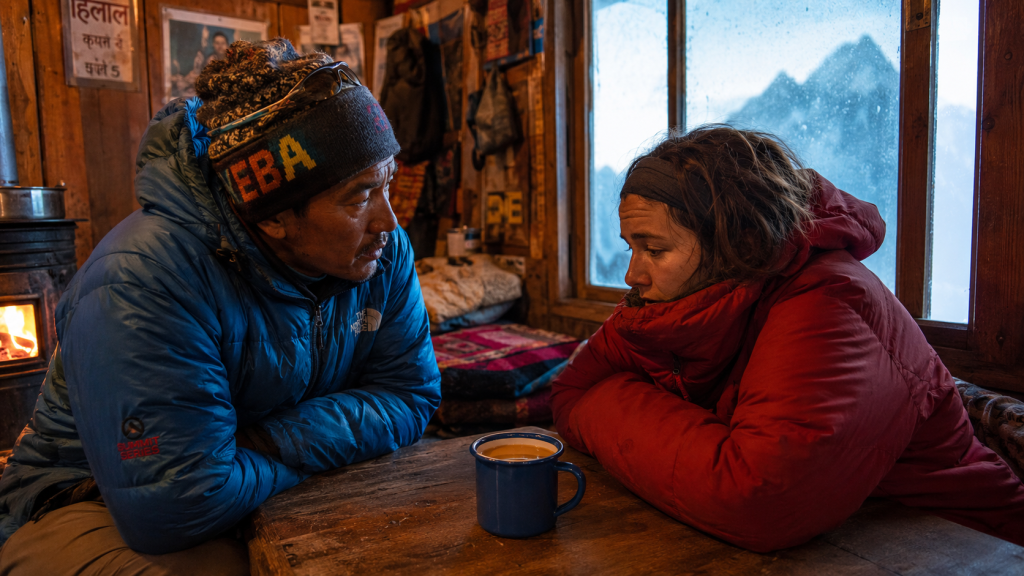
The one rule that keeps you safe
If your symptoms are getting worse, go down. If you are not sure, go down.
That really is the whole of it. Losing even a few hundred metres of height can turn a frightening situation around with something close to magic. Altitude sickness is one of the very few serious conditions in the world with such a clear and reliable cure: shed some height, and you get better. A trekker who can barely stand at 4,900 metres can feel like a different person after dropping to 4,300. Your guide knows this, the teahouse owners know this, and now you know it too.
Never climb to sleep at a higher altitude while symptoms are still hanging around. And never let pride, a tight schedule, or the money you have already spent talk you into going up when your body is plainly asking you to stop. The mountain will still be there next year. The whole point is to make sure you are too.
How to stop it before it starts
The good news is that you hold far more sway over altitude sickness than it might feel when that headache is throbbing. Prevention comes down to a handful of unglamorous habits, and they genuinely work.
Go slow, and let your sleeping height tell the story. The golden principle is “climb high, sleep low.” What matters most is not how high you wander during the day, but how high you sleep at night. Above roughly 3,000 metres, try not to raise your sleeping altitude by more than around 300 to 500 metres a night, and fold in a rest day every few days so your body can settle. A well-designed itinerary does this for you, which is one quiet reason the classic routes are so popular: their stages are paced for acclimatisation, not for rushing.
Drink more than you think you need. The dry mountain air draws moisture out of you with every breath. Keep sipping through the day, and let a clear, pale stream rather than a dark one be your simple, slightly undignified gauge that you are drinking enough.
Eat, even when you would rather not. Altitude has a habit of stealing your appetite at exactly the moment your body needs fuel most. Carbohydrate-heavy food, the endless dal bhat, potatoes, noodles, and warm porridge of the trail, gives you energy and seems to help your body adjust.
Save the celebratory drink for lower ground. Alcohol and altitude make a poor pairing, and that summit beer always tastes better earned on the way back down anyway.
Talk to a doctor about Diamox before you travel. Acetazolamide, sold under the brand name Diamox, is a prescription medicine that genuinely helps your body acclimatise and is widely used by trekkers in Nepal. It is not a magic shield, and it does not suit everyone, so the right move is a conversation with a travel doctor well ahead of your trip, who can tell you whether it is sensible for you and how to take it. This is also the moment to say plainly that everything here is general guidance to help you understand the risks, not a replacement for personal medical advice from a professional who knows your history.
If it finds you anyway
Say you have done everything right and the headache still arrives. Do not panic. This is normal, and it is usually fixable.
Stop climbing. Stay put at the same altitude, rest, drink, and give your body the time it is quietly asking for. Simple painkillers like paracetamol or ibuprofen can take the edge off the headache while you wait. If you feel better after a proper rest, wonderful: you can carry on, gently. If you feel worse, or if anything is more than mild, go down, and tell your guide exactly how you feel rather than playing the hero. Guides on the main routes are trained for precisely this, carry emergency medicines, and can arrange a helicopter evacuation in the rare event it ever comes to that. It seldom does. But it is exactly why having the right cover sorted before you set off is not a detail to skip.
Recommended Read: Travel Insurance for Trekking in Nepal: What Actually Counts in 2026.
Turning back is not failing
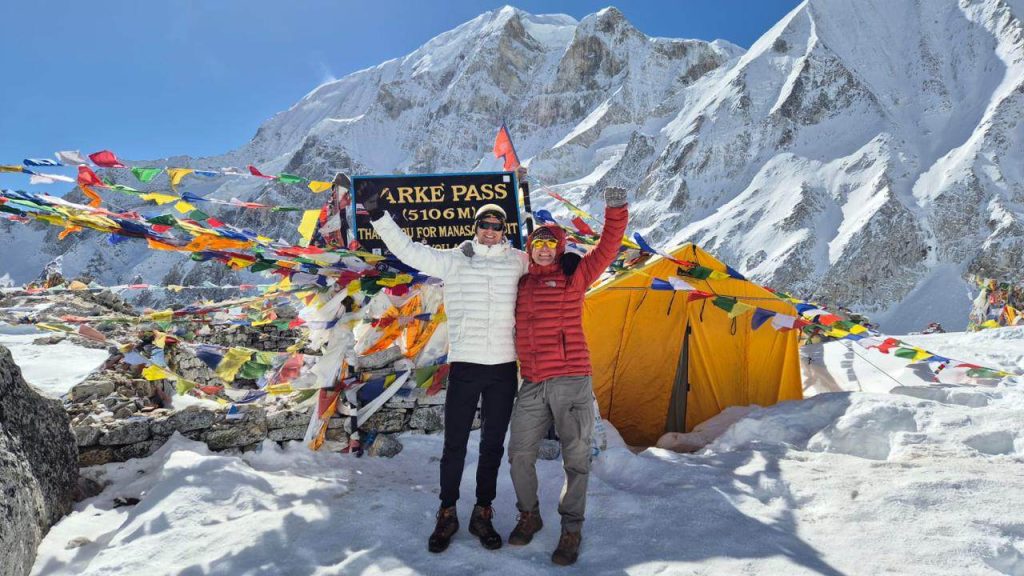
There is a particular kind of courage that almost never gets celebrated on the trail. It is the courage to stop. To look up at a pass you have dreamed about for years, feel your body telling you no, and choose to turn around with the summit still ahead of you.
It does not feel heroic in the moment. It feels like loss. But the trekkers who listen to their bodies are the ones who come home with the whole story intact, and very often the ones who return to finish what they started, stronger and a little wiser. Nepal does not ask you to conquer its mountains. It asks you to move through them with respect, and to come back down to tell the tale.
So climb slowly. Eat your dal bhat. Drink your water. Listen to that quiet ache behind your eyes as though it were a friend giving you good advice, because that is precisely what it is. Do that, and the high Himalaya will hand you something far better than a summit photo: the simple, soaring feeling of standing where the air is thin and the world falls away beneath your boots, knowing you got there the right way.
Recommended Read: No More Solo Trekking: Everything You Need to Know About Nepal’s 2026 Trekking Rules and A Step-by-Step Guide to Preparing for Your Trip to Nepal.
Related Posts
Stay Informed With the Latest & Most Important News
Previous Post
Next Post
- Kathmandu Travel Guide: What to See, Where to Stay, Eat and How to Get Around
- From Mustang to the World: Shinta Mani Mustang Named the No. 1 Luxury Hotel on Earth
- Best Places to Visit in Nepal: A Complete Region-by-Region Guide for Every Traveller
- Trekking in Nepal: The Complete Guide to Choosing and Planning Your Himalayan Trek
- Beyond the Mountains: Why Nepal Could Become One of the World’s Great Food Destinations