Now Reading: Manaslu Circuit Trek: The Complete Guide to Nepal’s Wilder Classic
-
01
Manaslu Circuit Trek: The Complete Guide to Nepal’s Wilder Classic

Manaslu Circuit Trek 2026: the honest guide to the route, Larkya La, permits, costs, seasons, and the new permit rule to know before you go.
The jeep leaves the tarmac somewhere past Arughat, and that is when you feel it. The road turns to rutted track, the Budhi Gandaki river throws itself white and furious through the gorge below, and the last mobile signal blinks out for good. You are heading north, into a fold of the Himalaya that most travellers never see, toward a mountain so vast it has its own weather. This is the way into the Manaslu Circuit, and from the moment the dust settles behind you, it feels like stepping off the map into an older, quieter Nepal.
If the Annapurna Circuit is the country’s great trek and Everest Base Camp is its famous one, Manaslu is its serious one, the route people whisper about after they get home. Here is the honest, complete guide to walking it in 2026: the route valley by valley, the crossing of Larkya La, what the permits really cost, when to go, and the rule change this year that quietly rewrote who is allowed on the trail.
Why Manaslu, and why now
Manaslu is the eighth-highest mountain on earth, 8,163 metres of ice and rock rising over a landscape that time seems to have forgotten. The trail loops right around it, following the Budhi Gandaki up from steamy river valleys into high, wind-scoured country where the villages are Tibetan in everything but name, prayer flags snap over the path, and yak bells drift across the silence.
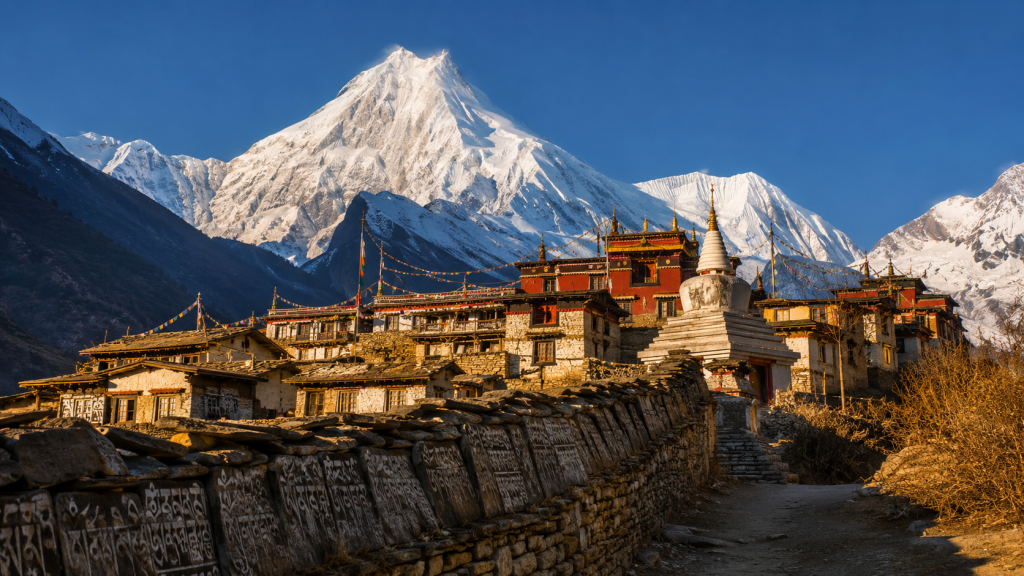
What makes it special is what it does not have. Fewer than five thousand trekkers walk this circuit in a year, a fraction of the crowds on Annapurna or Everest, so the teahouses still feel like homes rather than hostels, and the culture along the way has stayed remarkably whole. You will pass mani walls worn smooth by centuries of hands, monasteries clinging to hillsides, and grandmothers spinning wool in doorways who have watched this valley change very little in their lifetimes.
There is also a timely reason to look at Manaslu now. For years, the restricted-area rules forced you to have at least two trekkers on a single permit, which quietly priced solo walkers out or made them pay for a second, non-existent companion. In March 2026 that rule was dropped, so a lone traveller can finally get the Manaslu permit on their own. More on exactly what that means below, because there is a catch worth understanding.
The route, valley by valley
Most treks begin with a long jeep day from Kathmandu, rattling west along the Prithvi Highway before turning north onto the rough road to Machha Khola. It is not a gentle start, and the honest advice is to arrive the afternoon before rather than trying to walk on the same day you have spent nine hours being shaken like a cocktail.
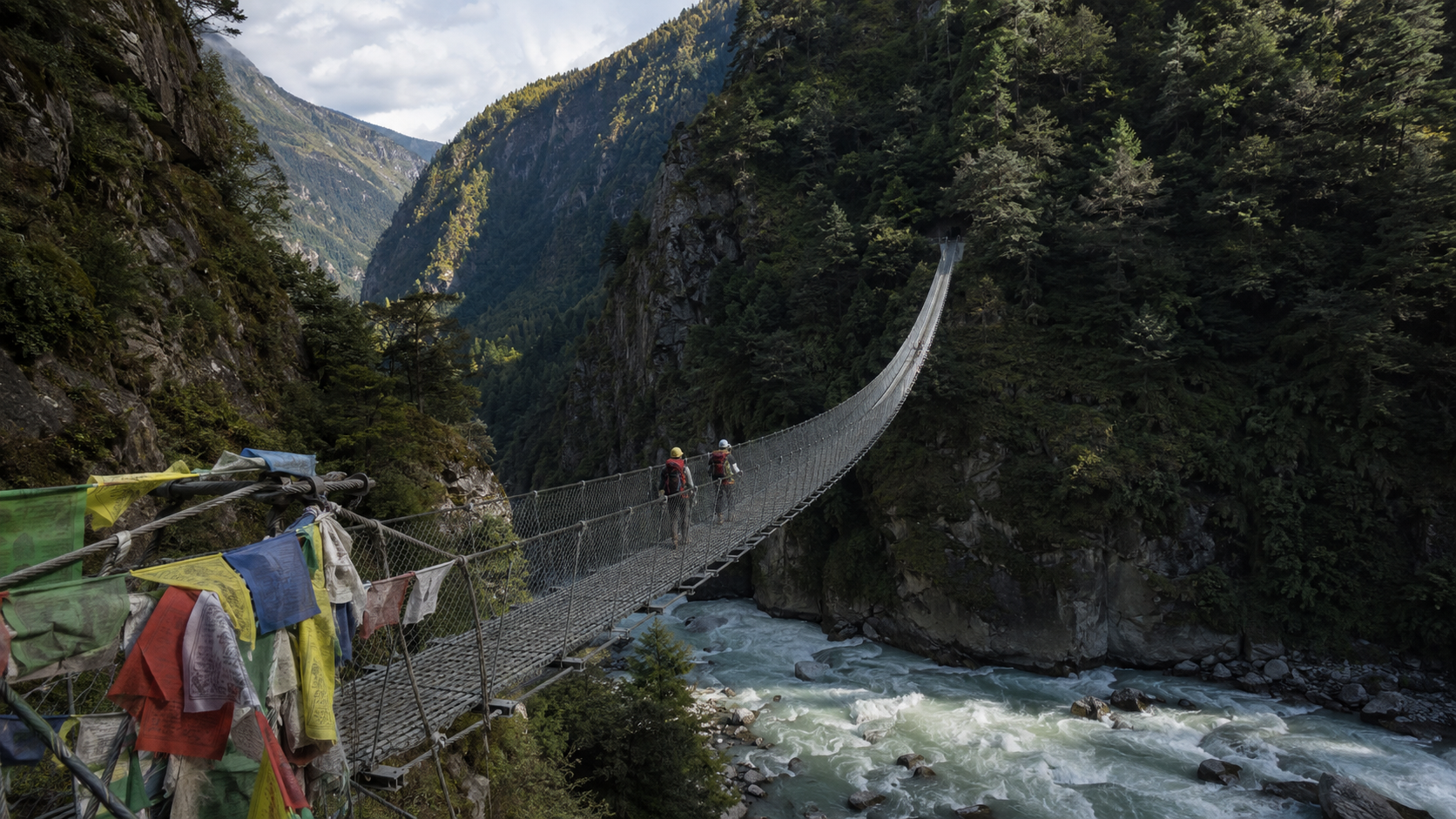
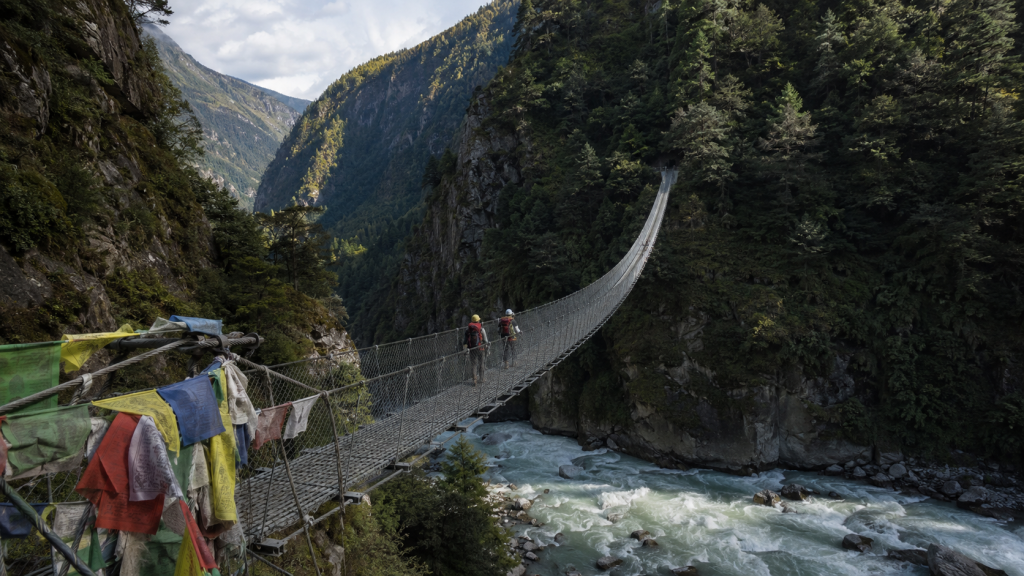
From there the trail climbs slowly through the gorge. The early days are warm and green, all suspension bridges, waterfalls, and terraced fields, threading through Jagat and Deng as the river roars beside you. Somewhere around Namrung the world begins to change. Pine and rhododendron take over, the air sharpens, and the first proper Himalayan giants lift their heads above the ridgelines.
Then you reach Lho, and everything stops. From the village, with its long mani wall and hilltop gompa, Manaslu reveals its full south face for the first time, and it is the kind of view that makes people forget to speak. A little further on lies Samagaun at around 3,530 metres, the heart of the trek, where most itineraries build in a rest day. Use it. Wander up to the turquoise glacial pool of Birendra Lake, hike toward Manaslu Base Camp, or climb to the old monastery at Pungyen with the mountain filling the whole sky. You are not just resting here, you are letting your body catch up with the altitude.
Beyond Samagaun the landscape turns austere and beautiful. Samdo, at 3,875 metres, sits within sight of the Tibetan border, its stone houses huddled against the wind. And then comes the last, spartan outpost before the pass: Dharamsala, sometimes called Larkya Phedi, at 4,460 metres, where the accommodation is basic, the nights are bitter, and everyone goes to bed early because tomorrow starts in the dark.
Larkya La, the crossing
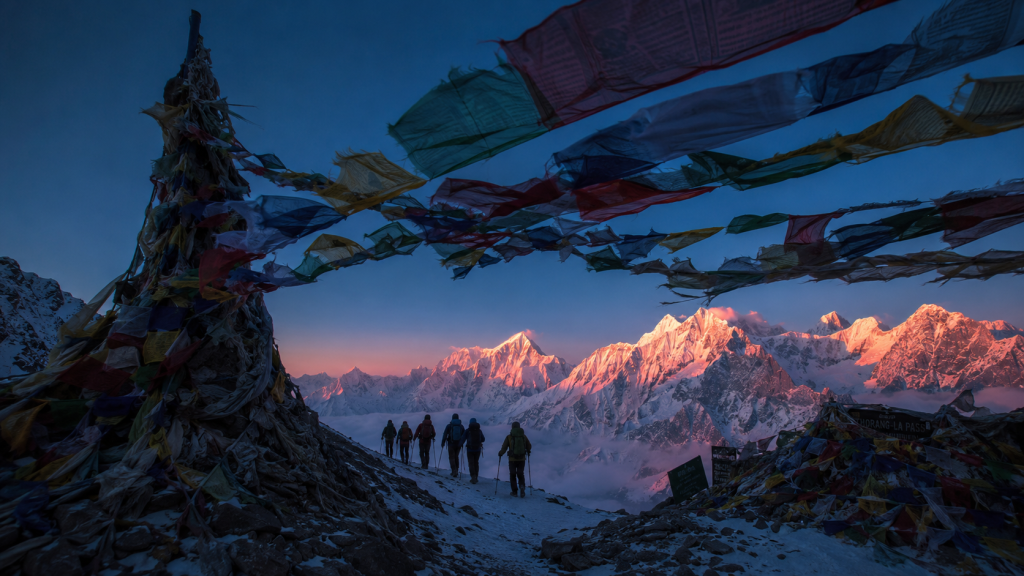
You will be walking by two or three in the morning, head torch carving a small circle of light out of an enormous darkness, boots crunching on frozen ground. This is the crux of the whole trek, the crossing of Larkya La at 5,106 metres, and starting early is not tradition for its own sake: it gives you the calmest weather and enough daylight to make the long descent on the far side.
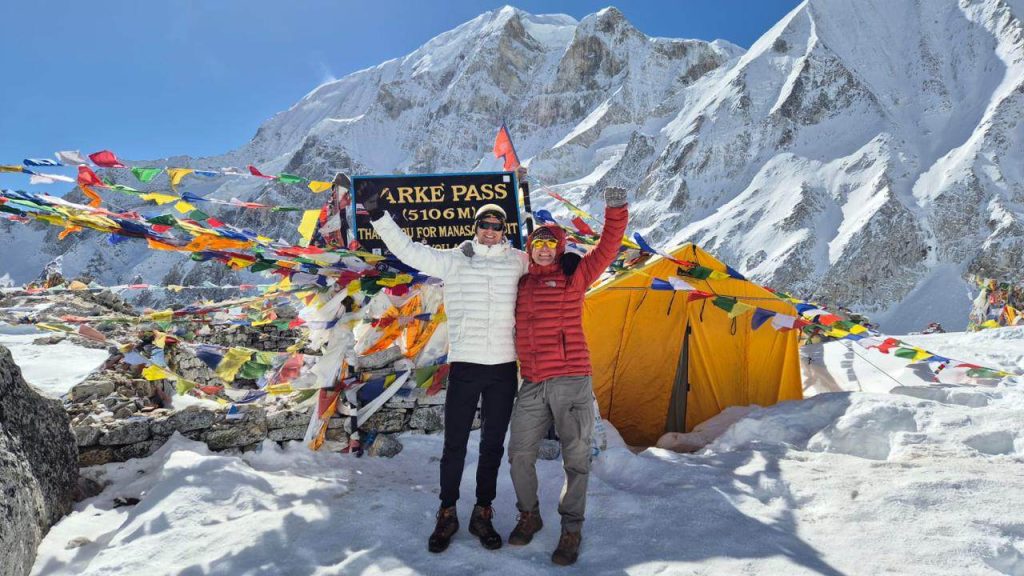
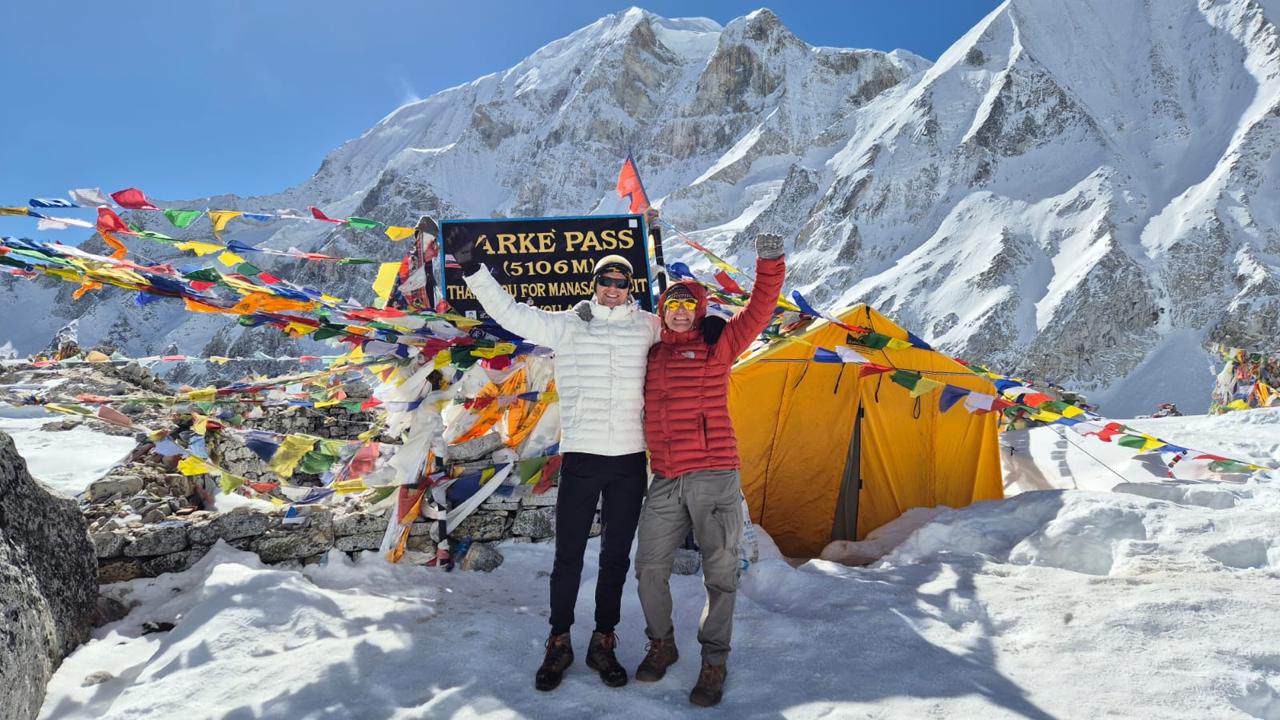
The climb is slow, cold, and lung-burning, one careful step after another as the sky slowly pales. And then you are there, on a saddle strung with tattered prayer flags, with a ring of white peaks all around you: Manaslu behind, Himlung and Cheo Himal ahead, Annapurna II floating on the horizon. The wind is fierce, the air is thin, and for a few unforgettable minutes the effort of the whole journey resolves into something close to bliss.
The descent drops you into Bimthang, a broad meadow that feels almost gentle after the pass, and from there the trail tumbles down through forest to Tilje and Dharapani, where the circuit joins the Annapurna trail. A final jeep ride brings you back to Besisahar and on to Kathmandu, dusty, tired, and quietly changed.
How long, and how hard?
Plan on around fourteen to sixteen days of walking, plus your travel days at either end, covering roughly 177 kilometres in total. Some agencies squeeze it into twelve, but the extra days buy you acclimatisation, and on a trek like this that is not a luxury, it is your safety margin.
Manaslu is fairly graded as moderate to challenging. There is no technical climbing, no ropes or crampons, just long days on your feet, big daily distances, and one serious high pass. What makes it demanding is the remoteness and the altitude rather than the terrain underfoot. If you can walk comfortably for six or seven hours day after day, and you take the ascent slowly, you are the kind of person who does well here. The mountains reward patience far more than raw fitness. For the full picture on staying well up high, it is worth reading our guide to altitude sickness in Nepal before you go.
The permits, honestly
Manaslu sits inside a controlled border region, which means paperwork, and rather more of it than the standard trails. There is no way around this, and no way to do it truly independently. Here is the 2026 permit stack, in plain terms:
- Manaslu Restricted Area Permit (RAP): priced by season and by how many days you spend inside the zone. From September to November it is around 100 US dollars per person for the first seven days, then roughly 15 dollars a day after that. From December to August it drops to about 75 dollars for the first week, then around 10 dollars a day.
- Manaslu Conservation Area Permit (MCAP): about 30 US dollars per person, fixed.
- Annapurna Conservation Area Permit (ACAP): about 30 US dollars per person, needed because you exit onto the Annapurna side at Dharapani.
- Chum-Nubri Rural Municipality fee: a small local charge, around 1,000 Nepali rupees, collected on the trail at Jagat.
For a standard two week circuit that comes to somewhere around 215 to 260 US dollars per person in autumn, and a little less in the quieter months. There is no TIMS card on this route: the restricted-area permit takes its place.
Now the important bit. The RAP can only be issued through a registered trekking agency, never to you directly and never at the trailhead, and you must walk the restricted section with a licensed guide. That part has not changed. What did change, in March 2026, is that Nepal scrapped the old requirement for a minimum of two trekkers on the permit. A solo traveller can now get the Manaslu permit alone, as long as they still hire a licensed guide. Plenty of older guides online have not caught up and still tell you that you need a partner or a second paid permit. You do not. For the wider picture on guides and the current rules, see our explainer on Nepal’s 2026 trekking rules.
When to go
Autumn, from late September through November, is the classic window, and for good reason. The monsoon has washed the air clean, the skies are a deep, reliable blue, and the mountain views are as sharp as they ever get. October in particular is glorious, which is also why it is the busiest and priciest time, and why the pass can feel almost sociable at dawn.
Spring, roughly March into May, is the lovely alternative. The rhododendron forests lower down burst into red and pink, the crowds are thinner, and the days are pleasant, though the wind on Larkya La can bite a little harder. Winter turns the pass into a serious, snow-choked proposition and shutters many of the higher teahouses, while the summer monsoon brings landslides, leeches, and clouds that hide the very mountains you came for. If you can choose, choose autumn or spring. For a broader look at timing your trip, our best time to visit Nepal guide breaks it down month by month.
What it costs
Manaslu is not Nepal’s budget trek, and it is worth being upfront about that. The restricted-area permits, the mandatory guide, and the long, awkward jeep access all push the price above the standard trails. On a pay-as-you-go basis you might spend somewhere between 45 and 80 US dollars a day on the trail once food, a room, and your guide are counted. Booked as a package, a comfortable fourteen to sixteen day trip tends to land between about 1,200 and 1,900 dollars per person, climbing higher in peak October when guides are scarce and every warm room is spoken for.
A quick word on the people who make it possible. A good guide charges in the region of 25 to 35 dollars a day, a porter perhaps 20 to 28, and they are worth every rupee: they read the weather, manage the pace, know which lodge has the warmest beds before the pass, and can coordinate a rescue on a trail where help may be hours away. A tip at the end, commonly around 8 to 12 dollars a day for good service, is customary and always remembered.
Teahouses, food, and small comforts
Accommodation is simple and honest: twin-share rooms with a bed, a thin mattress, and walls that do little against the cold, which is exactly why a proper sleeping bag earns its place in your pack. The dining room, warmed by a stove fed with dung or wood, becomes the heart of every evening, a place of steaming mugs, drying socks, card games, and easy conversation with strangers who slowly become friends.
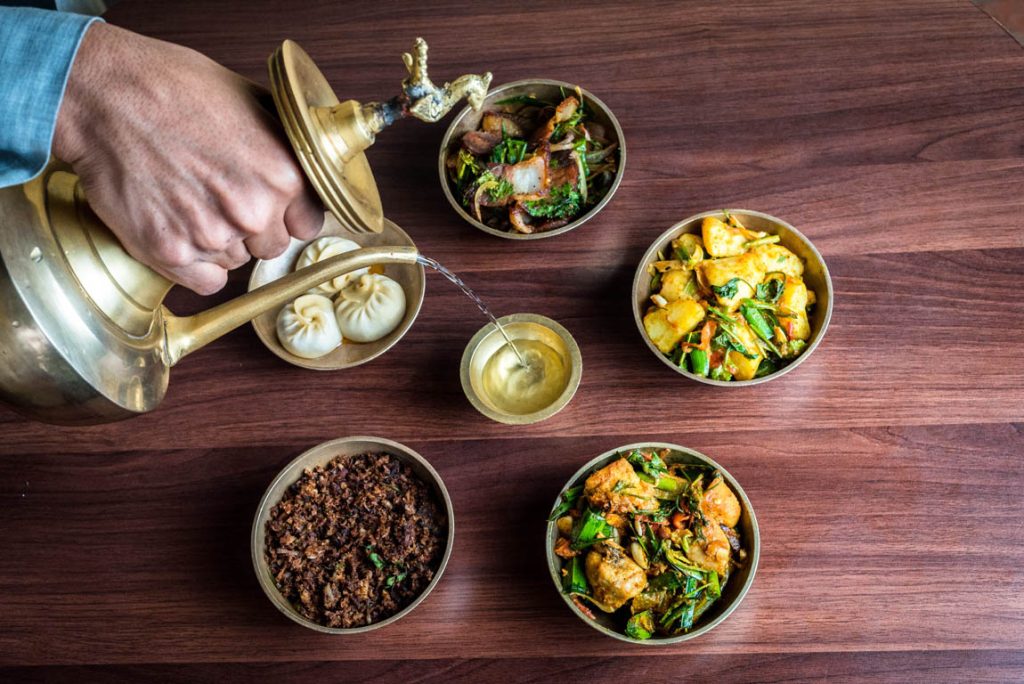
The food is heartier than you might expect. Dal bhat is the reliable engine of the trail, endlessly refilled, and there is usually noodle soup, fried potatoes, pasta, eggs, and Tibetan bread besides. Higher up, bottled water gets both expensive and wasteful, running anywhere from one to four dollars a litre, so bring a filter or purification tablets and refill as you go. This valley’s waste system is fragile, so carry out what you carry in, and tread as lightly as the place deserves.
Staying safe and well up high
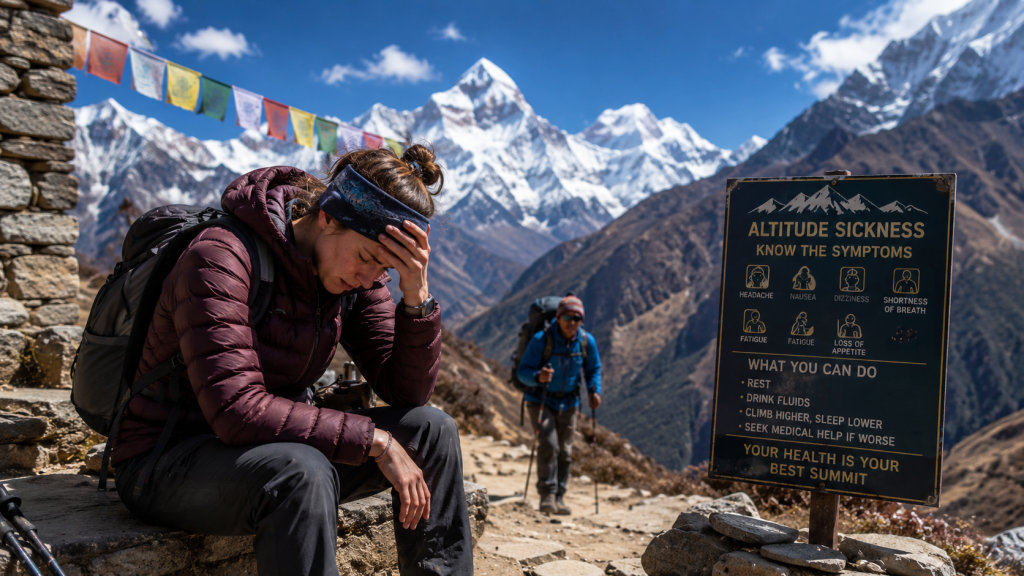
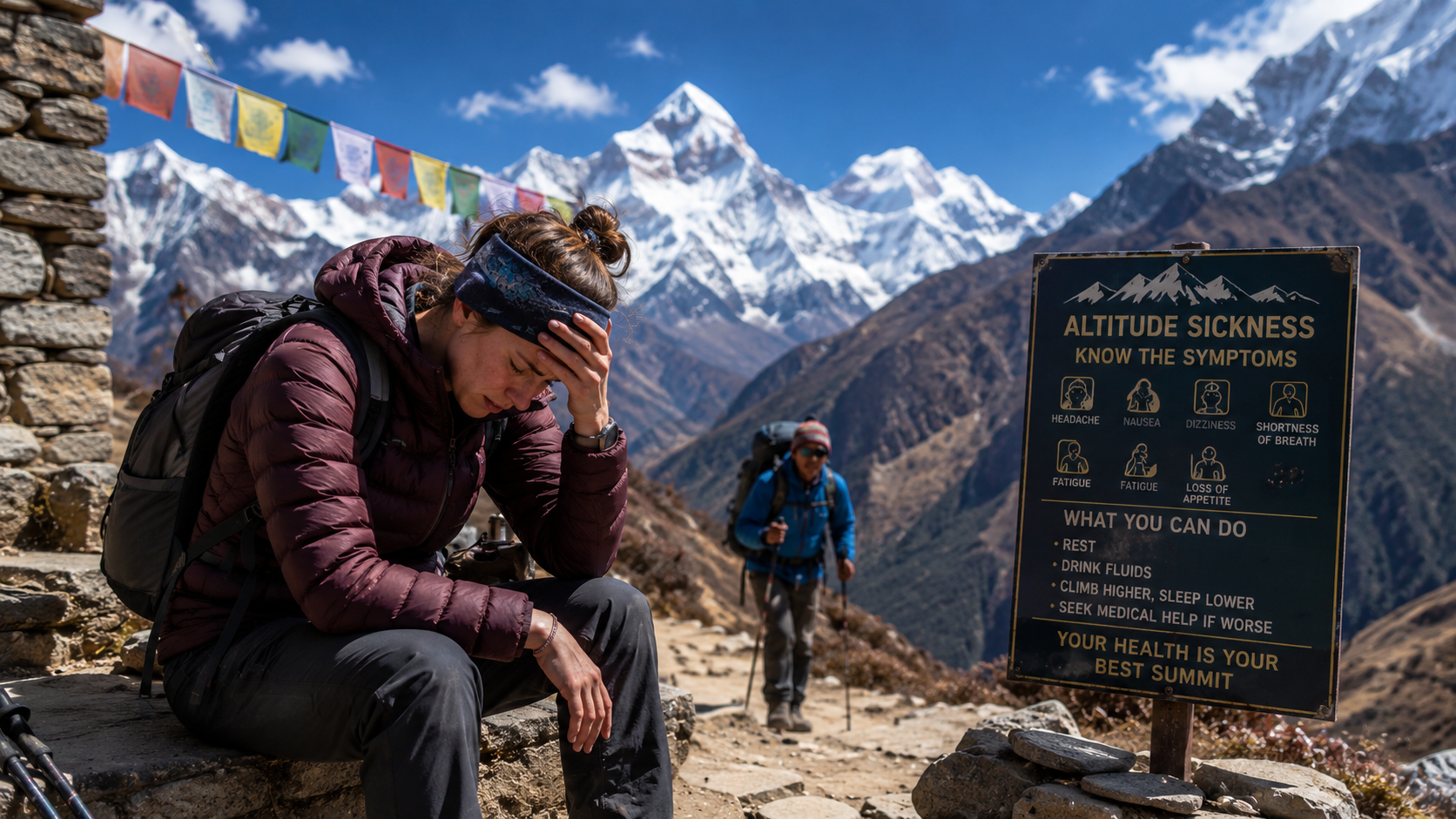
The single greatest risk on Manaslu is not the trail, it is the altitude, and Larkya La is higher than many people have ever been. Go slowly, drink more water than feels necessary, take your acclimatisation day in Samagaun seriously, and never climb higher to sleep while symptoms are hanging around. If you are considering acetazolamide, better known as Diamox, have that conversation with a travel doctor well before you fly rather than making it up on the trail. None of this is medical advice, just the plain wisdom of the mountains, and a nudge to get personalised guidance from a professional.
Insurance is the other non-negotiable. Any reputable agency will ask for proof that your policy covers trekking above 5,000 metres and includes helicopter evacuation, because on a route this remote a rescue is sometimes the only way down, and it is eye-wateringly expensive without cover. We have written the honest version of what to look for in our guide to travel insurance for trekking in Nepal, and it is a twenty-minute read that could save you thousands.
The Tsum Valley temptation
If you have the time and the appetite for going even deeper, the Tsum Valley branches off to the northeast, a hidden Buddhist sanctuary of ancient gompas, sacred caves, and villages where the old ways run undisturbed. It is a separate restricted area with its own permit, and it adds a week or so to your trip, but for trekkers with a month to spare it is one of the most quietly extraordinary corners of the entire Himalaya.
Go while it still feels like this
There is a particular magic to Manaslu that is getting rarer in the world: the sense of walking somewhere that has not yet been smoothed and sold. The road is creeping closer every year, and the trail will not stay this quiet forever. So if some part of you has been listening as you read this, picturing that headlamp-lit climb and the flags snapping on the pass, take it as your sign.
Sort your dates, choose a good agency and an experienced guide, get your permits and your cover in order, and go and walk around the eighth-highest mountain on earth while it still feels like a secret. The Budhi Gandaki is waiting, the tea is on, and Manaslu has been standing there for a very long time, holding your place.
Recommended Read: Travel Insurance for Trekking in Nepal: What Actually Counts in 2026, Altitude Sickness in Nepal: How to Spot It, Prevent It, and When to Turn Back, and A Step-by-Step Guide to Preparing for Your Trip to Nepal.
Related Posts
Stay Informed With the Latest & Most Important News
Previous Post
Next Post
- Kathmandu Travel Guide: What to See, Where to Stay, Eat and How to Get Around
- From Mustang to the World: Shinta Mani Mustang Named the No. 1 Luxury Hotel on Earth
- Best Places to Visit in Nepal: A Complete Region-by-Region Guide for Every Traveller
- Trekking in Nepal: The Complete Guide to Choosing and Planning Your Himalayan Trek
- Beyond the Mountains: Why Nepal Could Become One of the World’s Great Food Destinations