Now Reading: Where to Stay in Kathmandu: A Neighbourhood Guide for Every Kind of Traveller
-
01
Where to Stay in Kathmandu: A Neighbourhood Guide for Every Kind of Traveller

Thamel, Patan, Boudha, Bhaktapur, Jhamsikhel, Nagarkot: a neighbourhood-by-neighbourhood guide to where to stay in Kathmandu with honest price bands.
Kathmandu is not one city. It is a dozen neighbourhoods stacked against each other, each with its own rhythm, its own sound, its own way of greeting the morning. The first-timer tends to book something in Thamel and call it a trip. That works, especially if you are short on time. But once you know the lay of the land, you realise the neighbourhood you choose shapes the entire feel of your stay.
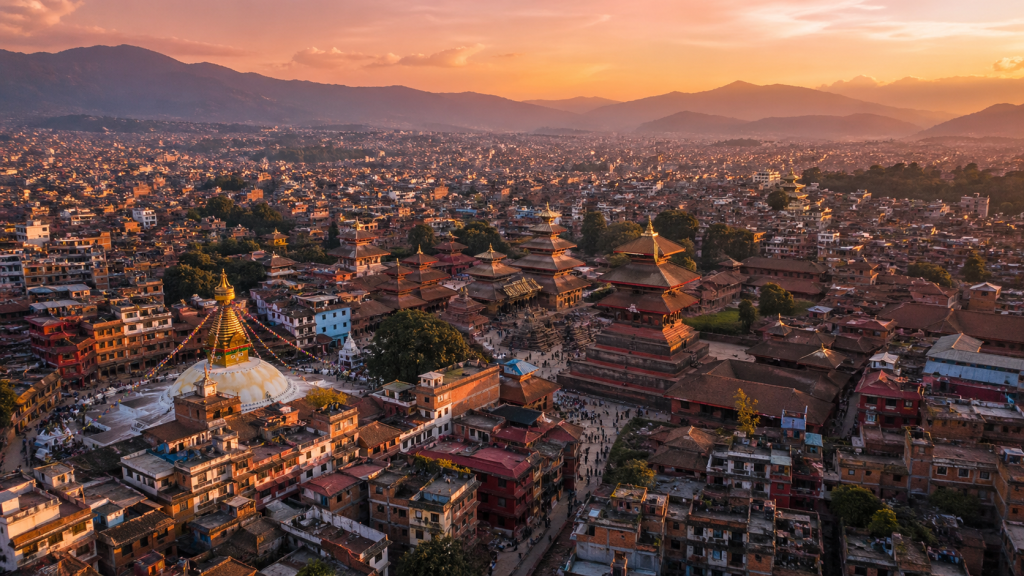
A night in Boudha, with the prayer wheels turning and the monks chanting the day to a close, is a different visit to Nepal than a night in Thamel. An evening in Patan, drinking chiya on a Durbar Square rooftop, is different again. This guide walks you through where to stay in Kathmandu, which neighbourhood suits, what it costs, and how to make your choice.
Thamel: The Default Landing Spot
Thamel is where most travellers end up on their first night, and there is a reason for that. It is the tourist engine of the city. Trekking shops, bookshops, cafes, bars, travel agencies, SIM card stalls, pashmina vendors, and taxi drivers all compress into a few narrow streets that feel louder every year. The signs are mostly in English, menus list veggie burgers next to dal bhat, and a decade’s worth of travellers’ graffiti sits layered on the walls of the backpacker pubs.
Who Thamel Suits
Thamel works if this is your first visit, if you are arriving at Tribhuvan International with no Nepali under your belt and need everything within walking distance. It also suits trekkers in the pre-departure scramble who need to rent a sleeping bag, buy duct tape, and confirm a permit all in the same afternoon. And it is the easiest place in Nepal to find a last-minute room at almost any budget.
What It Trades Off
Noise and air quality. Thamel is loud from morning horns until the last taxi clears out well past midnight, and the narrow lanes hold exhaust fumes longer than you would like. The cultural depth of Kathmandu is close by but not immediate. You will see plenty of trekkers and backpackers, fewer genuinely local scenes. If you want quiet evenings and early mornings with a view rather than a horn, stay elsewhere.
Price Bands
Budget dorms and basic guesthouses start from around USD 8 to 15 per night. Mid-range hotels with clean private rooms and decent breakfast sit at USD 30 to 60. The boutique end of Thamel, places with rooftop gardens and courtyard restaurants, stretches to USD 80 to 150. For a first night or two, a mid-range Thamel room is hard to beat on convenience.
Patan: The Quieter, Richer Choice
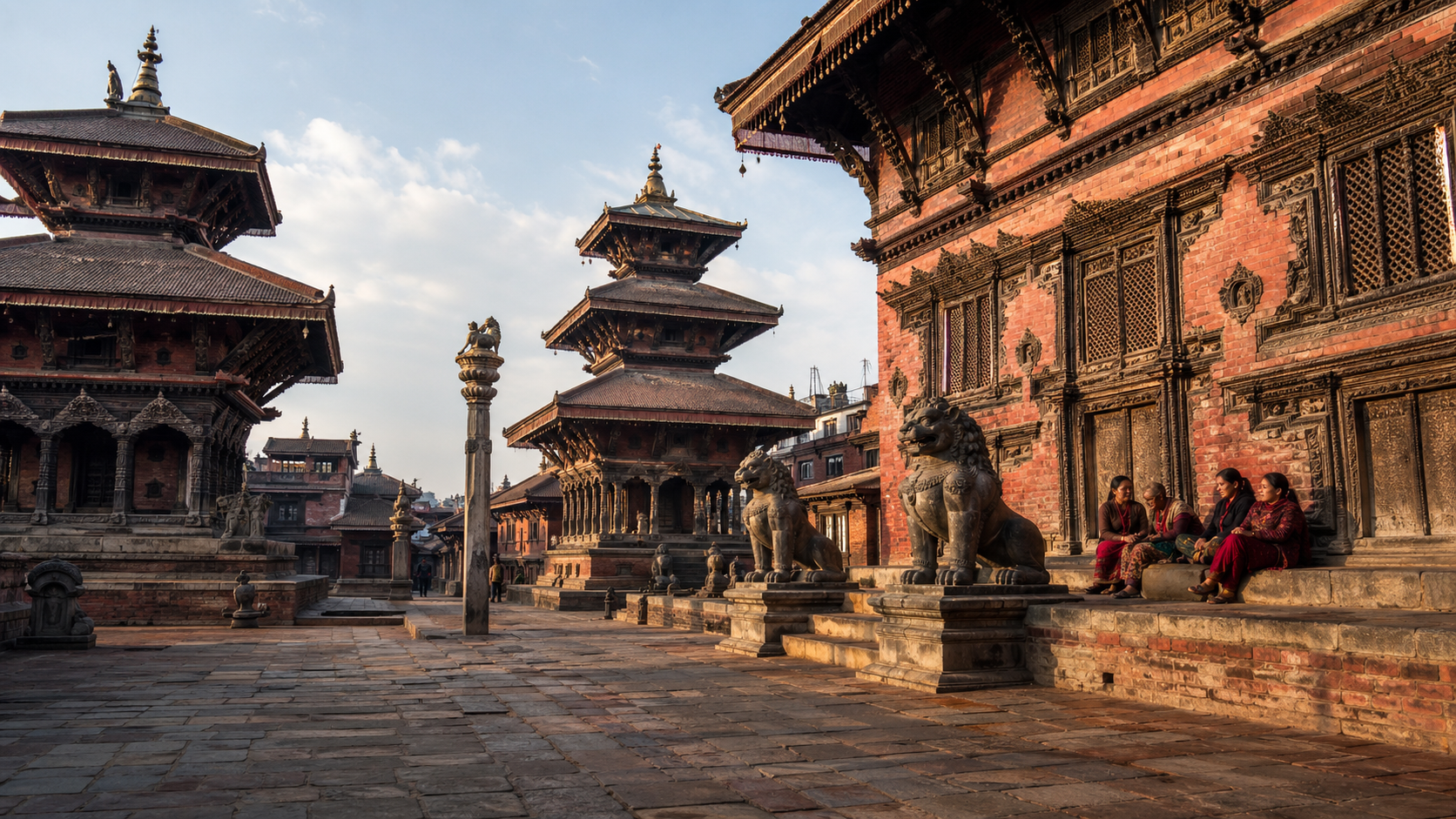
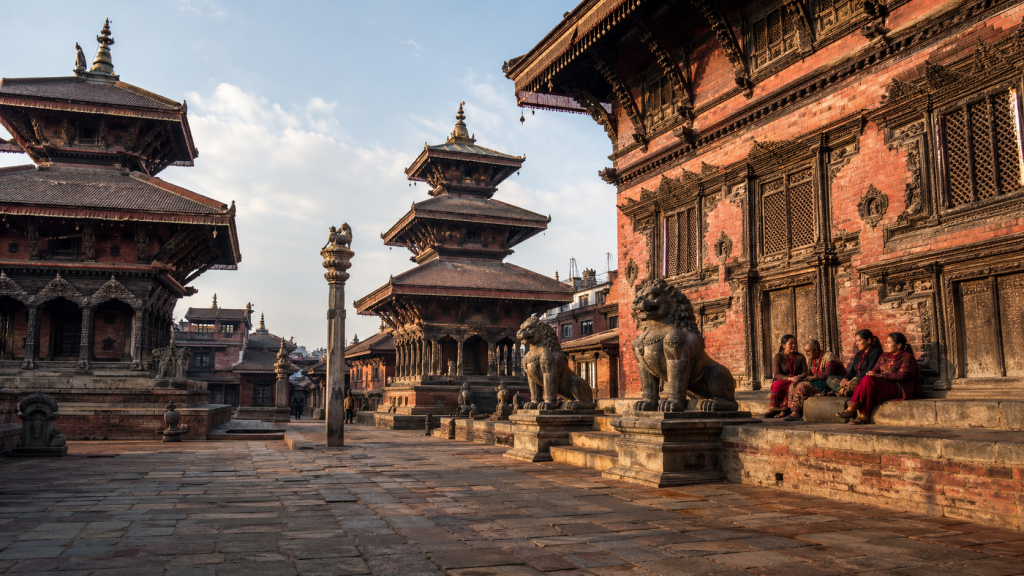
Patan, also called Lalitpur, sits just across the Bagmati River and feels like a different city entirely. The Durbar Square here is, for many visitors, the most beautiful in the valley. Brick and timber temples, stone courtyards, metalworkers hammering in doorways that have not moved in five hundred years. Evenings in Patan are unhurried. The sound you hear most often is pigeons on the temple roofs.
Who Patan Suits
Second-time visitors who have done Thamel and want something deeper. Culture-focused travellers, art lovers, anyone who prefers walking ancient courtyards to shopping for trekking gear. Patan is also the quieter, more refined choice for couples and for anyone who wants to linger over cafe breakfasts rather than negotiate a crowded lane.
What It Trades Off
A short taxi ride to Thamel if you need trekking logistics. A slightly thinner range of backpacker-budget accommodation. Nightlife is near invisible, which for many people is a feature rather than a loss.
Price Bands
Budget options in Patan run around USD 15 to 25. The mid-range here leans boutique, with heritage guesthouses in restored Newari buildings at USD 50 to 100. A handful of higher-end properties in converted courtyards reach USD 150 to 250. If you can stretch to the mid-range, Patan rewards every rupee.
Boudha: Monasteries, Prayer Wheels, and Early Mornings
Boudhanath Stupa is one of the largest in Asia, and the neighbourhood around it has a character shaped entirely by Tibetan Buddhism. The stupa is circled from before dawn by monks, pilgrims, and locals doing their morning kora (the clockwise walking prayer). Monasteries ring the square. Prayer flags snap in the wind. Tibetan refugee communities have lived here for generations, and the restaurants reflect that: hand-pulled thukpa, thenthuk noodles, and some of the best Tibetan food you will eat anywhere.
Who Boudha Suits
Travellers drawn to the spiritual side of Nepal. Yoga and meditation practitioners looking for a base between retreat sessions. Slow travellers who want to spend a week in one place, walking the kora in the morning, writing in a cafe in the afternoon, watching butter lamps flicker at dusk. Photographers love Boudha for obvious reasons.
What It Trades Off
A longer taxi ride to central Kathmandu, roughly 20 to 30 minutes depending on traffic. Less in the way of Western amenities. The area around the stupa is small, and if you stay more than a few days you will feel you have walked every inch of it.
Price Bands
Budget stays near Boudha run USD 15 to 30. Comfortable mid-range guesthouses and small hotels, many with stupa views, come in at USD 50 to 120. A few heritage-feel properties with courtyards and gardens reach USD 150 or so. A stupa-view balcony at sunset is worth paying a little extra for.
Bhaktapur: Sleeping Inside a Living Museum
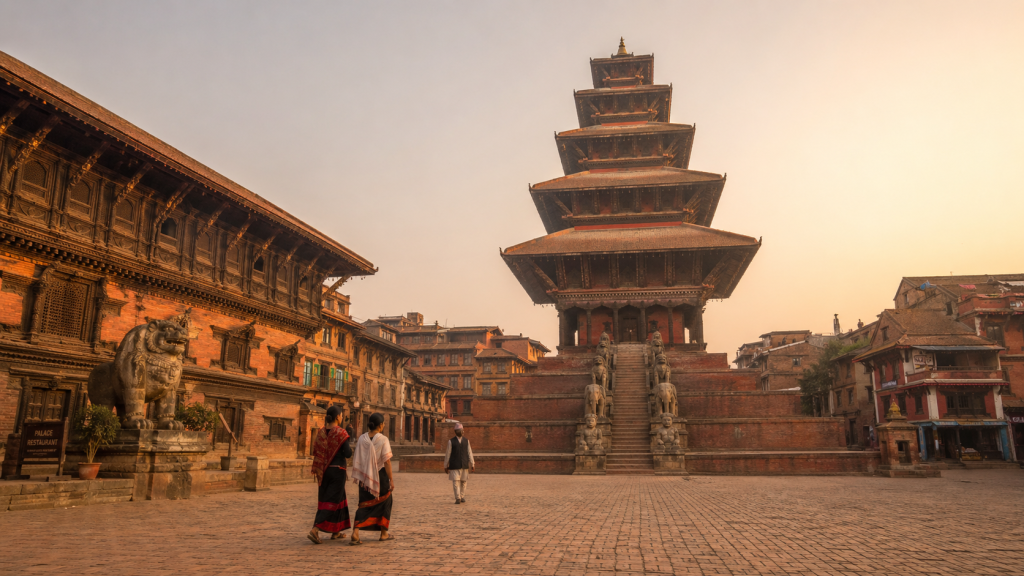
Bhaktapur sits about an hour east of Kathmandu and feels like the valley’s best-preserved heritage town. The Durbar Square is wide, open, and genuinely medieval in its bones. There are no motorbikes in the core of the old town, which does something remarkable to the experience: you hear footsteps, metalworking, distant bells, and almost nothing else.
Who Bhaktapur Suits
Slow travellers who are willing to base themselves a little out of the way for a much quieter experience. History and architecture enthusiasts. Anyone who wants to photograph morning markets and temple rituals without the crowds of central Kathmandu. This is also a good base if you plan to do a day trip to Nagarkot or Dhulikhel, since you are already halfway there.
What It Trades Off
Distance from Thamel and the airport. Most travellers use Bhaktapur as a two or three night stopover either at the start or end of their trip, rather than their whole Kathmandu base.
Price Bands
Heritage guesthouses in restored buildings run USD 25 to 70. A handful of higher-end boutique properties reach USD 100 to 180. There is less in the way of true budget accommodation inside the old town, though a short walk out gets you cheaper options.
Jhamsikhel and Sanepa: The Expat Dining Hub
Known locally as Jhamel, this area of Lalitpur is where the international crowd tends to eat, drink, and live when they spend extended time in Kathmandu. It is a short walk from Patan Durbar Square but has a different feel: leafier, quieter, lined with bakeries, brunch cafes, wine bars, and a few of the best restaurants in the country.
Who Jhamsikhel Suits
Digital nomads, return visitors, and travellers who want a less touristy base with excellent food within walking distance. It is also a good fit for anyone working on longer projects, with reliable WiFi cafes and coworking spaces within a few minutes’ walk.
What It Trades Off
It is not a sightseeing neighbourhood. You come here to live, not to tick off monuments. Taxis or a walk of 15 to 20 minutes get you into the cultural core of Patan.
Price Bands
Serviced apartments and boutique hotels dominate, mostly USD 50 to 150 per night. A few high-end properties reach USD 200. For longer stays, the monthly apartment rates in this area are among the most reasonable in the city for the quality on offer.
Nagarkot and Dhulikhel: The Mountain-View Escape
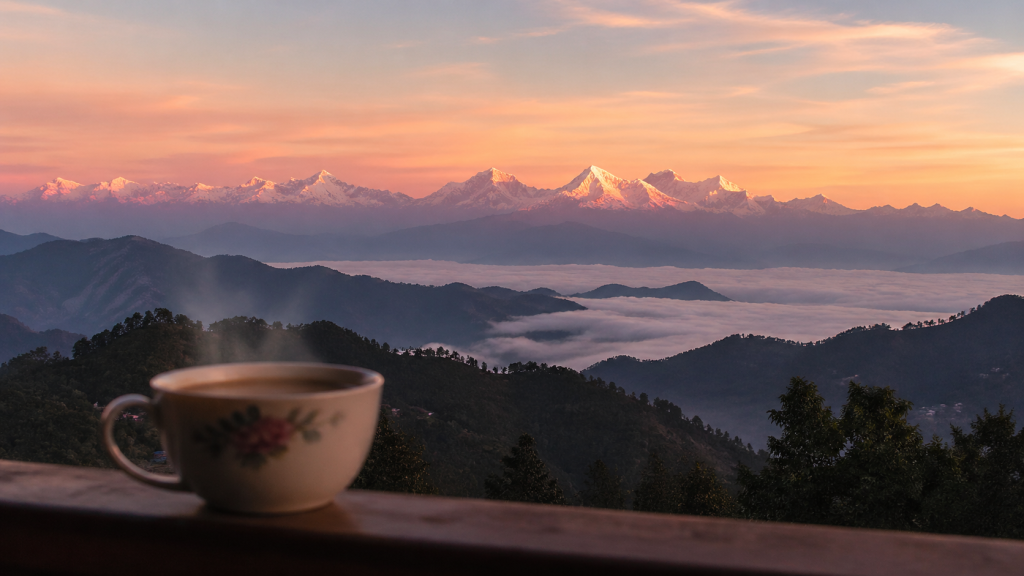
Not technically Kathmandu, but close enough to deserve a mention. Both sit about 90 minutes east of the city, perched on ridges with views that, on clear mornings, stretch all the way from the Annapurna range in the west to the Everest massif in the east. These are places you stay for the sunrise.
Who Nagarkot and Dhulikhel Suit
Anyone who wants a taste of the Himalaya without committing to a trek. A classic combination is to book two or three nights in Kathmandu for sightseeing, then two nights at a Nagarkot or Dhulikhel resort for the quiet and the view, before heading off to Pokhara or Chitwan.
Price Bands
Basic guesthouses start around USD 20. The resort-style properties with balcony mountain views run USD 80 to 250, with a handful of higher-end places stretching further still. On a clear October or November morning, the view from your room is worth every rupee.
How to Choose Your Base
A practical way to plan it: where are you arriving from, how many nights do you have in the Kathmandu Valley, and what do you actually want from those nights?
- First time, short trip, trekking-focused: Thamel for convenience, with a day trip to Patan and Bhaktapur.
- First time, cultural focus: Two nights in Thamel, then move to Patan or Bhaktapur for the remainder.
- Return visit, slower pace: Skip Thamel entirely. Split your time between Patan and Boudha.
- Spiritual or meditation focus: Boudha as your base, with day trips as needed.
- Working from Kathmandu: Jhamsikhel, with occasional cultural days elsewhere.
- Mountain view priority: Add two nights at Nagarkot or Dhulikhel as a bookend.
Booking Smart
A few practical tips that save regret. Book your first two nights before you arrive, even if you plan to be flexible after. Arriving at Tribhuvan jet-lagged with no booking is not a situation you want to negotiate at midnight. After those first nights, you can adjust on the ground, and you will often get better rates by walking in and asking.
Check what floor your room is on, especially in Thamel. Street-facing rooms on lower floors catch every horn. Always check the bathroom before accepting. Hot water should be confirmed rather than assumed, especially in budget places in winter. And if the room has a heater in colder months, make sure it actually works before you commit.
Start Picking Your Kathmandu Home
The neighbourhood you choose is the frame that everything else in Kathmandu fits into. Thamel will show you Nepal’s trekker energy. Patan will show you its craftsmanship. Boudha will show you its spirituality. Bhaktapur will show you its heritage. Each is a different version of the same city, and if you have the time, you can do more than one.
Start with where you are arriving from and work outward. Book the first nights, research the next, and leave room to pivot once you are on the ground. Kathmandu rewards the traveller who takes it slowly.
Related Posts
Stay Informed With the Latest & Most Important News
Previous Post
Next Post
- Kathmandu Travel Guide: What to See, Where to Stay, Eat and How to Get Around
- From Mustang to the World: Shinta Mani Mustang Named the No. 1 Luxury Hotel on Earth
- Best Places to Visit in Nepal: A Complete Region-by-Region Guide for Every Traveller
- Trekking in Nepal: The Complete Guide to Choosing and Planning Your Himalayan Trek
- Beyond the Mountains: Why Nepal Could Become One of the World’s Great Food Destinations