Now Reading: May in Nepal: The Last Window Before the Monsoon
-
01
May in Nepal: The Last Window Before the Monsoon
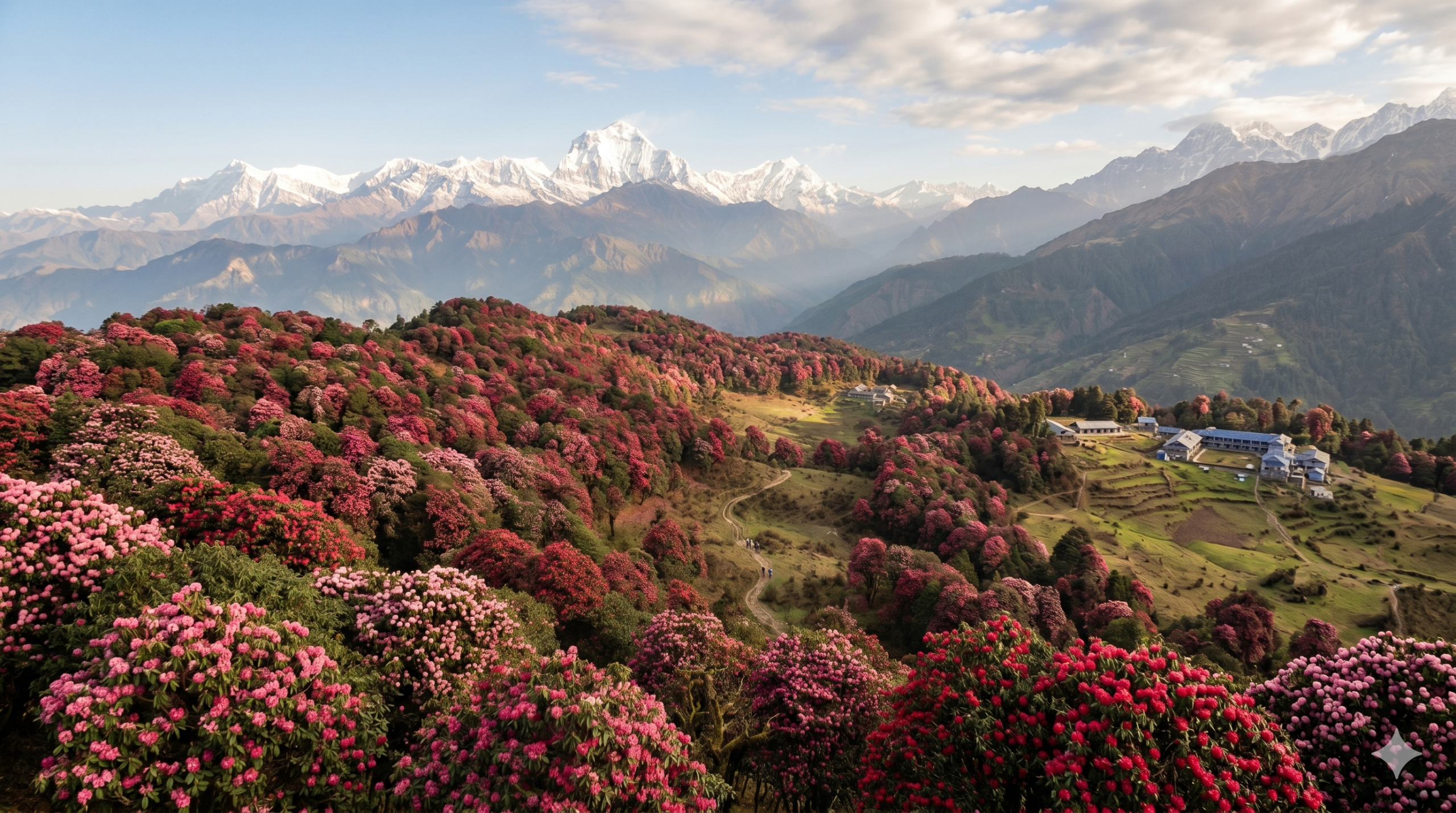

May is Nepal's last pre-monsoon window: quieter trails, rhododendrons in bloom, lower prices. An honest guide to trekking and travel in May.
May in Nepal is the country holding its breath. The spring trekking season is winding down, the monsoon is gathering somewhere over the Bay of Bengal, and there is this narrow, interesting window where the mountains are still showing themselves and the crowds have thinned. If you are thinking about a late spring trip and wondering whether it is too late, the short answer is no. You just need to know what you are getting.
This is the month of rhododendron forests still in bloom at altitude, of afternoon heat building in the valleys, of thunderstorms beginning to roll across the skyline some evenings. Some parts of the country are at their best. Others are past their peak. Here is the honest breakdown.
What May Actually Feels Like in Nepal
May is warm. Kathmandu sits at a little over 1,300 metres, and daytime temperatures push into the late twenties Celsius, sometimes higher. The nights stay pleasant. You can comfortably wear a t-shirt into the evening in Thamel or on a rooftop in Patan. The humidity builds steadily through the month, and by the last week you can feel the air thickening in a way that tells you the rain is coming.
Pokhara feels similar, though a degree or two warmer and with a distinct heaviness settling over the lake in the afternoon. Chitwan, down in the Terai lowlands, is genuinely hot. Expect mid-thirties Celsius, sticky nights, and the kind of heat that makes jungle walks a morning-only activity.
Higher up, the picture is different. The middle-altitude hills, 2,000 to 3,000 metres, are at their most comfortable: warm afternoons, cool mornings, clear mountain light before the clouds build. Above 4,000 metres, you still need your down jacket in the evenings, but you are walking through snow-free trails and stable conditions.
Trekking in May: What Still Works
Most of Nepal’s major trekking routes are still viable in May. The weather window narrows as the month progresses, but you can genuinely have a wonderful trek if you plan smartly and accept the trade-offs.
Upper Mustang Comes Into Its Own
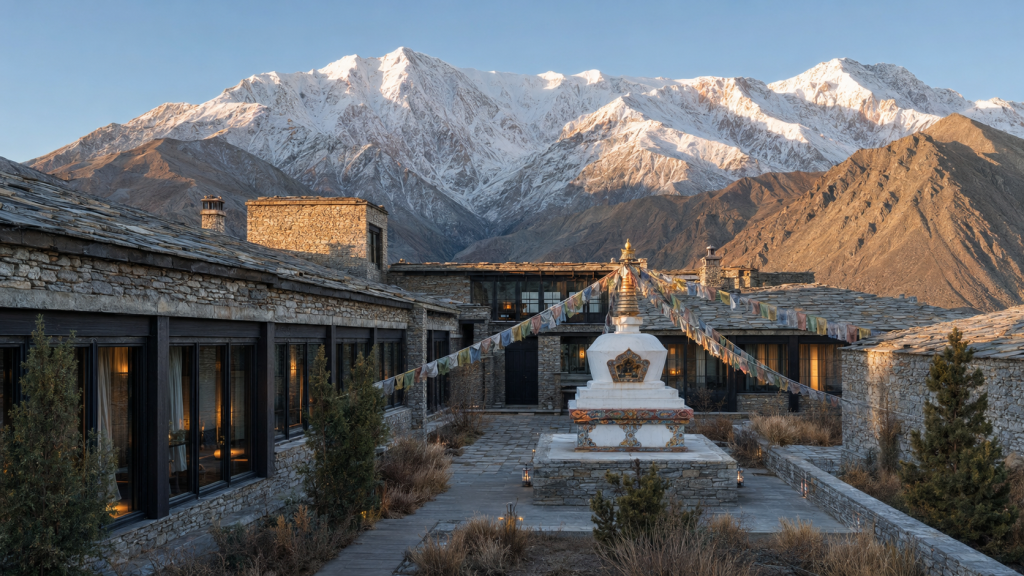
This is Upper Mustang’s best month. Mustang sits in the rain shadow of the Annapurna and Dhaulagiri massifs, so the monsoon that soaks the rest of the country largely passes it by. The high desert landscape is warming up, the winds ease, and the region’s monasteries and fortified villages are accessible without the bone-cold mornings of earlier spring. If you are booking a May trek, Mustang is the smartest call.
Langtang in Late Bloom
The Langtang Valley trek is still on in May, especially in the first half of the month. Rhododendrons above 2,500 metres are spectacular, the trails are less busy than in the March and April peak, and the teahouses are happy to see you. Expect clear mornings and cloudier afternoons. Plan an early start each day and be off the trail by early afternoon.
Everest Base Camp: Shoulder Conditions
EBC trekkers are still going strong in early May, though numbers taper toward the end of the month. Views tend to be cleaner in the mornings, cloudier by lunch. The risk of afternoon thunderstorms rises as May progresses. If you are booking EBC for May, front-load the month rather than the tail end.
Annapurna Circuit and ABC
Both are doable in May but not at their best. The lower sections can feel oppressive in the heat, and the Thorong La pass on the Circuit becomes weather-dependent in the second half of the month. Annapurna Base Camp is more forgiving since it is a shorter trek and you are in and out in a week. Book with a local agency who watches the forecasts carefully.
Treks to Skip
Higher restricted-area treks like Manaslu and certain Dolpo routes become increasingly weather-dependent. If you are set on one of these, April is a better bet. If May is your only option, speak with a Nepali agency who will tell you honestly what the current conditions look like.
The Good Surprises of May
Beyond the trail considerations, there are reasons travellers quietly prefer late spring in Nepal.
Fewer Crowds
March and April are packed. Every teahouse on Poon Hill, every permit queue at Nepal Tourism Board, every trekker-bus departure from Kathmandu is at capacity. By May, numbers drop noticeably. You can get the teahouse room you want, eat without waiting, and walk with actual space between you and the next group.
Lower Prices
Accommodation rates in Kathmandu and Pokhara drop in May. Mid-range hotels that were fully booked in April will quote 20 or 30 per cent less by mid-May. Flights into Kathmandu often drop similarly. If you are flexible on timing and willing to accept the weather risk, May is genuinely good value.
The Rhododendron Forests
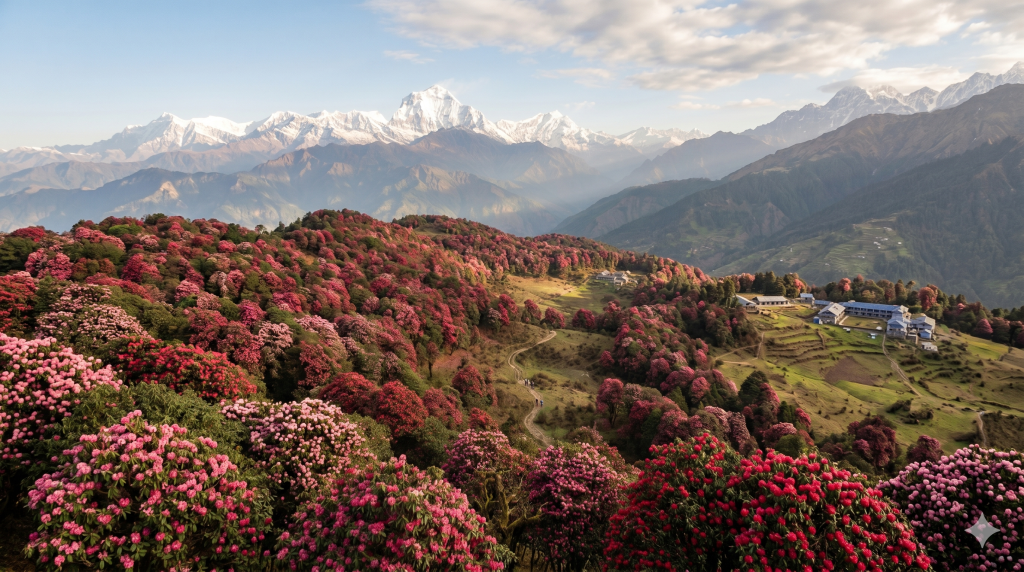
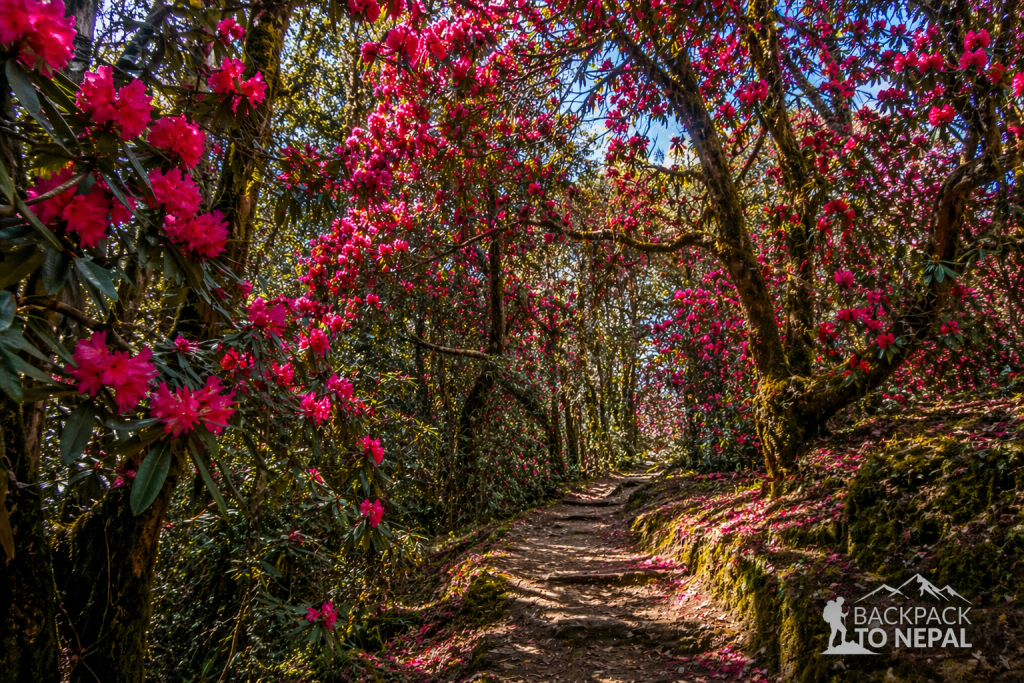
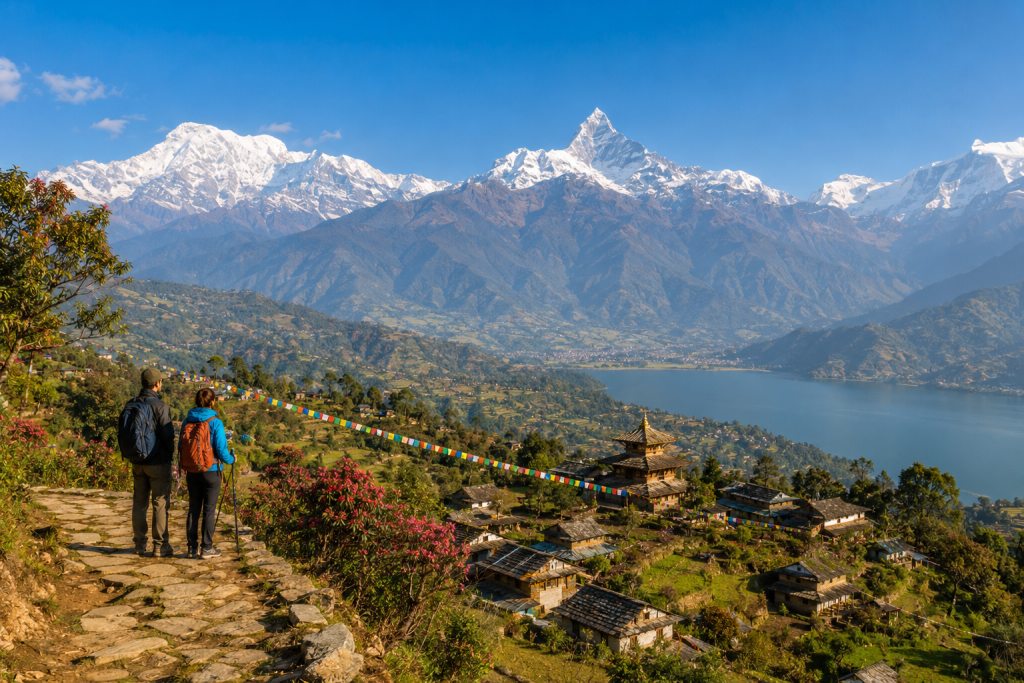
Depending on altitude, May is when the rhododendron zones between 2,500 and 3,500 metres are at their most dramatic. The trails through Poon Hill, Mardi Himal, lower Langtang, and the approach to ABC are walking through colour. If you have only ever seen Nepal in autumn, you do not know this country yet.
Longer Days
By late May, you have daylight from around 5am to nearly 7pm. That is room to start early, take a long lunch, and still cover ground. Autumn trekkers are hustling to finish before the early dusk. May trekkers have time to spare.
The Honest Trade-Offs
Pretending May is perfect would be unfair. Here are the things that do catch travellers out.
Afternoon Cloud Cover
Mornings are usually clear. By early afternoon, clouds build over the high peaks and you lose the long mountain views. This is not unique to May, but it is more pronounced than in peak autumn. The practical response: start your days early. If you want a sunrise view from Sarangkot or Poon Hill or Nagarkot, it needs to happen before 7am.
Pre-Monsoon Showers
The last week of May starts delivering proper thunderstorms, especially in the east and the Kathmandu Valley. They tend to roll in late afternoon and clear by nightfall. Pack a genuine waterproof jacket and waterproof cover for your daypack. Trekking trails can turn slippery, particularly the stone stair sections.
Heat in the Lowlands
Chitwan in late May is properly hot. The wildlife experience is still good, but you are doing dawn safaris and resting through midday. Bardia, in the west, is even warmer. If Terai wildlife is a priority, earlier spring or early autumn is kinder.
Visibility on the Mountains
Even on clear days, atmospheric haze is higher in May than in November. Photographs come out softer. You can still see the peaks clearly from close range, but the postcard-perfect view from distant viewpoints is not quite what it is in autumn.
How to Plan a May Trip Well
A smart May itinerary front-loads the high-altitude and mountain-view parts of the trip and back-loads the cultural and lower-altitude time.
The Two-Week Template
A route that works beautifully in May: arrive in Kathmandu for two or three nights, then head straight to Pokhara. From Pokhara, do a six to eight day trek: Mardi Himal if you want something less crowded than Poon Hill, ABC if you want the classic base camp experience, or fly into Jomsom and do Upper Mustang if your budget stretches. Return to Pokhara, then back to Kathmandu for your final cultural days in Patan, Bhaktapur, or Boudha.
What to Pack
Layering matters more in May than people expect. You are dealing with hot days at low altitude and cold mornings at high altitude, often on the same trek. Pack:
- Light moisture-wicking tops for walking
- A proper fleece or down-light jacket for mornings and altitude
- A waterproof shell, not a thin plastic poncho
- Quick-drying trekking trousers plus shorts for lower stretches
- A sun hat and sunglasses; UV is fierce at altitude
- A proper SPF 50 sunscreen and lip balm
- Electrolyte tablets; you will sweat more than in autumn
Book Weather Buffers
Build a spare day or two into any trek itinerary. If you are pinned down for a morning by a thunderstorm or trail conditions, you want the flexibility to adjust rather than miss your flight home.
Beyond Trekking: Other May Moves
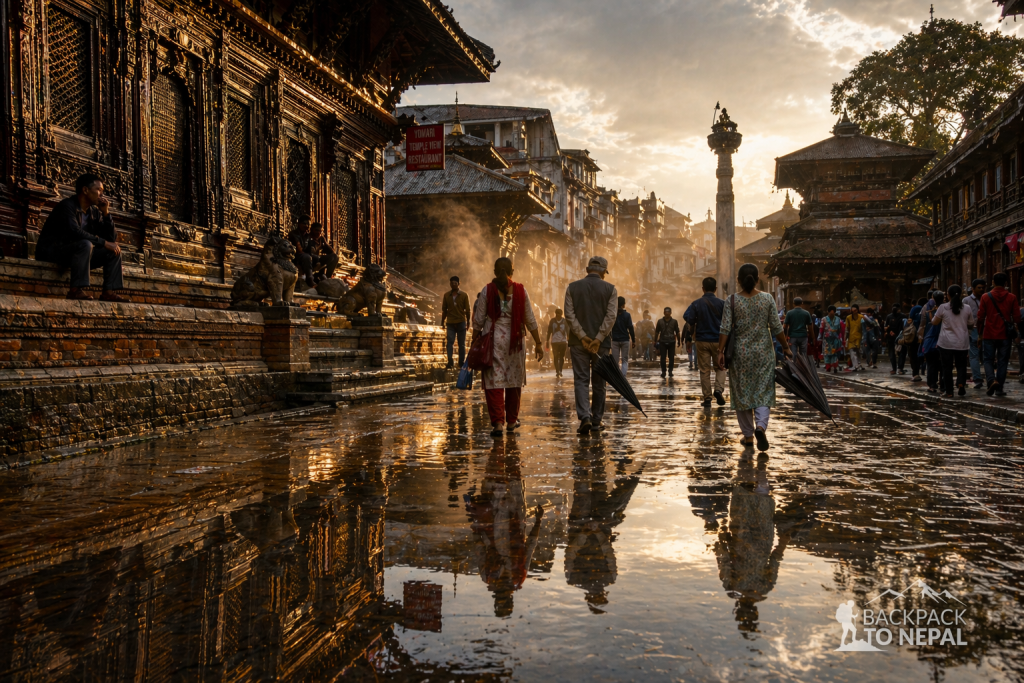
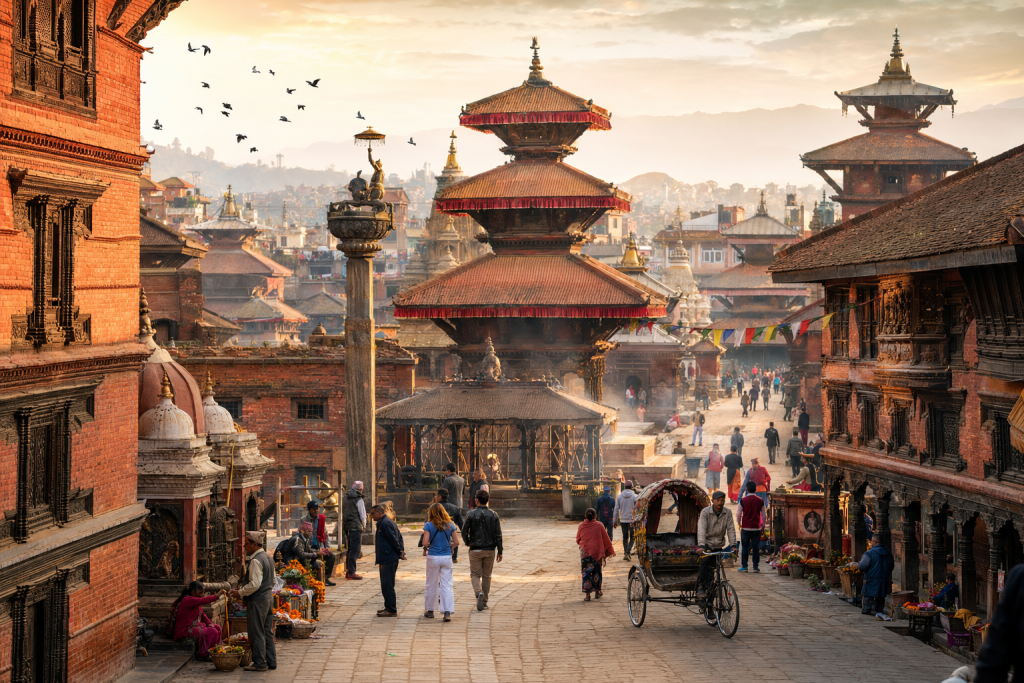
If you are not trekking, May still has plenty. The Kathmandu Valley sightseeing is entirely comfortable in the morning and evening, with a slower midday pace. Boudhanath and Pashupatinath feel less crowded. Patan’s courtyards are still cool in the mornings and catch pleasant cross-breezes in the evening.
Buddha Jayanti, the celebration of Buddha’s birth, usually falls in May. Lumbini comes alive with pilgrims, and the monasteries across Kathmandu hold special ceremonies. If the dates align with your trip, it is a beautiful moment to witness.
Paragliding in Pokhara continues through May, though morning flights tend to be better than afternoon ones as the thermals become more active and unpredictable as the month progresses. Lake boating on Phewa remains lovely, especially in the early morning before the heat builds.
The Call
May in Nepal rewards the traveller who has realistic expectations and good planning. You are not getting the crystal-clear autumn days or the peak spring crowds. You are getting something else: a quieter country, warm-enough weather for comfort, the last of the rhododendrons, and a real chance to trek well at a softer pace.
If you have been putting off the booking because you thought spring was done, it is not. Pick your route with monsoon timing in mind, pack for variable conditions, and go. By June, the country belongs to the rain. May still belongs to you.
Related Posts
Stay Informed With the Latest & Most Important News
Previous Post
Next Post
- Kathmandu Travel Guide: What to See, Where to Stay, Eat and How to Get Around
- From Mustang to the World: Shinta Mani Mustang Named the No. 1 Luxury Hotel on Earth
- Best Places to Visit in Nepal: A Complete Region-by-Region Guide for Every Traveller
- Trekking in Nepal: The Complete Guide to Choosing and Planning Your Himalayan Trek
- Beyond the Mountains: Why Nepal Could Become One of the World’s Great Food Destinations