Now Reading: Respect Nepal: The Travel Etiquette Crisis Hurting Local Communities (And What Responsible Visitors Must Know)
-
01
Respect Nepal: The Travel Etiquette Crisis Hurting Local Communities (And What Responsible Visitors Must Know)
Respect Nepal: The Travel Etiquette Crisis Hurting Local Communities (And What Responsible Visitors Must Know)

Nepal's communities are raising the alarm. A growing pattern of disrespectful group travel behaviour is damaging local environments and eroding Nepali hospitality. Here's the full picture.
Nepal is one of the most welcoming countries on earth. That is not a travel cliché: it is something you feel the moment you arrive. Locals greet you with a namaste and a genuine smile, guesthouse owners remember your breakfast order, and strangers on mountain trails share their snacks without being asked. The warmth of Nepali hospitality is woven into the culture so deeply that the country’s tourism industry has been built on it for decades.
Which is exactly why what is happening right now is so troubling.
Across Nepal’s most loved destinations, from the ghats of Pokhara’s Phewa Lake to the forested foothills of Chitwan, local communities are raising the alarm about a pattern of visitor behaviour that is unlike anything they have encountered before. Large groups of tourists, many arriving by bus in convoys of dozens or even hundreds of people, are setting up impromptu camps on public land, cooking meals on open fires in the middle of roads and footpaths, leaving behind mountains of litter, and moving through communities with a near-total disregard for local customs, residents, and the environment they are passing through.
This is not a small or isolated problem. It is happening regularly, it is getting worse, and it is damaging something that cannot easily be repaired: the trust and goodwill that has always sat at the heart of Nepal’s relationship with its visitors.
If you love Nepal, or if you are planning to visit, this is a conversation worth having, honestly.
What Is Actually Happening on the Ground
To understand the problem, it helps to understand the pattern. What locals and tourism workers are describing is not spontaneous, disorganised misbehaviour. It is something more systematic: large, pre-organised group tours that travel together in big buses from across the border, typically following a circuit of well-known Nepali destinations, and doing so in a way that bypasses almost every established norm of responsible travel.
These groups often carry all of their own food and cooking equipment. Rather than eating at local restaurants or teahouses, which would support the communities they are passing through, they stop wherever is convenient, set up portable stoves, and cook communal meals on roadsides, in public parks, beside temples, and along lakeshores. The ground is left littered with packaging, ash, and food waste. The spaces they occupy, sometimes for hours at a stretch, become effectively inaccessible to local residents and other visitors.
Wild camping is another flashpoint. Groups are pitching tents on undesignated land: beside rivers, in temple courtyards, on the edges of national park buffer zones, and on private farmland. There are no permits, no coordination with local authorities, and no attempt to leave the site as it was found. Sacred sites and community spaces that Nepali people use daily are being treated as free overnight facilities.
And the litter. Residents in multiple destinations have described waking up to scenes of extraordinary waste after groups have passed through: plastic bottles, food wrappers, disposable cookware, and bags of organic waste dumped in rivers, fields, and roadsides. Nepal already struggles with waste infrastructure in its most visited areas. The additional load being generated by this pattern of travel is pushing some communities past breaking point.
Why This Pattern of Behaviour Is a Problem Beyond the Mess
It would be easy to frame this purely as an environmental and cleanliness issue, but the damage runs deeper than what you can see on the ground.
Local Economies Are Being Bypassed Entirely
Tourism in Nepal works because visitors spend money in the communities they visit. Every meal eaten at a local dal bhat restaurant, every night spent in a family-run guesthouse, every guide hired for a trek, every souvenir bought from a market stall: these transactions flow directly into local households and keep an entire ecosystem of small businesses alive. When large groups arrive carrying all their own food and supplies, spending nothing in the towns and villages they pass through, that ecosystem gets nothing. The community bears the cost of the visit, in disruption, noise, litter, and wear on public spaces, and receives not a single rupee in return.
Sacred Spaces Are Being Desecrated
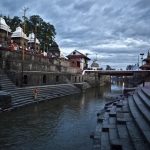
Nepal is a deeply spiritual country. Temples, ghats, stupas, and shrines are not tourist attractions in the way that a museum might be: they are active, living places of worship, woven into the daily life of local communities. The idea of setting up a cooking stove beside a temple, or pitching a tent in a sacred courtyard, is not merely rude. For the people who use those spaces as part of their religious and cultural lives, it is genuinely distressing. Several incidents have been reported in 2025 and 2026 involving groups camped or cooking in the immediate vicinity of active Hindu and Buddhist sites, with local residents and priests visibly upset and unable to continue their daily rituals undisturbed.
The Environment Cannot Absorb This
Nepal’s natural landscapes are spectacular precisely because they are largely intact. The rivers run fast and cold from glacial snowmelt. The forests around Chitwan and Bardia shelter some of Asia’s most remarkable wildlife. The hillsides above Pokhara burst with rhododendron blossom in spring. All of it is fragile in ways that are not immediately obvious to a visitor who has never thought about ecological load. Open fires lit in undesignated areas risk hillside burns during the dry season. Food waste and litter in or near waterways affects both wildlife and the communities downstream who depend on those rivers. Compacted and overused ground beside trails and campsites takes years, sometimes decades, to recover.
The Etiquette Every Visitor to Nepal Should Know
The behaviour described above represents a fundamental failure of travel etiquette, but it also points to a knowledge gap. Not every traveller arrives with a clear sense of how to behave respectfully in a country whose culture and customs differ from their own. So here, plainly and simply, is what respectful travel in Nepal looks like.
Eat Where the Locals Eat
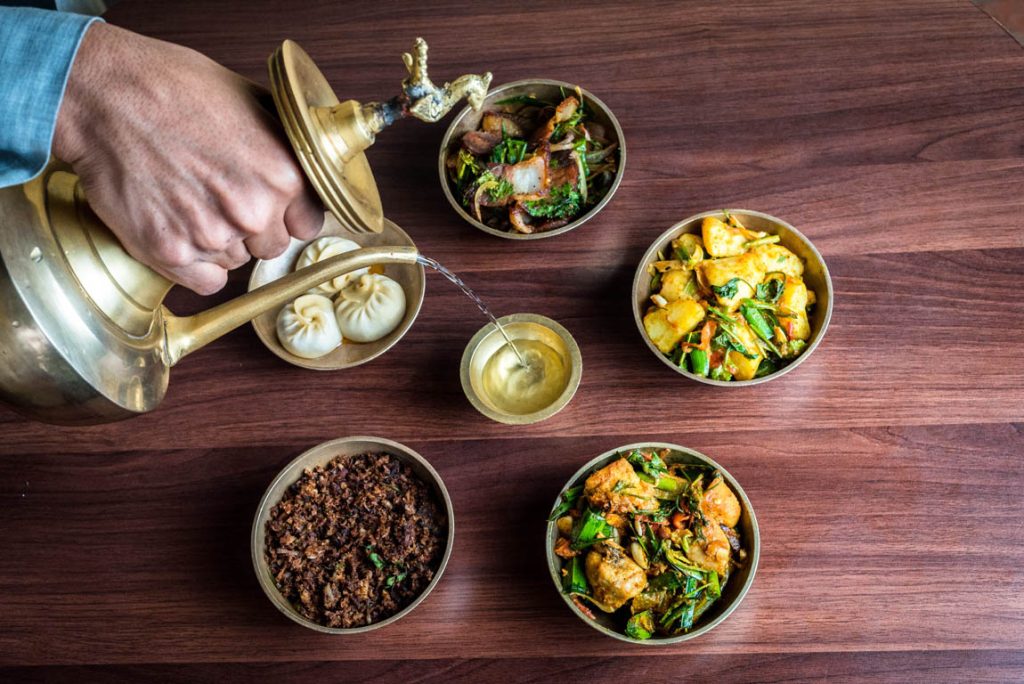
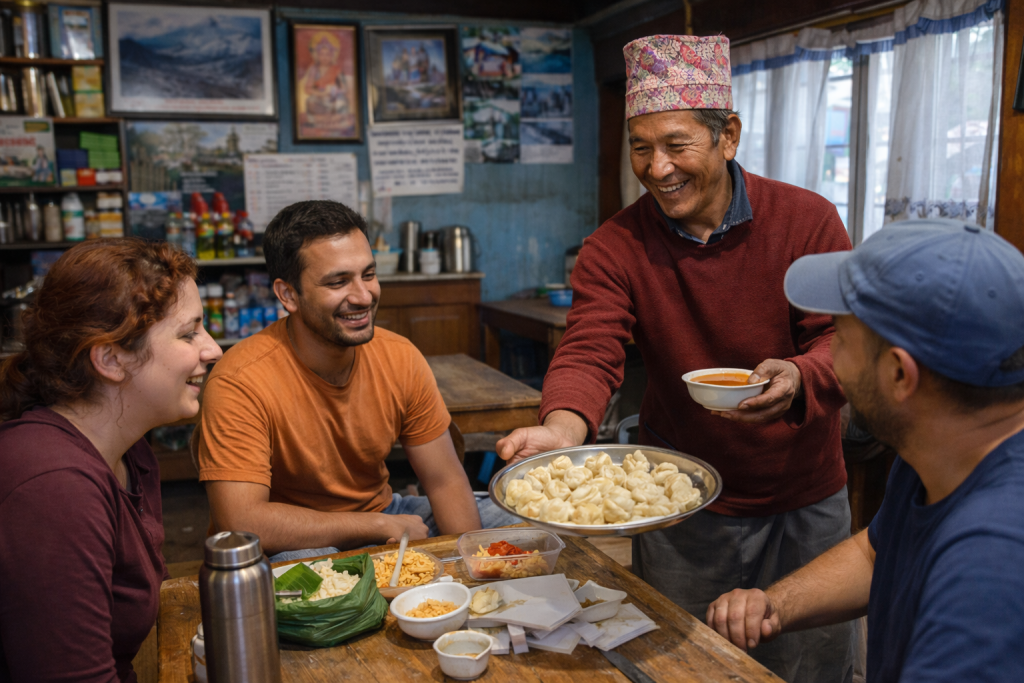
Bringing your own food into a destination community and consuming it there without spending anything locally is one of the most economically damaging things a traveller can do. Nepal has an extraordinary food culture: dal bhat, momos, thukpa, sel roti, Newari feasts spread across banana leaves. Eating at local restaurants is not just good etiquette, it is one of the greatest pleasures of being here. Support the people who feed you.
Camp Only in Designated Areas
Wild camping is either restricted or outright prohibited in most of Nepal’s protected areas and popular destinations. Designated campsites exist, many of them beautiful, and using them is not a compromise: it is how you ensure the places you love remain intact for the people who come after you. If you are unsure whether a site is appropriate for camping, ask local authorities or your accommodation. Never assume open land is free to use.
Treat Sacred Spaces With Reverence
Before entering a temple or religious site, remove your shoes. Dress modestly: shoulders and knees covered is the baseline. Walk clockwise around stupas and mani walls, not counter-clockwise. Do not eat, drink, or raise your voice inside or immediately adjacent to active places of worship. If a ceremony or puja is in progress, observe quietly from a respectful distance or come back later. These are not bureaucratic rules: they are expressions of respect for a living culture.
Take Every Piece of Litter With You
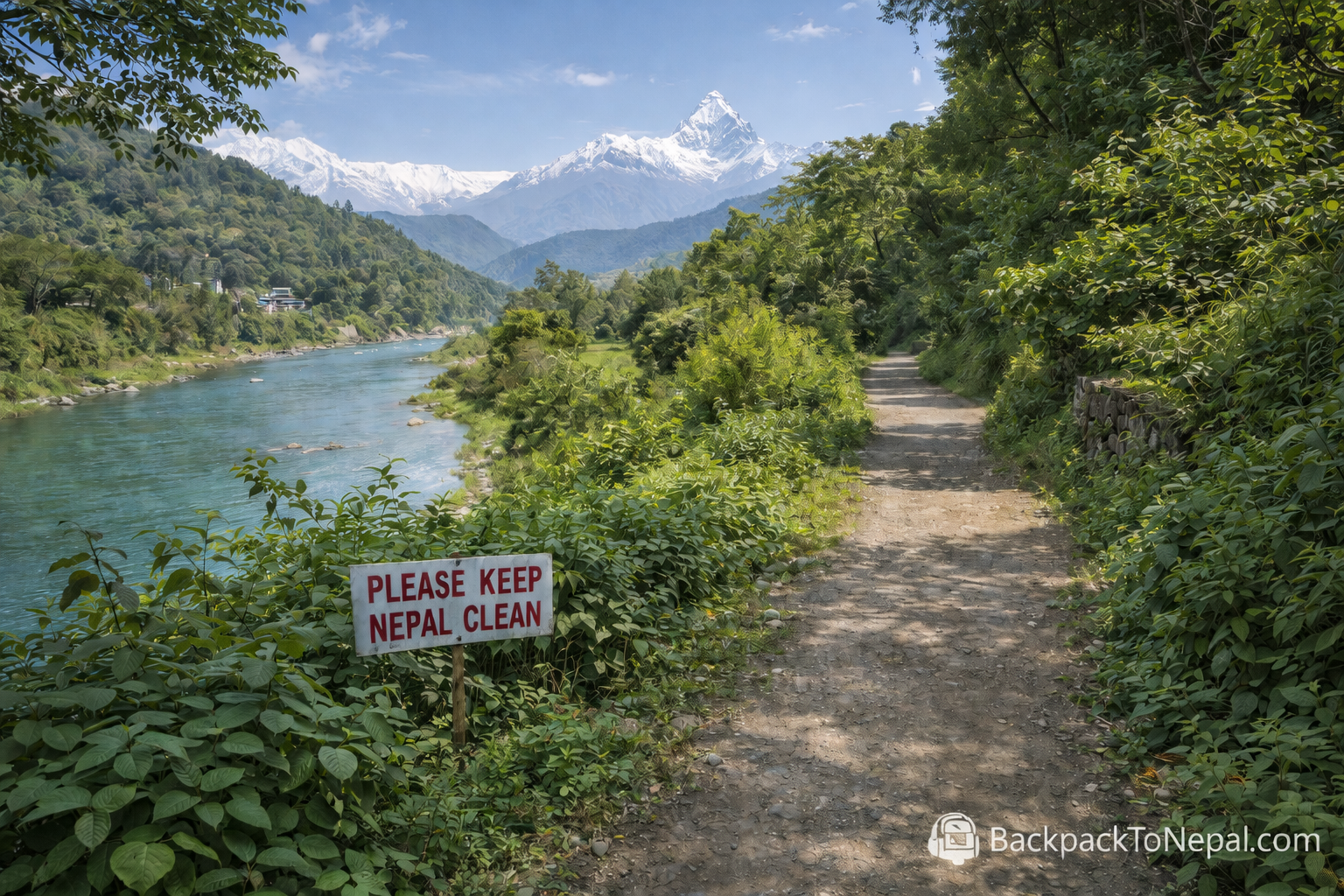
Nepal’s waste collection infrastructure is limited outside of major urban areas. The mountains, forests, and lakesides you come to admire have no magic system for absorbing the rubbish you leave behind. Carry a bag, use it, and take everything out with you. This includes food waste, which attracts wildlife and spreads disease when dumped in natural areas. The rule is simple: leave every place exactly as you found it, or better.
Engage, Spend, and Give Back
The best travel experiences are the ones where you participate in the life of the place you are visiting, rather than rolling through it as a self-contained unit. Talk to people. Eat their food. Buy from their stalls. Hire local guides. Stay in locally owned accommodation. Tip fairly. These interactions are not just good for the economy: they are the reason most people fall in love with Nepal in the first place.
What Nepal’s Tourism Authorities Are Doing About It
Awareness of this problem at the official level is growing. Nepal Tourism Board representatives and local government officials in several districts have spoken publicly about the need for better regulation of large group arrivals, clearer rules around camping and public space use, and stronger enforcement of existing environmental protection laws. Community groups in Pokhara and Chitwan have begun documenting incidents and presenting evidence to local authorities.
There is also a growing conversation within the travel industry about the responsibility of tour operators, particularly those organising large cross-border group packages, to brief their clients on local expectations before arrival. A traveller who arrives in Nepal understanding that camping without permission is not allowed, that littering is unacceptable, and that local communities deserve both respect and economic benefit from their visit, is far less likely to cause the kind of harm being reported. The briefing, or the absence of it, matters enormously.
Some voices in Nepal’s tourism sector are calling for mandatory pre-arrival etiquette information for group tour operators, minimum spending requirements for package tours that enter the country, and expanded ranger and enforcement capacity in the most affected areas. Whether or how quickly these measures are implemented remains to be seen, but the political will to act appears to be building.
A Country That Deserves Better
Nepal asks very little of its visitors. It offers staggering beauty, extraordinary food, profound spiritual depth, and a quality of human warmth that is genuinely rare in the world. In return, it asks only that you come with open eyes, a little humility, and the basic decency to treat its people, its sacred places, and its landscapes with the care they deserve.
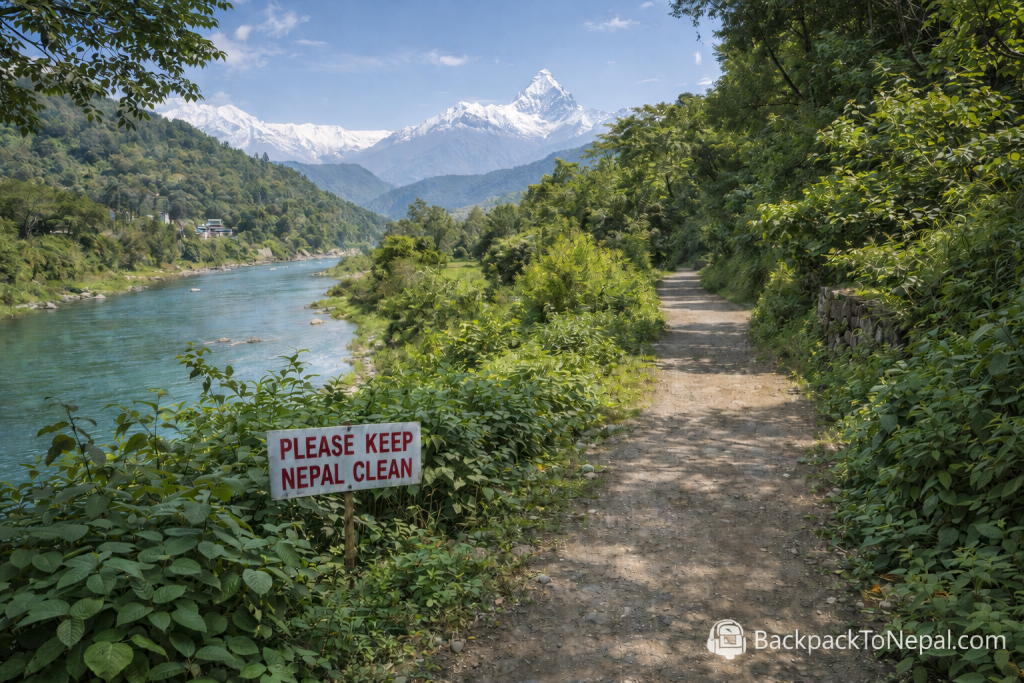
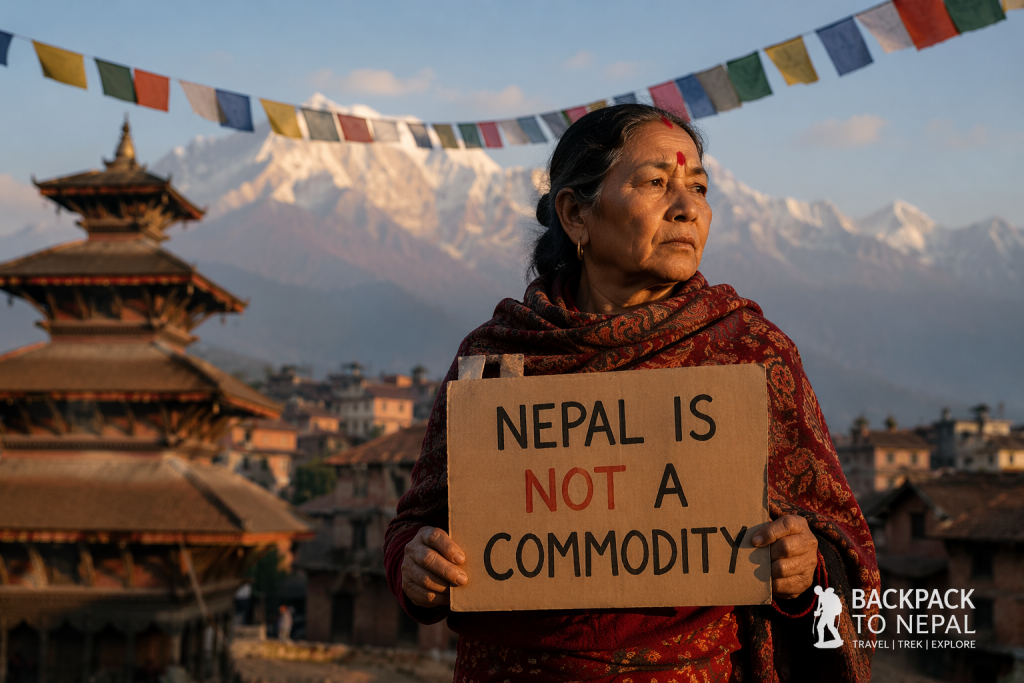
That is not too much to ask. For the vast majority of travellers who visit Nepal every year, it goes without saying. But for those who arrive treating it as a backdrop for their own convenience, a place to sleep for free, cook their own food, and move on without a backward glance, it is worth saying clearly: this is not what travel looks like. This is not what respect looks like. And the communities of Nepal, who have welcomed visitors with such extraordinary generosity for so long, deserve far better than this.
If you are planning a trip to Nepal, go with your whole heart. Spend in the communities you visit. Sleep where it is permitted. Carry your litter out. Step gently around sacred spaces. Say namaste and mean it. Nepal will give you back tenfold everything you bring with genuine respect and curiosity. That exchange, that real, human, reciprocal exchange, is what travel at its best is all about.
Related Posts
Stay Informed With the Latest & Most Important News
Previous Post
Next Post
- Kathmandu Travel Guide: What to See, Where to Stay, Eat and How to Get Around
- From Mustang to the World: Shinta Mani Mustang Named the No. 1 Luxury Hotel on Earth
- Best Places to Visit in Nepal: A Complete Region-by-Region Guide for Every Traveller
- Trekking in Nepal: The Complete Guide to Choosing and Planning Your Himalayan Trek
- Beyond the Mountains: Why Nepal Could Become One of the World’s Great Food Destinations