Now Reading: Pokhara Travel Guide: Everything to See, Do, and Eat at Nepal’s Lakeside Gem
-
01
Pokhara Travel Guide: Everything to See, Do, and Eat at Nepal’s Lakeside Gem

Your complete Pokhara travel guide: Phewa Lake, Sarangkot sunrise, paragliding, World Peace Pagoda, the best food, and a 3-day itinerary for Nepal's Lakeside city.
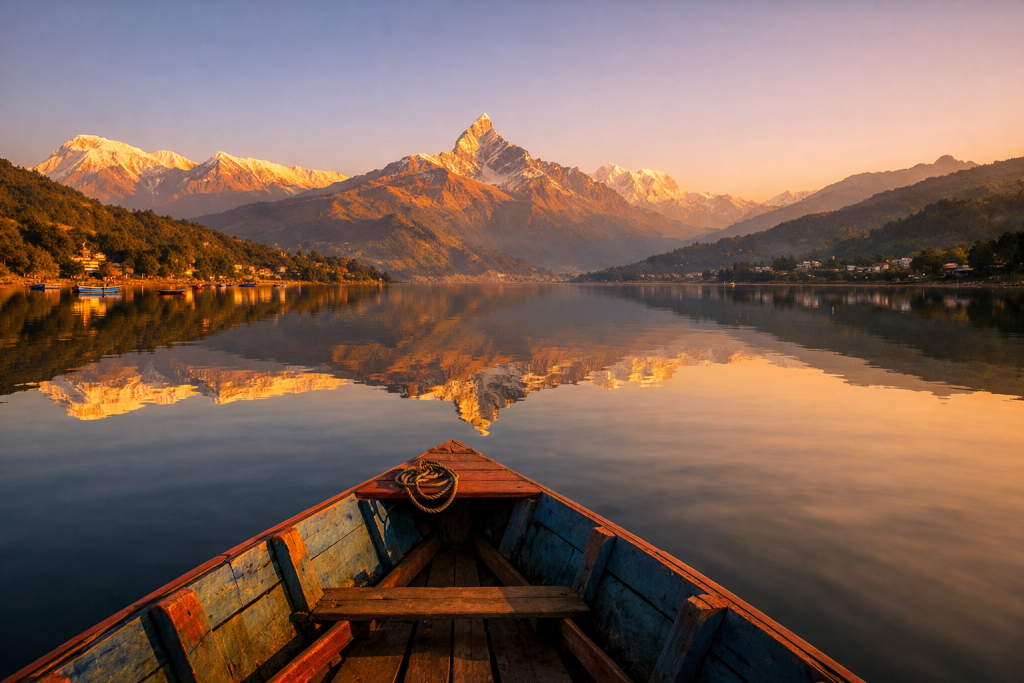
There is a moment, somewhere between your first sip of ginger-lemon-honey tea on a Lakeside terrace and the sight of Machhapuchhre’s perfect peak catching the first blush of morning light across Phewa Lake, when Pokhara stops being a destination and starts feeling like somewhere you were always meant to come back to. Nepal’s second city moves at a gentler pace than Kathmandu, the air is cleaner, the mountains feel impossibly close, and the whole place has this easy, welcoming rhythm that makes days stretch out in the best possible way.
This Pokhara travel guide covers everything you need to plan an unforgettable visit: the must-see sights, the best food, the adventures worth chasing, and a practical 3-day itinerary to help you make the most of your time here.
Why Pokhara Belongs on Every Nepal Itinerary
Pokhara sits at roughly 820 metres above sea level in the Gandaki Province, cradled by the Annapurna massif to the north and strung along the southern shore of Phewa Lake. It is the gateway to some of Nepal’s most celebrated trekking routes, including the Annapurna Circuit, the Annapurna Base Camp trek, and the Ghorepani Poon Hill trail. But you do not have to lace up your trekking boots to fall in love with it. Paragliding, boating, cave exploring, sunrise chasing, and lingering over excellent coffee are all perfectly valid ways to spend your time here.
The city has two distinct personalities. The old Pokhara Bazaar area, a few kilometres from the lake, pulses with local commerce, temples, and everyday Nepali life. Lakeside, known locally as Baidam, is the traveller hub: a long strip of guesthouses, restaurants, gear shops, and cafés lining the eastern shore of Phewa Lake. Most visitors spend the majority of their time in and around Lakeside, which is exactly where this guide will take you.
Getting to Pokhara
Pokhara is well connected to Kathmandu by both air and road. Flights take around 25 minutes and offer some of the most spectacular mountain views you will ever see from an aircraft window. Tourist buses from Kathmandu’s Thamel neighbourhood depart early morning and cover the roughly 200 km journey in six to eight hours, winding through the hills with plenty of scenery along the way. Local buses are cheaper but considerably more crowded. Private cars and taxis are also easy to arrange through your guesthouse if you prefer comfort and flexibility.
Pokhara’s new international airport, Gandaki Airport, opened in 2023 and handles both domestic and international routes, making it easier than ever to fly in directly from certain regional hubs.
Exploring Lakeside: Your Base Camp in the City
Lakeside is made for slow mornings and easy exploration on foot. The main strip, Baidam Road, runs parallel to the lake and is lined with everything from budget teahouses to surprisingly sophisticated rooftop restaurants. Hire a rowing boat or a pedal boat for a couple of hours and let yourself drift out onto Phewa Lake, pausing mid-water to watch the Annapurna range shimmer in the reflection below you.
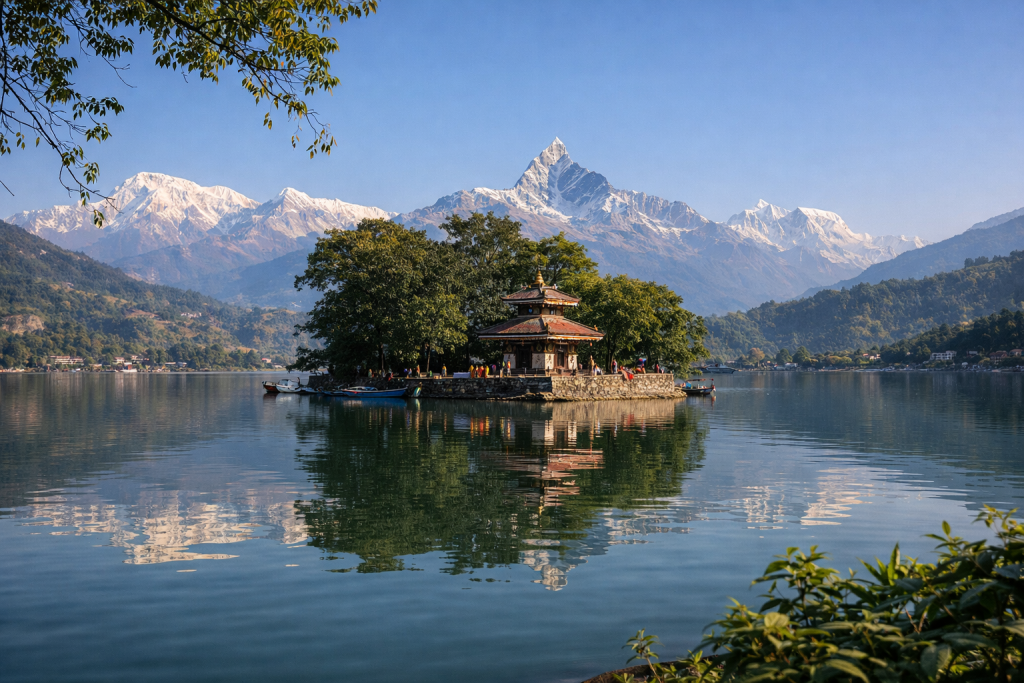
Across the lake, you will spot a small island with a bright orange temple perched on top. That is the Barahi Temple, a Hindu shrine dedicated to the boar-headed goddess Barahi. It is one of the most photographed spots in Pokhara, and you can row out to it yourself or take a short wooden ferry from the main ghat. Remove your shoes before entering, and take a moment to sit quietly and soak in the view back across the water toward the mountains. It is one of those places that genuinely stops you in your tracks.
Sarangkot: The Sunrise You Will Never Forget
If you do only one thing in Pokhara, make it the sunrise from Sarangkot. This hilltop viewpoint sits at around 1,600 metres and commands a sweeping panorama of the Annapurna range, including Annapurna I (8,091m), Annapurna II, Annapurna III, Annapurna IV, Annapurna South, and the iconic Machhapuchhre, the Fishtail Peak that is sacred to Hindus and has never been officially summited.
You will need to leave Lakeside while it is still dark, usually around 5:00 to 5:30am depending on the season. Taxis can take you most of the way up, and then it is a short climb on foot to the main viewpoint. Wrap up warm: the ridge gets cold before the sun arrives. When the sky begins to lighten, you will watch the peaks turn from grey to pale gold to a deep, burning orange. It happens quickly, and it is completely silent apart from the wind and the clicking of camera shutters around you. Bring a thermos of tea if you can.
Sarangkot is also the launch point for paragliding over the Pokhara valley, which brings us to the next item on your list.
Paragliding Over Pokhara: Flying With the Eagles
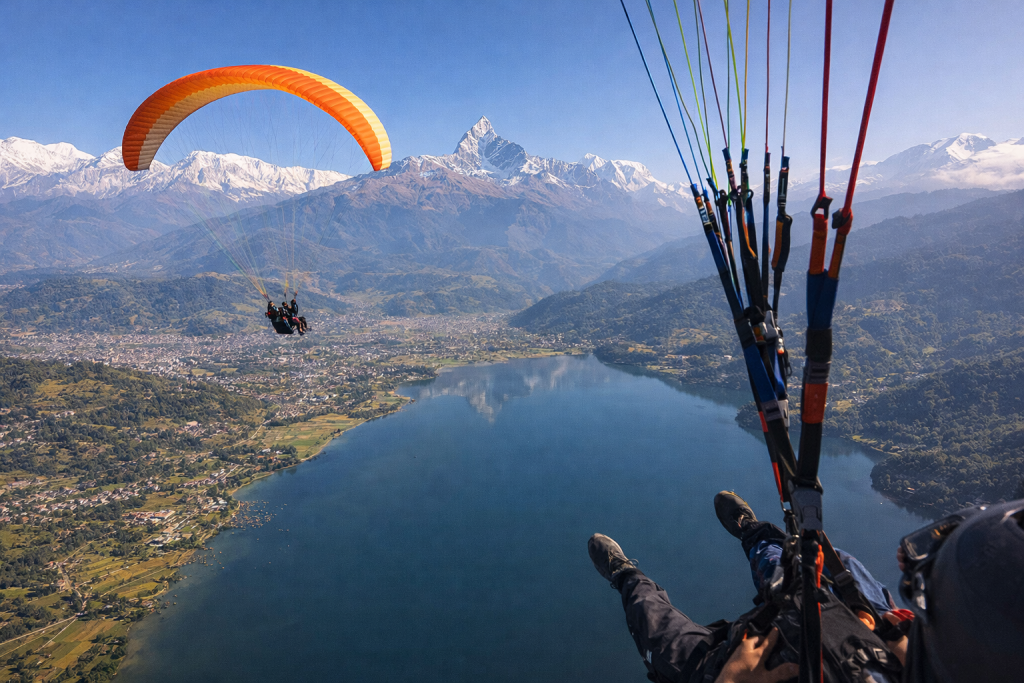
Nepal is one of the top paragliding destinations in the world, and Pokhara is where most of that magic happens. The thermals off the Sarangkot ridge are powerful and reliable, the views of the lake and the mountains from the air are extraordinary, and the whole experience takes around 30 to 45 minutes for a standard tandem flight. You do not need any prior experience: a trained pilot sits with you, and your job is simply to run off a hill and then try not to forget to breathe when you realise you are actually flying.
Dozens of operators run flights from Sarangkot, and prices vary. Do your research, read recent reviews, and choose a company with a solid safety record. Budget around USD 70 to 100 for a standard tandem flight. If you want video footage, most operators offer a GoPro package for an additional fee. Book in advance during peak season (October to November and March to April), as spots fill up fast on clear days.
The World Peace Pagoda: Calm Above the City
Perched on a ridge on the southern side of Phewa Lake, the World Peace Pagoda is a gleaming white stupa built by Japanese Buddhist monks of the Nipponzan-Myohoji order. It is one of over 80 peace pagodas built around the world, and its elevated position gives it one of the finest views in all of Pokhara: the lake stretching out below, the city to the east, and the white line of the Annapurnas along the northern horizon.
You can reach it by hiking up from the lakeside (allow about an hour each way on a well-marked trail through forest), or by taking a boat across to the southern shore and hiking up from there. The quieter boat-and-hike combination is worth it. The pagoda itself is serene and beautifully maintained, and because it sits away from the main tourist strip, it tends to feel genuinely peaceful. Visit in the late afternoon if possible: the light on the mountains from this vantage point at golden hour is extraordinary.
Davis Falls and Gupteshwor Cave
About 2 km south of Lakeside, the Seti River disappears underground in a dramatic, churning rush of white water at a spot known as Davis Falls (officially Patale Chhango). During the monsoon season, the falls are a roaring, thunderous spectacle. In the drier months they are smaller but still striking, and you can get surprisingly close to the edge on the walkways above.
Directly across the road, Gupteshwor Cave is a sacred Hindu cave complex that actually runs beneath the road and connects to the natural cavern behind the falls. Inside you will find a large Shiva lingam shrine, stalactites and stalagmites lit up in coloured lights, and at the back of the cave, a window that looks directly into the churning pool at the base of Davis Falls. It is oddly dramatic and well worth the small entrance fee. The two sites together take around an hour and pair well with a visit to the nearby Tibetan refugee settlements, where you can watch artisans at work producing thangka paintings, carpets, and jewellery.
What to Eat in Pokhara
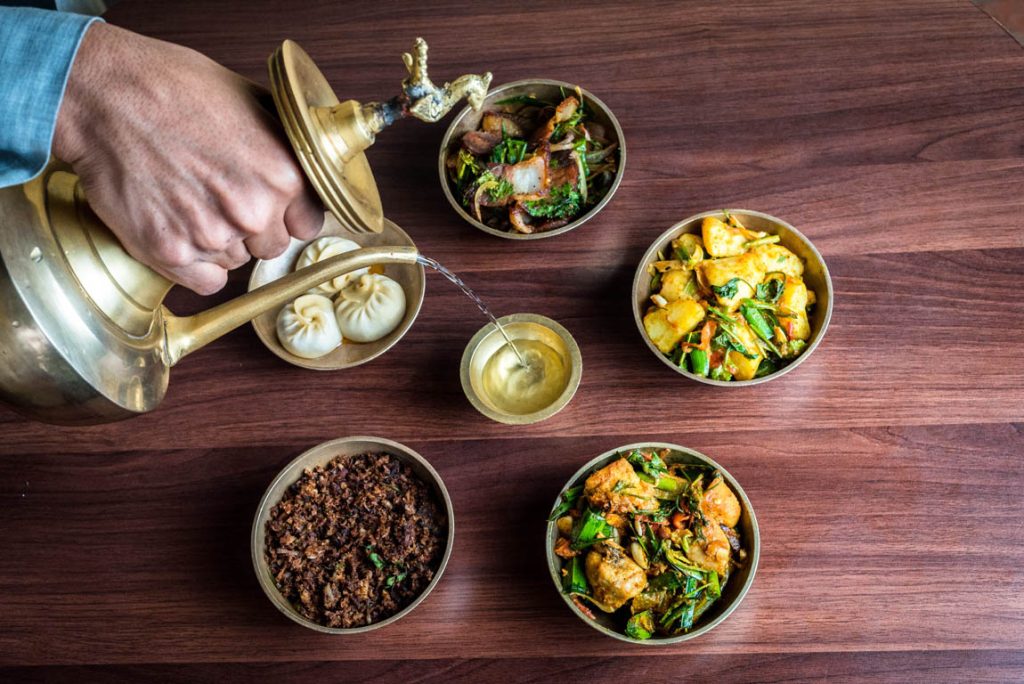
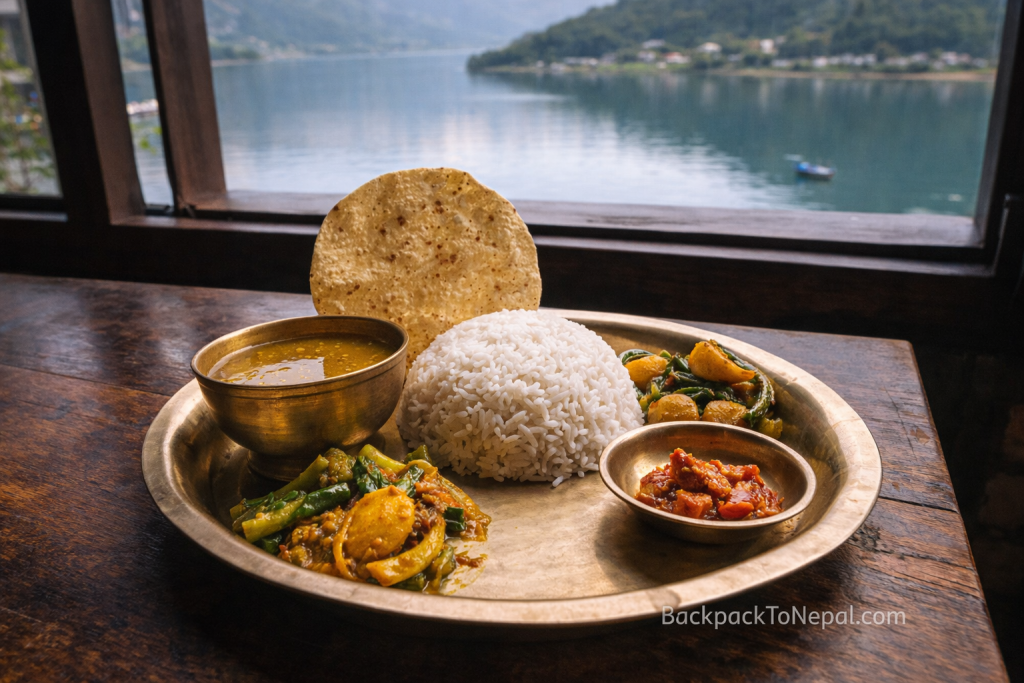
Pokhara’s food scene punches well above its weight. Dal bhat is the foundation of Nepali eating: steamed rice, lentil soup, curried vegetables, pickles, and sometimes a piece of chicken or mutton, all served on a large round plate and refilled as many times as you like. Find a local restaurant away from the main tourist strip for the most authentic version, and order it for lunch when you are genuinely hungry. It is filling, nutritious, and rarely costs more than a few dollars.
Momos are a non-negotiable. These steamed or fried dumplings, stuffed with spiced minced meat or vegetables and served with a tangy tomato-sesame dipping sauce, are found everywhere and are addictive in the best possible way. Try them at a local joint rather than a tourist-facing restaurant for the best ratio of quality to price.
Lakeside’s café culture is genuinely impressive. Busy Bee Café is something of an institution, with live music, strong coffee, and a relaxed vibe that makes it dangerously easy to waste an afternoon there. Third Wave Coffee and similar speciality spots have introduced proper espresso drinks to the strip. For something heartier, Moondance Restaurant and Caffe Concerto are long-standing favourites with reliable menus covering everything from pasta to Nepali set meals.
If you want to eat where locals eat, head to the Mahendrapul area or toward the old bazaar. The street food scene there, freshly fried selroti (sweet rice doughnuts), spiced chatpate, and hot Nepali tea in small clay cups, is worth every second you spend wandering through it.
Your 3-Day Pokhara Itinerary
Day 1: Arrive, Explore Lakeside, and Get on the Water
Check in to your guesthouse, drop your bags, and walk straight down to the lake. Hire a rowing boat for the afternoon and spend a couple of hours out on the water, pausing at the Barahi Temple island. As the sun dips, find a rooftop restaurant or a terrace spot and watch the mountains change colour over dinner. Order momos and a plate of dal bhat and settle in. Go to bed early: tomorrow starts before dawn.
Day 2: Sarangkot Sunrise, Paragliding, World Peace Pagoda
Wake up at 4:30am and get a taxi up to Sarangkot for the sunrise. Stay as long as you like on the ridge, then if you have booked a paragliding flight, get ready to launch. Flights typically run from late morning through early afternoon when the thermals are best. After landing back in Lakeside, have lunch and rest for an hour. In the late afternoon, take a boat across the lake and hike up to the World Peace Pagoda for golden hour. Walk back down to the southern shore and catch a boat back to Lakeside. Dinner at a Lakeside terrace café, live music optional.
Day 3: Davis Falls, Gupteshwor Cave, Old Bazaar, and Departure
Start the morning with a proper breakfast at one of the Lakeside cafés, then take a taxi south to Davis Falls and Gupteshwor Cave. Spend an hour or so at both, then continue to the old Pokhara Bazaar area to explore the Tibetan market, browse thangka paintings, and have lunch at a local dal bhat restaurant. If you have more time before your onward journey, the Annapurna Butterfly Museum near Lakeside is a delightful, lesser-known stop. Wrap up your afternoon back by the lake, and let yourself sit with a cup of tea and the mountains one last time before you go.
Practical Tips for Visiting Pokhara
The best seasons to visit are October to November (post-monsoon, crystal-clear skies, peak trekking season) and March to April (spring, rhododendrons in bloom, excellent mountain visibility). December to February can be cold and hazy but is much quieter. July and August bring the monsoon: lush and dramatic, but cloudy and wet.
Most visitors to Nepal get a tourist visa on arrival at Tribhuvan International Airport in Kathmandu, or can apply in advance through the online Nepal visa portal. Standard fees apply for 15-day, 30-day, and 90-day stays.
ATMs are readily available on the Lakeside strip. Carry Nepali rupees for local restaurants, markets, and transport. Most mid-range and upscale restaurants accept cards, but smaller places and street vendors are cash only. A budget of NPR 3,000 to 5,000 per day (roughly USD 22 to 37) covers accommodation in a comfortable guesthouse, meals, and activities, though paragliding and boat hire will add to this.
Pokhara sits at a modest altitude and you are unlikely to experience altitude sickness in the city itself. If you are heading up toward Sarangkot or planning any trekking from here, stay well hydrated, ascend gradually, and never ignore symptoms like persistent headaches or dizziness.
Start Planning Your Pokhara Adventure
Pokhara has a way of holding on to people. You arrive planning two or three days and somehow find yourself renegotiating your onward bus ticket at the end of the week, because there is always one more sunset to catch, one more bowl of momos to eat, one more morning where the Fishtail Peak is sitting there above the lake looking so impossibly beautiful that leaving feels like a mistake.
So start planning. Book that flight to Kathmandu, sort your visa, and give yourself enough time to actually slow down once you get to the lake. Nepal is waiting, and Pokhara is one of the finest reasons to go.
Related Posts
Stay Informed With the Latest & Most Important News
Previous Post
Next Post
- Kathmandu Travel Guide: What to See, Where to Stay, Eat and How to Get Around
- From Mustang to the World: Shinta Mani Mustang Named the No. 1 Luxury Hotel on Earth
- Best Places to Visit in Nepal: A Complete Region-by-Region Guide for Every Traveller
- Trekking in Nepal: The Complete Guide to Choosing and Planning Your Himalayan Trek
- Beyond the Mountains: Why Nepal Could Become One of the World’s Great Food Destinations