Now Reading: Poon Hill Trek: The Complete Guide
-
01
Poon Hill Trek: The Complete Guide
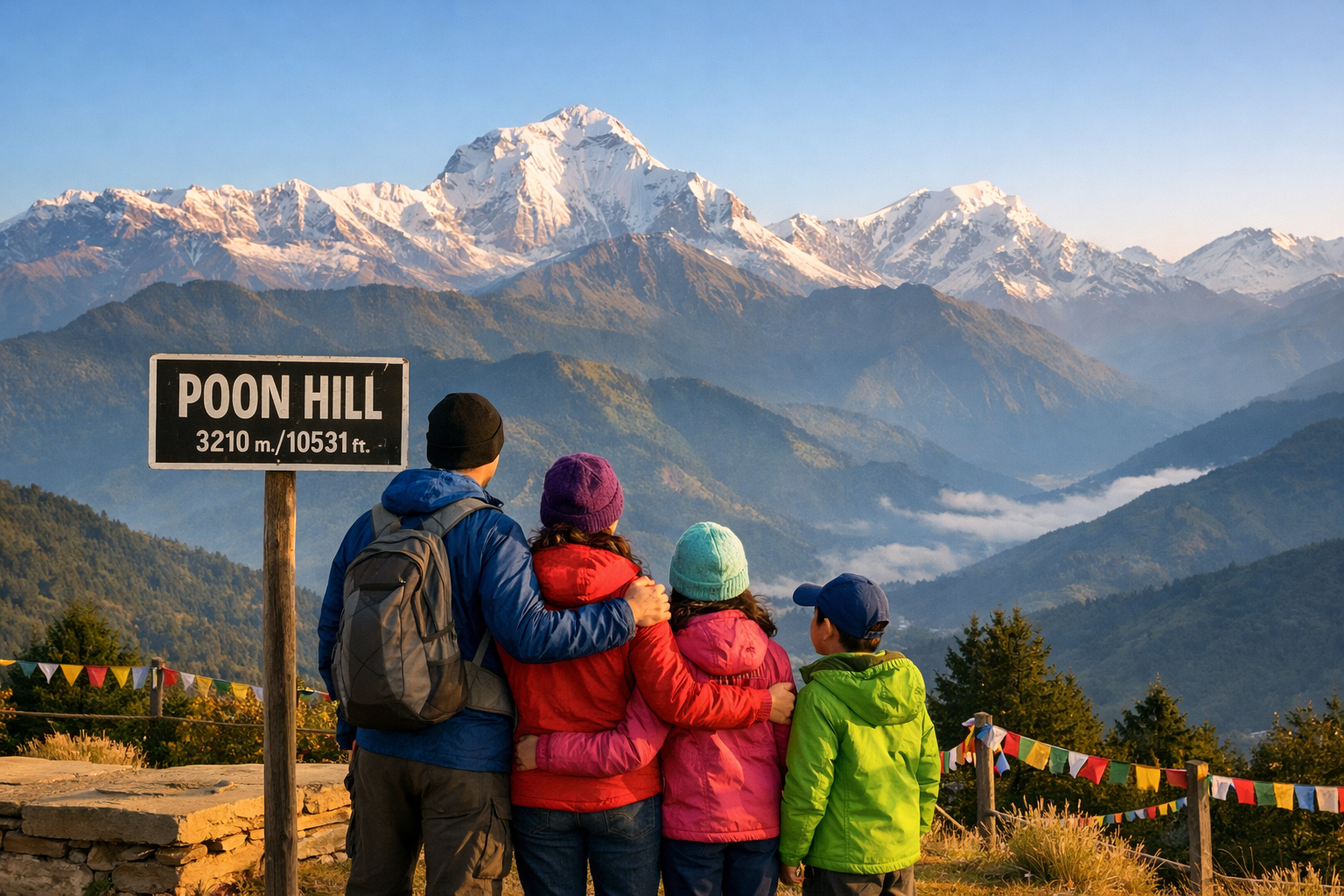

Your complete 2026 guide to the Poon Hill Trek: day-by-day itinerary, realistic costs ($15-25/day), difficulty level, best months, packing list, and permits.
Picture this: it is 4:30 in the morning, the air bites your cheeks with a cold you can feel in your teeth, and you are climbing stone steps in the dark with nothing but the bouncing glow of your headlamp and the sound of your own breathing. Then, just as your thighs begin to protest, you reach the top. The sky shifts from deep violet to pale gold, and the entire Annapurna and Dhaulagiri ranges ignite with light… peak after peak after peak, stretching across the horizon like something a painter would be afraid to attempt because nobody would believe it was real.
That is the Poon Hill Trek. And it might just be the single best short trek in all of Nepal.
Whether you are a first-time trekker looking for a gentle Himalayan introduction or a seasoned hiker squeezing adventure into a tight schedule, this guide covers everything you need: a detailed day-by-day itinerary, realistic costs (yes, you really can do this for $15 to $25 a day on the trail), difficulty level, what to pack, and the best months to go. Let us get you to that sunrise.
[IMAGE: Panoramic sunrise view from Poon Hill viewpoint at 3,210m showing the golden light hitting Dhaulagiri and the Annapurna range, with silhouettes of trekkers in the foreground]
Why the Poon Hill Trek Deserves a Spot on Your Bucket List
Nepal has no shortage of legendary trails. The Everest Base Camp trek, the Annapurna Circuit, the Manaslu loop… they are all extraordinary. But the Poon Hill Trek holds a special place because it packs a staggering amount of beauty into a very short, very accessible package. You do not need mountaineering experience. You do not need weeks of holiday time. And you absolutely do not need to sell a kidney to afford it.
The trek sits in the Annapurna Conservation Area, starting from the lakeside city of Pokhara. Over three to five days, you walk through terraced rice paddies, dense rhododendron forests that explode in crimson and pink during spring, and charming Gurung and Magar villages where stone houses sit nestled against hillsides and prayer flags snap lazily in the breeze. You sleep in family-run teahouses, eat steaming plates of dal bhat, and wake up to mountain views that most people only see on postcards.
The crown jewel? The sunrise from Poon Hill itself, at 3,210 metres. From the viewing platform, you can see over 30 Himalayan peaks, including two towering 8,000-metre giants: Dhaulagiri (8,167m) and Annapurna I (8,091m). Fishtail Mountain (Machhapuchhre) stands proud with its distinctive twin summit, and the surrounding ranges stretch in every direction. It is, without exaggeration, one of the most spectacular viewpoints in the Himalayas.
How Difficult Is the Poon Hill Trek? (Honest Answer)
The Poon Hill Trek is graded as easy to moderate, and that description is fair. If you can walk for five to six hours a day on uneven terrain with some sustained uphill sections, you can do this trek. You do not need to be an athlete. Plenty of families with children, retirees, and people who had never set foot on a mountain trail before have completed it with big smiles on their faces.
That said, let us not sugarcoat a couple of sections. The climb from Tikhedhunga to Ulleri involves roughly 3,300 stone steps. Your calves will have words with you. And the pre-dawn hike from Ghorepani to Poon Hill is steep enough that you will feel the burn in your lungs, especially in the cold, thin air. But each of these challenges is short-lived, and the reward at the top makes every single step feel worth it.
The highest point on the trek is Poon Hill at 3,210 metres. At this altitude, the risk of acute mountain sickness (AMS) is very low, which is another reason why this trek is so beginner-friendly. You do not need acclimatisation days, and you are never far from a village or teahouse if you need to rest.
Fitness Tips Before You Go
Start walking regularly four to six weeks before your trek. Stairs are your best friend: if you have a local park with a hill or a building with several flights, use them. Focus on building endurance rather than speed. If you can comfortably walk for four hours on hilly terrain without feeling wrecked, you are ready for Poon Hill.
The Best Months for the Poon Hill Trek in 2026
Nepal has four distinct trekking seasons, and the one you choose will shape your entire experience.
Autumn (September to November): The Gold Standard
This is the most popular season for good reason. The monsoon rains have washed the sky clean, leaving you with crystal-clear visibility and those impossibly sharp mountain views you see in all the photos. Daytime temperatures are pleasant, hovering around 15 to 20 degrees Celsius at lower elevations, and dropping to around 0 to 5 degrees at Ghorepani after dark. The trails are busy but buzzing with a wonderful international energy. Book your teahouses in advance during October and November, as the route fills up quickly.
Spring (March to May): The Colourful Season
Spring rivals autumn in terms of weather quality, with the added bonus of rhododendron forests in full bloom. If you trek in late March or April, the hillsides between Ulleri and Ghorepani light up in shades of red, pink, and white. It is magical. Temperatures are slightly warmer than autumn, and the visibility is excellent, though occasional afternoon haze can roll in during May.
Winter (December to February): For the Quiet Seekers
Fewer trekkers, lower prices, and the chance of snow on the trail. Winter trekking on Poon Hill is absolutely doable. Daytime temperatures at Ghorepani sit around 5 to 10 degrees, but mornings and evenings drop sharply, sometimes to minus 5 degrees. Pack serious warm layers and a decent sleeping bag. The trails are quieter, and there is something deeply peaceful about having the sunrise viewpoint nearly to yourself.
Monsoon (June to August): Approach with Caution
The monsoon brings heavy rainfall, leeches on the trail, slippery paths, and clouds that often obscure the mountain views entirely. It is the least recommended season, though the landscape is lush and vibrantly green. If you must trek during monsoon, be prepared for rain gear, patience, and the possibility of not seeing the peaks at all.
[IMAGE: Rhododendron forest in full bloom along the trail between Ulleri and Ghorepani, with vibrant red and pink flowers framing a mountain path]
Day-by-Day Itinerary: The Classic 4-Day Poon Hill Trek
There are several ways to structure the Poon Hill Trek, ranging from a rushed 2-day sprint to a leisurely 5 or 6-day wander. The 4-day version is the sweet spot for most trekkers: enough time to enjoy the journey without feeling hurried, and short enough to fit into a week-long Nepal trip.
Day 1: Pokhara to Nayapul, Trek to Tikhedhunga (1,540m)
Drive: 1.5 to 2 hours | Trek: 3 to 4 hours | Altitude gain: 720m
Your adventure starts with an early morning drive from Pokhara to Nayapul, the official trailhead. The road winds through green valleys and crosses suspension bridges, giving you your first taste of the Annapurna countryside. At Nayapul, you register your permits, hoist your daypack, and start walking.
The first stretch follows the Modi Khola river through the village of Birethanti, a pretty settlement where the sounds of rushing water mix with the clinking of teaspoons in chai glasses. From here, the trail climbs gently through farmland and small hamlets until you reach Tikhedhunga, a compact village tucked into the hillside. Your teahouse for the night will be simple but comfortable: a twin room, a warm blanket, and a communal dining room where you can order your first proper dal bhat of the trip.
Day 2: Tikhedhunga to Ghorepani (2,860m)
Trek: 5 to 6 hours | Altitude gain: 1,320m
This is the big effort day. Almost immediately out of Tikhedhunga, you face the famous stone staircase to Ulleri. These steps are relentless, climbing steeply through terraced hillsides for about an hour and a half. Your breathing will get heavy, your legs will feel it, and you will stop frequently to “admire the view” (code for catching your breath). Keep going. Ulleri is a beautiful Magar village perched on a ridge, and the sense of accomplishment when you arrive is wonderful.
From Ulleri, the trail mellows considerably. You enter dense forests of oak and rhododendron, dappled light filtering through the canopy, the air cool and fragrant with moss and damp earth. The path passes through the small settlements of Banthati and Nangethanti before finally reaching Ghorepani. By this point in the afternoon, clouds often swirl in from the valley below, creating a dramatic, atmospheric scene. Find your teahouse, order a hot lemon tea, and go to bed early. Tomorrow morning is the reason you came.
[IMAGE: The famous stone staircase trail from Tikhedhunga climbing up to Ulleri village, with a trekker ascending the steps surrounded by green hillside terraces]
Day 3: Sunrise at Poon Hill (3,210m), Trek to Tadapani (2,630m)
Trek: 6 to 7 hours (including Poon Hill) | Altitude gain to Poon Hill: 350m, then descent
The alarm goes off at 4:00 AM. It feels brutal, but trust the process. You pull on every warm layer you have, grab your headlamp, and join the stream of trekkers heading up the hill in the dark. The climb from Ghorepani to the Poon Hill viewpoint takes about 45 minutes to an hour, depending on your pace. Stone steps wind upward through quiet forest, and the cold gnaws at your fingers and nose.
Then you arrive at the top, and the world opens up. The sky shifts through impossible colours as dawn breaks. First a faint glow behind the peaks, then streaks of orange and gold, and finally the moment the sun crests the ridge and floods the snow-capped mountains with warm, golden light. Dhaulagiri to the west, Annapurna South directly ahead, Machhapuchhre with its signature pointed peak to the east… the panorama stretches in a sweeping 180-degree arc. People gasp. Some cry. It is that kind of moment.
After soaking it in (and taking approximately 400 photos), you descend back to Ghorepani for a hearty breakfast. The rest of the day is a trek through beautiful forest to Tadapani, a quieter village with stunning close-up views of Machhapuchhre. The trail undulates through rhododendron groves and opens occasionally to reveal jaw-dropping mountain vistas. You will sleep well tonight.
Day 4: Tadapani to Ghandruk (1,940m) to Pokhara
Trek: 3 to 4 hours | Drive: 2 to 3 hours
The final day is a gentle descent through the forest to the village of Ghandruk, one of the most picturesque Gurung settlements in the Annapurna region. Stone-paved paths wind between traditional houses, and a small museum showcases the culture and history of the Gurung people who have called these mountains home for centuries. Take your time here. Wander the narrow lanes, peek into the museum, and enjoy a last cup of tea with a mountain backdrop.
From Ghandruk, you catch a jeep or bus back to Pokhara, arriving in the late afternoon. The lakeside restaurants and cold beverages of Pokhara will feel like pure luxury after four days on the trail. You have earned it.
[IMAGE: The traditional Gurung village of Ghandruk with stone houses and slate roofs, with Annapurna South and Machhapuchhre visible in the background]
Poon Hill Trek Cost Breakdown: What You Will Actually Spend
One of the best things about the Poon Hill Trek is how budget-friendly it can be. If you are an independent trekker managing your own logistics, you can realistically spend between $15 and $25 per day on the trail. Here is how that breaks down.
On-Trail Daily Costs (Independent Trekker)
Accommodation: Teahouse rooms along the Poon Hill route cost between $3 and $8 per night for a basic twin room. Most teahouses offer free or heavily discounted rooms if you eat your meals there, which is the standard arrangement. You get a bed, a pillow, blankets, and a shared bathroom.
Food: Expect to pay $2 to $5 per meal. Dal bhat is the best value on the menu: it is filling, nutritious, and almost always comes with unlimited refills. A full day of three meals typically runs $8 to $15. Western options like pizza and pasta are available at most teahouses but cost a bit more and, honestly, are rarely as satisfying as the local food.
Extras: Hot showers ($1 to $3), phone and device charging ($1 to $2), bottled water ($1 to $2 per litre, though carrying purification tablets is cheaper and more eco-friendly), snacks, and the occasional celebratory Everest beer ($3 to $5).
Fixed Costs (Before the Trek)
Permits: You need two permits for this trek. The Annapurna Conservation Area Permit (ACAP) costs $30 for foreign nationals. The TIMS (Trekkers’ Information Management System) card costs $20. Both can be obtained in Kathmandu or Pokhara.
Guide (mandatory in 2026): As of recent regulations, foreign trekkers are now required to hire a licensed guide for treks in the Annapurna region. Guide fees typically range from $25 to $35 per day, depending on experience. This is arguably money well spent: a good guide enhances the experience enormously, handling logistics, sharing local knowledge, and keeping you safe.
Transport: The drive from Pokhara to Nayapul and the return journey cost roughly $10 to $25 per person each way, depending on whether you share a jeep or arrange private transport.
Porter (optional): If you would rather not carry your own bag, a porter costs $15 to $25 per day and can carry up to 25kg.
Total Estimated Budget
For a 4-day trek with a guide, permits, transport, food, and accommodation, most independent trekkers spend between $250 and $400 total. If you book an organised package through a trekking agency, prices range from about $200 to $500 per person depending on group size and inclusions, with larger groups getting lower per-person rates.
What to Pack for the Poon Hill Trek
Packing for Poon Hill is all about layering and practicality. The altitude is moderate, but temperatures swing dramatically between warm, sunny afternoons and freezing pre-dawn mornings. Here is your essential gear list.
Clothing
Base layers: Moisture-wicking thermal tops and bottoms. These are your first defence against cold mornings and your best friend for the Poon Hill sunrise hike. Avoid cotton, which holds moisture and chills you fast.
Mid layers: A fleece jacket or lightweight softshell for everyday trekking warmth. Something you can easily take on and off as the temperature shifts throughout the day.
Insulated jacket: A compact down or synthetic puffer for early mornings, evenings, and the summit push. This is non-negotiable, especially from October through April.
Waterproof shell: A breathable rain jacket that doubles as a wind layer. Even outside the monsoon, afternoon showers can catch you off guard.
Trekking trousers: Lightweight, quick-drying pants. Convertible trousers that zip off into shorts are a practical choice. Pack one or two pairs.
Accessories: A warm beanie, lightweight gloves (or waterproof gloves for winter), a buff or neck gaiter, and a sun hat for exposed sections of the trail.
Footwear
Trekking boots: Waterproof, with ankle support and a sturdy sole. Break them in thoroughly before your trip. Blisters on the Ulleri staircase are not the souvenir you want.
Camp shoes: Lightweight sandals or slippers for wearing around the teahouse in the evening. Your feet will thank you.
Trekking socks: Two to three pairs of good wool or synthetic blend socks. Consider liner socks to reduce friction.
Gear and Essentials
Daypack (25 to 35 litres): If you have a porter, this is all you carry. Fill it with water, snacks, your camera, a rain layer, and a warm jacket.
Headlamp: Absolutely essential for the pre-dawn Poon Hill climb. Bring spare batteries.
Trekking poles: Optional but highly recommended, especially for the descents. Your knees will appreciate them on the way down from Ghorepani.
Water bottle and purification: Carry a reusable bottle and water purification tablets or a filter bottle. This saves money and reduces plastic waste on the trail.
Sleeping bag: Teahouses provide blankets, but a lightweight sleeping bag rated to around minus 5 to minus 10 degrees Celsius adds comfort, particularly in winter. You can rent one in Pokhara if you do not want to carry your own.
Power bank: Charging devices at teahouses costs money and availability can be limited. A 10,000 to 20,000 mAh power bank keeps your phone and camera alive throughout the trek.
Sunscreen and sunglasses: The UV intensity at altitude is fierce, even on cloudy days. Use SPF 50+ and UV-protective sunglasses.
Basic first aid kit: Blister plasters, pain relievers, anti-diarrhoeal medication, rehydration salts, any personal prescriptions, and a small tube of antiseptic cream.
[IMAGE: A trekker’s backpack laid open on a teahouse bed showing organised gear including layers, boots, headlamp, water bottle, and trekking poles, with a mountain view through the window]
A Taste of the Trail: Food and Culture on the Poon Hill Trek
You cannot walk through the Annapurna foothills without falling in love with the food. Teahouse menus along the Poon Hill route are surprisingly varied, but the undisputed king of the trail is dal bhat: steaming rice, lentil soup, vegetable curry, pickles, and sometimes a small serving of meat. It is hearty, nutritious, and comes with free refills. Trekkers have a saying in Nepal: “Dal bhat power, 24 hour.” It is corny. It is also true.
Mornings usually bring Tibetan bread with honey, porridge, eggs, and pancakes. Lunch and dinner menus expand to include noodle soups (thukpa), fried noodles (chow mein), momos (Nepali dumplings that you will become mildly obsessed with), and even attempts at pizza and pasta. Ginger lemon honey tea becomes your constant companion: warming, soothing, and the unofficial fuel of every Himalayan trek.
Beyond the food, the cultural richness of the trail adds depth to every day. You walk through villages of the Gurung and Magar people, communities with deep roots in these mountains. In Ghandruk, you can visit a small museum dedicated to Gurung heritage, see traditional stone architecture, and experience the warmth of people who have been welcoming strangers into their homes for generations. Take a moment to sit, to listen, to ask questions. The mountains are magnificent, but the people make the trek truly unforgettable.
Important Practical Tips for 2026
Permits and Regulations
For 2026, Nepal requires foreign trekkers in the Annapurna region to trek with a registered guide. Solo, unsupported trekking permits are no longer issued for this route. You will need an ACAP permit ($30) and a TIMS card ($20), both of which can be arranged through your trekking agency or obtained at the permit offices in Kathmandu or Pokhara. Your guide or agency will typically handle this paperwork for you.
Getting There
Most trekkers base themselves in Pokhara, which is connected to Kathmandu by a 25-minute flight or a scenic 7 to 8-hour bus ride. From Pokhara, the trailhead at Nayapul is a 1.5 to 2-hour drive. Some agencies offer drives directly to Ulleri or Hile to shorten the trek by skipping the initial road section.
Connectivity and Cash
There are no ATMs beyond Pokhara, so carry enough Nepali rupees for your on-trail expenses. Most teahouses are cash only. Mobile signal is available in some villages, and some teahouses offer WiFi for a small fee ($1 to $3), though speeds range from slow to glacial. Consider a Nepali SIM card (Ncell is popular) for basic connectivity.
Travel Insurance
While the Poon Hill Trek is low altitude and low risk, travel insurance that covers trekking up to at least 3,500 metres is strongly recommended. It should include emergency evacuation and medical coverage. Peace of mind is worth the small cost.
Ready to Chase That Sunrise?
The Poon Hill Trek is one of those rare experiences that genuinely lives up to the hype. It is affordable, accessible, stunningly beautiful, and deeply rewarding. Whether you are stepping onto a mountain trail for the very first time or looking for a short Himalayan escape between bigger adventures, Poon Hill delivers something that stays with you long after you have returned home.
So here is your call to action: stop scrolling, start planning. Pick your dates, book a reputable guide, pack your layers, and get yourself to Pokhara. That sunrise is not going to watch itself.
Nepal is waiting. The mountains are ready. Are you?
Stay Informed With the Latest & Most Important News
Previous Post
Next Post
- Kathmandu Travel Guide: What to See, Where to Stay, Eat and How to Get Around
- From Mustang to the World: Shinta Mani Mustang Named the No. 1 Luxury Hotel on Earth
- Best Places to Visit in Nepal: A Complete Region-by-Region Guide for Every Traveller
- Trekking in Nepal: The Complete Guide to Choosing and Planning Your Himalayan Trek
- Beyond the Mountains: Why Nepal Could Become One of the World’s Great Food Destinations