Now Reading: Pokhara Calling: Why Nepal’s Lakeside City Will Steal Your Heart (and When to Go)
-
01
Pokhara Calling: Why Nepal’s Lakeside City Will Steal Your Heart (and When to Go)

Discover Pokhara, Nepal's stunning lakeside city. From Phewa Lake reflections to Sarangkot sunrises and momo feasts, here is your complete guide to falling in love with Pokhara.
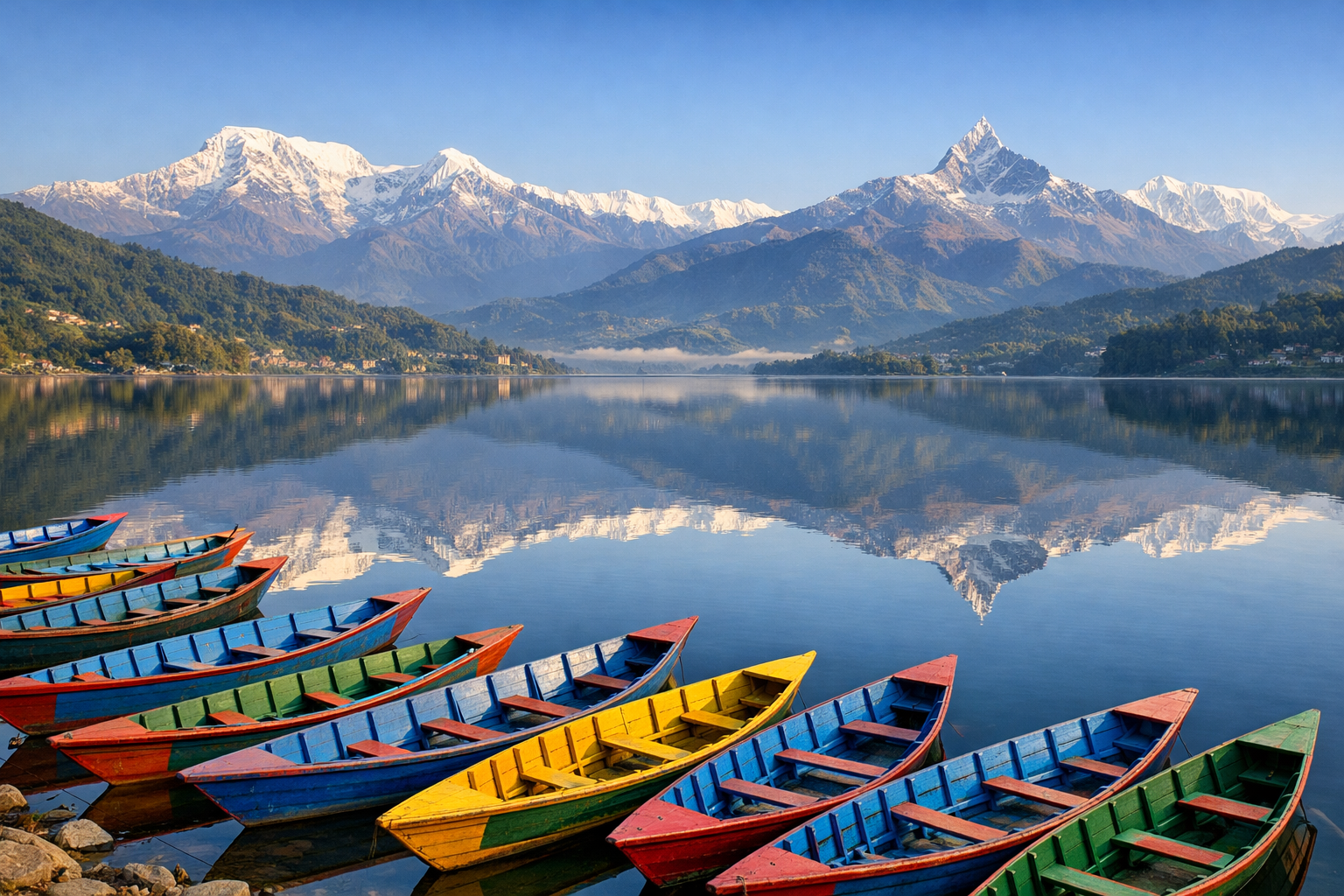
There is a moment, just after your bus rounds the final bend on the Prithvi Highway, when the haze parts and Phewa Lake stretches out below you like a sheet of crumpled turquoise silk. Behind it, if the skies are kind, the Annapurna massif floats in a white arc so enormous it barely looks real. That is Pokhara saying hello. And trust me, the rest of the introduction only gets better.
I have returned to this city more times than I can count, and every visit peels back a new layer. Pokhara is not just a launching pad for trekkers (though it is spectacularly good at that). It is a place where you slow down, eat ridiculously well, paddle into sunsets, and end up staying longer than you planned. If Nepal’s capital, Kathmandu, is an espresso shot of sensory overload, Pokhara is a long, warm cup of masala tea sipped on a rooftop with nowhere else to be.
Let me walk you through everything that makes this lakeside city so magnetic, so you can start planning your own visit.
First Impressions: Lakeside and the Rhythm of the City
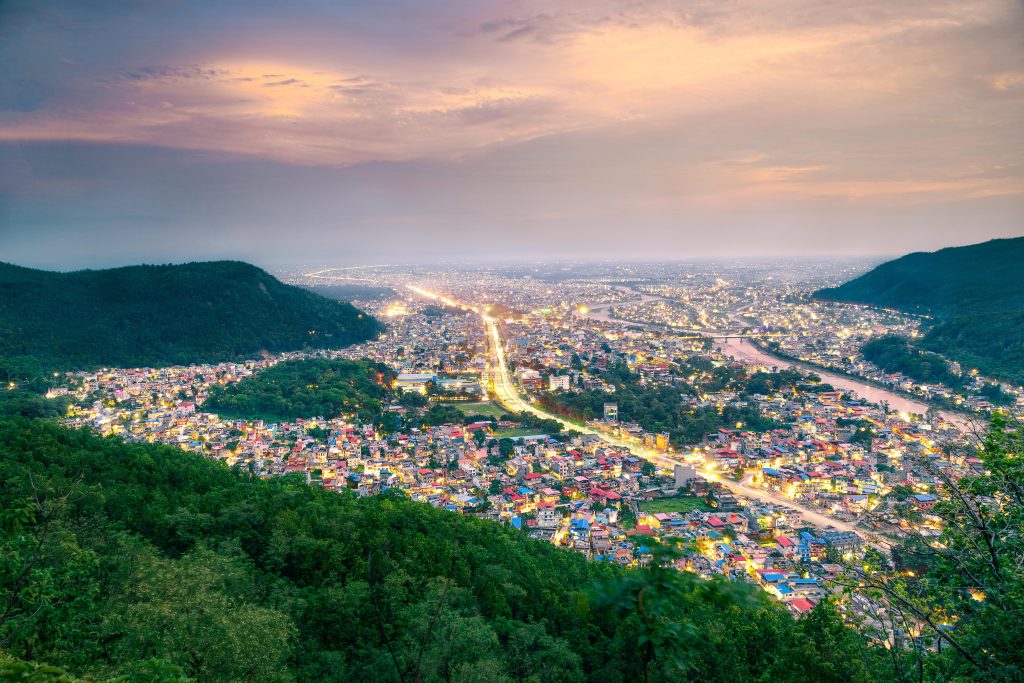
Most travellers base themselves in the Lakeside neighbourhood, a long, gentle strip of guesthouses, restaurants, and outdoor gear shops that runs parallel to Phewa Lake’s eastern shore. It is touristy, yes, but in that comfortable way where you can find a wood-fired pizza one night and an authentic dal bhat the next, all within a five-minute walk.
What strikes you first is the pace. Compared to Kathmandu’s honking, weaving, glorious chaos, Pokhara feels like someone turned the volume knob down by half. Mornings start with birdsong and the soft knock of rowing boats bumping against the dock. Street dogs stretch in patches of sunlight. Shopkeepers arrange their prayer flags and trekking poles without any rush. You will find yourself matching that tempo almost immediately.
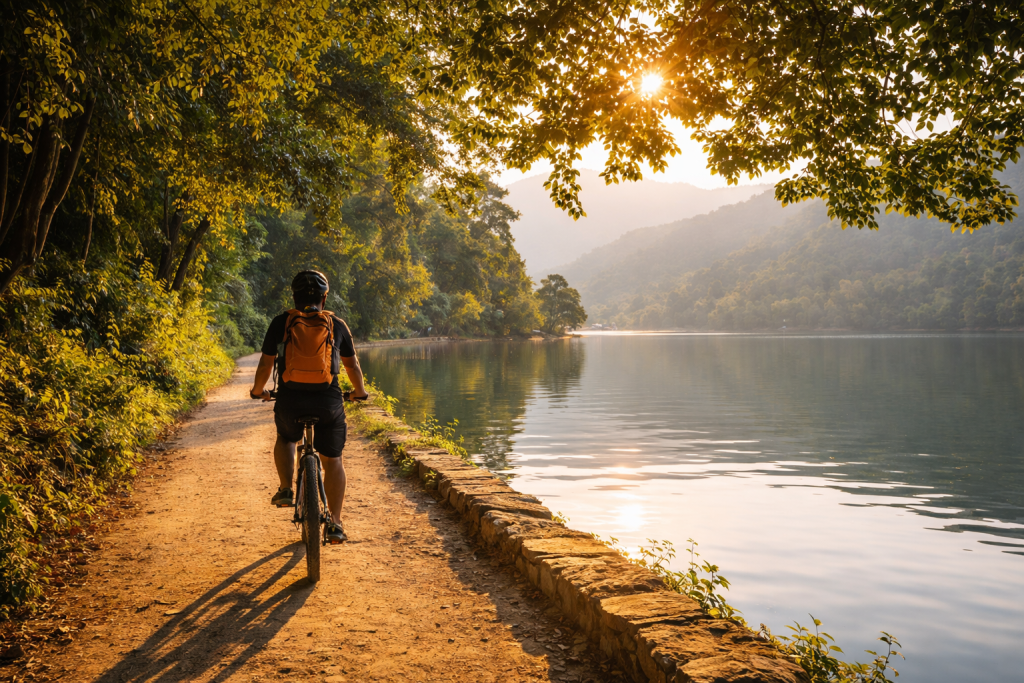
Wander south along the lake path, and Lakeside thins out into quieter neighbourhoods. Rent a bicycle for a few hundred rupees and follow the road to the Peace Pagoda trailhead, or simply meander until you find a cafe with a lake view that feels like yours alone. That aimless exploring is part of the magic here.
Sarangkot at Dawn: The Sunrise That Ruins All Other Sunrises
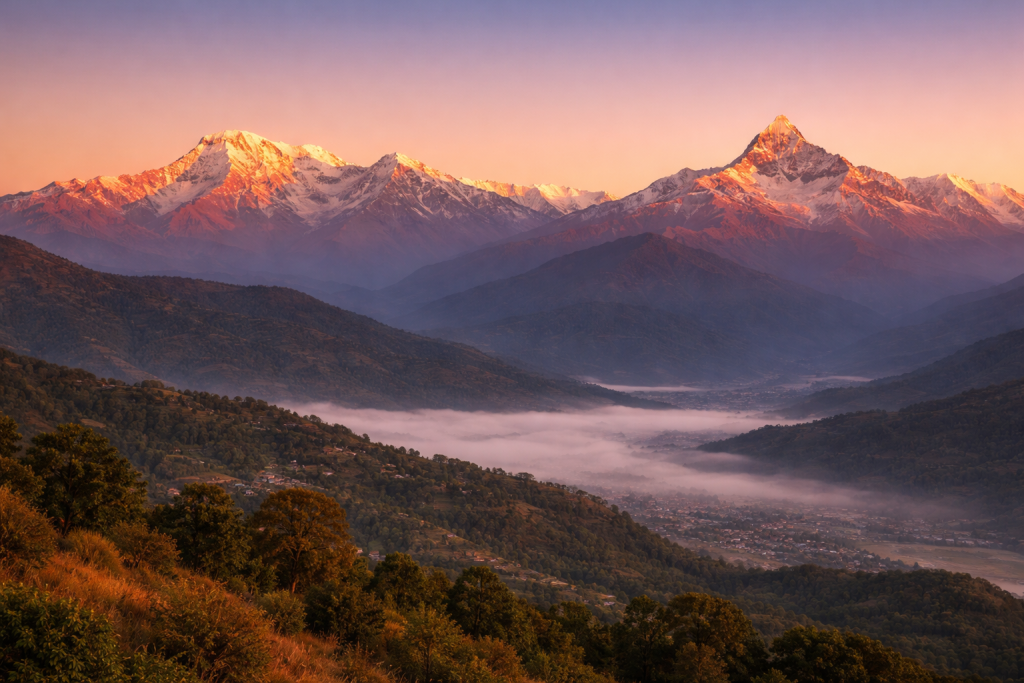
If you do only one early morning in Pokhara, make it Sarangkot. The hilltop viewpoint sits at about 1,600 meters and looks directly across at the Annapurna range, Machhapuchhre (the famous “Fishtail” peak), and the rolling green hills that tumble down to the lake.
You will need to set an alarm that feels criminal, somewhere around 4:30 a.m., depending on the season. A taxi or jeep from Lakeside takes roughly 30 minutes on the winding road, and drivers know the drill. Wrap up warm, because the pre-dawn air has real bite, even in autumn.
Then you wait. The sky shifts from ink to charcoal to a pale lavender, and the peaks begin to glow: first a faint blush of pink, then a deep amber, then full golden fire. The Annapurna South face catches light before anything else, and there are usually a few collective gasps from the crowd gathered on the ridge. It never gets old. I have watched it four times now, and each time I just stand there, grinning like an idiot, coffee going cold in my hand.
Paragliding from the Top
Sarangkot doubles as Pokhara’s premier paragliding launch site. If you have ever fantasised about soaring over a Himalayan valley with a lake glittering below you, this is your chance. Tandem flights require zero experience; you simply run a few steps off the hillside, and your pilot does the rest. The flight lasts around 20 to 30 minutes, spiralling on thermals while you take in a 360-degree panorama of peaks, forest, and water. Expect to pay around 80 to 100 USD for the standard flight, with photos and video as optional add-ons.
Book with a reputable operator (your guesthouse can recommend one), check that the company is registered, and try to fly in the morning when thermals are most reliable. It is, without exaggeration, one of the most breathtaking half hours you will ever spend.
On the Water: Phewa Lake and Beyond
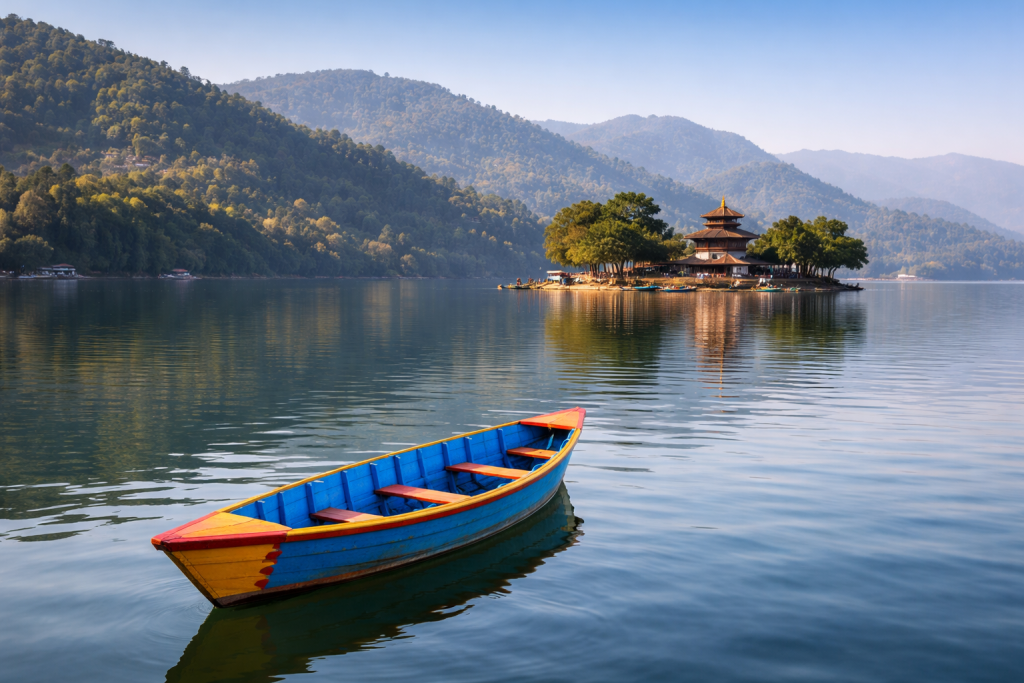
Phewa Lake is not just a backdrop; it is an activity in itself. Rent a brightly painted wooden rowboat from one of the docks along Lakeside and paddle out toward the Tal Barahi Temple, a small Hindu shrine perched on an island near the centre of the lake. The rowing is gentle, the water calm, and the views of the mountains shifting behind you as you glide are endlessly photogenic.
If you would rather not row, you can hire a boatman to do the work while you lean back and trail your fingers in the water. Late afternoon is gorgeous, when the light turns golden and the reflections on the lake become almost impossibly vivid.
For something more adventurous, head to Begnas Lake, about a 30-minute drive east. It is quieter, less developed, and surrounded by terraced farmland and forest. A kayaking trip here, with barely another person in sight, is one of Pokhara’s best-kept secrets.
The Flavours of Pokhara: Eating Your Way Through the City
Now, let’s talk about the food, because Pokhara delivers far more than the standard tourist menu of pancakes and fried rice. Yes, those exist (and sometimes that is exactly what you want after a long trek), but dig a little deeper and the culinary rewards are wonderful.
Start with Momos, Obviously
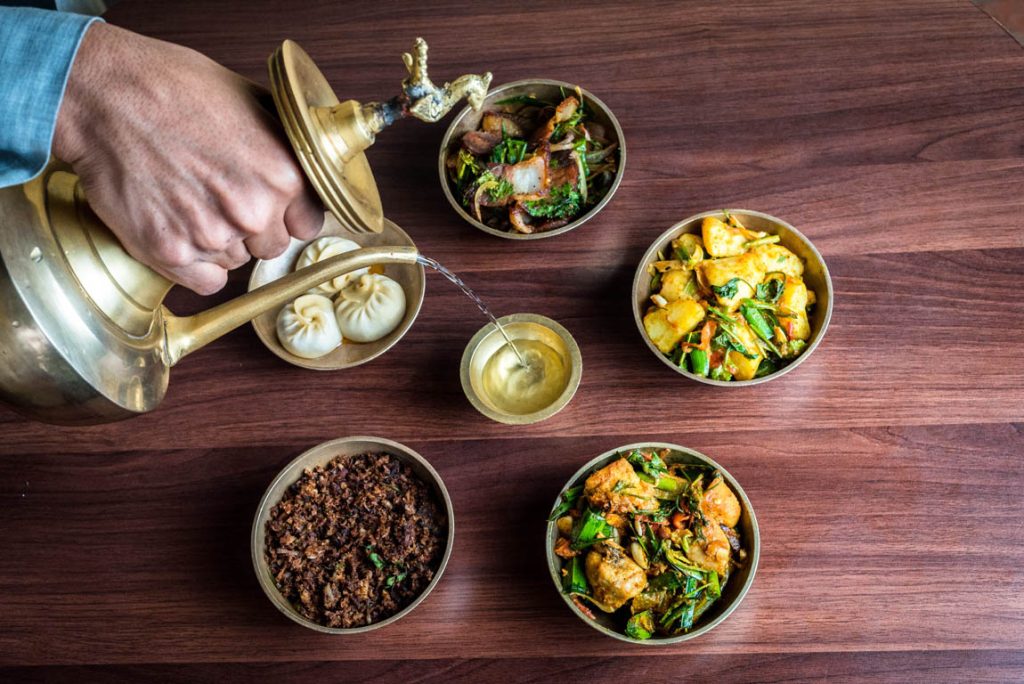
You cannot spend a single day in Nepal without encountering momos, and you should not try to resist them. These steamed (or fried, or soupy) dumplings come stuffed with buffalo meat, chicken, vegetables, cheese, or increasingly creative fillings. In Pokhara, you will find momo carts on nearly every corner and sit-down restaurants that take the art form seriously.
Look for places where locals are eating. A plate of buff (buffalo) momos with a fiery tomato achar, served on a steel plate with a tiny cup of broth on the side, costs less than a dollar and tastes like pure comfort. The jhol momo, swimming in a spiced sesame and tomato soup, is especially satisfying on a cool evening by the lake.
Dal Bhat Power, 24 Hour
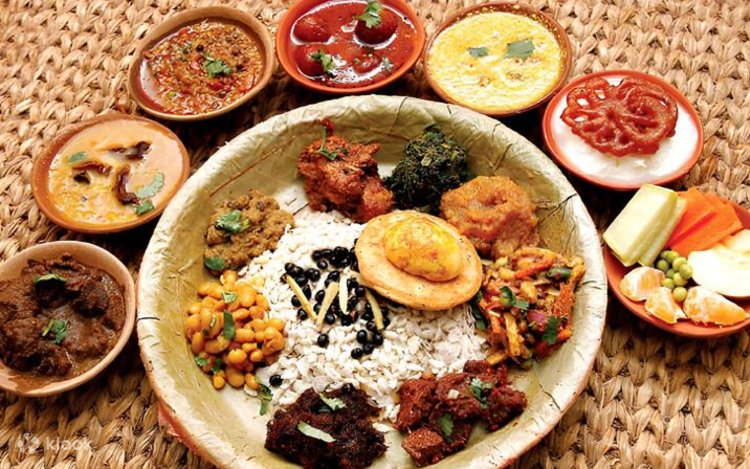
You will see this phrase on T-shirts all over Nepal, and it is more true than a joke. Dal bhat, the national meal of lentil soup, steamed rice, vegetable curry, pickles, and often a piece of meat, is eaten twice a day by most Nepalis. It is nourishing, balanced, and endlessly variable depending on the region, the season, and the cook’s mood.
Order it at a local bhojanalaya (a simple, no-frills eatery) rather than a tourist restaurant, and you will get generous refills of dal and rice at no extra charge. The whole experience, sitting cross-legged on a bench, eating with your right hand, scooping rice and dal together in that satisfying way… it connects you to the culture in a way that reading a guidebook never can.
Sweet Endings and Chai Stops
Keep an eye out for sel roti, a crispy, ring-shaped rice bread that is slightly sweet and absolutely addictive. Street vendors fry them fresh in big kadhai pans, and they are best eaten warm, still glistening with oil, alongside a cup of milky chiya (tea) spiced with cardamom, ginger, and cloves. If you have a serious sweet tooth, try juju dhau, the famous “king of yoghurt” from the Kathmandu Valley’s Bhaktapur. Thick, creamy, and served in little clay pots, it shows up in Pokhara too, and you should never pass it by.
Beyond Lakeside: Day Trips and Hidden Corners
The World Peace Pagoda
Perched on a ridge across the lake from Lakeside, the World Peace Pagoda (Shanti Stupa) offers one of the finest viewpoints in the valley. You can reach it by boat and then a short, steep hike, or by a longer trail through the forest. The white dome of the stupa glows in the afternoon light, and the panorama from the top takes in the lake, the city, and the mountains in a single, sweeping gaze. It is a calm, meditative spot, and far fewer tourists make the effort to get here than you might expect.
The Seti River Gorge
Right in the middle of Pokhara, the Seti River has carved a deep, narrow gorge through the rock. At certain points, the gap is so slim you could almost step across it, yet the milky white water roars far below. The Mahendra Cave and Gupteshwor Cave nearby add an underground dimension to the experience, with stalactites, shrine rooms, and the surreal sound of the river echoing through the darkness.
A Walk to the Australian Camp
If you want a taste of trekking without committing to a multi-day expedition, the walk from Phedi to Australian Camp is perfect. It takes about two to three hours of uphill hiking through rhododendron forest and terraced villages, and the reward at the top is a sweeping mountain view, a cup of tea at a cosy lodge, and the quiet satisfaction of having earned the scenery with your own two feet. You can walk back down the same day or stay the night and catch another stunning sunrise.
When to Visit Pokhara
Timing matters, and getting it right makes a real difference to your experience.
Autumn (October to November) is the sweet spot. Skies are clear, temperatures are comfortable, the mountains are sharp and visible almost every day, and the post-monsoon landscape is lush and green. This is peak season, so expect more crowds and slightly higher prices, but the conditions are worth it.
Spring (March to April) comes a close second. The weather warms up, the rhododendrons explode into bloom along the hillsides, and the mountains are usually visible in the mornings before afternoon clouds roll in. It is a gorgeous time to visit, especially if you plan to combine Pokhara with a short trek.
Winter (December to February) is quieter and colder, particularly at altitude, but Pokhara itself stays relatively mild during the day. Morning fog can obscure the mountains, but when it lifts, the air is crystal clear, and the snow-dusted peaks look spectacular. Budget travellers will find great deals on accommodation.
Monsoon (June to September) brings heavy rain, leeches on the trails, and clouds that hide the mountains for days at a stretch. It is not ideal for most visitors, though the waterfalls around Pokhara are at their most dramatic, and the valley is an almost unreal shade of green.
Practical Tips for Your Pokhara Trip
A few things worth knowing before you go:
Getting there: Pokhara is about a 25-minute flight from Kathmandu, or a six to seven-hour bus ride along the Prithvi Highway. Tourist buses are comfortable and scenic; local buses are cheap and an experience in themselves. The new Pokhara International Airport has been expanding options for direct flights from other countries, so check the latest schedules.
Budget: Pokhara is wonderfully affordable. A decent guesthouse room runs 10 to 25 USD per night, a full dal bhat meal costs 2 to 4 USD, and activities like boating and cycling are just a few dollars. Paragliding and organised tours are the bigger expenses, but even those are a fraction of what you would pay in Europe or North America.
Altitude: Pokhara sits at about 800 meters, so altitude sickness is not a concern in the city itself. If you are heading into the Annapurna region for a trek, that is a different story, and proper acclimatisation becomes essential.
Cultural etiquette: Remove your shoes before entering temples and homes. Ask before photographing people, especially during religious rituals. Dress modestly at sacred sites. And always use your right hand when giving or receiving anything. These small gestures go a long way.
Start Planning: Pokhara Is Closer Than You Think
Here is the thing about Pokhara: it meets you exactly where you are. If you want adrenaline, there are paragliders circling above and zip lines screaming across the valley. If you want stillness, there are temple bells, quiet lake mornings, and mountain views that hold you in place. If you want connection, there are dal bhat dinners with guesthouse families, chai conversations with fellow travellers, and the kind of warmth from local people that makes you feel less like a tourist and more like a guest.
Nepal has a way of getting under your skin, and Pokhara is often the place where it happens first. So pull up a flight search, check your calendar, and give yourself permission to go. The lake is waiting. The mountains are not going anywhere. And there is a plate of momos with your name on it.
See you in Pokhara.
Stay Informed With the Latest & Most Important News
Previous Post
Next Post
- Kathmandu Travel Guide: What to See, Where to Stay, Eat and How to Get Around
- From Mustang to the World: Shinta Mani Mustang Named the No. 1 Luxury Hotel on Earth
- Best Places to Visit in Nepal: A Complete Region-by-Region Guide for Every Traveller
- Trekking in Nepal: The Complete Guide to Choosing and Planning Your Himalayan Trek
- Beyond the Mountains: Why Nepal Could Become One of the World’s Great Food Destinations