Now Reading: Swayambhunath Stupa: Walking Through Time at Nepal’s Ancient Monkey Temple
-
01
Swayambhunath Stupa: Walking Through Time at Nepal’s Ancient Monkey Temple
Swayambhunath Stupa: Walking Through Time at Nepal’s Ancient Monkey Temple

If you arrive in Kathmandu early, before the city fully wakes, and let your feet follow the sound of distant bells and chanting, you may find yourself standing at the base of a long stone stairway. Above you, fluttering prayer flags stretch into the morning sky. Monkeys dart along the railings. Incense drifts downward in soft curls.
At the top of those 365 steps waits Swayambhunath Stupa, one of Nepal’s most sacred and ancient spiritual sites. Perched on a hill west of Kathmandu city, this UNESCO World Heritage Site is more than a monument. It is a living, breathing symbol of Nepal’s spiritual identity. For centuries, it has watched over the valley, quietly witnessing kingdoms rise and fall, faiths intertwine, and pilgrims climb those same worn steps in search of peace.
Let us walk together.
Recommended Read: UNESCO World Heritage Sites in Nepal: Complete Guide to All 10 Cultural & Natural Treasures
The Mythical Beginning: When the Valley Was a Lake
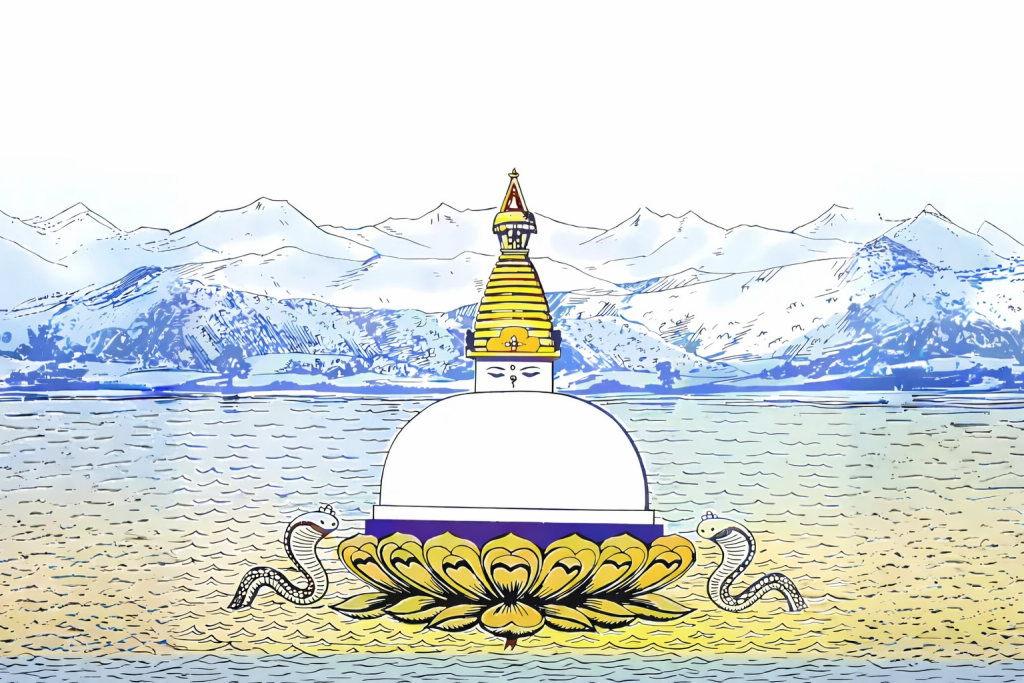
Long before there were temples, palaces, and busy streets, the Kathmandu Valley was said to be a vast lake. According to ancient legend, a brilliant lotus flower bloomed in the middle of that lake, radiating a divine light.
That light was self-created. Self-arisen. In Sanskrit, Swayambhu means “self-existent” or “self-created.”
The Bodhisattva Manjushri, seeing the radiant lotus from afar, travelled to the valley and cut open the surrounding hills with his sword, draining the waters so humanity could access the sacred flame. The lotus transformed into a hill, and upon it rose the stupa that now stands as Swayambhunath.
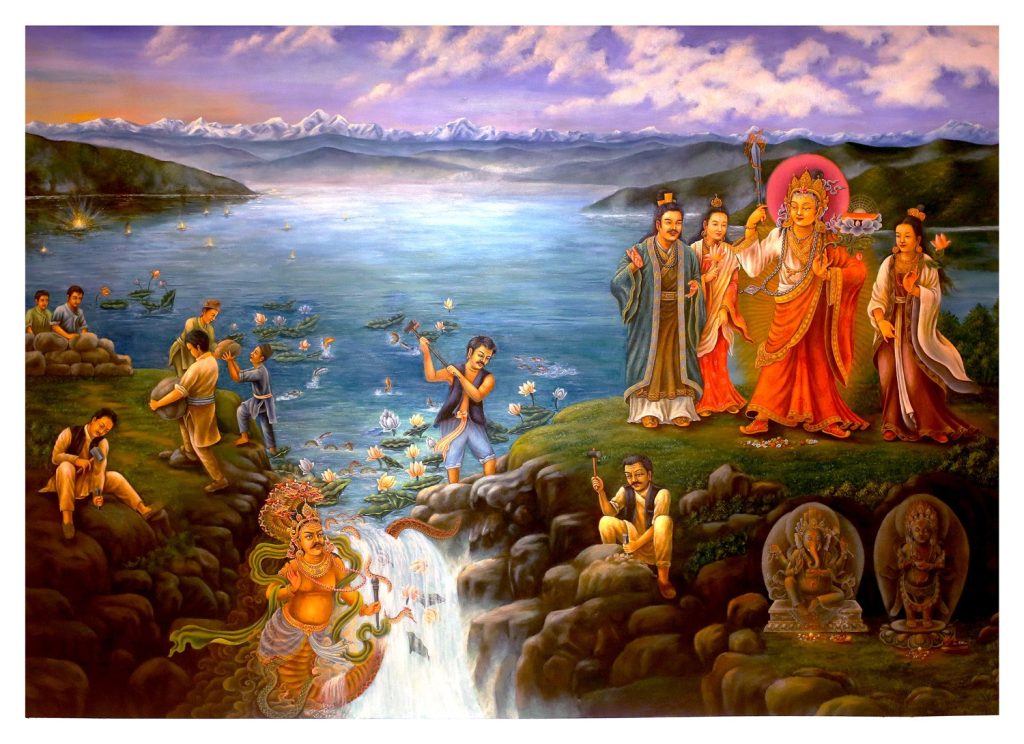
Myth and history blur here, as they often do in Nepal. But when you stand at the top and look across the valley, it feels entirely possible that something ancient and luminous once shimmered here.
Historical Foundations: Layers of Dynasties
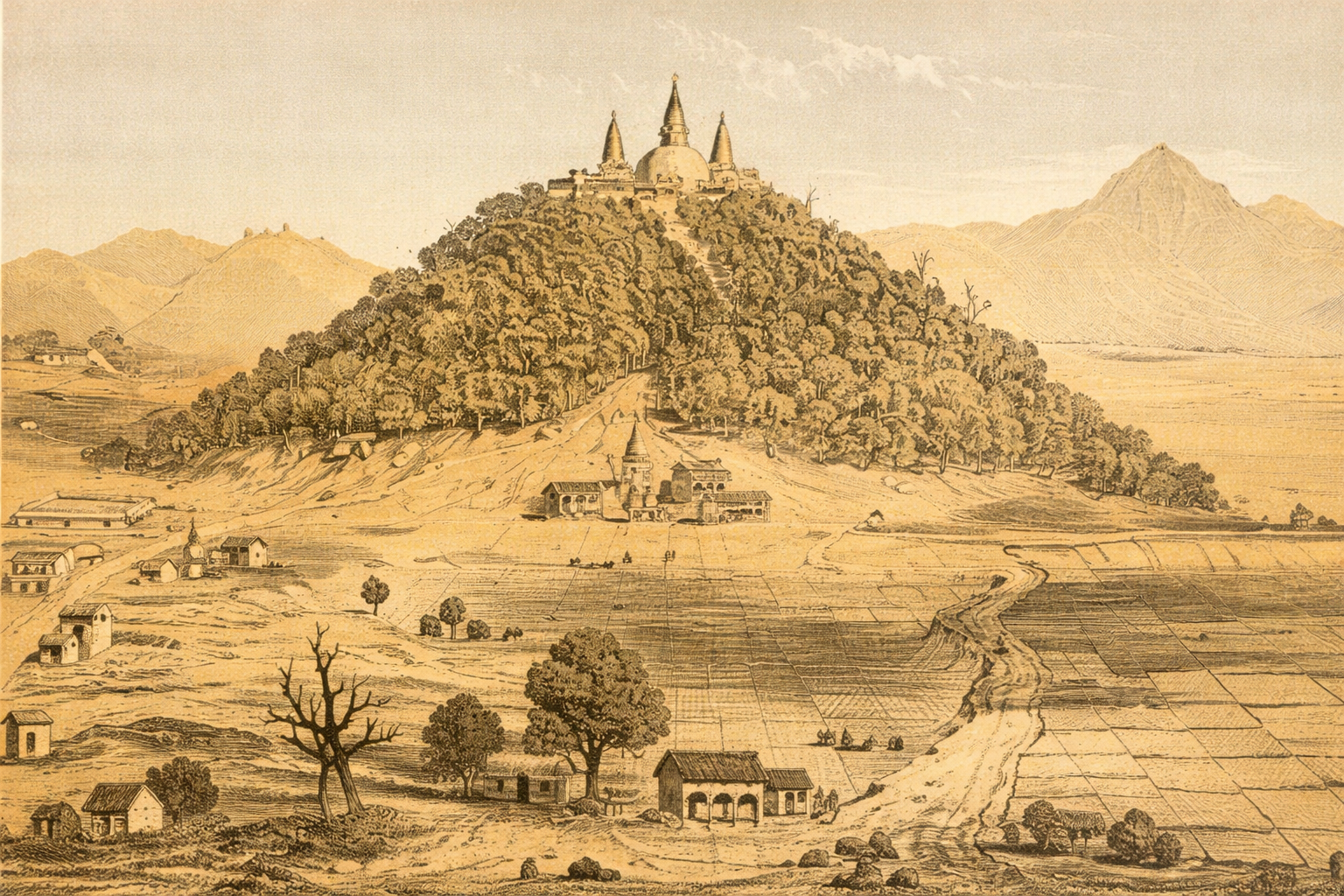
While legend gives Swayambhunath its soul, history gives it form.
Scholars believe the original structure dates back at least to the 5th century CE during the Licchavi period, one of Nepal’s earliest recorded dynasties. King Manadeva, a powerful Licchavi ruler, is often associated with its early development, though the site itself may be even older.
Over the centuries, the stupa was expanded, renovated, and enriched by successive dynasties:
- The Licchavis established the foundation of Buddhist devotion in the valley.
- The Malla kings, who ruled from the 12th to the 18th century, added shrines, chaityas, and ornate carvings that still surround the stupa today.
- Even after the Shah dynasty unified Nepal in the 18th century, Swayambhunath remained a central spiritual site, revered by both Buddhists and Hindus.
Earthquakes damaged the structure multiple times, including the devastating 2015 earthquake. But each time, the people of Nepal restored it with devotion, ensuring its continuity.
Swayambhunath is not frozen in time. It has evolved with it.
Climbing the Sacred Steps
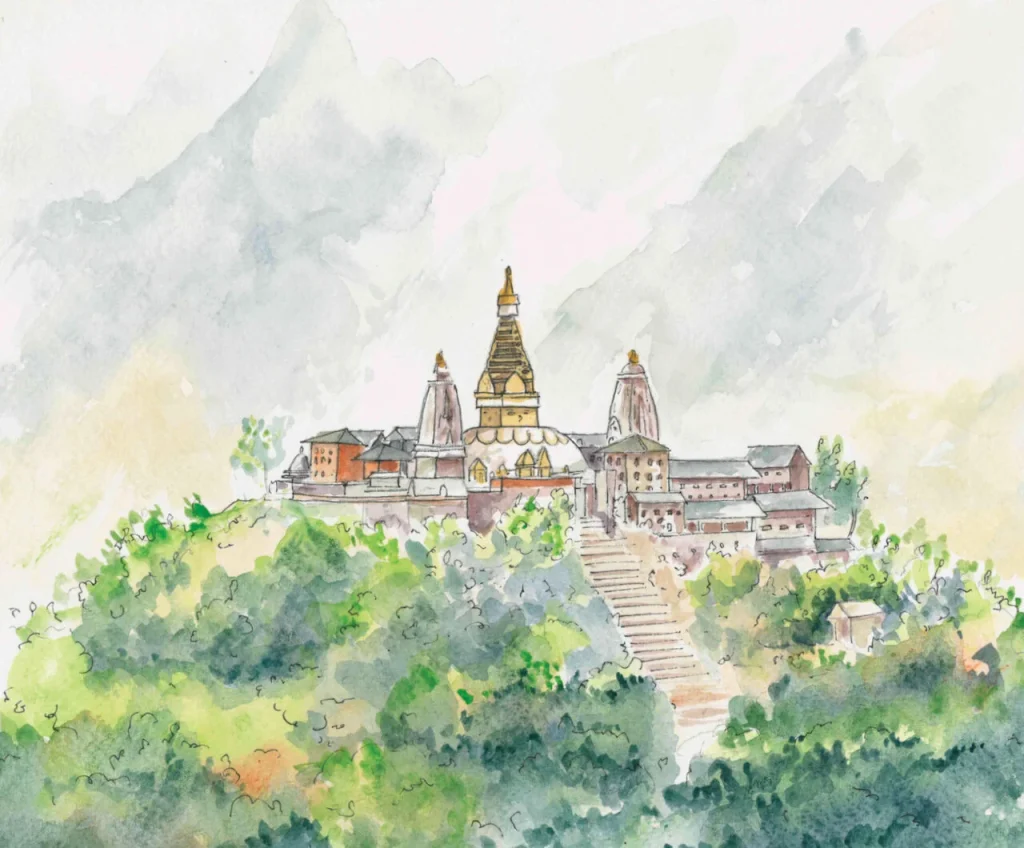
There are two ways to reach the summit. The traditional path is the eastern staircase, steep and direct. As you begin climbing, you may notice how each step feels slightly worn in the centre, shaped by centuries of pilgrims.
Halfway up, you will likely pause to catch your breath. This is not just from the incline, but from the view slowly revealing itself behind you. Kathmandu stretches wide below, rooftops stacked in uneven layers, the distant hills encircling the valley like protective arms.
Monkeys chatter overhead, giving the site its popular nickname: the Monkey Temple. They are mischievous but oddly at home here, as if guardians of the hill.
By the time you reach the top, prayer wheels line the final stretch. Spin them clockwise as you pass. Each turn is said to release prayers into the universe.
And then suddenly, there it is.
The Great Stupa: Eyes That See All
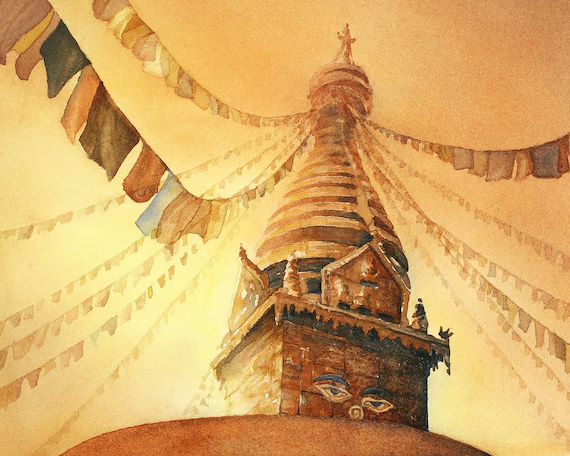
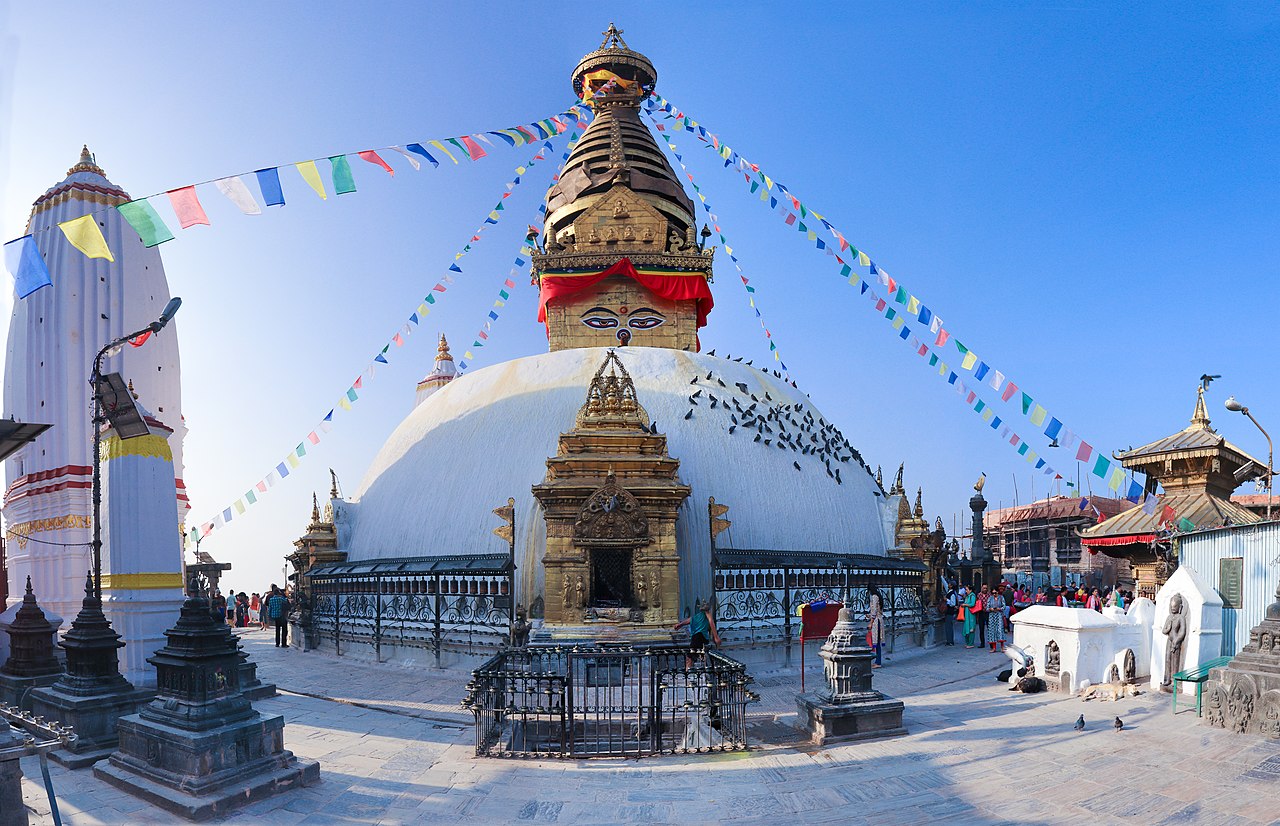
The white dome rises solid and serene. Above it, a golden spire gleams in the sunlight. Painted on all four sides of the square tower are the unmistakable eyes of Buddha, watching quietly in every direction.
These are not ordinary eyes. They symbolise wisdom and compassion. Between them is a curious shape resembling a question mark. It is the Nepali number one, representing unity and the singular path toward enlightenment.
The thirteen tiers of the spire above the eyes represent the thirteen stages of spiritual realisation leading to nirvana.
As you walk clockwise around the base, known as circumambulation, you join a timeless ritual. Elderly women in red saris murmur mantras under their breath. Tibetan monks move slowly with malas in hand. Visitors from around the world fall silent, instinctively lowering their voices.
There is movement, but there is also stillness.
A Meeting Place of Faiths
One of the most remarkable aspects of Swayambhunath is how naturally Buddhism and Hinduism coexist here.
While it is fundamentally a Buddhist stupa, Hindu shrines and deities surround it. You may see a shrine dedicated to Harati, once a child-eating demoness who was converted by Buddha into a protector of children. Hindu devotees also visit her temple regularly.
Statues of Saraswati, the Hindu goddess of knowledge, stand near Buddhist chaityas. Prayer flags flutter alongside tridents.
This blending reflects the spiritual fabric of Nepal itself. Here, faith is not divided into strict boundaries. It flows.
Swayambhunath becomes a powerful symbol of harmony in diversity, a space where traditions overlap and enrich one another rather than compete.
The Surrounding Complex: More Than a Stupa
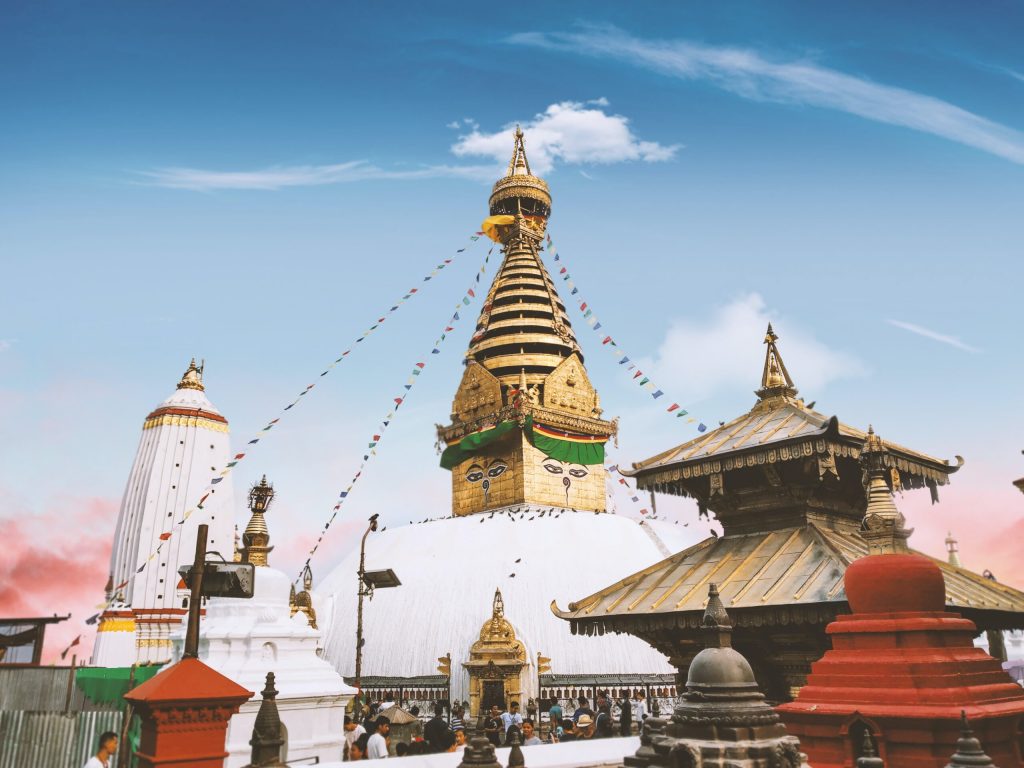
As you wander around the hilltop, you discover that Swayambhunath is not just a single monument but an entire sacred complex.
Smaller white chaityas dot the perimeter, each one built by devotees over centuries. Ornate Vajra thunderbolt sculptures sit prominently near the entrance, symbolising spiritual strength.
To the west stands a Tibetan monastery, its walls painted with vibrant murals depicting scenes from the life of Buddha. The scent of butter lamps fills the air inside.
If you venture slightly away from the main stupa, you will find quieter corners. From these edges, the valley appears vast and hushed, especially at sunset when the city lights begin to flicker below.
It is in these quieter moments that Swayambhunath reveals its deeper character. It is not only a place of grand symbolism but also of personal reflection.
Cultural Relevance in Contemporary Nepal
Despite its ancient origins, Swayambhunath is not a relic. It remains deeply woven into everyday Nepali life.
On Buddha Jayanti, the birthday of Lord Buddha, thousands gather here in celebration. Monks chant through the night. Butter lamps illuminate the dome. The entire hill glows.
Local families come to offer prayers before exams, business ventures, or important life events. Newlyweds visit for blessings. Tourists arrive curious and leave contemplative.
Even in a rapidly modernising Kathmandu, Swayambhunath stands as a spiritual anchor. It reminds the city of its roots.
In a world that often moves too fast, the stupa insists on slowness. Walk clockwise. Spin the wheel. Pause. Breathe.
UNESCO Recognition and Preservation
Swayambhunath is part of the Kathmandu Valley UNESCO World Heritage listing, recognised for its outstanding universal value as a masterpiece of religious architecture and a testament to Nepal’s syncretic spiritual culture.
Its preservation is not merely about protecting bricks and gilded spires. It is about safeguarding living traditions.
After the 2015 earthquake, restoration efforts combined traditional craftsmanship with modern structural reinforcement. Local artisans meticulously rebuilt damaged shrines, ensuring that the soul of the site remained intact.
When you see fresh wood carvings beside centuries-old stone, you are witnessing continuity rather than interruption.
Sunset Over the Valley
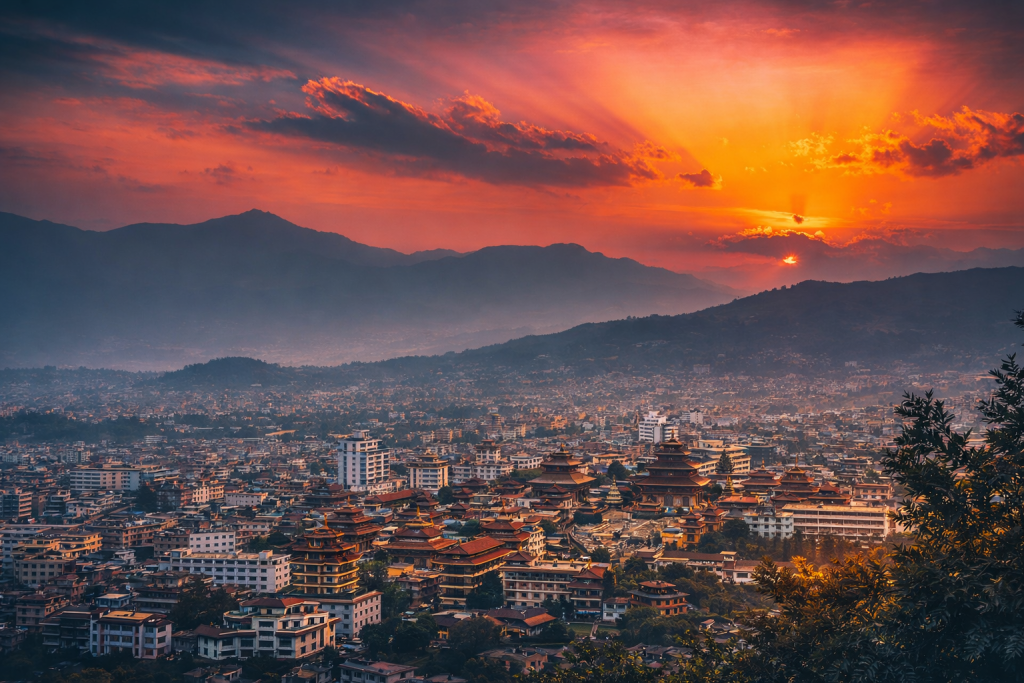
If you can, stay until evening.
As the sun lowers behind the hills, the sky shifts from pale blue to amber and rose. The golden spire catches the last light. Monks gather for evening prayers. The hum of Kathmandu softens below.
The monkeys settle. The wind picks up, carrying the flutter of prayer flags in every direction.
You realise that Swayambhunath is not merely something you visit. It is something you experience. It moves around you. It breathes with you.
And when you finally descend those 365 steps, the city feels different. Quieter, somehow. Or perhaps it is you who has changed.
Why Swayambhunath Still Matters
In a small valley situated between Himalayan hills stands a monument that has endured for more than fifteen centuries.
Empires have shifted. Earthquakes have struck. Generations have come and gone.
Yet the eyes of Buddha remain, gazing calmly across the Kathmandu Valley.
Swayambhunath is not simply an architectural marvel. It is a reminder of resilience, faith, and harmony. It is where mythology meets history. Where Buddhism and Hinduism stand side by side. Where locals and travellers circle the same dome in quiet unity.
And perhaps that is why, even today, people continue to climb.
Not just for the view.
But for the feeling.
Stay Informed With the Latest & Most Important News
Previous Post
Next Post
- Solo Female Travel in Nepal: What You Actually Need to Know
- Mardi Himal Trek: The Quieter Trail to Nepal’s Most Photogenic Peak
- Best Time to Visit Nepal: A Month-by-Month Breakdown for Every Traveller
- Poon Hill Trek: The Complete Guide
- Top 15 Biggest Cities in Nepal by Population: Walk With Me Through Urban Nepal