Now Reading: 10 Places in Nepal That Define Its Regions, Culture, and Soul
-
01
10 Places in Nepal That Define Its Regions, Culture, and Soul
10 Places in Nepal That Define Its Regions, Culture, and Soul

A warm, detailed guide to 10 places across Nepal's different regions and provinces, chosen for their regional character, cultural traditions, and community life rather than just their popularity. From Kathmandu's temple squares to Lo Manthang's walled Himalayan kingdom, from Janakpur's Mithila art to the far-western wildlife of Dhangadhi.
Welcome, and thank you for being here. Whether you are dreaming about your first trip to Nepal or you have already fallen in love with this country and are planning your next visit, I hope this guide feels like a conversation rather than a lecture. Nepal has given so much to everyone who has spent time there, and this is simply an attempt to share some of that with you.
Nepal is a surprisingly small country in terms of geography, but the range of what you find inside it is honestly quite hard to believe until you experience it yourself. In the north, the Himalayas rise to heights that still feel otherworldly even after you have stood beneath them. In the middle, green rolling hills carry ancient trade routes and centuries-old villages. In the south, the Terai lowlands stretch out in a warm, flat expanse of jungle, farmland, and sacred rivers. Each of these zones has its own character, its own people, and its own way of welcoming you.
This guide covers ten places spread across Nepal’s different regions and provinces. A few of them are well-known names you have probably already heard. Others are smaller towns that rarely appear on highlight reels but matter deeply to the people who live there and to understanding what Nepal actually is. Every place on this list was chosen because it represents something real about a particular region, its culture, and the daily life of its community. We hope you find it useful, and we hope even more that it inspires you to go.
Table of Contents
- Kathmandu – Bagmati Province, Central Hills
- Pokhara – Gandaki Province, Western Hills
- Bhaktapur – Bagmati Province, Kathmandu Valley
- Lumbini – Lumbini Province, Western Terai
- Janakpur – Madhesh Province, Eastern Terai
- Bharatpur – Bagmati Province, Central Terai
- Biratnagar – Koshi Province, Eastern Nepal
- Dharan – Koshi Province, Eastern Hills
- Lo Manthang (Upper Mustang) – Gandaki Province, High Himalayas
- Dhangadhi – Sudurpashchim Province, Far Western Nepal
1. Kathmandu – The City of Gods
Region: Bagmati Province, Central Hills | Elevation: 1,400 m (4,593 ft) | Population: around 1.5 million | UNESCO Sites: 7 in the valley
Nepal’s capital and its most layered, lively, and sacred city.
If you are visiting Nepal for the first time, Kathmandu is almost certainly where you will land, and honestly, that is a wonderful place to start. The city has a way of pulling you in immediately. You step outside the airport and there is incense in the air, horns in the distance, and somewhere nearby a temple bell ringing for no reason you can quite identify. It is busy and a little overwhelming, yes, but it is also full of warmth, and most people find themselves falling for it quite quickly.
Kathmandu sits in a broad valley surrounded by Himalayan foothills, and it is said to have more than 2,700 temples, shrines, and sacred monuments within its limits. That number sounds like an exaggeration until you actually start walking around and realise there is a small shrine on almost every street corner, and that people stop to make offerings at them as a completely natural part of their day. The city earned its nickname, the City of Gods, and it lives up to it.
Kathmandu Durbar Square is the historic heart of the old city and a UNESCO World Heritage Site. The square was the seat of the Malla kings for centuries, and the architecture they left behind is genuinely extraordinary. The pagodas here have tiered roofs covered in detailed woodcarvings, and the Kumari Ghar, home of the Living Goddess, stands right at the edge of the square. If you are lucky and patient, you might catch a glimpse of the Kumari herself at her window. The 2015 earthquake caused real damage to parts of the square, but restoration work has been ongoing and meaningful.
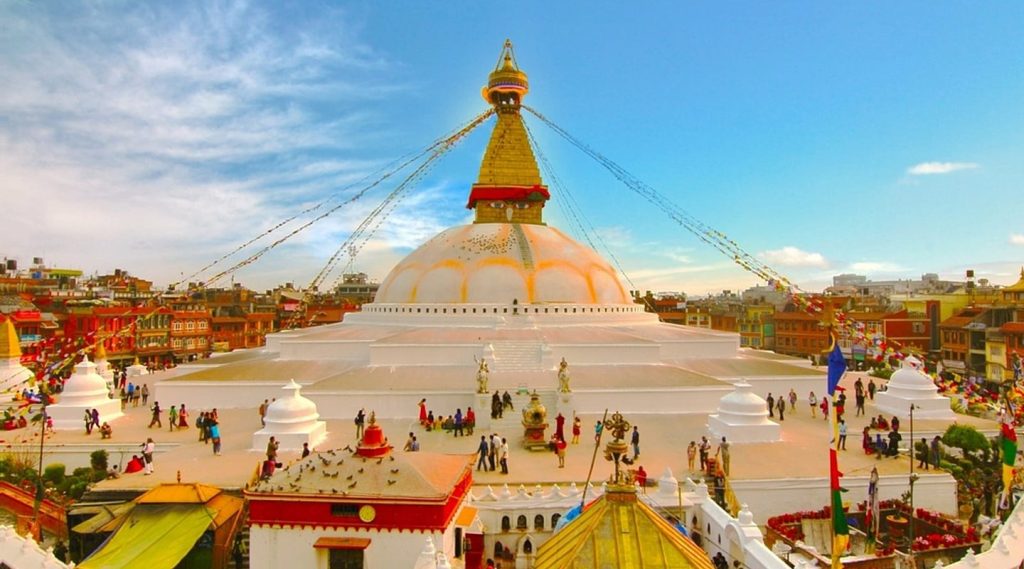
Swayambhunath, known affectionately as the Monkey Temple because of its resident population of rhesus macaques, sits on a hilltop west of the city and is one of the oldest Buddhist monuments in the world. The Buddha’s eyes painted on its golden spire look out in all four directions over the valley. Boudhanath, on the east side of the city, is one of the largest stupas anywhere on earth and the spiritual centre of Nepal’s Tibetan Buddhist community. Walking the circumference with a crowd of monks and pilgrims is something you will carry with you for a long time.
Pashupatinath Temple on the banks of the Bagmati River is one of the holiest Hindu sites in all of South Asia. Non-Hindu visitors are not permitted inside the main temple, but you can sit on the steps across the river and watch the life of the ghats unfold in front of you, including the open-air cremations that take place there every day. It is a profound and humbling thing to witness, and many visitors say it changes how they think about ordinary life. The neighbourhood of Thamel nearby is where most travellers stay, full of guesthouses, cafes, bookshops, and trekking outfitters. It can feel a little chaotic, but it is genuinely useful and has a charm of its own once you find your feet.
The People and Their Way of Life
Kathmandu is home to people from every part of Nepal. The Newar community, who are indigenous to the valley, are the ones who built the temples, the palaces, and the intricate woodcarved windows that make this city look the way it does. Their festivals, their food, and their guild traditions are still very much alive. Alongside them you will find people from the hills, the Terai, and the Himalayan regions who have made the capital their home. The result is a city that feels genuinely diverse and alive in a way that is hard to manufacture. Major festivals like Indra Jatra in September and Dashain and Tihar in autumn transform the streets completely, and if you happen to be here for any of them, consider yourself fortunate.
Things to See and Do
- Kathmandu Durbar Square (UNESCO World Heritage Site)
- Boudhanath Stupa (UNESCO) – the largest stupa in Nepal
- Swayambhunath, the Monkey Temple – one of the world’s oldest Buddhist monuments
- Pashupatinath Temple – the most sacred Shiva temple in the subcontinent
- Thamel neighbourhood – a lively base for travellers
- Patan (Lalitpur) Durbar Square – well worth a half-day visit
- Garden of Dreams – a beautifully restored Edwardian garden in the city centre
- Asan Tole market – the beating heart of the old city bazaar
Best time to visit: October through December gives you clear skies and cool air after the monsoon. March through May is lovely too, with spring festivals and rhododendrons blooming on the surrounding hills. The monsoon months of June through August bring heavy rain, but the valley turns an incredible shade of green if you do not mind getting wet.
2. Pokhara – The Lakeside City at the Foot of the Annapurnas
Region: Gandaki Province, Western Hills | Elevation: 827 m (2,713 ft) | Population: around 500,000 | Nearest major peak: Machapuchare (6,993 m)
Nepal’s most beautiful lakeside city and the gateway to the Annapurna mountains.
If Kathmandu is where Nepal grabs you by the senses, Pokhara is where it quietly takes your breath away. The city sits on the eastern shore of Phewa Lake with the entire Annapurna range rising directly behind it to the north. Machapuchare, the sacred fishtail peak that no one is permitted to climb, sits so close to the city that on a clear morning it feels almost close enough to touch. It is the kind of view that makes people stop mid-sentence and just stare.
Pokhara is Nepal’s official tourist capital, and it earns that title. Hundreds of thousands of trekkers pass through every year on their way to the Annapurna Circuit, Annapurna Base Camp, Poon Hill, and dozens of other trails that thread into the mountains above the city. But Pokhara is also genuinely wonderful just to be in, even if you never lace up a pair of hiking boots. The Lakeside district, known locally as Baidam, is a relaxed stretch of cafes, yoga studios, bookshops, and small restaurants where it is very easy to lose several days pleasantly doing not very much at all.
Early mornings on the lake are something else entirely. The water turns into a perfect mirror and reflects the entire Annapurna range back at you in a way that feels almost too beautiful to be real. Renting a small wooden rowboat and paddling across to the Tal Barahi island temple as the mountains change colour behind you is one of those simple travel experiences that somehow stays with you for years. If you are feeling more adventurous, Pokhara is the paragliding capital of Asia. Tandem flights from Sarangkot hill carry you on thermals over the lake with the Himalayas filling the whole horizon in front of you. It is very hard to describe how good that feels.
The International Mountain Museum on the southern edge of the city is genuinely excellent and worth a few hours before you head into the hills. It covers Himalayan geography, the cultures of the mountain peoples, and the full history of high-altitude mountaineering with real care and depth.
The People and Their Way of Life
The older part of Pokhara, known as Bagar, is where the city’s original character lives. The Gurung and Magar communities of the western hills have deep roots here, and their festivals and traditions are still very much part of daily life. Gurung Lhosar, the community’s New Year celebration in December, fills the streets with colour, dance, and music that has nothing to do with tourism and everything to do with genuine communal joy. The annual Pokhara Street Festival in January showcases the food, crafts, and music of the whole Gandaki region. And if you wander away from Lakeside into the older market streets, you will find a Pokhara that predates the tourist trade and is quietly getting on with its own life.
Things to See and Do
- Phewa Lake at dawn – the Annapurna reflection is genuinely one of the world’s great views
- Tal Barahi Temple on its small island in the middle of the lake
- Sarangkot hill for sunrise views over the entire Annapurna range
- Paragliding – the best in Asia, and accessible to complete beginners
- Annapurna Circuit and Annapurna Base Camp treks
- International Mountain Museum
- Devi’s Falls and Gupteshwor Mahadev Cave nearby
- Old Bazaar (Bagar) and Bindhyabasini Temple
Best time to visit: October and November give you the clearest mountain views after the monsoon rain. March and April are beautiful too, with green landscapes and rhododendrons in bloom. The lake is at its most magical in the early morning regardless of the season.
3. Bhaktapur – A Medieval Newari City Frozen in the Best Possible Way
Region: Bagmati Province, Kathmandu Valley | Elevation: 1,401 m | Distance from Kathmandu: 13 km east | UNESCO: World Heritage Site
Nepal’s best-preserved medieval city, where Newari art and community life are still completely alive.
Bhaktapur is only about 13 kilometres from Kathmandu, but it feels like a completely different world. Where Kathmandu has grown and modernised and taken on all the noise and energy of a big contemporary city, Bhaktapur has held on to its older self with remarkable care. Cars are not allowed in the historic core. The main squares have been beautifully restored. Local artisans still make woodcarvings, pottery, and thanka paintings using methods that have been passed down through families for generations. Walking around Bhaktapur for the first time, it is quite common to wonder if you have somehow stepped back several centuries.
Bhaktapur Durbar Square is the centrepiece of the old city and a UNESCO World Heritage Site. The 55-Window Palace that anchors the square is covered in the most intricate woodcarved latticework you are likely to see anywhere in the world. Across the square, the five-tiered Nyatapola Temple is the tallest pagoda in Nepal and one of the most structurally impressive buildings in all of Asia. It has survived multiple major earthquakes, including the terrible 1934 and 2015 events, completely intact, which tells you something remarkable about how well traditional Newari builders understood the physics of what they were doing.
Pottery Square, just a short walk from the main square, is where you can watch local potters working at their wheels in the open air, shaping clay the same way their grandparents did. Peacock Window, tucked into a side street, is considered the finest single example of woodcarving in Nepal. It is easy to walk past it without knowing what you are looking at, but if someone points it out to you and you take a few minutes to look closely, it is genuinely astonishing. Before you leave, please do try the juju dhau, or king curd. It is a thick, sweet, creamy curd set in small clay pots and it is a protected local speciality unique to Bhaktapur. It sounds simple and it tastes extraordinary.
The People and Their Way of Life
Bhaktapur has more festivals per year than almost any other city in Nepal. The community celebrates over 200 of them, which works out to roughly one every two days. Most of these are Newar festivals tied to the agricultural calendar, the seasons, and the complex mythology of the valley’s deities. The biggest and most spectacular is Bisket Jatra in April, which marks the Nepali New Year. A massive wooden chariot carrying the god Bhairav is hauled through the streets in a tug-of-war between different parts of the city, and a 25-metre ceremonial pole is raised and then later knocked down to mark the turning of the year. If you can be in Bhaktapur for Bisket Jatra, please go. It is like nothing else.
Things to See and Do
- Bhaktapur Durbar Square (UNESCO World Heritage Site)
- 55-Window Palace – the high point of Newari woodcarving
- Nyatapola Temple – Nepal’s tallest pagoda and a marvel of traditional engineering
- Peacock Window – set aside a few minutes to really look at it
- Pottery Square – watch traditional ceramics being made
- Taumadhi Square and Bhairavnath Temple
- Juju dhau (king curd) – do not leave without trying it
- Bisket Jatra New Year festival in April
Best time to visit: Bhaktapur is worth visiting year-round. April for Bisket Jatra is special. October through March gives you the clearest views of the Himalayas visible from the city’s edges. Try to arrive early in the morning before the day-trippers arrive from Kathmandu.
4. Lumbini – Where the Buddha Was Born
Region: Lumbini Province, Western Terai | Elevation: 100 m | District: Rupandehi | UNESCO: World Heritage Site since 1997
One of the most sacred sites on earth, and a place of quiet, genuine power.
There is something about Lumbini that is hard to put into words. It sits in the flat, warm lowlands of Nepal’s western Terai, surrounded by rice paddies and mango groves, and it looks at first glance like a fairly ordinary part of the countryside. But this is where Siddhartha Gautama was born around 563 BCE. This is where one of humanity’s most influential spiritual traditions began. For the roughly 500 million Buddhists around the world, it is the holiest ground that exists. Even for visitors with no particular connection to Buddhism, spending time here tends to feel like something more than ordinary sightseeing.
The Maya Devi Temple marks the exact spot where the birth happened. Inside, under careful archaeological excavation, you can see the stone that marks the birthplace itself, discovered in 1996 beneath layers of later construction. Right beside the temple stands the Ashoka Pillar, erected by the great Indian emperor Ashoka when he visited on pilgrimage in 249 BCE. The inscription on the pillar is one of the most important historical records in all of South Asia. It identifies this specific place as the birthplace of the Buddha and records that Ashoka exempted the village from taxes as a mark of devotion. The sacred Puskarini Pond next to the temple is where Queen Maya Devi is said to have bathed before giving birth.
The wider Lumbini Development Zone, designed by the Japanese architect Kenzo Tange, is laid out along a two-kilometre canal and contains more than twenty monasteries and temples built by Buddhist nations from across the world. Each one reflects a different country’s architectural and devotional tradition while pointing toward the same source. Walking along the canal in the late afternoon with the chanting of monks drifting across the water is one of the most peaceful experiences Nepal has to offer, and that is saying something in a country full of peaceful experiences.
The People and Their Way of Life
Lumbini is in some ways more international than any other place in Nepal. At any given time you will find monks and nuns from Myanmar, Thailand, Japan, Korea, Sri Lanka, Tibet, and dozens of other countries living and practising here. The social life of the zone is genuinely contemplative in a way that is rare. But the surrounding villages are rooted in a completely different tradition. The local Tharu community, the indigenous people of the Terai, maintain their own distinct language, architecture, and animist traditions alongside the Buddhist landscape that surrounds them. The biggest gathering of the year is Buddha Jayanti, the full moon in May, when over 100,000 pilgrims arrive from across South Asia. It is overwhelming in the most wonderful sense.
Things to See and Do
- Maya Devi Temple – the exact birthplace of the Buddha
- Ashoka Pillar (249 BCE) – one of the most important historical artefacts in South Asia
- Puskarini Sacred Pond
- The International Monastery Zone – over 20 countries represented
- World Peace Pagoda built by the Japanese Nipponzan Myohoji order
- Lumbini Museum and Research Centre
- The Eternal Flame of Peace
- Kapilavastu ruins about 30 km to the west – ancient capital of the Shakya kingdom
Best time to visit: October through March is the most comfortable season, when the Terai is cool and dry. Buddha Jayanti in May is an extraordinary gathering but gets very busy, so book accommodation well in advance. April through June can be quite hot, with temperatures sometimes reaching 38 degrees Celsius.
5. Janakpur – A City That Breathes the Ramayana
Region: Madhesh Province, Eastern Terai | Elevation: 75 m | Population: around 170,000 | Province: Madhesh
A city where ancient mythology, living art, and a proud regional identity come together beautifully.
Janakpur is not a city that tends to get much attention in mainstream travel coverage of Nepal, and that is honestly a bit of a shame, because it is one of the most culturally rich and distinctive places in the whole country. It sits in the eastern Terai close to the Indian border, and if you have any familiarity with the Ramayana, the great Hindu epic, you will know the name immediately. This is the city where Sita was born. This is where King Janak ruled the ancient kingdom of Videha. This is where Ram and Sita were married. For the largely Maithili-speaking people who live here, these are not just old stories from a book. They are the living fabric of the city’s identity.
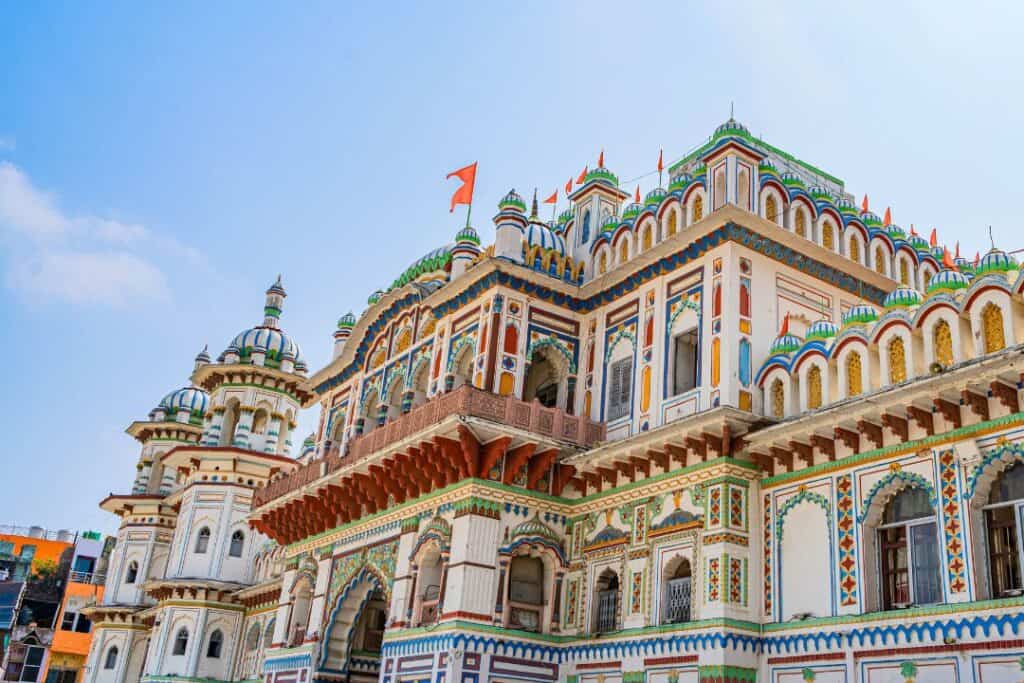
The Janaki Mandir, built in 1911, is the most striking building in Janakpur and the largest temple in Nepal. It was built in a beautiful blend of Mughal and Rajput architectural styles, with white marble, domed towers, and ornate stonework. Inside, the idol of Sita is visited by a constant stream of devotees who have come from across the subcontinent. The Vivaha Mandap next to it marks the spot where the divine wedding is believed to have taken place, and every December the Vivaha Panchami festival draws over 100,000 pilgrims here to celebrate and re-enact that marriage. It is one of the biggest and most heartfelt religious gatherings in Nepal.
But what really makes Janakpur unforgettable is its art. Mithila painting, also known as Madhubani, covers the exterior walls of houses throughout the city and the surrounding villages in dense, colourful patterns of fish, peacocks, elephants, lotus flowers, and gods. This tradition has been maintained by women for generations, originally created for festivals and weddings using natural pigments made from plants and minerals. Today it is recognised as serious fine art internationally, but in Janakpur it remains very much a living community practice. Walking through a village here is like walking through an open-air gallery that nobody curated, which makes it even better.
The People and Their Way of Life
Janakpur is the heart of Maithili culture, one of South Asia’s oldest and most distinguished civilisations with a literary and artistic tradition stretching back over a thousand years. The Maithili language has produced poets, scholars, and philosophers of genuine importance, and the city takes its cultural heritage seriously and with great warmth. The Janakpur Women’s Development Centre is a cooperative where local women create and sell Mithila paintings and crafts, and visiting it gives you a real sense of how a traditional art form is helping to sustain livelihoods and build economic independence for the women who practise it. The city also has 88 sacred ponds, each with its own mythological story, and simply wandering between them traces the geography of the Ramayana through the streets.
Things to See and Do
- Janaki Mandir – Nepal’s largest temple, beautiful Mughal-Rajput architecture
- Vivaha Mandap – the site of the divine Ram-Sita wedding
- Ram Mandir nearby in contrasting pagoda style
- Mithila paintings on village walls throughout the city
- Janakpur Women’s Development Centre – living Madhubani art tradition
- Vivaha Panchami festival in December – a remarkable pilgrimage gathering
- The 88 sacred kunds (ponds) – a lovely way to explore the city on foot
- Janakpur-Jayanagar Railway – one of South Asia’s last remaining heritage narrow-gauge lines
Best time to visit: November through February offers comfortable temperatures. Vivaha Panchami in December is the highlight of the cultural calendar. The summer months of April through June can be very hot in the Terai lowlands.
6. Bharatpur – The City That Opens the Door to Chitwan
Region: Bagmati Province, Central Terai | Elevation: 182 m | Population: around 350,000 | National Park: Chitwan (UNESCO)
Where Nepal’s jungle begins and one of Asia’s great wildlife conservation stories comes to life.
Bharatpur itself is a busy, modern city and an important regional centre. Most visitors pass through it on the way to somewhere else, which is completely understandable, because that somewhere else is Chitwan National Park. Chitwan is a UNESCO World Heritage Site covering 932 square kilometres of subtropical forest, tall grassland, and river floodplain in Nepal’s inner Terai. It is one of the finest wildlife sanctuaries in all of Asia, and spending time there is genuinely one of the great experiences Nepal offers.
The conservation story at Chitwan is worth knowing before you arrive, because it puts what you are seeing in context. The greater one-horned rhinoceros was poached almost to extinction in Nepal during the 20th century, with fewer than 100 individuals remaining at the lowest point. Today, thanks to sustained protection and community involvement, there are over 700 rhinoceroses in Nepal, and the majority of them live in Chitwan. Seeing one walk out of the tall grass at dawn is one of those moments that genuinely stops time. Bengal tigers also live in the park, in relatively high numbers by global standards. Sightings are not guaranteed, but they happen more often here than almost anywhere else. Gharial crocodiles rest on the sandy river banks. Asian elephants move through the forest. Over 550 bird species have been recorded in the park, making it a world-class destination for birdwatchers.
The People and Their Way of Life
The Tharu people are the indigenous community of this part of the Terai, and they have lived alongside the forest and its animals for centuries in ways that the rest of the world is still trying to understand and learn from. Their stick dance tradition, called Danda Nach, is performed at cultural evenings around the park’s tourist village of Sauraha, and it is well worth watching. But even better is visiting an actual Tharu village and spending some time with families in their traditional longhouses, which shelter extended families under one roof. The Tharu Cultural Museum in Sauraha is a thoughtful introduction to their history, their relationship with the land, and the challenges their community has faced as the park and the tourism industry have grown around them.
Things to See and Do
- Chitwan National Park (UNESCO World Heritage Site)
- Greater one-horned rhinoceros – one of conservation’s great success stories
- Bengal tiger jeep safaris
- Gharial crocodile observation from the river bank
- Canoe safaris on the Rapti and Narayani Rivers
- Tharu cultural villages and the Danda Nach stick dance
- Elephant Breeding Centre
- Birdwatching with a specialist guide (over 550 species in the park)
Best time to visit: October through March is the main season, with dry conditions and good wildlife visibility. February and March are particularly rewarding because the tall grass gets cut and animals are much easier to spot. The park partially closes during the monsoon from June through August.
7. Biratnagar – Eastern Nepal’s Busy, Proud Regional Capital
Region: Koshi Province, Eastern Nepal | Elevation: 72 m | Population: around 242,000 | Province: Koshi
Nepal’s second largest city and the industrial heart of the east, with extraordinary wild country on its doorstep.
Biratnagar does not usually appear on travel itineraries, and we want to gently make the case that it deserves a little more attention. It is Nepal’s second largest city by population, sits close to the Indian border in the southeastern Terai, and is the industrial and commercial centre of eastern Nepal. It is an honest, working city with a real history, a politically engaged population, and a cultural diversity that reflects the whole of the eastern region. It is also the natural starting point for some of the least visited and most rewarding natural areas in the country.
About two hours north of the city is Koshi Tappu Wildlife Reserve, a Ramsar-listed wetland on the floodplain of the Sapt Koshi River. This is one of Asia’s most important bird migration sites, with over 480 species recorded, and it shelters the last wild water buffalo population in Nepal. The floodplain shifts and changes with every monsoon season, which gives the whole ecosystem a dynamic, living quality that is quite different from the more managed feel of bigger parks. If you enjoy birdwatching even a little, Koshi Tappu is worth the journey. And Biratnagar is also the staging point for expeditions into the Kanchenjunga Conservation Area in the far northeast, protecting the world’s third highest mountain in a region so remote that very few travellers ever reach it.
The People and Their Way of Life
Biratnagar is where the cultures of the eastern hills and the Terai plains meet and mix. Maithili, Tharu, Rai, Limbu, and Brahmin-Chhetri communities all have a presence here, and the markets and streets reflect that richness. The city has a strong tradition of political and social activism that goes back to the early labour movement in Nepal, and that civic energy is still visible in public life today. The Chhath Puja festival in October and November is the biggest community event of the year. Families gather at the banks of the Koshi River at dawn and dusk over four days to offer prayers to the sun, and the sight of thousands of people standing in the water as the light comes up is genuinely moving. The Dhime drum tradition, a powerful percussion style unique to the eastern region, accompanies festivals throughout the year and is worth seeking out if you are here at the right time.
Things to See and Do
- Koshi Tappu Wildlife Reserve (Ramsar wetland) – over 480 bird species
- Wild water buffalo – the last remaining population in Nepal
- Kanchenjunga Conservation Area – gateway for serious trekkers
- Chhath Puja festival on the Koshi River in October and November
- Dhime drumming performances during local festivals
- Makalu-Barun National Park access
- Day trip north to Dharan hill station (40 km)
- Eastern Nepal border markets and cross-cultural trade culture
Best time to visit: October through February for comfortable temperatures and peak bird migration at Koshi Tappu. Chhath Puja in October and November is the cultural highlight of the region and well worth timing your visit around.
8. Dharan – A Hill Town with Deep Roots and a Big Heart
Region: Koshi Province, Eastern Hills | Elevation: 375 m | Population: around 158,000 | Province: Koshi
A city shaped by Gurkha history and Kirat culture, sitting between the hills and the plains.
Dharan sits at exactly the point where Nepal’s eastern Himalayan foothills begin to descend into the flat Terai, and that geographic position gives it a very pleasant character. It is cooler and greener than the lowland cities, with wide streets and a calm, well-kept feeling that is slightly unusual for a Nepali city of its size. That feeling has a specific explanation. Dharan was for a long time one of the main recruiting and transit centres for the Brigade of Gurkhas, the Nepali soldiers who have served in the British and Indian armies for over two hundred years. The British military presence left behind an organised, functioning city infrastructure that Dharan has maintained and built on.
The city is primarily home to the Rai and Limbu communities, who are part of the broader Kirat peoples, the indigenous inhabitants of the eastern hills and one of Nepal’s oldest ethnic traditions. Their culture, their script, and their oral traditions are genuinely alive here in a way that is not always true in places where modernisation has moved quickly. Bijayapur Hill above the city has a temple at the top and rewarding views south over the Terai and north toward the first Himalayan ridges. It is a pleasant walk that gives you the geography of the region in a single glance.
The People and Their Way of Life
Dharan has an interesting dual identity. On one hand, the Gurkha connection means that many families here have members serving abroad in the British or Indian army, which brings a certain outward-looking, cosmopolitan quality to community life. On the other hand, the Rai and Limbu communities maintain the Mundhum, their sacred oral scripture tradition, which describes their cosmology, their laws, and their relationship with the natural world. The Mundhum is still recited at festivals and rites of passage throughout the surrounding villages, and it represents a way of transmitting knowledge and values that has survived for centuries. The Sakela festival in May, when Rai and Limbu families come together to perform the traditional Sakela dance in their best clothes and jewellery, is among the most beautiful community celebrations in all of eastern Nepal. If you are passing through in May, please try to stay for it.
Things to See and Do
- Bijayapur Hill and Dantakali Temple – great views over the Terai and foothills
- Sakela and Ubhauli festival in May – Rai and Limbu community celebration
- Kirat Mundhum oral tradition and cultural heritage
- Gurkha history and the British military legacy in the city
- Gateway for Arun Valley and Makalu-Barun trek routes
- Vijaypur bazaar and weekly market days
- Rani Pokhari pond and its surrounding parkland
- BP Koirala Institute of Health Sciences – an interesting example of regional development
Best time to visit: October through April for pleasant hill temperatures. May is special if you can be here for the Sakela festival. The monsoon from June through September brings lush greenery but also heavy rain and sometimes difficult road conditions in the hills.
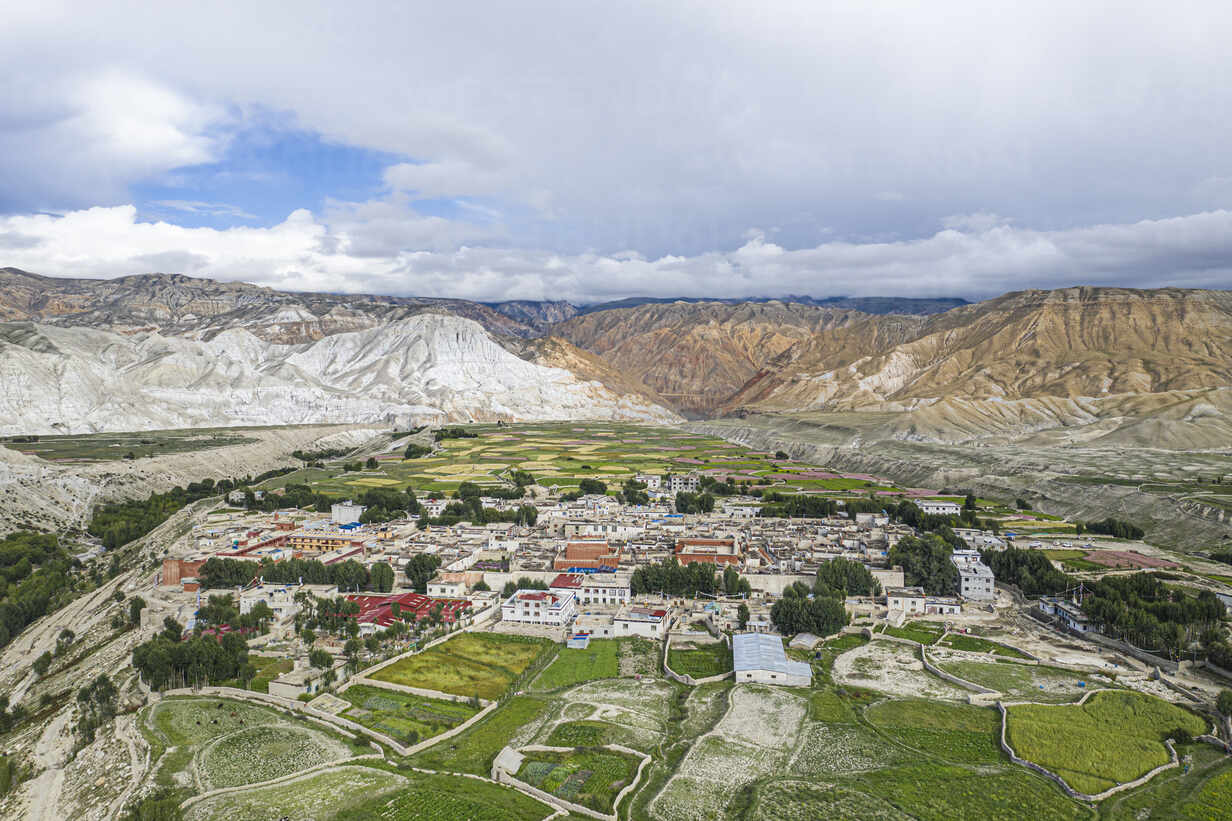
9. Lo Manthang – The Walled Kingdom at the Top of the World
Region: Gandaki Province, High Himalaya | Elevation: 3,840 m (12,598 ft) | Population: around 1,000 | Special permit required: USD 500 for ten days in Upper Mustang
A medieval walled city beyond the last Himalayan pass, where a 14th-century kingdom is still very much alive.
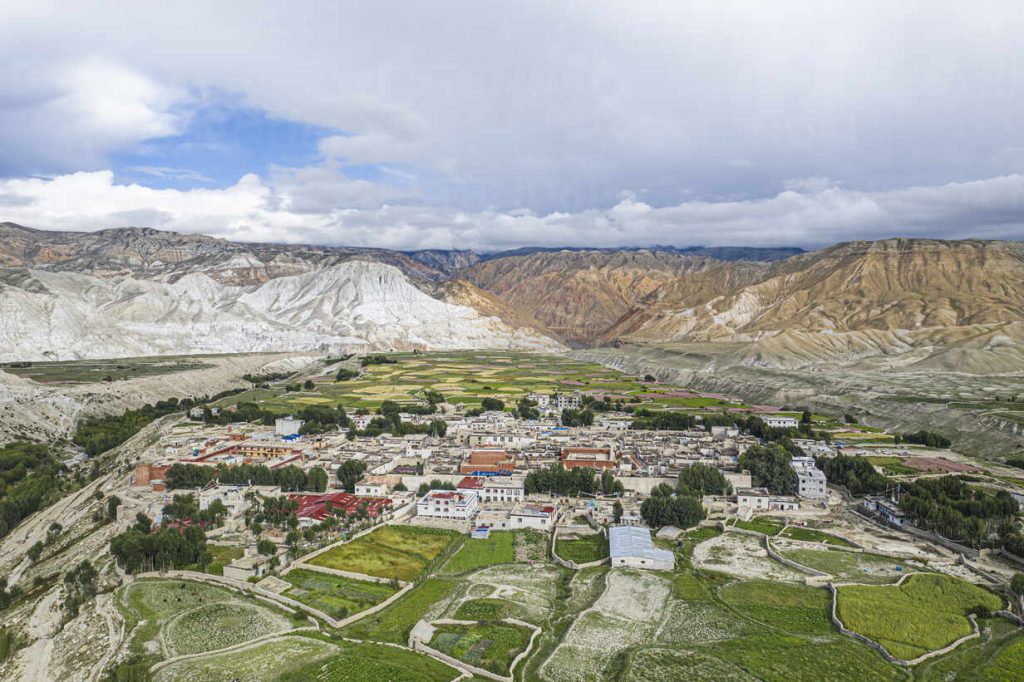
We want to be upfront about this one. Lo Manthang is not an easy or cheap place to reach. It sits at nearly 3,840 metres on a high desert plateau north of the Annapurna range, accessible only by a multi-day trek or a rough jeep road through some of the most dramatic gorge scenery in the world. The government requires a special restricted area permit costing USD 500 per ten days, which is specifically designed to limit visitor numbers and protect the environment and culture. So this is not for everyone, and there is no shame in that.
But for those who do make the journey, Lo Manthang is the kind of place that tends to become a significant marker in a life. The walled city, with its whitewashed mud-brick houses, flat rooftops, narrow lanes, and four-storey royal palace, has barely changed since the 14th century. The landscape surrounding it is extraordinary in a completely different way from the green, forested mountains further south. Up here it is ochre and terracotta and deep shadow, with eroded cliffs and wind-carved badlands that feel ancient in a geological sense. The sky at this altitude is an almost unbelievable shade of blue.
The former Kingdom of Mustang was officially absorbed into Nepal only in 2008, and the last king, Jigme Dorje Palbar Bista, still lives in the palace and is deeply respected by the local Loba community. The monasteries of the city contain 15th-century Tibetan Buddhist murals that are considered among the finest examples of that art form anywhere in the world, preserved in extraordinary condition by the extreme dryness of the climate. The approach route through the Kali Gandaki Gorge, the world’s deepest gorge, passes ancient cave dwellings carved into the cliffs by a pre-Buddhist civilisation whose origins are still being researched.
The People and Their Way of Life
The Loba people of Upper Mustang speak a Tibetan dialect and follow Tibetan Buddhist traditions that in many ways feel more intact than what survives in much of Tibet today. Their way of life is shaped by the high altitude, the short growing season, the strong wind that blows almost constantly, and a culture of community and interdependence that has allowed people to thrive in one of the harshest environments on earth. The Tiji Festival, held over three days in May, is the great community event of the year. Monks from Choede Monastery perform elaborate masked dances re-enacting the defeat of a demon that threatened the kingdom’s water supply. The entire village gathers in the main square of Lo Manthang, and the ceremony has a weight and a sincerity that is genuinely moving to witness. If you are going to spend USD 500 on a permit, going in May for Tiji is the way to make the most of it.
Things to See and Do
- Lo Manthang walled city – a medieval capital largely unchanged since the 14th century
- Thubchen Gompa and Jampa Gompa – 15th-century murals in remarkable condition
- Tiji Festival in May – three days of masked dance ceremony in the main square
- The Royal Palace of the Lo King
- Kali Gandaki Gorge – the world’s deepest gorge on the approach route
- Ancient sky caves carved into the cliffs above the valley
- High-altitude trekking across the Tibetan plateau landscape
- Surkhang and Namgyal monasteries in the surrounding area
Best time to visit: May and June for the Tiji Festival and the most hospitable trekking conditions. September and October for clear skies and autumn colours. Uniquely among Nepal destinations, Upper Mustang sits in the Himalayan rain shadow and stays relatively dry during the monsoon, making July and August more viable here than almost anywhere else in Nepal.
10. Dhangadhi – The Quiet Capital of Nepal’s Far West
Region: Sudurpashchim Province, Far Western Nepal | Elevation: 185 m | Population: around 175,000 | Province: Sudurpashchim (Far Western)
The gateway to Nepal’s most remote and least visited region, and an honest, growing city with a lot to offer.
If you are the kind of traveller who likes to go where few others go, we would genuinely encourage you to consider Dhangadhi. It is the provincial capital of Sudurpashchim, Nepal’s far western province, and it sits in the western Terai close to the border with India. Most international visitors to Nepal never make it this far west, which means that the region around Dhangadhi has a degree of quietness and authenticity that is increasingly rare in more visited parts of the country.
Shuklaphanta National Park is only about 20 kilometres from the city, and it is one of Nepal’s best-kept wildlife secrets. It protects 305 square kilometres of riverine grassland that is the finest habitat in the world for the swamp deer, known locally as barasingha, and is also home to tigers, elephants, leopards, and one of the world’s most endangered birds, the Bengal florican bustard. The difference between Shuklaphanta and Chitwan is that Shuklaphanta is almost empty. You can do a morning safari here and not encounter another vehicle. That kind of solitude in a place full of wild animals is something genuinely special and something that is becoming harder to find.
Further north, accessible by road from Dhangadhi, is Khaptad National Park, a high plateau at around 3,000 to 3,300 metres covered in rhododendron forest and medicinal herbs, with important Shaivite shrines and views of the Api Himal and Saipal peaks. The park was made famous by the Hindu saint Khaptad Baba, who lived here in meditation for decades. For the truly adventurous, the Api-Nampa Conservation Area in the far northwest corner of Nepal protects valleys and peaks that receive fewer than a handful of visitors per year. It is about as far from a beaten path as Nepal gets.
The People and Their Way of Life
The far western Terai is Tharu heartland. The Tharu are the indigenous people of the Terai lowlands, with communities that predate the migration of hill peoples into the plains by many centuries. Their traditional longhouses, which shelter whole extended families under one roof, are still a feature of the villages around Dhangadhi. Their dances, their textiles, and their relationship with the forest and river ecosystems that shaped their civilisation are all still very present. Alongside the Tharu, the Doteli and Awadhi communities of the far west maintain a folk music and oral poetry tradition that is genuinely beautiful and largely unknown outside the region. The Ghodaghodi Lake complex north of the city is a Ramsar-listed wetland and also a sacred space where the local Hindu community gathers for festivals at the lakeside Ghodaghodi Devi Temple. It is the kind of place where ecology and spiritual life are completely intertwined, which is very characteristic of this part of Nepal.
Things to See and Do
- Shuklaphanta National Park – uncrowded wildlife safaris in exceptional grassland habitat
- Swamp deer (barasingha) herds – the best place on earth to see them
- Khaptad National Park – a high plateau of forest, shrines, and mountain views
- Ghodaghodi Lake (Ramsar wetland) and the Ghodaghodi Devi Temple
- Mohana River corridor – pristine riverine ecosystem
- Api-Nampa Conservation Area – for serious trekkers and explorers
- Tharu longhouse villages and community cultural traditions
- Doteli and Awadhi folk music in local festivals and gatherings
Best time to visit: November through February for comfortable temperatures and peak wildlife activity in Shuklaphanta. March and April for the rhododendron bloom at Khaptad. The monsoon from June through September brings heavy rain and can make roads difficult to pass.
A Few Final Thoughts
Nepal is one of those countries that tends to get under your skin in a way you do not fully expect. People come for the mountains and end up being changed by the kindness of strangers in a village they did not plan to stop in. People come for one week and come back for months. People who have been many times will tell you, honestly, that they still feel like they have only scratched the surface.
We hope this guide has shown you a Nepal that is a little wider than the usual Kathmandu and Pokhara loop, as wonderful as those two cities are. The east and the west, the high mountains and the low plains, the walled medieval kingdoms and the jungle wildlife reserves, the Maithili artists and the Kirat drummers and the Tharu farmers, they are all part of the same extraordinary country. Every region has its own character, and every community has its own way of welcoming you.
Whatever draws you to Nepal, we hope you find it. And we hope you find a few things you were not looking for as well. That is usually where the best stories come from.
Have you been to any of these places? Is there somewhere in Nepal that you feel deserves more attention? We would love to hear about it in the comments below.
Related Posts
Stay Informed With the Latest & Most Important News
Previous Post
Next Post
- Nepal vs India for Holi: Why the Himalayas Win Every Time
- 10 Places in Nepal That Define Its Regions, Culture, and Soul
- Banke National Park: Forest Frontiers, Wildlife Corridors, and Nepal’s Quietest Terai Wilderness
- Parsa National Park: Emerging Forest Corridors and the Quiet Future of Nepal’s Terai
- Boudhanath Stupa: Walking the Living Mandala of Kathmandu