Now Reading: The Newari Feast: A Guide to Nepal’s Most Elaborate Food Tradition
-
01
The Newari Feast: A Guide to Nepal’s Most Elaborate Food Tradition

Discover the Newari feast (bhoj), Nepal's most elaborate food tradition. A complete guide to dishes, serving rituals, and the best Newari restaurants in Kathmandu and Bhaktapur.
There is a moment, somewhere between the first handful of beaten rice and the final spoonful of creamy Bhaktapur yogurt, when you realise something quietly extraordinary: you are not just eating a meal. You are sitting cross-legged on a woven straw mat, shoulder to shoulder with strangers who feel like old friends, experiencing a culinary ritual that has played out in the Kathmandu Valley for centuries. Welcome to the Newari bhoj… Nepal’s most elaborate, generous, and utterly unforgettable food tradition.
If you have ever Googled “Newari food Nepal” out of curiosity, you have probably seen photos of colourful platters piled high with spiced meats, lentil cakes, pickles, and mysterious fermented delights. But pictures only tell half the story. To truly understand Newari cuisine, you need to understand the feast itself: the order, the etiquette, the meaning behind every dish, and the warmth of a community that believes food is the truest expression of celebration.
This guide will walk you through every course, every flavour, and every cultural nuance of the Newari bhoj. And yes, I will point you to the best places in Kathmandu and Bhaktapur where you can experience it all for yourself.
What Exactly Is a Newari Bhoj?
The word “bhoj” simply means feast, but calling a Newari bhoj “just a feast” is like calling the Himalayas “just some hills.” This is a meticulously choreographed, multi-course dining ritual practised by the Newar people, the indigenous inhabitants of the Kathmandu Valley whose culinary heritage stretches back over a thousand years.
Every major life event in Newar culture revolves around food. Weddings, coming-of-age ceremonies, religious festivals, even mourning rituals all have their own specific feasts with carefully prescribed dishes. The communal feast, known locally as “bhwey” or “bhoye,” is the centrepiece of Newar social life. It is how families bond, how communities celebrate, and how traditions pass from one generation to the next.
There are two main styles you will hear about. The Suku Bhwey (or Lapte Bhwey) is the grand communal version where guests sit on long straw mats called sukul, and food is served on leaf plates called lapte, plates stitched together from broad leaves using thin bamboo strips. Then there is the Samay Baji, a ceremonial platter that serves as a condensed version of the feast, often available at restaurants and family gatherings year round.
The Setting: Where Ritual Meets Hospitality
Before a single morsel reaches your lips, the setting itself tells you that this is no ordinary meal. Imagine a courtyard in Bhaktapur’s old quarter, the red brick walls glowing in the late afternoon light. Long, narrow straw mats have been unrolled across the stone floor in neat parallel rows. You take your place, sitting cross-legged, and a fresh leaf plate is set before you along with a small clay bowl called a pala.
There is a protocol here that is worth knowing. The eldest guests are always served first, a sign of deep respect that runs through every layer of Newar society. Before anyone eats, a small portion of each dish is set aside next to the plate. This offering, called dyo chaye, is the gods’ share. A few drops of drink are scattered into the air. Only then does the feast begin.
Traditionally, you eat with your hands. The textures matter: the crumble of beaten rice between your fingers, the slight resistance of a lentil cake, the slippery warmth of a meat curry scooped up with practised ease. Many restaurants now offer spoons and forks, but if you get the chance to eat the old way, take it. There is something deeply grounding about it.
The Courses: A Dish-by-Dish Journey Through the Feast
One of the most fascinating things about the Newari bhoj is that the order of serving is not random. Each dish arrives at a specific point in the meal, building flavour, balancing richness, and guiding your palate from beginning to end. Here is what to expect.
The Opening: Baji and the First Wave
Every Newari feast begins with baji, or beaten rice (called chiura in Nepali). Two generous handfuls are placed on your leaf plate. This is your foundation, the starchy, slightly chewy base that anchors everything else. Think of it as the Newari equivalent of bread at a French table… it never leaves, and everything else orbits around it.
Alongside the baji come the first accompaniments: gainda gudi, a hearty mix of different lentils; hariyo saag, sautéed green spinach glistening with mustard oil; and alu tama, a curry of potatoes and fermented bamboo shoots with an aroma that is earthy, tangy, and completely addictive. If you have never tried alu tama before, prepare for a flavour you will crave long after you leave Nepal.
The Pickles and Raw Sides
Next come the achars and fresh sides. Alu kerau is a fiery, tangy mix of potatoes, radish, and small brown peas that wakes up your entire mouth. Tamatar ko achar, a ripe tomato pickle with a slow burn of chilli, arrives alongside it. Then there is chhuse musse, a refreshing raw salad of carrot, radish, cucumber, onion, and soaked peas that acts as a palate cleanser between the heavier dishes.
These are not afterthoughts. In Newari cuisine, pickles and fermented sides carry enormous culinary weight. They cut through richness, aid digestion, and add layers of sour, spicy, and tangy complexity that make the whole meal sing.
The Heart: Meat Courses
Now the feast hits its stride. The star protein in most traditional Newari bhoj is buffalo meat, prepared in several distinct ways that showcase the community’s remarkable culinary range.
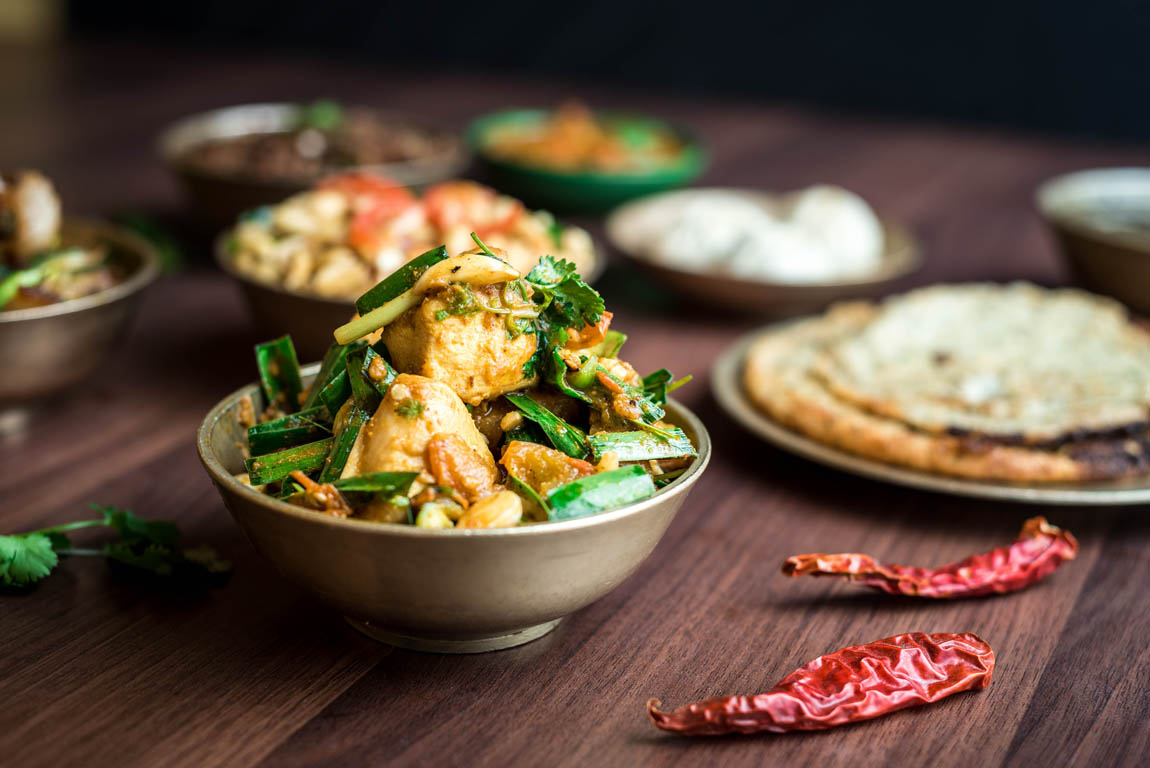
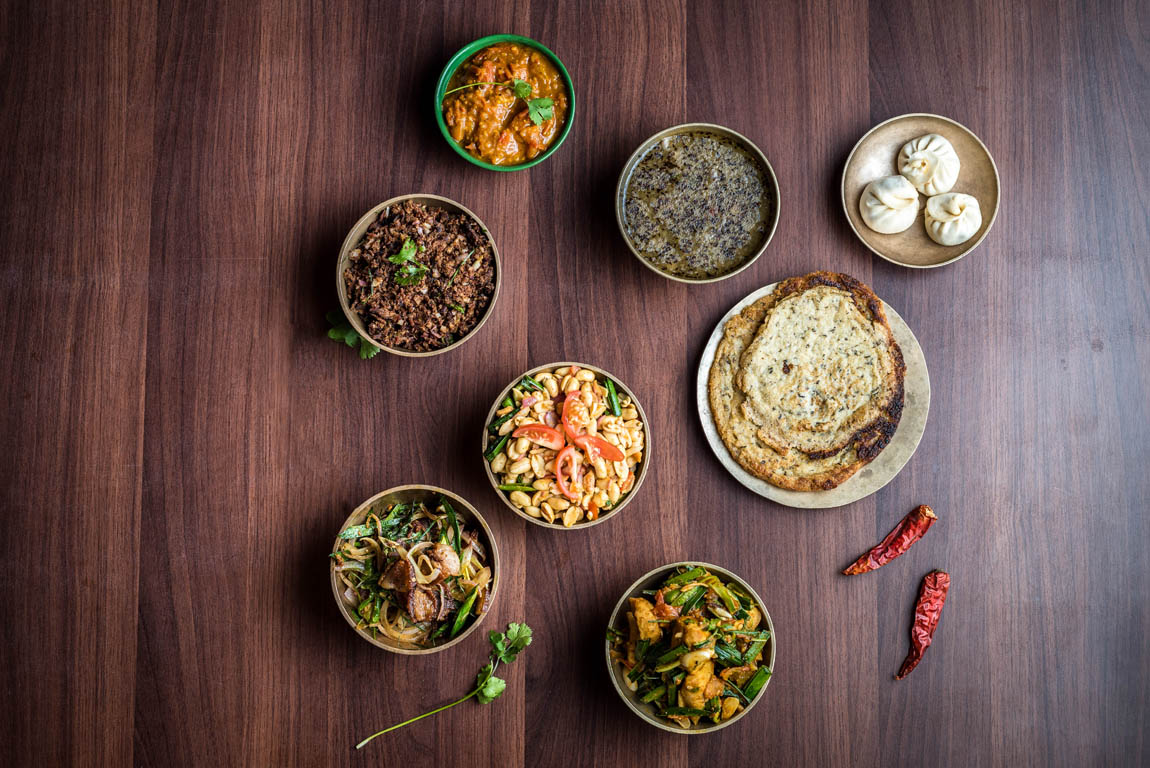
Chhoyela (or choila) is often the first meat to appear: chunks of smoked or grilled buffalo meat, marinated in mustard oil, dried red chillies, ginger, garlic, and a blend of spices that varies from family to family. The smokiness, the heat, the slick of mustard oil… it is intensely flavourful and pairs beautifully with the beaten rice. Chicken and duck versions are also common.
Dyakula comes next, a slow-cooked buffalo meat curry with a thick, deeply spiced gravy. This is comfort food at its most primal: rich, warming, and impossibly tender from hours of patient simmering.
In the cooler months, you might encounter takha, a jellied buffalo meat dish that is served cold and has a silky, gelatinous texture, or sanyakhuna, a bone broth that sets into a savoury jelly. These are winter specialties and a real treat if your visit coincides with the colder season.
For the adventurous, there is kachila, a preparation of finely minced raw buffalo meat mixed with spices, mustard oil, and ginger. Think of it as Nepal’s answer to steak tartare: bold, punchy, and not for the faint of heart.
The Signal: Bhuttan
Here is an insider tip that will make you look like a seasoned bhoj veteran. When bhuttan arrives on your plate, fried buffalo intestines with a crispy, savoury crunch, it means the feast is approaching its final act. Bhuttan only appears after every other dish has been offered at least two or three times. So when you see it, savour it slowly… the sweet finish is just around the corner.
The Sweet Finish: Dhau and Sisapusa
Before the yogurt is served, something beautiful happens. A small dab of curd is gently placed on the side of your forehead. This is dhau sagun, a blessing of good fortune. The placement varies by tradition: some communities place it on the right side for men and the left for women, while others simply choose the right side for everyone.
Then comes the dhau itself, thick, creamy yogurt that is often the legendary Juju Dhau (King Curd) from Bhaktapur. Made from buffalo milk and set in small clay pots, Juju Dhau is richer and creamier than any yogurt you have likely tasted. It arrives with a final handful of baji, and if you love the combination of cool, tangy curd with chewy beaten rice, this moment alone is worth the entire feast.
Finally, sisapusa, a mix of dried fruits and sweets, arrives as a gentle digestive to mark the official end of the meal.
The Drinks: Thon, Aila, and Beyond
No Newari feast is complete without something to wash it all down, and the Newar community has its own proud brewing tradition.
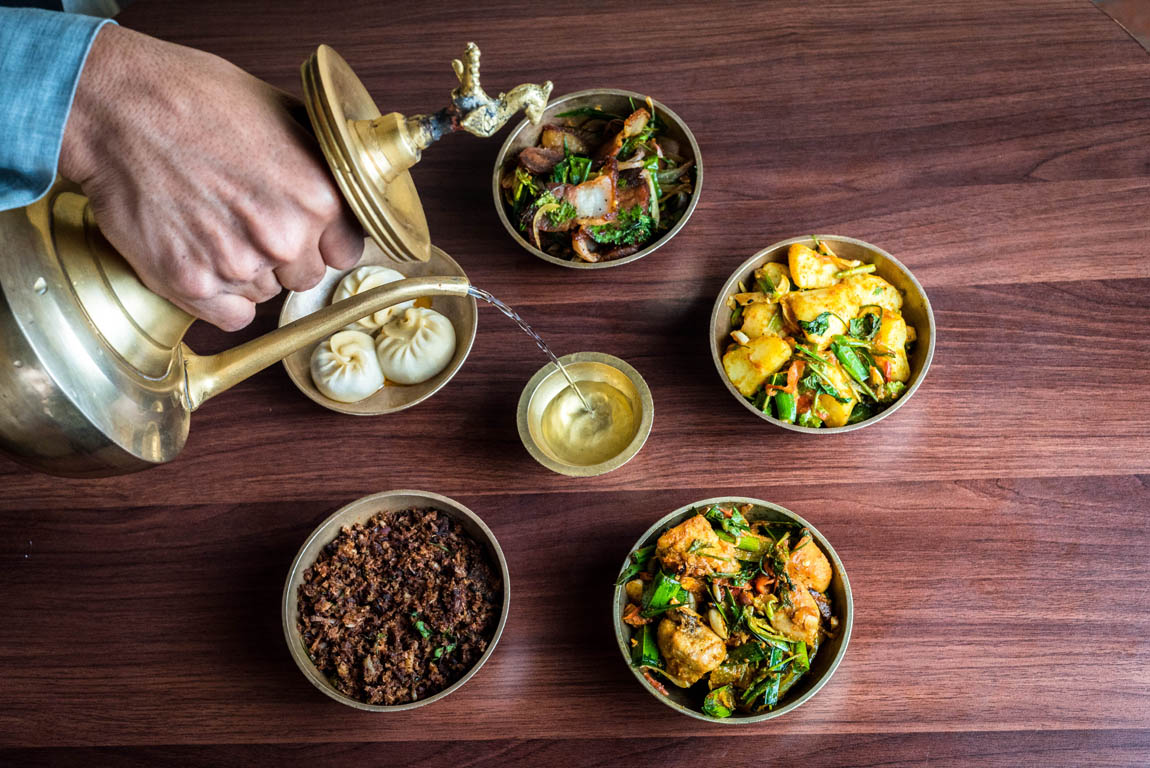
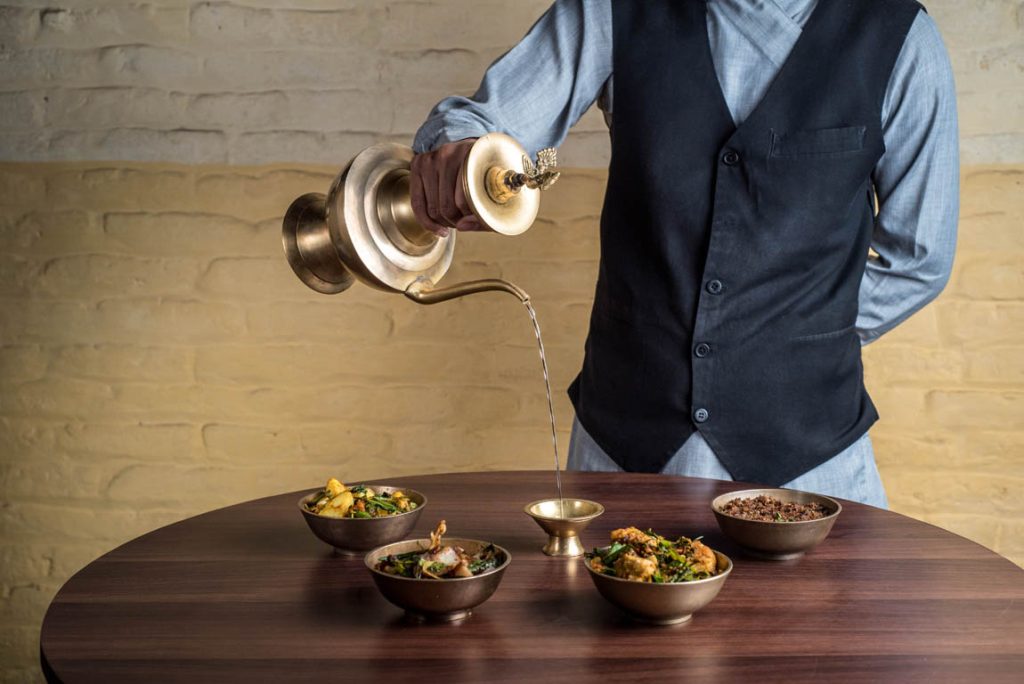
Thon (also called chhyang) is a homemade rice beer: cloudy, mildly sweet, and refreshingly light. It is the gentler option, perfect for sipping throughout the meal. Then there is aila, a clear, potent distilled spirit that hits like a freight train wrapped in silk. Aila is traditionally brewed at home and served in small clay cups. A word of warning: it is stronger than it looks. Go easy on your first pour.
As the feast nears its end, you might also be offered mee-kwa, a warm drink made from fenugreek seeds, or paun-kwa, a sweet and sour drink made from lapsi fruit (Nepali hog plum) that can be served hot or cold. These signal the very final stage of the bhoj and help settle your stomach after the glorious onslaught of flavours.
The Must-Try Dishes Beyond the Bhoj
While the full feast is the crown jewel, Newari cuisine extends far beyond the bhoj. Here are some dishes you should seek out during your time in Nepal, whether at a restaurant or a street stall.
Bara (also called wo) are savoury lentil patties made from ground black lentils, pan-fried until crispy on the outside and soft within. They come plain, with a fried egg on top (kheyn wo), or with minced meat. You will find them everywhere, from high-end restaurants to legendary hole-in-the-wall shops.
Chatamari is often called “Newari pizza,” though the comparison is a bit cheeky. It is a thin, crispy rice-flour crepe topped with minced meat, egg, vegetables, or all three. The texture is delicate, almost lace-like, and utterly delicious.
Yomari is a sweet steamed dumpling made from rice flour dough and shaped like a fish. The filling is usually chaku (a sticky, caramel-like jaggery) or khuwa (reduced milk solids). Yomari is especially associated with the harvest festival of Yomari Punhi in November or December, but good Newari restaurants serve it year round.
Sapu Mhicha is a dish for the truly curious: buffalo leaf tripe stuffed with bone marrow, tied with thread into little pouches, then boiled and deep-fried. It sounds unusual, but the result is soft, juicy, and utterly moreish.
Where to Experience Newari Food: Restaurant Recommendations
You do not need an invitation to a Newar wedding to experience this cuisine (though if you get one, say yes immediately). The Kathmandu Valley is home to dozens of restaurants and traditional eateries, known as bhattis, that serve authentic Newari food. Here are some of the best.
In Kathmandu
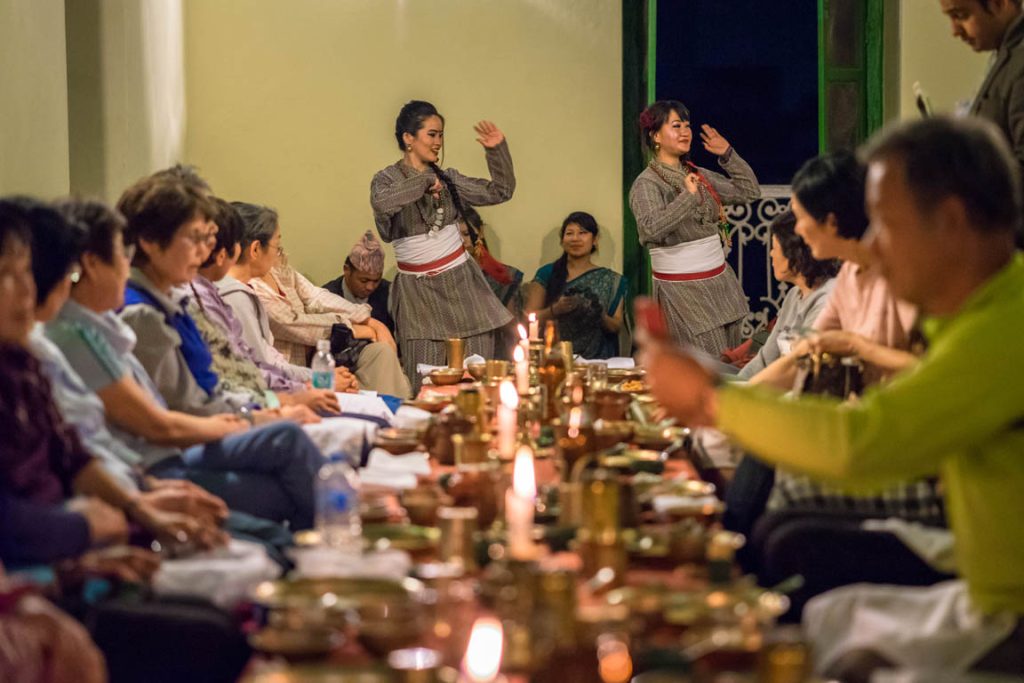
Bhojan Griha, Dillibazar is the name that comes up most often when locals talk about the quintessential Newari dining experience. Set in a beautifully restored heritage building, Bhojan Griha offers a full Newari feast complete with cultural dance performances in the courtyard. The atmosphere is magical: candlelit, intimate, and steeped in old-world charm. It is on the pricier side, but for a special occasion, it is unbeatable.
Harati Newari Restaurant, Naya Bazar has been serving authentic Newari food since 1995, and it remains one of the most beloved spots in central Kathmandu. Located near Thamel, it is incredibly convenient for travellers. The menu is enormous, covering everything from buff chhoyela and chatamari to bone marrow fry and fried buffalo tongue. The staff speak English and are happy to guide you through the menu. Prices are very reasonable.
Krishnarpan, Dwarika’s Hotel is the fine-dining option, offering an opulent multi-course Newari tasting menu in one of Kathmandu’s most beautiful heritage hotels. If you want to experience Newari cuisine elevated to an art form, this is where you go. Expect impeccable service, exquisite presentation, and a meal you will remember for years.
Bhumi Restaurant, Thamel sits right in the heart of the tourist district and does a wonderful job of blending traditional Newari flavours with a contemporary touch. Their chhoyela and nhyapu are standouts.
In Bhaktapur
Newa Lahana, near Taumadhi Square is a gem tucked down a small side street, and it is worth every second of searching. The restaurant is decorated in traditional Newari style with floor seating, red and black cushions, and food served on dried banana leaves. The samay baji set, buff chhoyela, and chatamari are all excellent. Portions are generous and prices are very fair. Newa Lahana also has branches in Kirtipur and Kamaladi, but the Bhaktapur location has the most authentic atmosphere.
Aamako Bara Pasal, near Bhaktapur Durbar Square deserves a special mention. This tiny, decades-old shop is run by a single woman (lovingly called “Aama,” meaning mother) who cooks everything herself. There is no printed menu. You sit down and eat whatever she has prepared that day: typically her legendary bara with a ladle of bamboo shoot and bean soup poured on top, plus her incredible spicy potato achar. A full meal costs under 300 Nepali rupees. It is as local and as authentic as it gets.
The Nanee, Bhaktapur is a newer addition to the Bhaktapur dining scene and offers a more polished experience. They have three distinct dining areas: the Bara Shop for traditional street-food-style Newari bites, Community for contemporary Newari dishes, and the Rooftop for an elevated chef’s table experience with seasonal, locally sourced ingredients.
Nyatapola Restaurant, Bhaktapur Durbar Square may not serve the most groundbreaking food in town, but the setting is spectacular. Perched near the towering Nyatapola Temple, it offers incredible views over the square along with solid samay baji and bara.
And wherever you are in Bhaktapur, do not leave without trying Juju Dhau from one of the countless small shops lining the old streets. Look for the little clay pots in refrigerators near the squares. A pot costs next to nothing, and the flavour is extraordinary.
In Kirtipur and Patan
If you have time to venture a little further, Newa Lahana in Kirtipur draws crowds from across the valley for its stunning views, traditional seating, and massive menu of Newari specialities. Nandini Newari Food Court near Patan Durbar Square is another excellent option, particularly for yomari and homemade raksi (local spirit). Harisiddhi Newa Sulee in Lalitpur is one of the oldest Newari restaurants in the valley, set in a beautifully decorated multi-storey building with a peaceful atmosphere away from city traffic.
When to Go: Timing Your Newari Food Experience
You can find Newari food in the Kathmandu Valley any day of the year, but if you want to witness a full-scale communal bhoj in its most vibrant form, time your visit around one of the major Newar festivals. Indra Jatra (September), Gai Jatra (August), Bisket Jatra (April), and Yomari Punhi (November/December) are all celebrated with elaborate feasts. During Dashain and Tihar, the biggest national festivals in Nepal, families across the valley prepare bhoj-style meals that fill entire neighbourhoods with the smell of roasting spices and sizzling meat.
Even outside festival season, restaurants like those mentioned above serve full samay baji sets and a la carte Newari dishes daily. The cuisine is available all year; the festivals simply amplify the experience.
Tips for First-Time Newari Diners
A few practical notes to help you make the most of your Newari food adventure:
Expect heat. Newari cuisine is famously spicy. If you are sensitive to chilli, ask for mild versions or keep a pot of Juju Dhau nearby as a cooling agent. Most restaurants are happy to adjust the spice level for visitors.
Come hungry. The portions at a bhoj, and even at restaurant samay baji sets, are extraordinarily generous. You will be offered seconds and thirds. It is polite to accept at least once.
Use your right hand. If eating traditionally without cutlery, always use your right hand. The left hand is considered unclean in Nepali dining culture.
Be open-minded about offal. Newari cuisine celebrates nose-to-tail eating. Dishes like bhuttan (intestines), sapu mhicha (bone marrow in tripe), and kaakwa (bone soup) are not just common but beloved. Even if you would not normally order them, a bhoj is the perfect place to try.
Budget-friendly feasting. One of the great joys of Newari food is that it is remarkably affordable. A full samay baji set at a local bhatti can cost as little as 300 to 700 Nepali rupees (roughly $2 to $5 USD), even in Kathmandu. Fine dining experiences like Krishnarpan are an exception, but the vast majority of Newari eateries are gentle on the wallet.
More Than a Meal: Why the Newari Bhoj Matters
There is a reason the Newari bhoj has survived for centuries while so many other food traditions have faded. It is not just about the food, though the food is extraordinary. It is about community. The communal mat, the shared plates, the ritual of offering to the gods before you feed yourself… these are acts of connection. In a world that increasingly eats alone, scrolling through a phone, the Newari bhoj is a radical invitation to slow down, look up, and share something real with the people beside you.
The Newari people understand something profound: that the way you eat says as much about your culture as the way you pray or the way you build your temples. Their cuisine is recognised as one of the oldest food cultures in South Asia, and every dish on that leaf plate carries a story, whether it is the seasonal shift from hot curries in summer to cold jellied meats in winter, or the specific sweets exchanged at weddings to seal bonds between families.
When you sit down to a Newari bhoj in Nepal, you are not a tourist observing from the outside. You are a guest, welcomed into a tradition that treats every shared meal as a small act of grace.
Start Planning Your Newari Food Adventure
So here is what I want you to do. Bookmark this article. Screenshot the restaurant names. Add “eat a full Newari bhoj” to your Nepal bucket list and underline it twice. Whether you find yourself sitting on a sukul mat at a Bhaktapur wedding feast or squeezing into Aamako Bara Pasal for a plate of the best bara in the valley, you are in for one of the most soulful, satisfying food experiences Asia has to offer.
Nepal is waiting. The leaf plate is set. The beaten rice is ready. And somewhere in the ancient streets of the Kathmandu Valley, a small clay cup of aila is being poured with your name on it.
All you have to do is show up hungry.
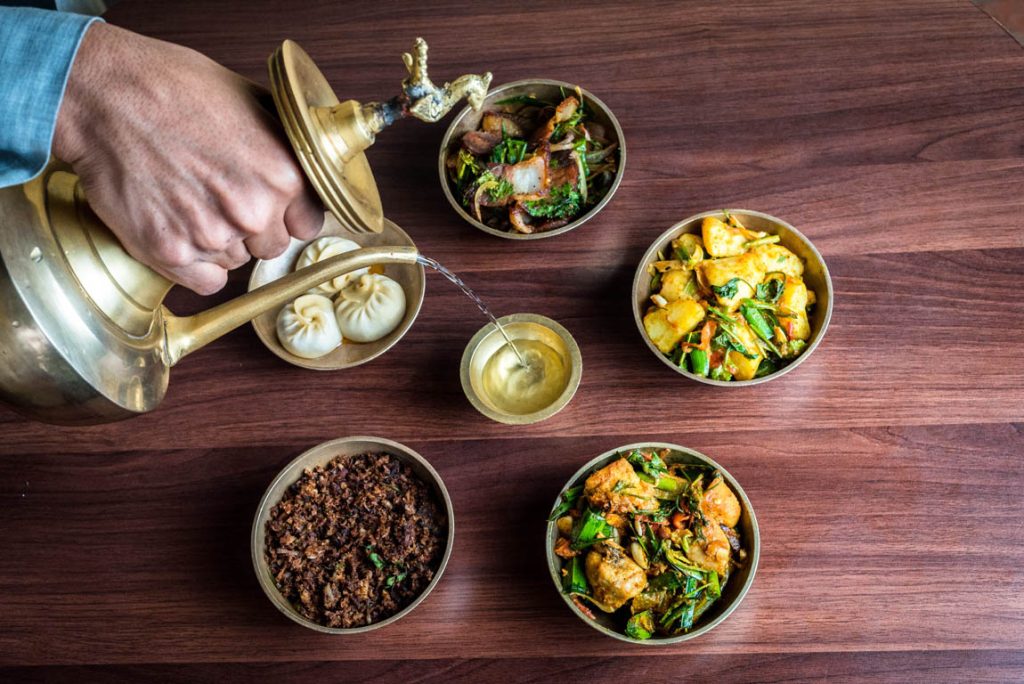
Images courtesy: Bhojan Griha, Kathmandu, Nepal https://www.bhojangriha.com.np/index.php
Related Posts

Stay Informed With the Latest & Most Important News
Previous Post
Next Post
- The Newari Feast: A Guide to Nepal’s Most Elaborate Food Tradition
- Solo Female Travel in Nepal: What You Actually Need to Know
- Mardi Himal Trek: The Quieter Trail to Nepal’s Most Photogenic Peak

- Best Time to Visit Nepal: A Month-by-Month Breakdown for Every Traveller

- Poon Hill Trek: The Complete Guide