Now Reading: Nepal’s 2026 Election: What Travellers Need to Know
-
01
Nepal’s 2026 Election: What Travellers Need to Know

When most people picture Nepal, they think of snow-dusted peaks at sunrise, prayer flags lifting in the wind, and ancient temple courtyards in the Kathmandu Valley. Nepal reaches people first through beauty: through mountains, faith, and pilgrimage.
But Nepal is also a deeply political country. Conversations matter here. Tea shop debates become miniature parliaments. Taxi drivers often have sharper political commentary than television panels. And ordinary people carry very clear memories of change, disappointment, protest, and hope.
That is why Nepal’s 2026 election matters, not just for the country, but for anyone planning to visit it.
A Political Moment, Not Just a Result
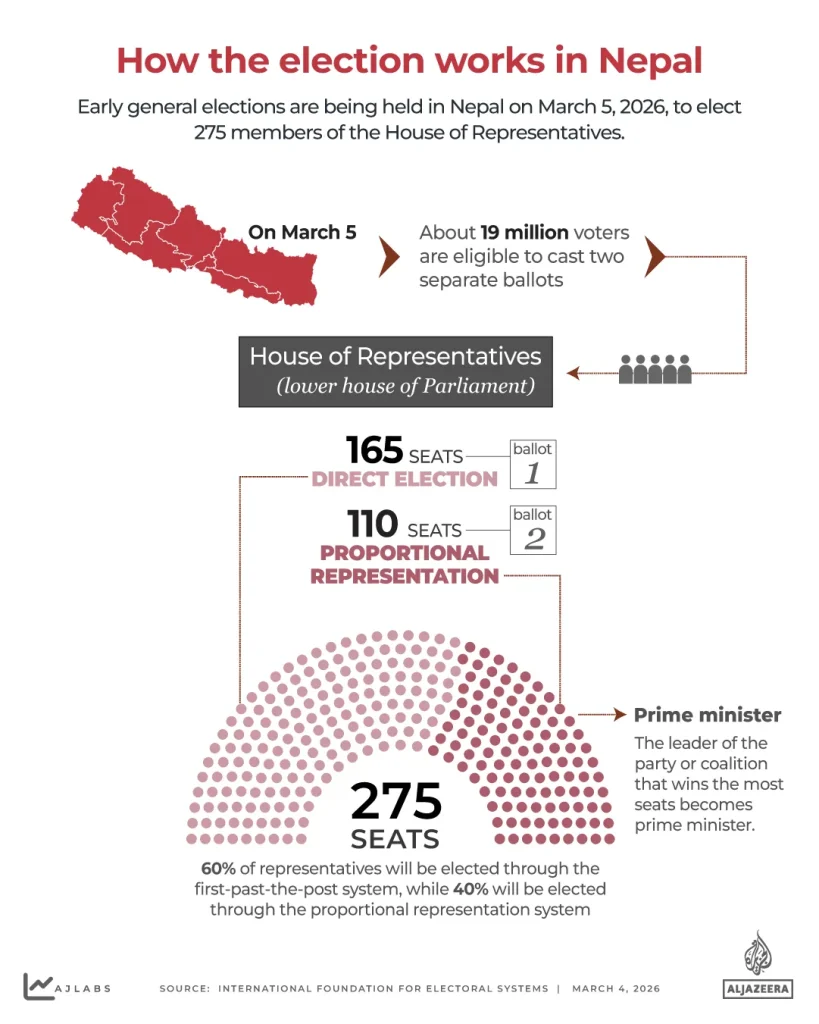
The 2026 election has not been treated as a routine democratic event. For many Nepalis, it has felt like a public reckoning, a moment when years of accumulated frustration finally found a sharper political expression.
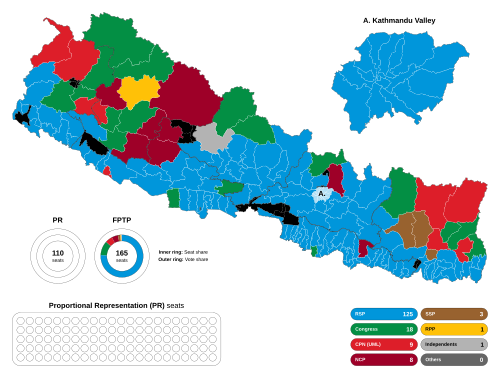
The defining story of the vote was the extraordinary surge of the Rastriya Swatantra Party (RSP). To outside observers, this may look sudden. Inside Nepal, the ground had been shifting for some time.
The traditional parties have dominated the democratic era for decades. They shaped the republic, wrote major chapters of recent history, and remained central to power through endless coalitions and realignments. But over time, public confidence in them wore thin. Too many voters felt that leadership had become repetitive, self-protective, and comfortable with weak delivery.
The RSP gained momentum because it seemed to embody something different: not another version of the same political machinery, but a challenge to it. Its success was not just organisational. It was emotional. People did not merely vote for a new party name. Many appear to have voted for the idea that Nepal deserves a different governing culture altogether.
Why So Many Nepalis Wanted Change
To understand the force of this result, it helps to look at the mood that came before it.
Nepal’s democratic journey has been hopeful, painful, and often unstable, moving through monarchy, civil conflict, a peace process, constitutional transformation, and the long task of building a federal democratic republic. The modern political system carries all of that history.
Yet for many ordinary people, the daily questions remained strikingly practical: Can the government deliver jobs? Can public services work? Can corruption be reduced? Can young people imagine a future at home rather than abroad?
These are not abstract political questions in Nepal. They live inside family decisions, educational hopes, and the deeply human reality of migration. Almost every Nepali family, directly or indirectly, knows someone who has left, to the Gulf, Malaysia, Australia, Europe, or North America. Labour migration is not just an economic story. It is a social one. A political one. And when people feel that politics has failed to offer enough at home, that frustration runs deep.
A vote for change in Nepal is often also a vote against stagnation. Against being told to wait. Against the normalisation of disappointment.
The Role of Youth and Generational Impatience
Youth energy has been one of the most important forces behind Nepal’s recent political mood. Nepal is a young country, and many younger citizens grew up expecting that democracy would bring renewal, fairness, and better institutions. Instead, too many watched the same leaders dominate headlines year after year.
Their lives have been shaped by tougher realities: limited job opportunities, rising aspirations fuelled by digital media, more education but not always more opportunity. The gap between expectation and reality sharpened their political impatience.
The RSP spoke directly to that impatience. It offered a vessel for frustration, but also a sense of possibility. Whether it can fully meet those hopes remains to be seen. But in elections, feeling matters, and the feeling that history could be pushed clearly moved a great many voters.
What This Means for Nepal’s Old Political Parties
For the traditional parties, this election looks like a warning they can no longer ignore. Historical legitimacy carries weight in Nepal, but it does not last forever. Legacy and past democratic struggle can carry a party only so far when present performance weakens.
The result exposed a simple truth: many Nepalis no longer wanted to be asked for patience without proof.
That does not mean the established parties will disappear. They remain deeply rooted, politically experienced, and locally connected. But the emotional authority they once relied on has been openly challenged, and that is what makes this result feel larger than a normal electoral shift.
Can the New Political Force Actually Deliver?
This is now the biggest question hanging over Nepal.
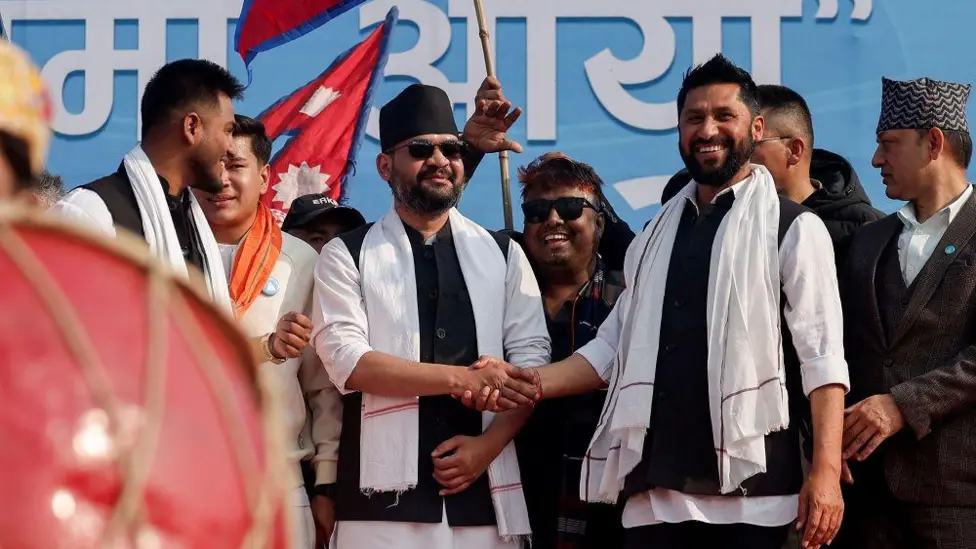
Winning an election is powerful. But governing Nepal is difficult. The problems that produced public anger are not easy to solve quickly. Institutions take time to reform, corruption networks do not disappear overnight, and economic frustration cannot be erased by a single electoral result.
Many Nepalis are excited, but they are not naive. They know the country has seen promises before. They know that opposition politics is easier than governing. Still, the electorate has made its message unmistakable. The fact that democratic fatigue has become sharper participation, rather than apathy, is itself significant.
What Travellers Should Know About the Political Atmosphere
For visitors, the most important thing is not to mistake Nepal’s political energy for instability in every corner of daily life. Nepal remains a country where hospitality runs deep, and most visitors will still experience the same warmth, generosity, and cultural richness that have long drawn people here.
You can still wander through Patan Durbar Square as evening light softens the old city. Hear monks chanting near Boudhanath at dusk. Drink tea in a hill village while clouds roll across terraced fields. Watch the Annapurna range appear at dawn like something half remembered from a dream.
But the atmosphere of a country after a major election is always slightly charged. In Kathmandu, especially, politics becomes visible in small ways. Conversations are sharper. Public opinion is more animated. Expectations and doubts rise together.
Visitors should see this not as a problem, but as context. Nepal is not only a destination. It is a society in motion.
Will the Election Affect Travel Practically?
In practical terms, most visitors are far more likely to encounter minor inconvenience than any serious disruption. The most common effects of political tension in Nepal include traffic delays, demonstrations, temporary road blockages, and occasional slowdowns in busy urban areas, most of this concentrated in Kathmandu.
A demonstration near key roads can affect movement between the airport, Thamel, government districts, or the old city. If you are relying on tight timing for domestic flights or day tours, a politically active week can make the city feel less predictable.
That said, Nepal is used to absorbing disruption. Locals adapt quickly. Businesses continue. Guides reroute. The country keeps moving, even when imperfectly.
Practical tips for travellers:
- Build flexibility into your Kathmandu itinerary
- Ask your hotel, guesthouse, or guide if any protests are expected
- Avoid gathering crowds and do not linger around demonstrations
- Allow extra time for city movement when national politics are running hot
- If trekking outside the capital, the direct impact is usually much smaller, though transport connections through Kathmandu can still affect onward plans
Political Conversation Is Part of the Experience
One of the most rewarding things about travelling in Nepal is how easily conversation opens up. And once it does, it can travel far.
If you stay in family-run guesthouses, travel with local guides, or spend time in tea shops, politics may come into conversation naturally, not in a formal way, but in a living one. A shopkeeper may laugh bitterly about old politicians. A university student may speak with urgency about change. A driver may explain why people are fed up. A lodge owner may wonder whether anything will truly improve.
These moments are worth listening to carefully. They offer one of the clearest reminders that Nepal is not frozen in heritage. It is modern, argumentative, democratic, wounded, ambitious, and very aware of itself.
Nepal Beyond the Postcard
There is a temptation to divide countries into two versions: the one that belongs to tourism, and the one that belongs to politics. In Nepal, that division does not hold.
The temples are real. The mountains are real. The monasteries, pilgrimage routes, festivals, stupas, and high passes are all real. But so are the pressures that shape everyday life: youth outmigration, the cost of living, frustration with governance, the hunger for dignity and accountability.
To understand Nepal well, even as a visitor, is to hold both sides together.
You can stand at Swayambhunath and watch the valley stretch outward beneath a hazy sky, ancient and modern at once. But if you listen closely, the country is also telling you about itself in the present tense. The recent election reveals that Nepal is not only preserving the past. It is struggling over the future.
Why This Is Actually a Good Time to Visit
This may be one of those moments when Nepal feels especially vivid to be in. Not always easy. Not always smooth. But vivid.
You may find yourself in a city that is both tired and hopeful. A place where deep cultural continuity exists beside democratic restlessness. A country where sacred spaces remain full while public trust in institutions is being contested. A nation where people continue to welcome visitors warmly, even while arguing intensely about the future.
That combination is part of Nepal’s character, and one reason the country stays with people long after they leave. Nepal rarely offers only one story. It offers many at once: beauty and hardship, faith and frustration, stillness and motion, ancient continuity and urgent change.
Come for the mountains. Come for the monasteries and the old cities, the trekking trails and the festivals. But come knowing that the country is living through a politically meaningful chapter. That awareness changes the texture of travel and makes the experience richer for it.
If you visit Nepal now, you are not arriving in a nation paused between attractions. You are arriving in a nation thinking hard about itself. And that, too, is part of the journey.
Related Posts
Stay Informed With the Latest & Most Important News
Previous Post
Next Post
Previous Post
Next Post
- Nepal’s 2026 Election: What Travellers Need to Know
- The Last Forbidden Kingdom: Your Ultimate Guide to Trekking Upper Mustang in 2026
- Nepal vs India for Holi: Why the Himalayas Win Every Time
- 10 Places in Nepal That Define Its Regions, Culture, and Soul
- Banke National Park: Forest Frontiers, Wildlife Corridors, and Nepal’s Quietest Terai Wilderness