Now Reading: Nepal vs India for Holi: Why the Himalayas Win Every Time
-
01
Nepal vs India for Holi: Why the Himalayas Win Every Time
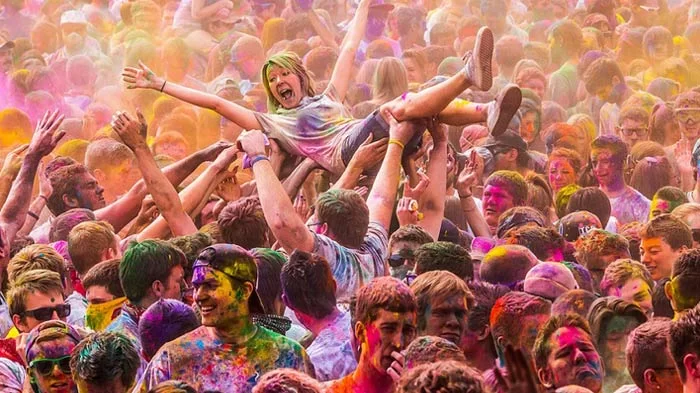

The world thinks India owns Holi. Here is the honest, side-by-side comparison that shows why Nepal offers a safer, more authentic, and more breathtaking Festival of Colours experience. Your travel plans are about to change.
Close your eyes for a moment. You are standing in an ancient cobblestone square surrounded by laughing strangers who are quickly becoming friends. Someone gently smears bright pink powder across your cheek, and you cannot help but burst out laughing. The air smells of marigolds and incense, temple bells ring somewhere nearby, and all around you the world has erupted into a joyful, colour-soaked celebration of life itself.
Now, where are you?
If your mind went straight to India, you are not alone. For decades, travellers from all over the world have made the pilgrimage to Rajasthan, Vrindavan, or Jaipur to experience Holi. And while those experiences can be wonderful, there is a conversation that the travel world has been slow to have:
Nepal does Holi better. Safer. More authentically. And with a backdrop that India simply cannot match.
This is not an anti-India argument. India is magnificent. But if you have been dreaming of experiencing the Festival of Colours and found yourself hesitating due to safety concerns, overwhelming crowds, or the sheer complexity of navigating India as a solo traveller or family, then keep reading. Nepal is about to change your plans.
Nepal vs India for Holi: The Honest Comparison
Let us lay it out plainly, side by side. No travel marketing fluff, just the facts that actually matter when you are deciding where to spend your Holi.
| Factor | India | Nepal |
|---|---|---|
| Crowd Size | Millions in top locations. Vrindavan and Mathura see stampede-level crowds. Navigation is exhausting. | Thousands, not millions. Human-scale celebrations where you can move freely, find your group, and breathe. |
| Safety for Women | Well-documented incidents of harassment in crowded Holi events. Solo women are advised to go in groups and stay alert. | One of Asia’s top-rated destinations for solo female travellers. Community-led festivals with a family-first culture create a naturally safer environment. |
| Colour Quality | Synthetic industrial dyes are common at large events. Known to cause skin, eye, and respiratory irritation. | Growing movement toward plant-based, organic gulal powders. Many guesthouses and organisers make natural colours the default. |
| Cultural Authenticity | Deeply authentic but increasingly commercialised at top tourist sites. Package Holi tours have become a major industry. | Still community-led and genuinely participatory. Visitors are welcomed as guests into neighbourhood celebrations, not managed as tourists. |
| Festival Duration | One primary celebration day plus the Holika Dahan bonfire the night before. | Two separate celebration days across different regions, plus the Holika Dahan ritual. Double the joy in one trip. |
| Scenery | Spectacular palaces, forts, and temples. Rajasthan and Varanasi offer unforgettable visual settings. | Ancient temples AND the Himalayas. There is no other place on earth where you throw colour powder while the world’s highest mountains watch over you. |
| Budget | Costs vary widely. Premium Holi tour packages can be expensive, and tourist pricing is common in high-traffic festival cities. | One of Asia’s most affordable destinations. Excellent value guesthouses, food, and experiences at every budget level. |
Cultural Legitimacy: Nepal Is Not Imitating Anyone
The first thing sceptics say is: “But Holi is Indian.” And here is where the history matters.
Nepal is the world’s only officially Hindu republic. The festival’s roots run just as deep in the Kathmandu Valley as anywhere on the Indian subcontinent. The same sacred mythology, the same Holika Dahan bonfires the night before, the same throwing of colours at dawn. The Newari people of the Kathmandu Valley have their own songs, their own rituals, and their own ceremonial poles called chir that are erected days before the festival begins.
India has incredible Holi celebrations. But it does not have a monopoly on the festival. Nepal celebrates Holi as its own living tradition, unchanged and uncommercialised, for the same reasons and with the same spiritual depth.
Crowd Size: The Difference Between Joyful and Overwhelming
India’s Holi in Vrindavan, Mathura, and Jaipur is extraordinary in scale. It is also, for many travellers, genuinely frightening in scale. Millions of people. Crushing surges. The kind of crowd density where you lose your group and cannot move in any direction you choose.
Nepal operates on a completely different level. Kathmandu’s Holi celebrations in Basantapur Durbar Square and Thamel are lively and electric, but remain human-sized. You can move freely. You can find your people. You can duck into a chai shop when you need a moment. You are part of a festival, not a crowd management problem.
In India, many travellers survive Holi. In Nepal, travellers savour it.
Safety: The Conversation We Need to Have Honestly
The harassment incidents during Holi in parts of India have been well documented. Women travellers, both foreign and Indian, have spoken openly about feeling unsafe during the festival at major tourist sites. This is not a generalisation. It is a documented pattern that influences how many people plan their trips.
Nepal tells a different story. It has long been rated among the safest destinations in Asia for solo female travellers. Its culture is deeply community-oriented, with festivals as multigenerational, neighbourhood affairs. That community fabric acts as a natural, organic safety net.
In areas where tourists celebrate Holi, including Thamel, Patan’s Durbar Square, and Pokhara’s lakeside, visitors find a genuinely welcoming atmosphere. Local families invite strangers to join them. Guesthouses host rooftop celebrations. There is a warmth and intentionality to how Nepali people include visitors in their festivals that is, without exaggeration, something quite rare in the world today.
Families with children will find Nepal’s Holi particularly wonderful. It is colourful and fun without tipping into chaos.
The Colours Are Literally Kinder to Your Skin
This is a practical point that experienced festival travellers will appreciate. At large commercial Holi events in India, the synthetic industrial dyes commonly used have been known to cause skin irritation, eye damage, and respiratory issues. Reports of chemical burns from low-quality powders are not uncommon.
Nepal’s festival scene has taken a different path. There is a growing and sincere movement toward natural, plant-based gulal powders made from turmeric, sandalwood, marigold, and other botanicals. Many eco-conscious guesthouses and festival organisers in Kathmandu and Pokhara make organic colours the default option, not an upsell.
All the visual magic of the Festival of Colours. Your skin will thank you the next morning.
You Are a Guest, Not a Tourist: The Deepest Difference
In the most heavily visited Holi destinations of India, there is an inevitable tension that develops between the volume of visitors and the local communities. The festival begins to feel like a product being packaged and sold rather than a living tradition being shared. Many travellers return home feeling like they consumed Holi rather than experienced it.
Nepal has not reached that tipping point. When you celebrate Holi in Kathmandu or Pokhara, you are genuinely welcomed into something that belongs to the community. Families open their courtyards. Local musicians play traditional songs. The elderly woman laughing from her window is part of the same festival as the young kids chasing each other with water balloons in the street below.
In India’s top Holi destinations, you are a visitor with a ticket. In Nepal, you are a guest with an open invitation.
The Two-Holi Secret That India Cannot Offer
Here is something most travellers do not know: Nepal actually celebrates Holi on two separate days. The Terai lowland regions celebrate on the same day as India, while the hilly regions, including Kathmandu, celebrate a day later.
This means with smart planning, you can experience the festival twice in two completely different settings. Spend the first day in Chitwan or Lumbini in the southern lowlands, where the celebration is electric and community-spirited. Then travel north to Kathmandu for day two, where the celebration is more urban yet deeply culturally grounded.
Two Holi celebrations. One trip. Only in Nepal.
The Backdrop: There Is No Contest
India has magnificent settings for Holi. The pink city of Jaipur, the ghats of Varanasi, the temples of Vrindavan. These are genuinely beautiful places to celebrate.
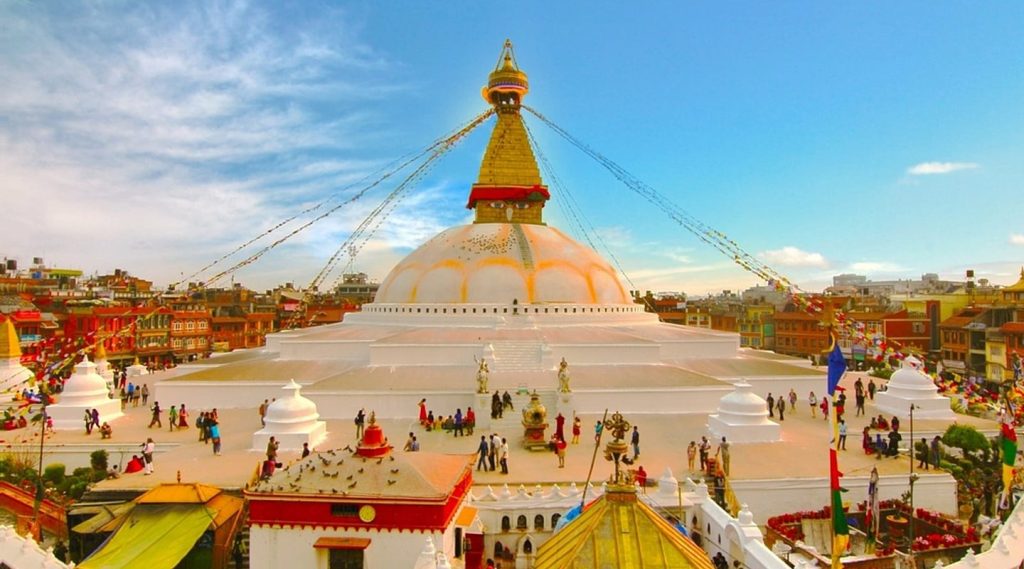
But Nepal has the Himalayas. Throw colour powder into the air in Pokhara and the Annapurna range floats on the horizon. Celebrate in Kathmandu’s Durbar Square and you are surrounded by pagoda temples over a thousand years old. Hike to a hilltop viewpoint and watch the colours fly against a canvas of snow-capped peaks.
There is nowhere else on earth where you can celebrate the Festival of Colours with the world’s highest mountains as your backdrop. That is a specific, irreplaceable kind of magic that Nepal owns entirely.
Your Practical Guide to Celebrating Holi in Nepal
Ready to make the switch? Here is everything you need to plan the perfect Nepal Holi experience:
- When to go: Holi in Nepal’s hill regions falls in February or March depending on the lunar calendar. Book accommodation 6 to 8 weeks in advance as it fills quickly during festival season.
- Where to celebrate: Thamel and Basantapur Durbar Square in Kathmandu are the main hubs. Pokhara’s lakeside offers a more relaxed vibe with the added bonus of mountain views. Many guesthouses host rooftop celebrations, so ask yours in advance.
- What to wear: Old clothes you do not mind permanently colouring. White is traditional and shows the colours beautifully. Leave your good camera at the hotel and use a waterproof phone or disposable camera instead.
- Protect your skin and hair: Apply a generous layer of coconut oil to your skin and hair before heading out. It makes the colour wash off so much more easily afterwards.
- Ask before you colour: Always ask before applying colour to someone, especially older people and children. Consent is part of the culture here, not an afterthought.
- Watch the Holika Dahan the night before: Do not miss the bonfire ritual on the eve of Holi. It is a deeply moving ceremony that gives the whole celebration its spiritual context, and many short-stay visitors never see it.
The Verdict: Nepal Wins
India will always be India. We are not asking you to cancel your Indian travel dreams. India is a country that deserves a lifetime of visits.
But if your specific dream is to celebrate Holi in a way that feels safe, warm, genuine, and utterly breathtaking, then Nepal is not just an alternative to India.
Nepal is the better choice.
The secret is slowly getting out. The celebrations remain genuine, the welcome remains warm, and the festival holds all the spiritual richness and joyful chaos that makes Holi one of the most extraordinary events on the human calendar.
Somewhere in the Himalayas, a laughing stranger is already waiting to smear colour across your cheek and welcome you into something truly, beautifully unforgettable.
Have you celebrated Holi in Nepal? Share your experience in the comments below. We would love to hear your story.
Tags: #Nepal #Holi #FestivalOfColours #NepalVsIndia #NepalTravel #HoliInNepal #SafeTravel #SoloFemaleTravel #FamilyTravel
Related Posts
Stay Informed With the Latest & Most Important News
Previous Post
Next Post
- Nepal vs India for Holi: Why the Himalayas Win Every Time
- 10 Places in Nepal That Define Its Regions, Culture, and Soul
- Banke National Park: Forest Frontiers, Wildlife Corridors, and Nepal’s Quietest Terai Wilderness
- Parsa National Park: Emerging Forest Corridors and the Quiet Future of Nepal’s Terai
- Boudhanath Stupa: Walking the Living Mandala of Kathmandu