Now Reading: Nepal’s Festival Calendar 2026: Plan Your Trip Around the Celebrations
-
01
Nepal’s Festival Calendar 2026: Plan Your Trip Around the Celebrations
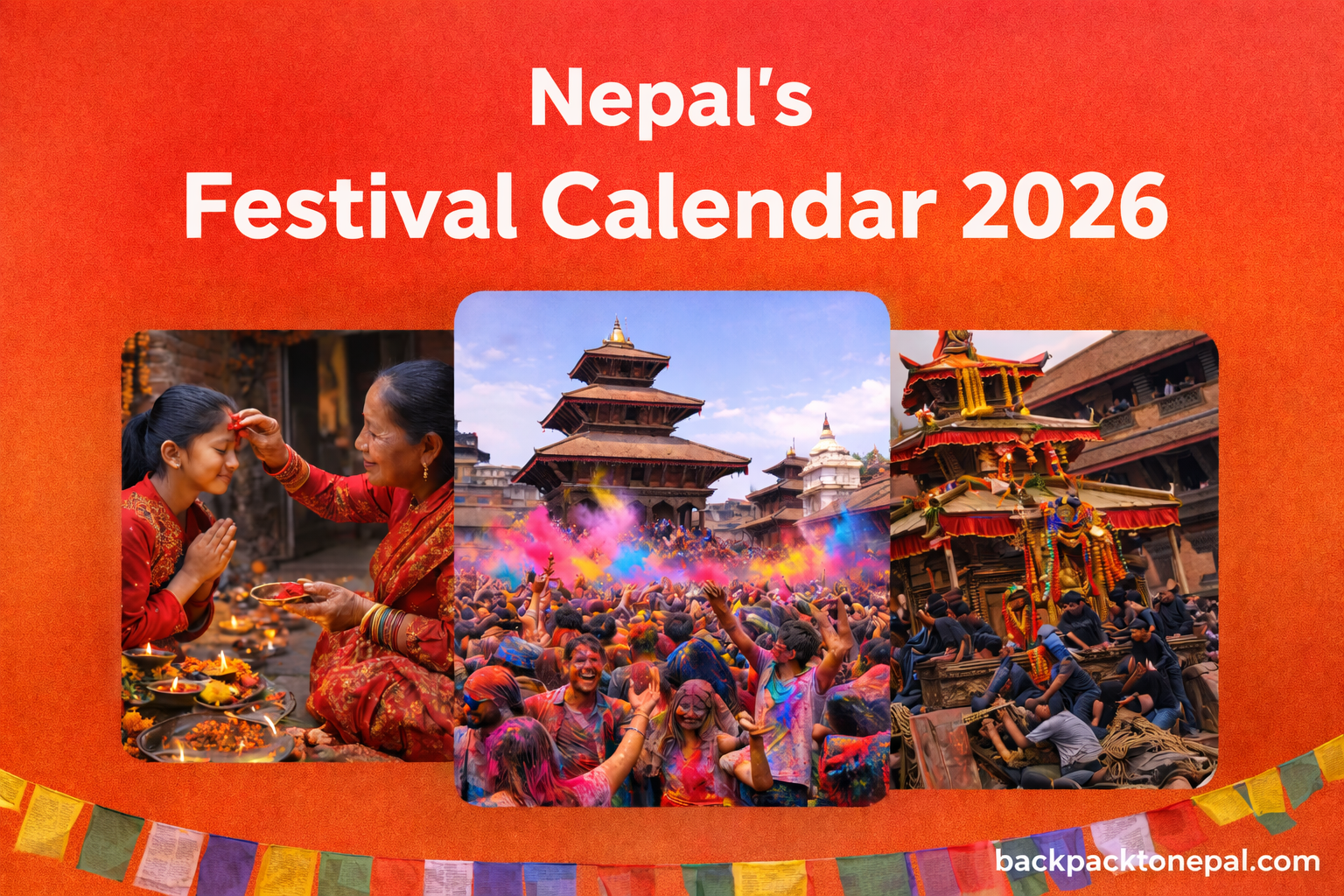

Plan your Nepal trip around the most vibrant celebrations of 2026. Your month-by-month guide to Nepal festivals 2026, from Holi to Tihar and everything in between.
There is a moment in Nepal that no amount of planning can fully prepare you for. You turn a corner in Kathmandu’s old city and suddenly the street is alive: drums thundering, oil lamps flickering in every doorway, petals raining from temple balconies, and strangers pressing tikka to your forehead with genuine warmth and welcome. It is not a performance staged for tourists. It is real life, and you have just walked into the middle of it.
Nepal is one of the most festival-dense countries on earth. With a calendar shaped by both Hindu and Buddhist traditions, plus a rich tapestry of indigenous Newar, Tharu, Rai, and Gurung celebrations layered on top, there is rarely a month that passes without something remarkable happening somewhere in the country. The trick is knowing when to show up.
This guide walks you through Nepal’s major festival calendar for 2026, month by month, so you can time your trip to coincide with the celebrations that excite you most. Note that many Nepali festivals follow the lunar calendar, so dates shift each year. The dates listed here are approximate and confirmed to the best of our knowledge for 2026, but always double-check closer to your travel date.
Why Timing Your Nepal Trip Around a Festival Changes Everything
Outside of festival season, Nepal is still wonderful. The mountains are always there. The temples are always there. But during a major celebration, the entire emotional register of the country shifts. Families reunite. Cities that are already sensory-rich turn genuinely overwhelming in the best possible way. Food stalls appear on every corner. Music fills streets that are normally just traffic noise. Locals who might otherwise be too busy to stop will invite you in for tea, share their plate of sel roti, or explain the meaning of a ritual you would never have understood on your own.
Festivals are also among the most photographically rewarding windows into Nepali life. The light, the colour, the joy: it is all there, unscripted and generous. If you are planning a trip and have even a little flexibility in your dates, building your itinerary around one or two festivals is genuinely one of the best travel decisions you can make.
Nepal’s Festival Calendar 2026: Month by Month
February / March: Holi, the Festival of Colours
2026 date: 3 March
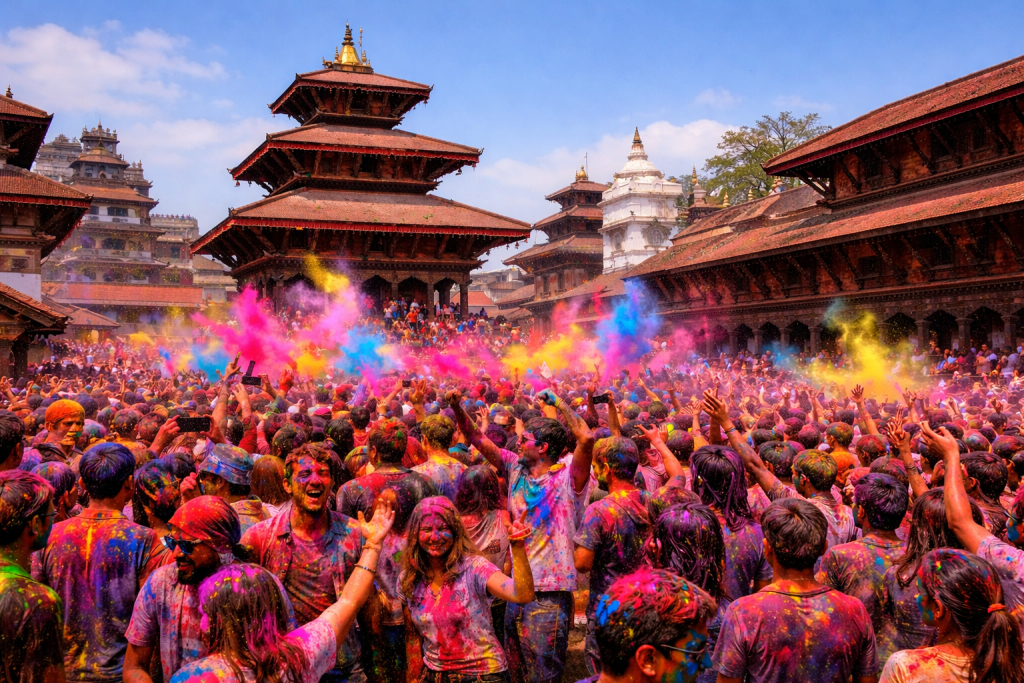
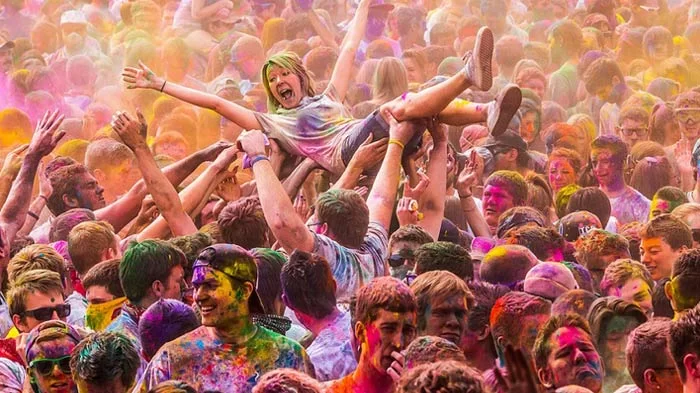
Holi is the festival that even people who know nothing about Nepal have heard of, and the reality of experiencing it here does not disappoint. On the eve of the full moon in Falgun (the Nepali month straddling February and March), celebrations begin in the Terai lowlands. The following day, the Valley joins in. By morning, Kathmandu’s Durbar Squares, particularly Basantapur, become a swirling riot of coloured powder and water balloons. Strangers smear gulal (coloured powder) across your face as a gesture of friendship. Water guns appear from nowhere. By noon, everyone looks like a walking paint palette.
As a traveller, the best advice is simple: wear clothes you are happy to throw away, protect your camera, and lean into it. Holi in Nepal is joyful, inclusive, and remarkably good-natured. The evening before is also worth catching: the Holika bonfire ceremony, symbolising the burning of evil, draws crowds in many neighbourhoods and is a quieter, more contemplative counterpoint to the following day’s chaos.
April: Bisket Jatra, New Year in Bhaktapur
2026 dates: 13 to 22 April (Nepali New Year: 14 April)
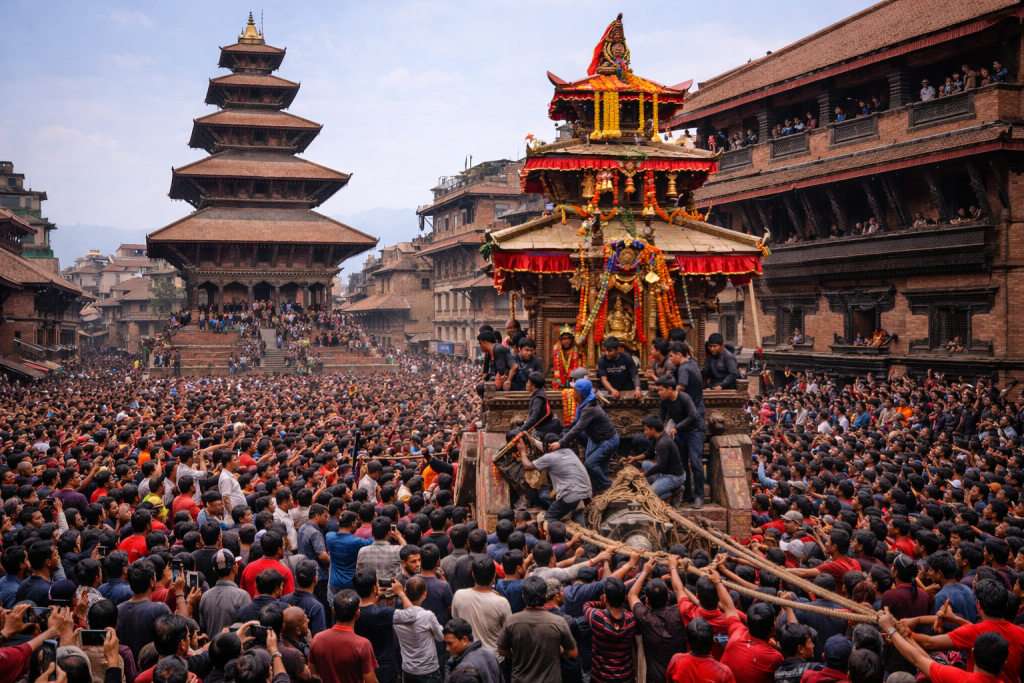
If you can only be in Nepal for one festival and you want something ancient, dramatic, and unlike anything else on earth, make it Bisket Jatra in Bhaktapur. This eight-day chariot festival marks the Nepali New Year (the beginning of 2083 in the Bikram Sambat calendar) and it unfolds with an intensity that is almost medieval in atmosphere.
The centrepiece is a towering wooden chariot carrying the deity Bhairav, pulled through Bhaktapur’s narrow lanes by crowds of devotees in a tug-of-war between two sides of the city. The streets are packed, the chanting is relentless, and the energy is electric. On New Year’s Day itself, a massive ceremonial pole called the yosin is erected and later toppled, to widespread cheering. It is spectacular, slightly chaotic, and deeply moving all at once.
Bhaktapur is only about 13 kilometres from central Kathmandu, making it an easy day trip, though staying overnight puts you at the heart of the action.
May: Buddha Jayanti, Celebrating the Enlightened One
2026 date: 12 May
Buddha Jayanti, also called Buddha Purnima, marks the birth, enlightenment, and passing of Siddhartha Gautama, who was born in Lumbini in the Nepali lowlands around 563 BCE. It falls on the full moon of Baisakh (April/May) and is observed with particular reverence across the country.
In Kathmandu, Swayambhunath and Boudhanath are the places to be. At Boudhanath, the great white stupa that anchors the city’s Tibetan Buddhist community, monks in saffron and maroon robes lead circumambulations from dawn. Butter lamps are lit in their thousands. Prayer flags are renewed. The air smells of juniper incense and warm wax. It is peaceful, profound, and genuinely moving, even if you have no personal connection to Buddhism.
For a deeper experience, consider making the pilgrimage to Lumbini itself, the UNESCO-listed birthplace of the Buddha in the Western Terai. The Maya Devi Temple complex is transformed during Buddha Jayanti into a place of quiet pilgrimage, drawing monks from across Asia.
June / July: Rato Machhindranath Chariot Festival
2026: Runs from late April into June; main chariot procession through June
This is one of the longest festivals in the world, stretching over several months in Patan (Lalitpur), the artistic heart of the Kathmandu Valley. Rato Machhindranath is the rain god and patron deity of the Valley, and his festival involves the slow procession of an enormous chariot through Patan’s streets, pulled by hand over weeks.
The climax is the Bhoto Jatra ceremony, a public display of a jewelled vest, historically attended by the head of state. Catching the chariot procession on a clear afternoon, with the pagoda towers of Patan’s Durbar Square in the background, is one of those Nepal moments that genuinely stops time.
August: Janai Purnima and Gai Jatra
2026 dates: Janai Purnima 9 August; Gai Jatra 10 August
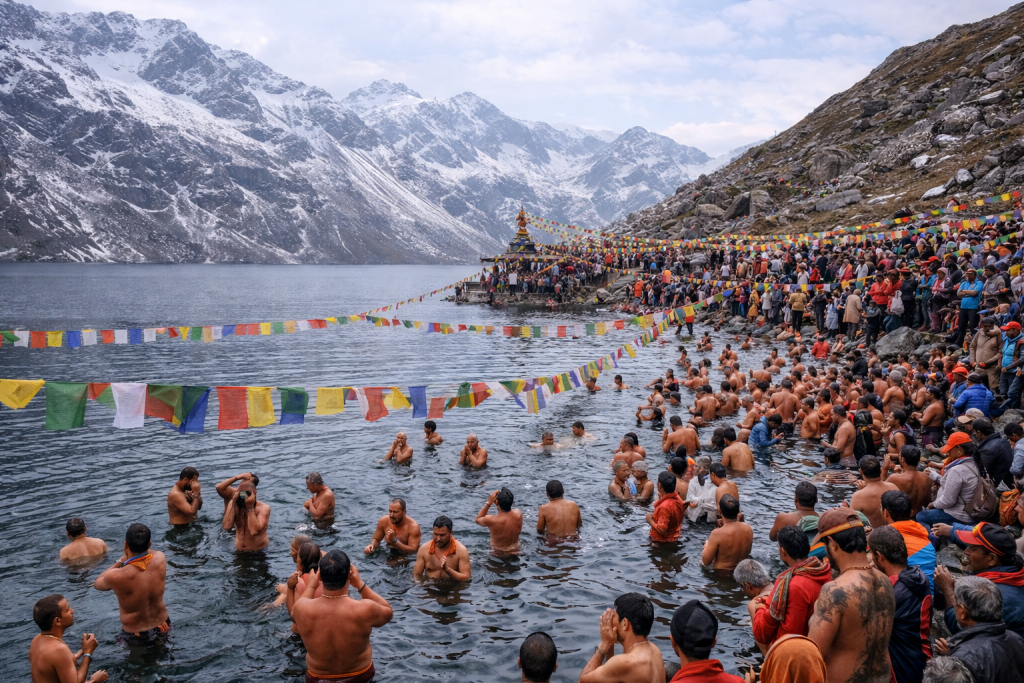
Shrawan Purnima (the full moon of Shrawan) brings two contrasting but equally fascinating festivals in quick succession. Janai Purnima is the sacred thread festival, when high-caste Hindu men renew the janai thread they wear across their chest. At Gosaikunda Lake, a high-altitude sacred lake north of Kathmandu at 4,380 metres, thousands of pilgrims make the trek to bathe in the frigid waters. It is one of Nepal’s great acts of devotion, and trekking up to witness it is an unforgettable experience for those with the legs and lungs for altitude.
The very next day brings Gai Jatra, the cow festival, which has an entirely different mood: irreverent, satirical, even comedic. Originally a procession to honour those who had died in the past year (the cow guides the deceased to heaven in Hindu belief), it evolved in Kathmandu into a tradition of political satire and street comedy. Newspapers publish cartoon supplements, comedians perform in public squares, and participants dress in outrageous costumes. It is joyful and a little anarchic, and a wonderful reminder that Nepali culture holds enormous space for humour alongside its spiritual depth.
September: Indra Jatra, Kathmandu’s Greatest Street Festival
2026 dates: Approximately 14 to 21 September
If there is one festival that most completely captures the ancient soul of Kathmandu, it is Indra Jatra. This eight-day festival in Basantapur honours Indra, the king of the gods and lord of rain, and it coincides with the living goddess Kumari’s annual public appearance in her gilded chariot.
The opening night, when the ceremonial pole (lingo) is erected in Hanuman Dhoka square, draws enormous crowds. Over the following days, masked dances depicting deities and demons weave through the old streets. The Kumari, a prepubescent girl chosen as the living embodiment of the goddess Taleju, is paraded through the city in her chariot while the faithful reach out for a glimpse of her blessing.
September is also a beautiful time to be in Nepal practically speaking: the monsoon is winding down, the air is washed clean, and the Himalaya begin to reveal themselves again after months behind cloud. Catching Indra Jatra at the tail end of the green season, with the mountains just starting to emerge, is a combination that is hard to beat.
October: Dashain, Nepal’s Biggest Celebration
2026 dates: Main celebrations 10 to 22 October; Vijaya Dashami (main day) approximately 20 October
Everything in Nepal builds toward Dashain. This fifteen-day festival is the country’s most important celebration, observed by the Hindu majority with a fervour that reshapes the entire rhythm of daily life. Shops close, roads fill with people heading home to their villages, and every family compound becomes a centre of ritual and reunion.
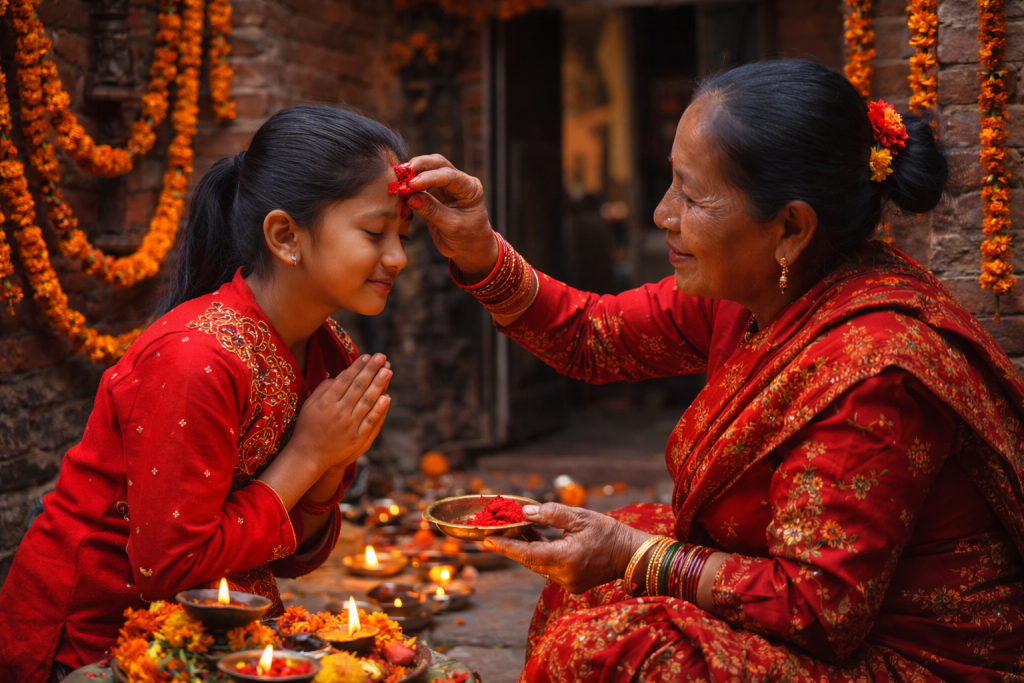
The festival commemorates the goddess Durga’s victory over the demon Mahishasura, and at its heart is the blessing of younger family members by their elders, through the application of tika: a mixture of red powder, rice, and yoghurt pressed to the forehead while elders bestow jamara (yellow grass grown in the dark) and whisper blessings. It is tender, intimate, and profoundly moving to witness.
As a traveller, Dashain has a dual nature. On one hand, it is the best time to glimpse the soul of Nepali family life: the kite-flying on rooftops, the new clothes, the elaborate feasts of rice and goat curry, the laughter of children on bamboo swings strung from the tallest trees. On the other hand, tourist services scale back significantly, trekking agencies may be closed, and transport is overwhelmed. Plan ahead, book accommodation early, and embrace the slower pace rather than fighting it.
October / November: Tihar, the Festival of Lights
2026 dates: Approximately 28 October to 1 November
Coming just two weeks after Dashain, Tihar is Nepal’s answer to Diwali: five days of lights, music, flower garlands, and devotion. Each day honours a different being. The crow receives offerings on day one. Dogs are garlanded with marigolds and fed sweet treats on day two (possibly the most charming ritual in all of Nepali culture). Cows are honoured on day three, the same evening that oil lamps and electric lights transform every street and rooftop into something magical. Oxen are blessed on day four. And day five, Bhai Tika, celebrates the bond between brothers and sisters with a long, elaborate ceremony of tikka, garlands, and feasting.
For travellers, Tihar is perhaps the most visually spectacular festival of the year. The cities glow. Every house edge, window frame, and staircase is outlined in tiny lights. Deusi and Bhailo groups, bands of young people, go door to door singing traditional songs in exchange for money and sweets. If a group visits your guesthouse or homestay and invites you to join, say yes immediately.
November: Chhath Puja
2026 dates: Approximately 18 to 21 November
Chhath Puja is one of the most ancient Vedic festivals still observed today, and it is particularly significant in the Terai region of Nepal and among Madhesi communities throughout the country. Dedicated to Surya, the sun god, and his sister Chhathi Maiya, it involves four days of fasting, purification, and offering at the water’s edge.
The most striking moments come at sunset and sunrise on the third and fourth days, when devotees stand in rivers or ponds, submerged to the waist, offering arghya (water cupped in the palms toward the sun) as it dips below and rises above the horizon. The Bagmati River in Kathmandu and the ghats of Janakpur are the most atmospheric places to witness this ceremony: quiet, golden, and deeply meditative.
Practical Tips for Festival Travel in Nepal
A few things worth knowing before you go:
Book early for Dashain and Tihar. These are the two periods when domestic travel peaks sharply. Buses and flights fill weeks in advance, and accommodation in popular tourist areas books out fast. If you want to be in Kathmandu or Pokhara during either festival, sort your accommodation at least six weeks ahead.
Expect business closures. Banks, government offices, shops, and trekking agencies may close for days or even a week around major festivals. Stock up on cash before Dashain begins and confirm your trekking agency’s operating schedule if you are heading into the mountains.
Dress respectfully at religious sites. Festival or not, covering your shoulders and knees at temples is simply good manners. During Dashain and Tihar especially, when temples are busiest, modest dress is particularly appreciated.
Accept the tikka. If a Nepali family or local offers to bless you with tikka during Dashain, accept gratefully. It is one of the most generous gestures of inclusion a traveller can receive.
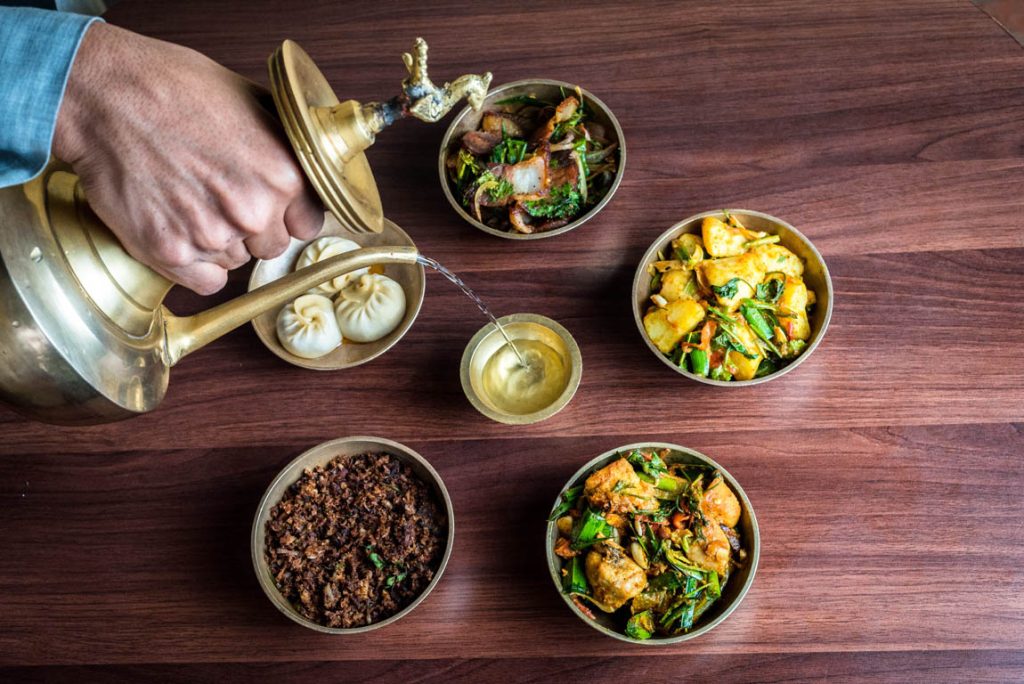
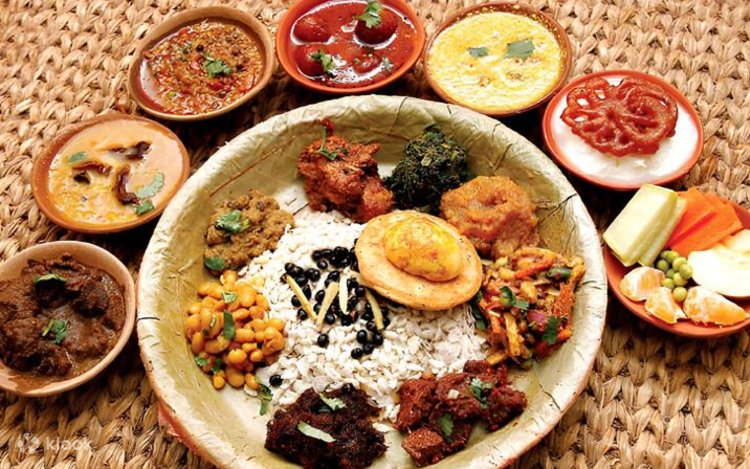
Try the festival food. Each celebration comes with its own edible rituals. Sel roti (crispy fried rice-flour donuts) at Dashain and Tihar. Yomari (steamed dumplings filled with molasses and sesame) at Yomari Punhi in December. Lakhamari sweets at Indra Jatra. Eating your way through the festival calendar is one of the great, underrated pleasures of travel in Nepal.
How to Participate Respectfully
Nepal’s festivals are not performances staged for visitors: they are living expressions of faith, family, and community. The best travellers approach them with curiosity and humility rather than cameras-first. Ask before photographing rituals or people. Follow the lead of locals when it comes to where you can stand, sit, or walk. If you are unsure whether something is accessible to outsiders, ask your guesthouse host or a local guide. In almost every case, the answer will be warm and welcoming, because Nepal’s festival culture is fundamentally generous. But the asking matters.
Your Nepal Festival Trip Starts Here
There is no wrong time to visit Nepal. But there are times that will leave you changed in ways a simple sightseeing trip never could. Whether you find yourself drenched in coloured powder at Holi, standing in a Patan courtyard as a chariot the size of a house rolls past, or sitting cross-legged in a family home while an elder presses tikka to your forehead and whispers a blessing you cannot quite translate, these are the moments that travel is really made of.
Nepal’s festival calendar in 2026 is waiting for you. Pick your celebration, build your itinerary around it, and let the rest unfold. The country will take care of the rest.
Ready to plan your Nepal festival trip? Browse our destination guides, suggested itineraries, and packing lists to build the journey that is right for you, and reach out if you want personalised advice on the best time to visit for your interests.
Related Posts
Stay Informed With the Latest & Most Important News
Previous Post
Next Post
- The Digital Nomad’s Guide to Nepal: WiFi, Co-working, Visas, and Living Costs
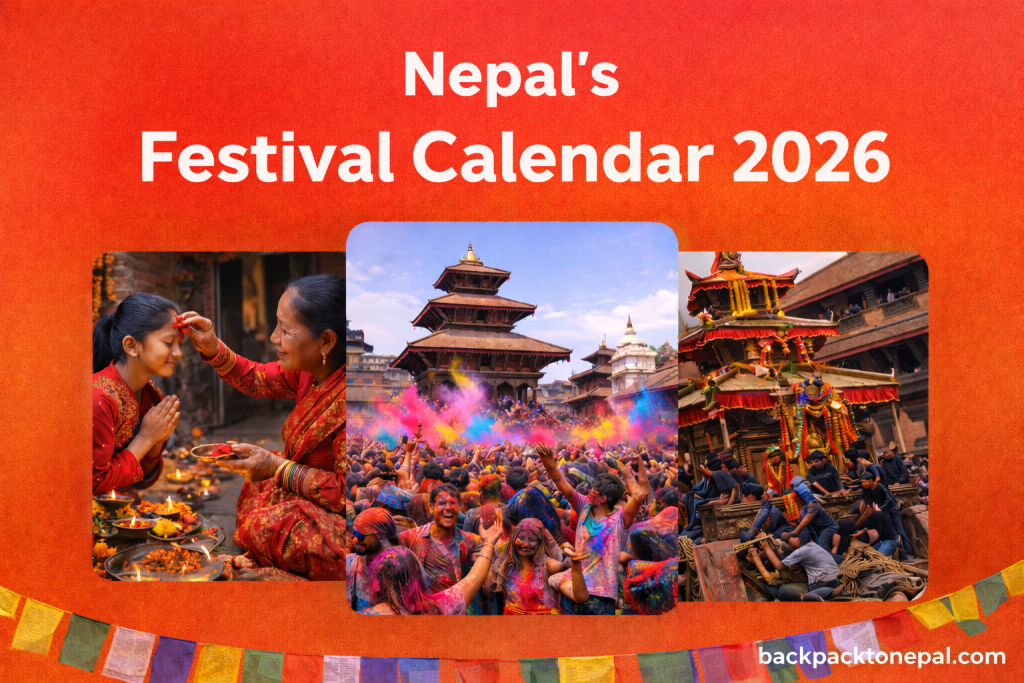
- Nepal’s Festival Calendar 2026: Plan Your Trip Around the Celebrations
- Pokhara Travel Guide: Everything to See, Do, and Eat at Nepal’s Lakeside Gem
- Everest Base Camp vs Annapurna Circuit: Which Epic Trek Is Right for You?
- The Newari Feast: A Guide to Nepal’s Most Elaborate Food Tradition