Now Reading: Beyond Dal Bhat: A Traveller’s Guide to the Foods of Nepal
-
01
Beyond Dal Bhat: A Traveller’s Guide to the Foods of Nepal

A deep guide to Nepal's rich food culture for travellers, covering the daily ritual of dal bhat and the elaborate feasts of Newari cuisine to momos, trail food, traditional drinks, street snacks, and essential dining etiquette.
Nepal is a country that feeds the soul in every sense. Wedged between the culinary giants of India and China, it has forged a food identity entirely its own, one shaped by extreme altitude, ancient trade routes, and dozens of ethnic communities cooking with what the land provides. Whether you are trekking through the Himalaya or wandering the alleyways of Kathmandu, understanding Nepali food is one of the fastest ways to understand the country itself.
Dal Bhat: The Meal That Powers a Nation
No guide to Nepali food can begin anywhere else. Dal bhat, lentil soup served over steamed rice with an assortment of side dishes, is not merely a common meal; it is the structural foundation of daily life. The saying “Dal bhat power, 24 hour” is a lighthearted national motto, but it carries real truth. Porters carrying enormous loads through mountain passes, farmers tending terraced hillsides, and office workers in Kathmandu all rely on the same plate of food, usually eaten twice a day.
A typical dal bhat thali includes steamed rice, a bowl of dal (most commonly made from yellow lentils, though black lentils and split peas are also used), a vegetable tarkari (curry), achar (pickle or relish), and often a portion of saag (sautéed leafy greens). In many homes and local restaurants, the rice and dal are refilled without extra charge, so you eat until you are satisfied. Meat, when included, is usually chicken or mutton served as a side curry.
The brilliance of dal bhat lies in how it changes as you move through the country. In the Terai lowlands, the rice is long-grained and the dal is thinner, influenced by nearby Indian cooking. In the hills, you may find the rice swapped for dhindo, a thick porridge made from millet or buckwheat flour, and the achar made with fiery timur (Sichuan pepper) and freshly ground spices. Learning to appreciate these subtle regional shifts is one of the quiet pleasures of travelling in Nepal.
Newari Cuisine: Kathmandu Valley’s Living Food Heritage
The Newar people of the Kathmandu Valley maintain one of the most elaborate culinary traditions in South Asia, deeply intertwined with festivals, rituals, and family life. If dal bhat is Nepal’s everyday fuel, Newari food is its celebration feast.
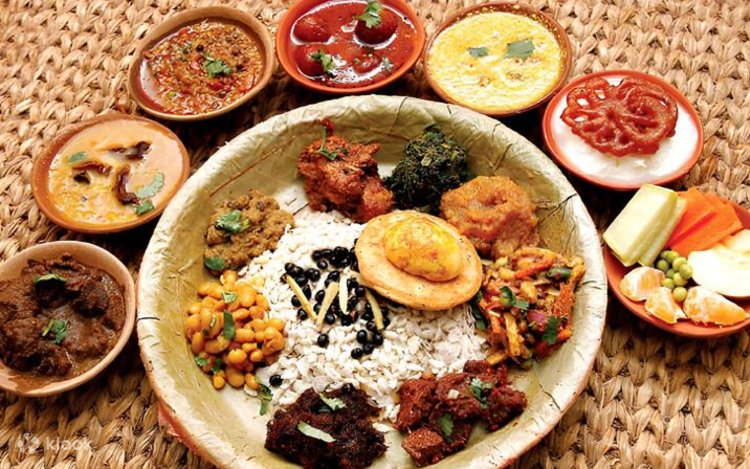
A Newari samay baji, a ceremonial platter, is a visual and flavourful spectacle. It typically includes beaten rice (chiura) at the centre, surrounded by marinated and spiced buffalo meat (choila), black-eyed peas, ginger and garlic pickle, fried soybeans (bhatmas sadeko), boiled egg, leafy greens, and a sharp, tangy achar made from lapsi (a native Nepali hog plum). Each component has a purpose, and in traditional settings, the arrangement on the plate follows specific customs.
Other Newari dishes worth seeking out include bara (savoury lentil pancakes, sometimes topped with an egg or minced meat), chatamari (often called “Nepali pizza,” a rice-flour crêpe with various toppings), yomari (steamed rice-flour dumplings filled with chaku, a molasses-like sweetener, prepared especially during the Yomari Punhi festival), and kwati (a hearty soup of nine types of sprouted beans traditionally prepared during the Janai Purnima festival).
In Kathmandu and Bhaktapur, small Newari restaurants and bhattis (traditional eateries) serve these dishes in an atmosphere far removed from tourist menus. Asking for a samay baji set is one of the most rewarding things a food-curious traveller can do.
Momos: Nepal’s Beloved Dumpling
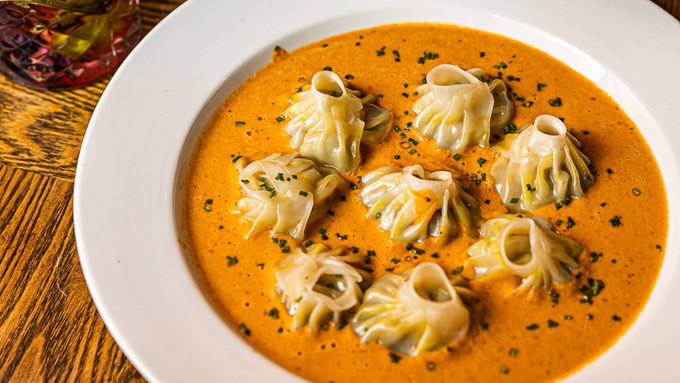
Momos have become arguably Nepal’s most famous single dish, found everywhere from five-star hotel restaurants to tiny street carts. These steamed or fried dumplings, filled with spiced meat or vegetables wrapped in thin dough, have Tibetan origins but have been thoroughly adopted and adapted by Nepali cooks.
The classic Nepali momo is filled with minced buffalo meat seasoned with onion, garlic, ginger, and cilantro, then steamed and served with a fiery tomato-based dipping sauce (achar). Vegetarian versions use cabbage, paneer, or mixed vegetables. But the momo universe has expanded considerably: you will find jhol momo swimming in a spiced sesame-and-tomato broth, kothey momo that are pan-fried on one side for a crispy base, and chilli momo tossed in a sweet-spicy sauce reminiscent of Indo-Chinese cooking.
Momos are an essential part of Nepali social life. Families make them together on weekends and holidays, friends meet at momo joints the way people elsewhere meet at cafés, and debates about who makes the best momos in Kathmandu can become passionate. For the traveller, they offer an affordable, filling, and endlessly varied eating experience.
Tea, Tongba, and What Nepal Drinks
Nepali chiya (tea) is not the same as Indian chai, though they share a family resemblance. Nepali tea tends to be lighter, less aggressively spiced, and often made simply with tea leaves, milk, sugar, and perhaps a touch of cardamom or ginger. It is offered as a gesture of hospitality in almost every home and shop you enter, and refusing it can feel impolite. Masala tea, with a fuller spice blend, is also widely available, especially in tourist areas and larger towns.
For something uniquely Nepali, seek out tongba in the eastern hills and in areas with Limbu and Rai communities. Tongba is fermented millet served in a tall wooden or metal container. Hot water is poured over the millet, allowed to steep, and then sipped through a narrow bamboo straw with a filter at the bottom. You refill the hot water several times, and the flavour evolves from sweet and tangy to subtly earthy. It is warming, mildly alcoholic, and has a communal, unhurried quality that suits mountain evenings perfectly.
Raksi, a homemade distilled spirit made from rice or millet, is the other traditional Nepali drink. It ranges from smooth and surprisingly refined to eye-wateringly strong, depending on who made it. In rural areas and during festivals, raksi flows freely and is considered an integral part of celebration. Chang, a mildly alcoholic fermented rice beer with a milky appearance, is common in Tibetan-influenced areas and the high hills.
Eating on the Trail
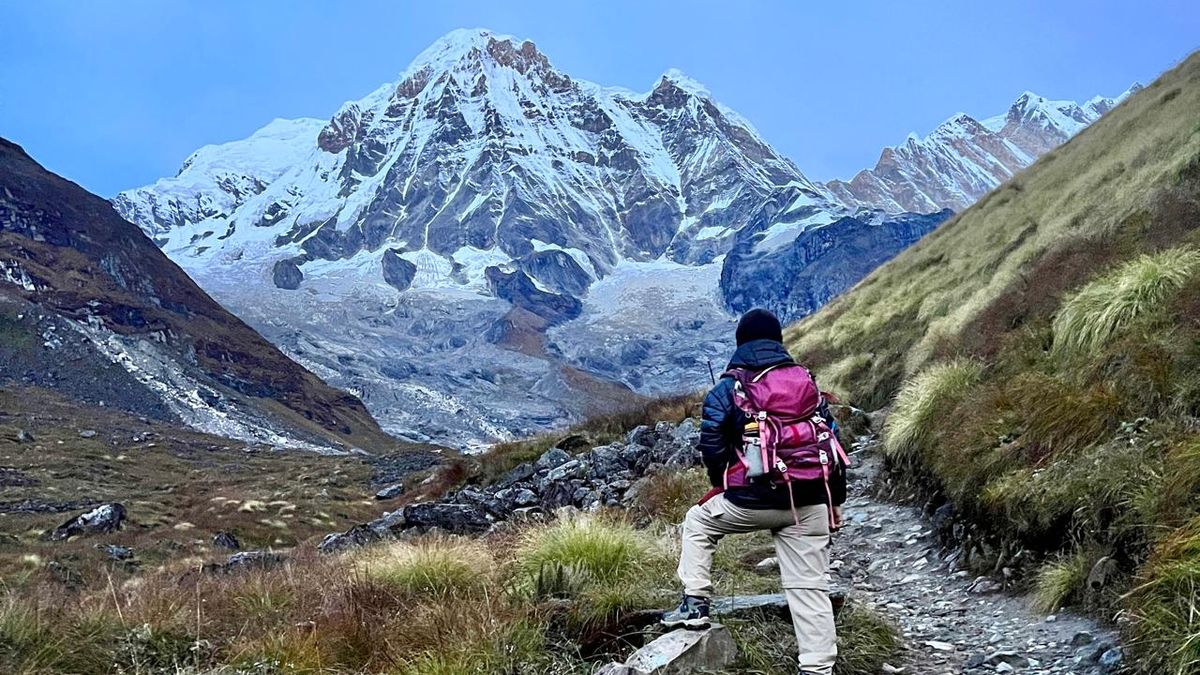
If you plan to trek in Nepal, food becomes a central part of the experience. Teahouse menus along popular routes like the Annapurna Circuit and the Everest Base Camp trek are surprisingly extensive, though certain realities apply. The higher you go, the more limited and expensive the options become, because everything must be carried up on foot or by pack animal.
Dal bhat remains the best trekking fuel. It is freshly cooked, nutritious, and comes with unlimited refills at most teahouses. Trekkers who stick with dal bhat tend to fare better with both energy and digestion than those who order pasta, pizza, or other Western dishes adapted for tourist palates, which often rely on ingredients that do not travel well to altitude.
Other trail staples include Sherpa stew (a thick, hearty vegetable and noodle soup), Tibetan bread (fried dough served with honey or jam at breakfast), and thukpa (a Tibetan noodle soup that warms you from the inside on cold evenings). Porridge with honey and cinnamon is a common and welcome breakfast above 3,000 metres.
A practical note: stomach trouble is common among travellers in Nepal, and food hygiene on the trail requires some awareness. Eating freshly cooked, hot food (dal bhat, soups, stews) is generally safer than salads, unpeeled fruit, or reheated dishes. Drinking only treated or boiled water is essential everywhere.
Street Food and Snacks
Nepali street food deserves a section of its own. In the bazaars and lanes of Kathmandu, Pokhara, and other towns, you will encounter a lively world of quick bites and snacks.
Pani puri (called golgappa in some regions), crisp hollow shells filled with spiced water, tamarind chutney, and chickpeas, is an iconic street snack. Sel roti, a ring-shaped fried bread made from rice flour batter with a slightly sweet flavour, is found at festivals and roadside stalls alike. Chatpate is a tangy, spicy mix of puffed rice, chopped onion, tomato, cilantro, lemon juice, and chilli, Nepal’s answer to a quick, flavour-packed salad. Sekuwa, marinated and grilled meat (typically chicken, mutton, or pork) cooked over charcoal, fills the air with smoky, spiced aromas at dusk in many towns.
For those with a sweet tooth, jeri (or jalebi), deep-fried batter spirals soaked in sugar syrup, and lakhamari, a traditional Newari sweet bread, are found in sweet shops throughout the valley.
Food Etiquette: What Every Visitor Should Know
Nepali food culture comes with customs that are important to understand and respect. The concept of jutho, ritual impurity through contact, governs much of how food is shared. Once your lips or your used utensil have touched food or drink, that item is considered jutho and should not be offered to others. Drinking from a shared water bottle, for example, is done by pouring water into the mouth without touching the bottle to your lips.
Eat with your right hand if eating by hand, as the left is considered unclean. Remove your shoes before entering a home for a meal. If offered food or drink, accepting graciously is the polite course of action; refusing repeatedly can cause discomfort to your host. Saying “pugyo” (enough) with a hand over your plate is the polite way to decline more food once you have had your fill.
In many homes and traditional restaurants, food is served on a brass or steel thali (plate), and you are expected to finish what is on your plate, and wasting food is frowned upon. These customs are not just etiquette; they reflect deep-rooted values around purity, generosity, and respect that run through Nepali daily life.
A Country Best Understood Through Its Kitchen
Nepal does not always appear on lists of the world’s great food destinations, but it should. Its cuisine is honest, varied, and deeply connected to geography, season, and community. The best meals in Nepal are rarely found in upscale restaurants. They are in roadside dal bhat kitchens where the tarkari was made from vegetables picked that morning, in a Newari grandmother’s home during a festival, or in a high-altitude teahouse where a bowl of thukpa feels like the best thing you have ever eaten.
For the traveller willing to look beyond tourist menus and follow local appetites, Nepali food is not just sustenance. It is a doorway into understanding a country whose warmth, complexity, and resilience show up on every plate.
Related Posts

Stay Informed With the Latest & Most Important News
Previous Post
Next Post
- Beyond Dal Bhat: A Traveller’s Guide to the Foods of Nepal
- No More Solo Trekking: Everything You Need to Know About Nepal’s 2026 Trekking Rules
- The Mountains Are Still Calling: How to Reach Nepal When the Middle East Skies Are Closed

- Nepal’s 2026 Election: What Travellers Need to Know

- The Last Forbidden Kingdom: Your Ultimate Guide to Trekking Upper Mustang in 2026