Now Reading: Everest Base Camp vs Annapurna Circuit: Which Epic Trek Is Right for You?
-
01
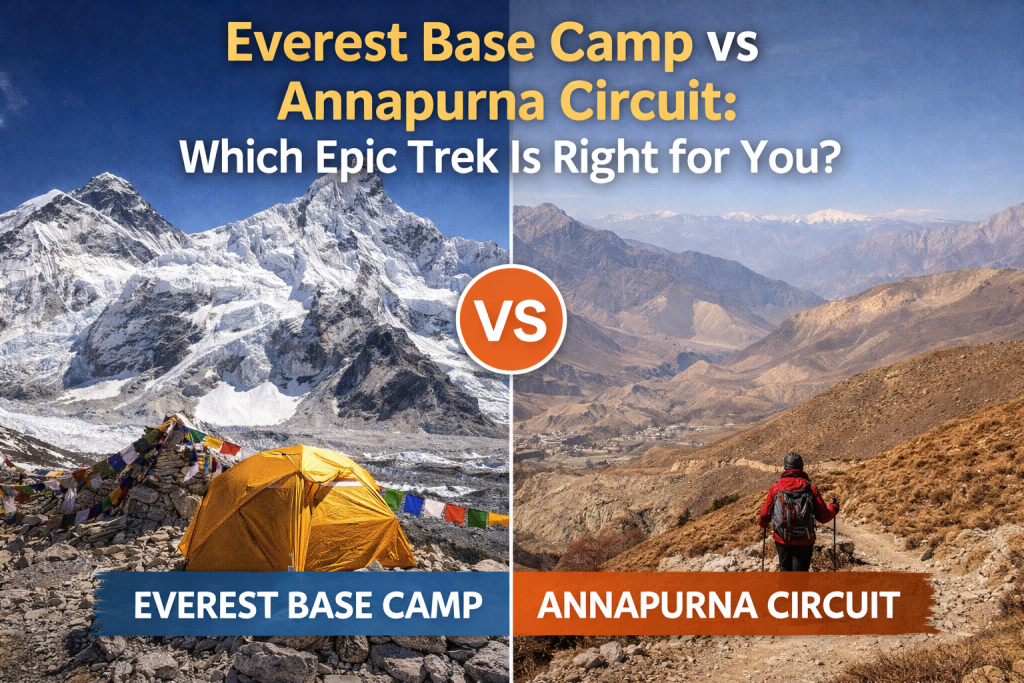
Everest Base Camp vs Annapurna Circuit: Which Epic Trek Is Right for You?
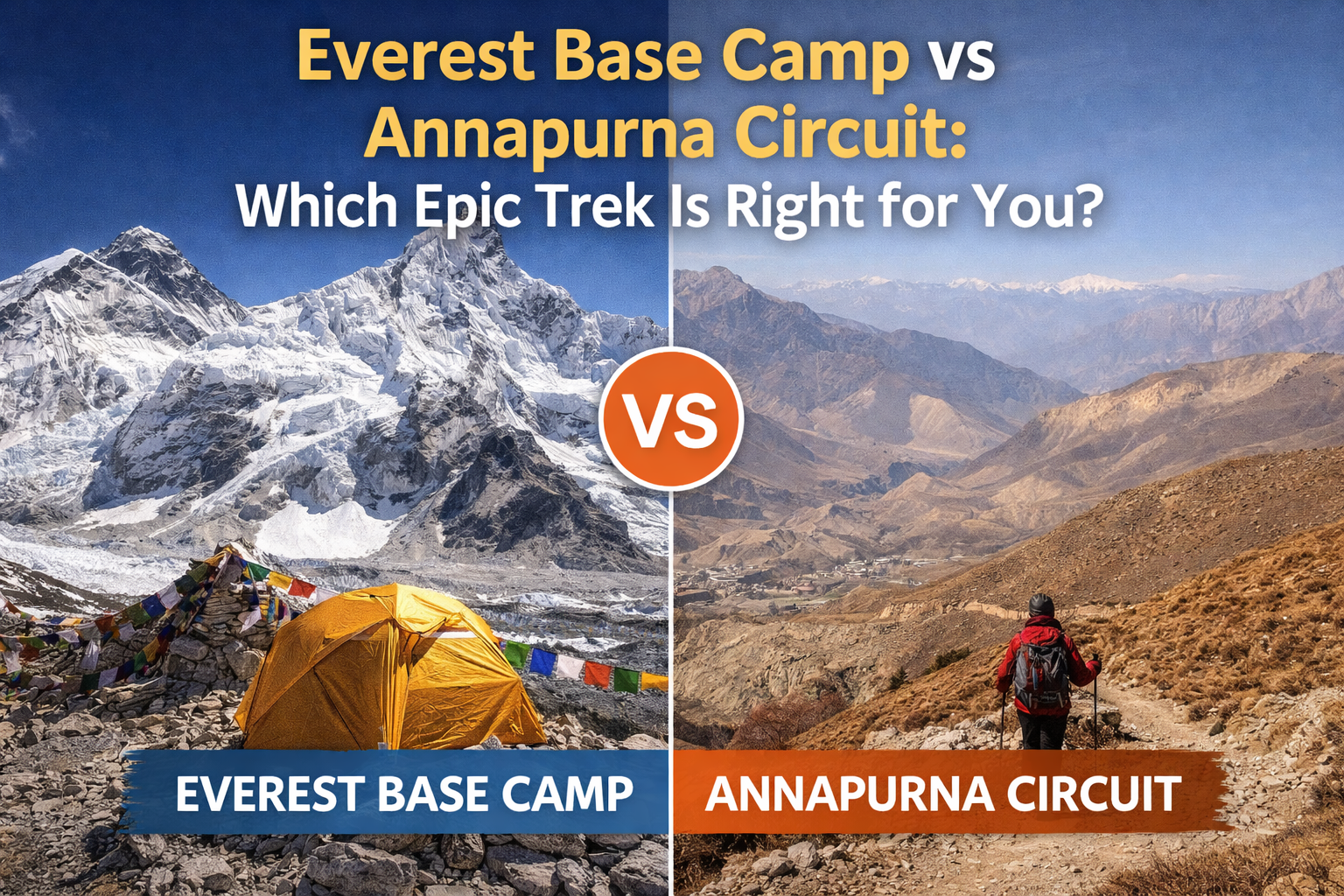
Everest Base Camp vs Annapurna Circuit: Which Epic Trek Is Right for You?

EBC vs Annapurna Circuit: compare duration, cost, difficulty, scenery, teahouses, and crowds to find the perfect Nepal trek for you.
You have done the research. You have watched the YouTube videos. You have scrolled through more Instagram reels than you care to admit. And every time you get close to booking flights to Nepal, the same question stops you cold: Everest Base Camp or the Annapurna Circuit?
It is one of the most common dilemmas in trekking, and honestly, it is a brilliant problem to have. Both trails rank among the finest long-distance walks on the planet. Both will test your legs, reward your patience, and leave you changed in ways you will spend months trying to articulate to people who have never stood at altitude with the Himalayas blazing in front of them.
But they are not the same trek. Not even close. One is a pilgrimage to the foot of the world’s tallest mountain, methodical and iconic. The other is a sweeping, shape-shifting journey through an entire geographic cross-section of Nepal, from subtropical valleys to high-altitude desert. Choosing between them is less about which is “better” and more about which one matches you: your fitness, your budget, your timeline, and the kind of experience you are chasing.
Let’s break it down properly, side by side, so you can stop deliberating and start packing.
The Basics: Duration and Route Overview
Everest Base Camp (EBC)
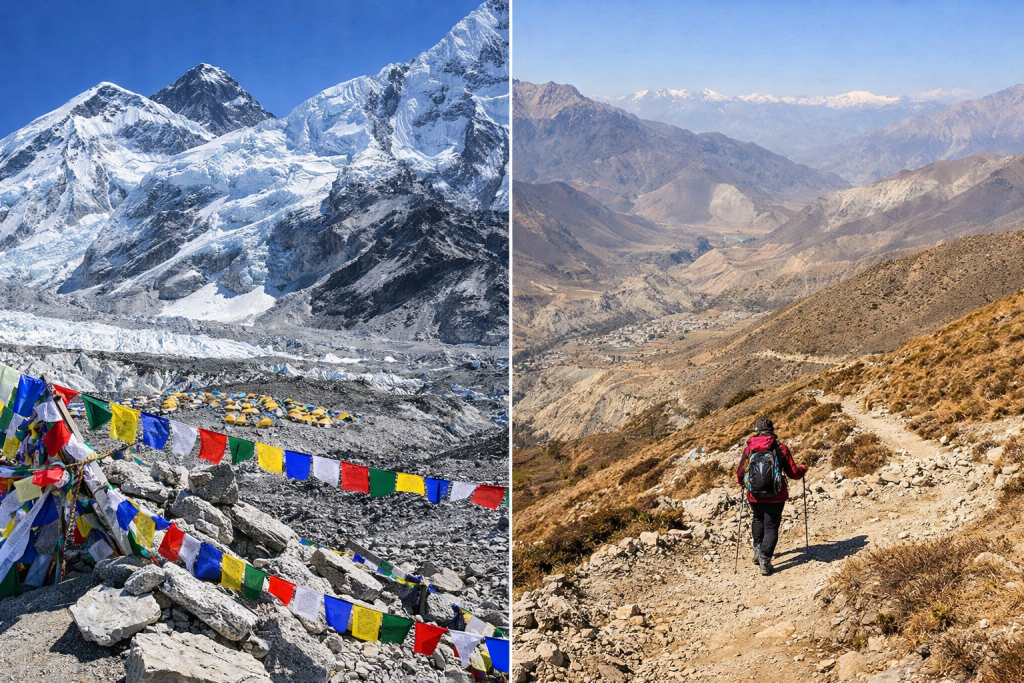
The classic EBC trek runs roughly 12 to 14 days of actual walking, though most trekkers budget 16 to 18 days total including acclimatisation rest days, buffer days for weather, and travel time through Kathmandu. You fly into Lukla (one of the world’s most dramatic airstrips, perched at 2,860m) and follow the Dudh Koshi river valley northward through a succession of increasingly high Sherpa villages: Namche Bazaar, Tengboche, Dingboche, Lobuche, Gorak Shep. The route tops out at Base Camp itself at 5,364m, with an optional early-morning ascent of Kala Patthar (5,545m) for the classic overhead view of Everest’s south face.
It is an out-and-back route. You walk in, you walk out the same way. That is worth knowing upfront.
Annapurna Circuit
The full Annapurna Circuit traditionally takes 14 to 21 days, though road construction has shortened the motorable sections and many trekkers now focus on the upper circuit and Thorong La crossing, condensing it to 12 to 14 days of walking. The route is a loop (or near-loop), starting around Besisahar in the Marsyangdi valley, climbing through lush rhododendron forests and terraced rice paddies, ascending to the Manang plateau, crossing the legendary Thorong La pass at 5,416m, descending to the sacred pilgrimage town of Muktinath, and finishing at Jomsom or Pokhara.
The variety is staggering. In a single week you pass through sub-tropical forests, high-altitude meadows, and Tibetan-influenced semi-desert. The Annapurna Circuit does not just show you mountains; it walks you through an entire vertical world.
Difficulty: How Hard Is Each Trek, Really?
EBC: Altitude Is the Boss
On pure terrain, EBC is not technically demanding. The trails are well-maintained, rarely exposed, and the daily elevation gains are managed carefully to allow your body to acclimatise. What makes EBC hard is the altitude, full stop. Spending multiple nights above 4,000m is no small thing. The “climb high, sleep low” acclimatisation days in Namche and Dingboche are non-negotiable, not optional bonuses. Acute Mountain Sickness (AMS) is a real risk for anyone who rushes, and even fit, experienced trekkers can be hit by headaches, nausea, and disrupted sleep.
Daily walking distances average 10 to 15km with ascents of 400 to 700m on most days. The stretch from Lobuche to Gorak Shep to Base Camp and back is the toughest section, cold, windswept, and at altitude where every step costs more oxygen than it should.
Annapurna Circuit: One Monster Day
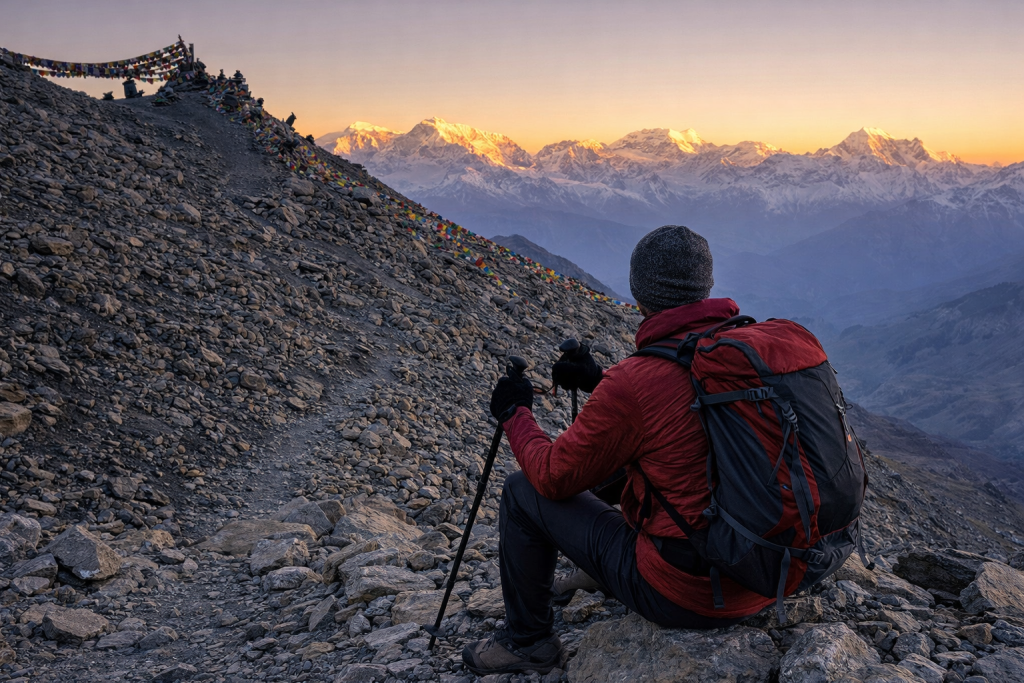
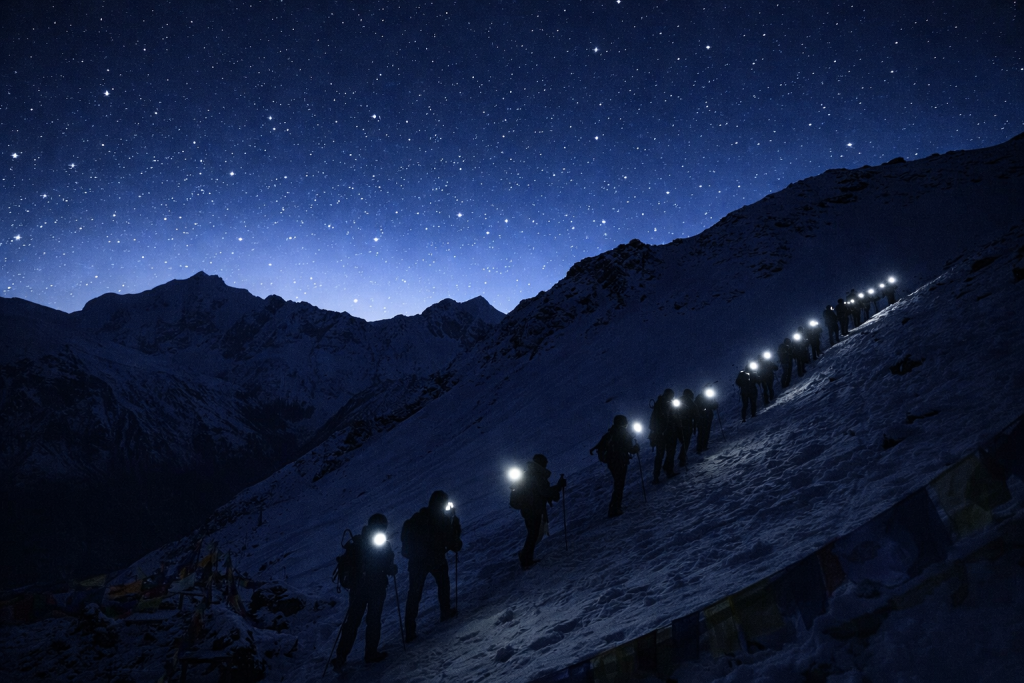
The circuit is physically more varied. Most days are moderate, long but comfortable walking through changing landscapes. The single defining challenge is the Thorong La crossing: a 5,416m pass that demands an alpine start (usually 4am) and a full 8 to 10 hours of hard walking, ascending roughly 1,000m from Thorong Phedi before a long, knee-punishing 1,600m descent to Muktinath.
That day is legitimately tough. It requires fitness, good acclimatisation, and the right weather window. But the rest of the circuit is gentler on the lungs than EBC’s higher sustained altitude. If altitude sensitivity is a concern for you, the Annapurna Circuit may actually feel more forgiving on a day-to-day basis.
Verdict: EBC wins on sustained altitude challenge. Annapurna Circuit wins on overall physical variety. Neither requires technical climbing skills or prior high-altitude experience, but both reward solid cardiovascular fitness.
Cost: What Will Each Trek Actually Set You Back?
EBC Trek Costs
Everest Base Camp is the more expensive of the two. The breakdown looks roughly like this, in US dollars, for an independent trekker:
- Flights Kathmandu to Lukla (return): $350 to $450. Weather delays can add extra nights in Lukla, so budget a buffer.
- Sagarmatha National Park permit: $30
- TIMS card: $10 (though requirements change, always check current rules)
- Teahouse accommodation: $5 to $20 per night depending on altitude. Higher up, rooms are basic and prices for food spike significantly.
- Food on trail: $20 to $35 per day at higher elevations. A simple dal bhat in Gorak Shep will cost three times what it does in Namche.
- Guide and porter (optional but recommended): $25 to $35 per day for a guide, $18 to $25 for a porter.
All in, independent trekkers typically spend $1,200 to $1,800 on the trail portion alone (excluding international flights and Kathmandu accommodation). With a guide, add $400 to $600 for a two-week trip.
Annapurna Circuit Costs
The circuit is noticeably more budget-friendly, particularly in the lower and mid sections where competition between teahouses keeps prices reasonable.
- ACAP permit (Annapurna Conservation Area): $30
- TIMS card: $10
- No internal flights required (buses from Kathmandu or Pokhara to trailhead cost $8 to $15)
- Teahouse accommodation: $3 to $15 per night across most of the route
- Food on trail: $15 to $25 per day for most of the circuit, rising in Manang and Muktinath
Independent trekkers typically spend $700 to $1,200 on the trail portion. The absence of the Lukla flight alone saves you $350 to $450 compared to EBC, and the generally lower teahouse and food prices compound that saving over two to three weeks on trail.
Verdict: Annapurna Circuit is the clearer budget choice, sometimes by $500 to $800 for the full trip.
Scenery: What Are You Actually Looking At?
EBC: One Mountain, Absolute Majesty
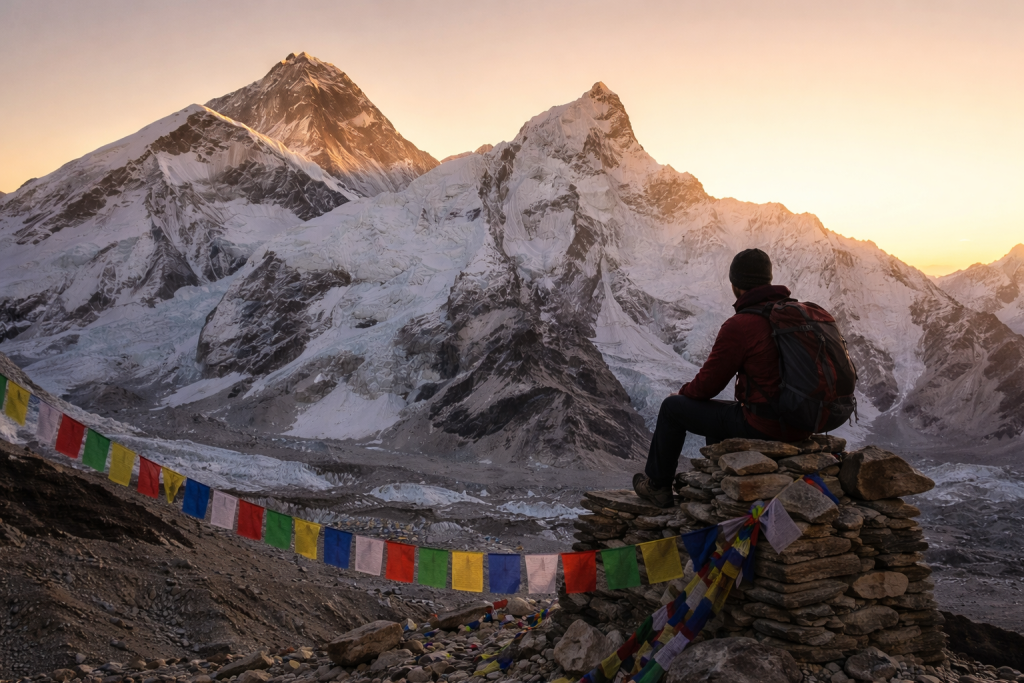
EBC is a focused pilgrimage. The landscape builds with intention, each day drawing you deeper into the Khumbu, the ridges getting higher, the glaciers more present, the air thinner and more crystalline. Tengboche Monastery, backdropped by Ama Dablam, is one of the great visual moments in all of trekking. Kala Patthar at dawn, with Everest’s pyramid catching the first light while the Khumbu icefall groans below you, is genuinely unforgettable.
The scenery is singular and monumental. It is not varied, but it does not need to be. You are walking toward the highest point on Earth, and the landscape knows it.
Annapurna Circuit: A World in Miniature
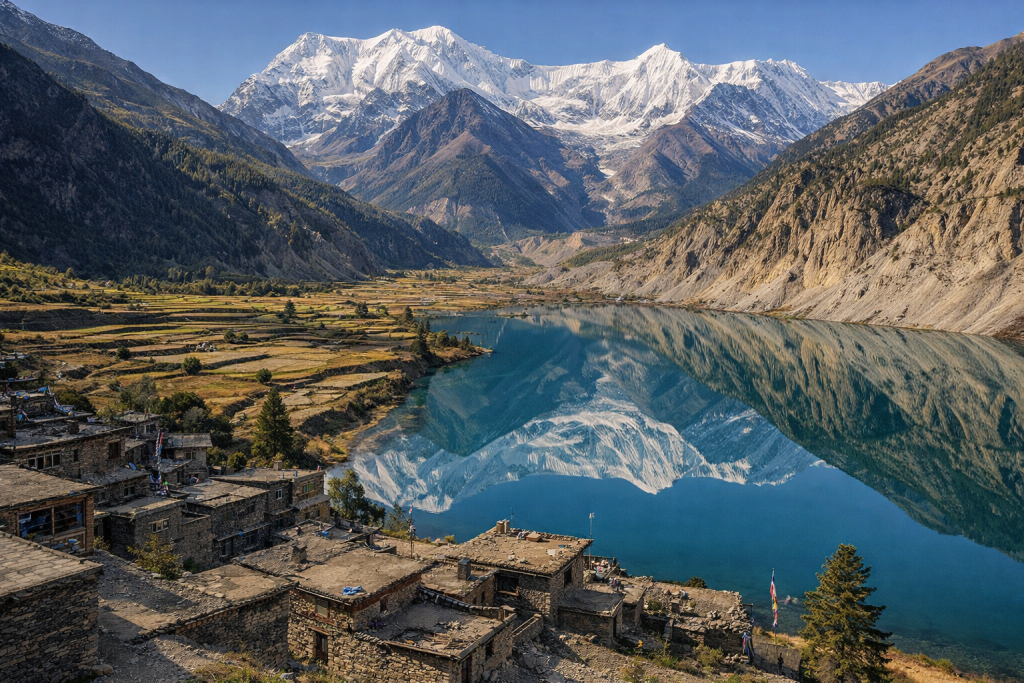
The circuit gives you everything. Waterfalls and terraced fields in the lower Marsyangdi valley. Dense rhododendron forests bursting with colour in spring. The broad, windswept plateau above Manang with the Annapurna massif rising impossibly above it. The stark, ochre-coloured desert of the upper Mustang valley around Kagbeni, where the landscape feels more Central Asian than South Asian. The sacred ghats of Muktinath. The descent into the lush Kali Gandaki gorge, reportedly the deepest valley on Earth.
If EBC is a portrait, the Annapurna Circuit is a panorama.
Verdict: EBC for iconic, focused grandeur. Annapurna Circuit for sheer variety and the sense of walking through multiple worlds.
Teahouse Quality and Trail Infrastructure
EBC Teahouses
The Everest region has seen significant investment in teahouse infrastructure over the past decade. In Namche Bazaar, you will find WiFi, espresso machines, charging ports, and multi-storey lodges with private rooms. The further you climb, the more basic conditions become. Above Dingboche, expect cold rooms, thin mattresses, shared squat toilets, and the kind of chill that seeps through every layer at 4,800m. Hot showers become a luxury you pay extra for, and hot water for a bucket wash may be the reality above Lobuche.
Namche and Tengboche tease you with comfort. Gorak Shep brings you back to earth with a bump.
Annapurna Circuit Teahouses
Standards vary more widely on the circuit simply because the route is longer and passes through more settlements. The lower sections around Jagat and Dharapani offer simple, family-run guesthouses with excellent home-cooked food. Manang, being a major acclimatisation stop, has developed a solid range of teahouses with reasonable facilities. Muktinath, as a major pilgrimage destination, has plenty of options.
The real wild card is the upper circuit around the Thorong La. Thorong Phedi and High Camp are crowded and basic, but they only need to hold you for one night. Once you are through the pass, Muktinath’s facilities feel positively luxurious by comparison.
Verdict: Broadly similar at mid-range points on both routes. EBC has the edge in the Namche area. Both routes become genuinely rustic at their highest sections, and that is part of the experience.
Crowds: How Busy Is Busy?
EBC
The Everest Base Camp trek is among the most trafficked trekking routes in the world. In peak season (October to November and March to May), the trail between Lukla and Namche can feel remarkably busy, a steady stream of trekkers, laden porters, yak trains, and the occasional expedition team. Namche Bazaar on a busy Saturday has the energy of a small mountain town festival.
Above Namche, the crowds thin progressively as altitude takes its toll on the less committed. The stretch from Lobuche to Base Camp and Kala Patthar is genuinely quiet at dawn, which makes the whole push worthwhile.
Annapurna Circuit
The circuit draws significant numbers but spread across a longer, more varied route, it rarely feels as congested as the lower EBC trail. The key bottleneck is Thorong La: crossing attempts cluster on the same narrow weather windows, and early morning departures from High Camp can feel like a strange, shuffling procession of headlamps. But for the vast majority of the route, you will have long stretches of trail to yourself, particularly in the Marsyangdi valley sections and the Mustang descent.
Verdict: Annapurna Circuit generally feels less crowded day-to-day. If solitude matters to you, the circuit has the edge, especially if you travel in shoulder season.
Permits: What You Need for Each Trek
EBC Permits
For Everest Base Camp you need two documents: the Sagarmatha National Park Entry Permit ($30 USD) and a Khumbu Pasang Lhamu Rural Municipality fee ($2 USD per day or roughly $20 to $30 for a standard trip duration). TIMS cards, previously mandatory, have recently been replaced for the Khumbu region by the local municipality permit, but regulations shift, so verify the current requirements with your agency or the Nepal Tourism Board before you travel.
Annapurna Circuit Permits
The circuit requires the Annapurna Conservation Area Permit (ACAP) at $30 USD and a TIMS card at $10 USD for independent trekkers (free if using a registered agency). Both can be obtained in Kathmandu at the Nepal Tourism Board office on Bhrikuti Mandap, or in Pokhara before you start.
Check our full EBC guide and Annapurna Circuit guide for the most current permit requirements and where to obtain them.
So, Which Trek Is Right for You?
Here is the honest, no-nonsense breakdown:
Choose Everest Base Camp if…
- Standing at the foot of Everest is on your actual bucket list and nothing else will scratch that itch
- You have 16 to 18 days and a slightly higher budget
- You are comfortable with sustained high altitude and have done your research on AMS prevention
- You want a focused, iconic, singular experience rather than variety
- You are happy with an out-and-back route
Choose the Annapurna Circuit if…
- You want the full spectrum of Nepal’s landscapes in a single trek
- Budget is a meaningful factor and you want to stretch your money further
- You prefer a loop route to retracing your steps
- You are drawn to cultural variety: Hindu pilgrimage sites, Buddhist monasteries, Tibetan-influenced villages, and everything in between
- You want the Thorong La crossing as your singular achievement rather than sustained altitude
And if the answer is still “both”… you are not wrong. Many Nepal regulars do EBC on one trip and the circuit on the next. Nepal has a way of pulling you back.
Start Planning Your Nepal Trek Today
Whichever route calls to you, the hardest step is the first one: actually committing to go. Nepal does not ask for perfection. It asks for a willingness to show up, move slowly, breathe deeply, and accept that some of the best moments will happen in places that are cold and inconvenient and extraordinarily, achingly beautiful.
Dig into our detailed trail guides, get your permits sorted, start building your fitness, and book those flights. The mountains are not going anywhere. But the version of you that walks into Namche Bazaar for the first time, or crests Thorong La before the sun fully rises, that version is waiting just on the other side of a decision.
Make it. You will not regret a single step.
Ready to go deeper? Read our complete Everest Base Camp Trek Guide and Annapurna Circuit Trek Guide for day-by-day itineraries, packing lists, teahouse recommendations, and everything else you need to plan your trip with confidence.
Related Posts
Stay Informed With the Latest & Most Important News
Previous Post
Next Post
- Pokhara Travel Guide: Everything to See, Do, and Eat at Nepal’s Lakeside Gem
- Everest Base Camp vs Annapurna Circuit: Which Epic Trek Is Right for You?
- The Newari Feast: A Guide to Nepal’s Most Elaborate Food Tradition
- Solo Female Travel in Nepal: What You Actually Need to Know
- Mardi Himal Trek: The Quieter Trail to Nepal’s Most Photogenic Peak