Now Reading: The Digital Nomad’s Guide to Nepal: WiFi, Co-working, Visas, and Living Costs
-
01
The Digital Nomad’s Guide to Nepal: WiFi, Co-working, Visas, and Living Costs
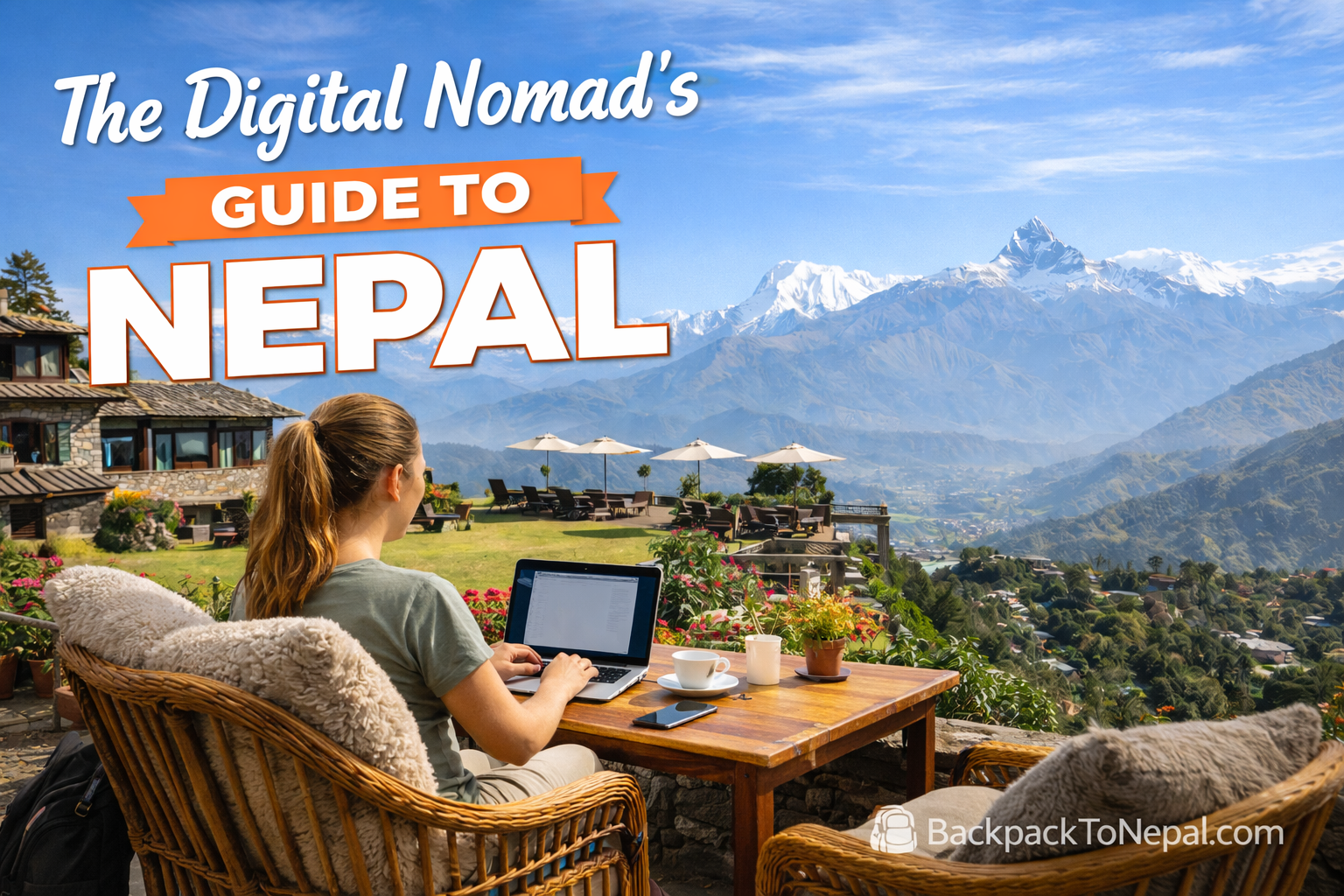

Thinking of working remotely from Nepal in 2026? Here's everything you need to know: co-working spaces, internet speeds, visa rules, and real monthly costs.
Picture this: your laptop is open, your coffee is hot, and just beyond the window, the white-capped tip of the Annapurna range floats above a curtain of morning cloud. The WiFi is holding steady, your standup call starts in ten minutes, and the dal bhat you ordered for lunch costs less than a coffee back home. This is what a workday looks like when you choose Nepal as your remote office.
Nepal has been quietly gathering a reputation among the digital nomad community, and it is more accessible and more connected than ever before. If you are weighing up whether to pack your laptop and spend a month or three here, this guide covers everything you genuinely need to know: which city suits your working style, where to find a reliable desk, what the internet is actually like, how the visa situation works, and what a realistic monthly budget looks like. No fluff, just the real picture.
Kathmandu vs Pokhara: Which City Should You Base Yourself In?
This is the question every remote worker asks first, and honestly, the two cities offer very different flavours of the nomad life. The right answer depends entirely on what you are looking for from your time here.
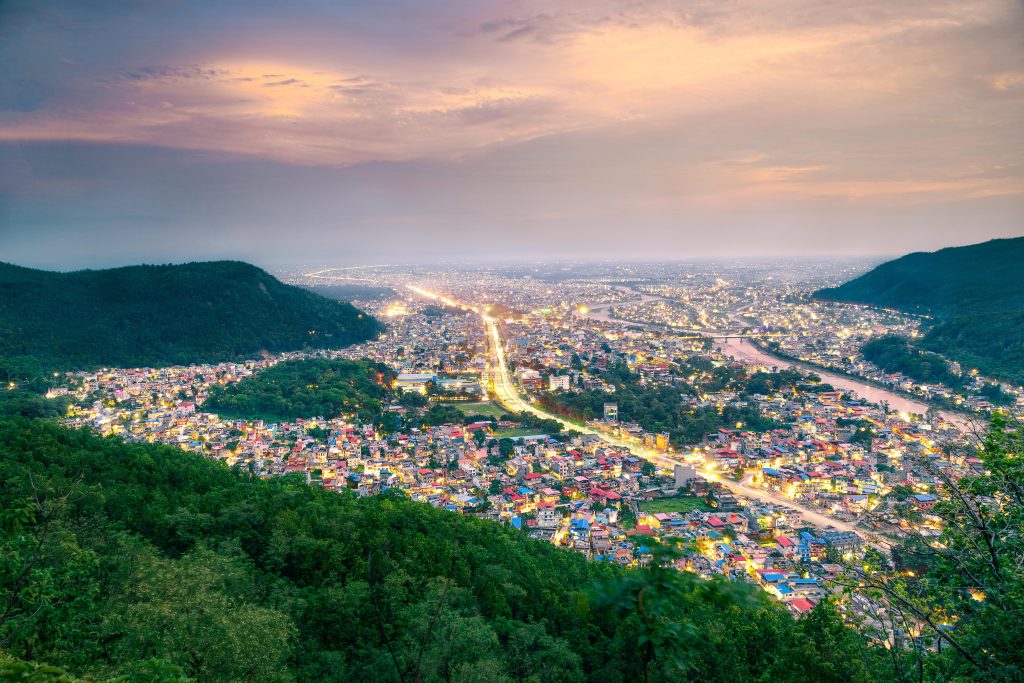
Kathmandu: The Connected Capital
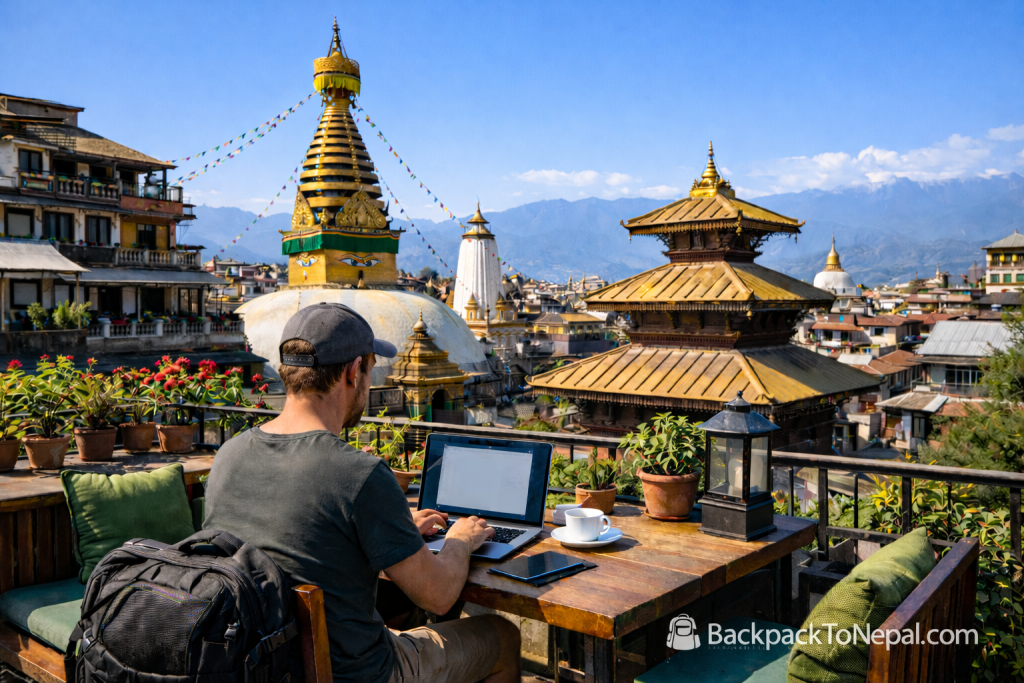
Kathmandu is Nepal’s beating heart and, for nomads who value infrastructure and connectivity above all else, it is the stronger choice. The city has seen serious investment in its fibre network over the past few years. Providers like Vianet, WorldLink, and Classic Tech now offer fibre plans that deliver consistent speeds of 50 to 100 Mbps in most parts of the city, with some co-working spaces clocking even faster connections during off-peak hours.
The trade-off is the city itself. Kathmandu is loud, chaotic, and polluted in ways that can wear you down after a few weeks. Traffic in Thamel and Lazimpat can reduce a ten-minute journey to a forty-minute crawl. But if you lean into the energy rather than fight it, you will find a city crackling with creativity: bookshops wedged between temples, rooftop restaurants serving Newari cuisine above the haze, and a resident expat and nomad community that has been building steadily for years.
The neighbourhood of Jhamsikhel, just south of Patan, has become something of a quiet favourite among longer-stay nomads. It is calmer than Thamel, walkable, stocked with good cafes, and close to some of the best co-working spaces in the country.
Pokhara: The Scenic Alternative
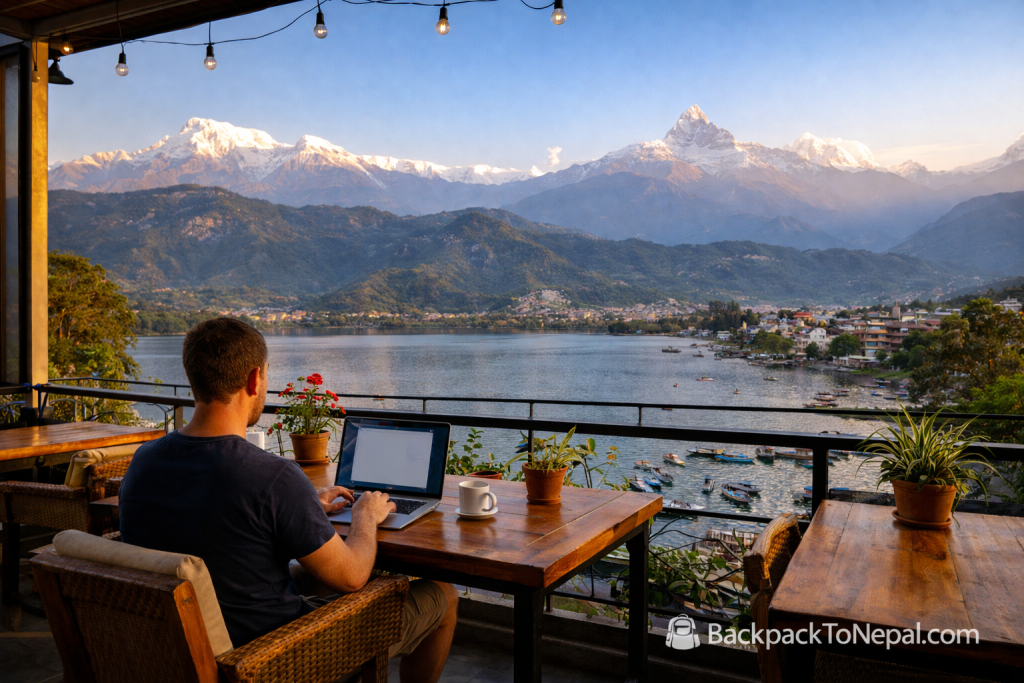
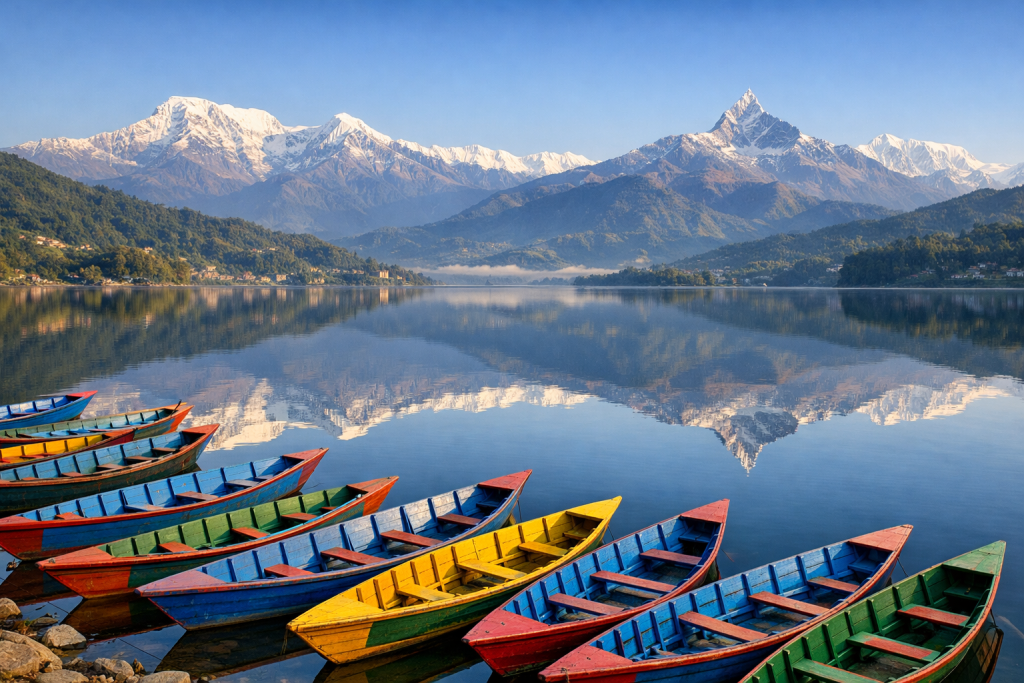
Pokhara is where you go when you want to feel like you are on holiday and working at the same time. The lakeside setting is genuinely beautiful, the air is cleaner, and the pace of life drops several notches the moment you arrive. Phewa Lake glitters outside cafe windows, paragliders drift overhead in lazy arcs, and the Annapurna massif dominates the northern horizon on clear days.
Internet speeds in Pokhara have improved substantially. Most co-working spaces and quality guesthouses now offer fibre connections in the 30 to 60 Mbps range, which is more than enough for video calls, cloud work, and the occasional large file upload. The co-working scene is smaller than Kathmandu’s but growing, and the community that congregates around Lakeside tends to be warm and easy to connect with.
The main limitation in Pokhara is that it can feel isolated if you need to get things done in the real world: fewer courier services, a smaller professional network, and fewer English-speaking specialists if you run into administrative problems. For solo remote workers who just need a desk and good vibes, though, it is close to perfect.
Co-working Spaces Worth Knowing About
Nepal’s co-working scene is still developing compared to Southeast Asian hubs like Chiang Mai or Bali, but the quality of the best spaces is genuinely impressive. Here are the types of setups you will find and what to expect.
In Kathmandu
The area around Jhamsikhel, Pulchowk, and Lazimpat has the highest concentration of dedicated co-working spaces. Most offer day passes in the range of 500 to 800 Nepali Rupees (approximately $4 to $6 USD), with monthly hot-desk memberships running between 8,000 and 15,000 NPR ($60 to $115 USD). Private offices for longer stays are negotiable. Expect fast fibre, power backup systems (load-shedding is rare now but backup generators remain standard), standing desks at the better spaces, and meeting rooms you can book by the hour.
Several cafes in Thamel and around the Garden of Dreams area have evolved into reliable working spots, with dedicated plug sockets at most tables, strong WiFi, and staff who are unfazed by a laptop staying open for four hours over a single order. Just tip well and order regularly: it is good etiquette and good karma.
In Pokhara
The Lakeside strip, particularly around Baidam, has seen a handful of purpose-built co-working spaces open in the past two years. Day rates are slightly lower than Kathmandu, typically 400 to 600 NPR ($3 to $4.50 USD). The atmosphere tends to be more relaxed and sociable. You are as likely to find yourself chatting with a trekking guide on a rest day as with another remote worker, and that mix of characters is part of the appeal.
Several guesthouses and boutique hotels in Pokhara now market explicitly to nomads, offering monthly room rates that include dedicated desk space, fast WiFi, and access to shared lounge areas. If you are planning to stay for a month or more, this can be a genuinely cost-effective arrangement.
Visas and the Honest Truth About Long-Term Stays
Here is where things get a little more complicated, and it is important to be clear-eyed about this before you commit to Nepal as a base.
Nepal does not currently offer a dedicated digital nomad visa. The standard tourist visa is available on arrival or in advance, and it comes in three options: a 15-day single-entry visa, a 30-day single or multiple-entry visa, and a 90-day multiple-entry visa. For most nationalities, these are straightforward to obtain at Tribhuvan International Airport in Kathmandu or via the online application portal before you travel.
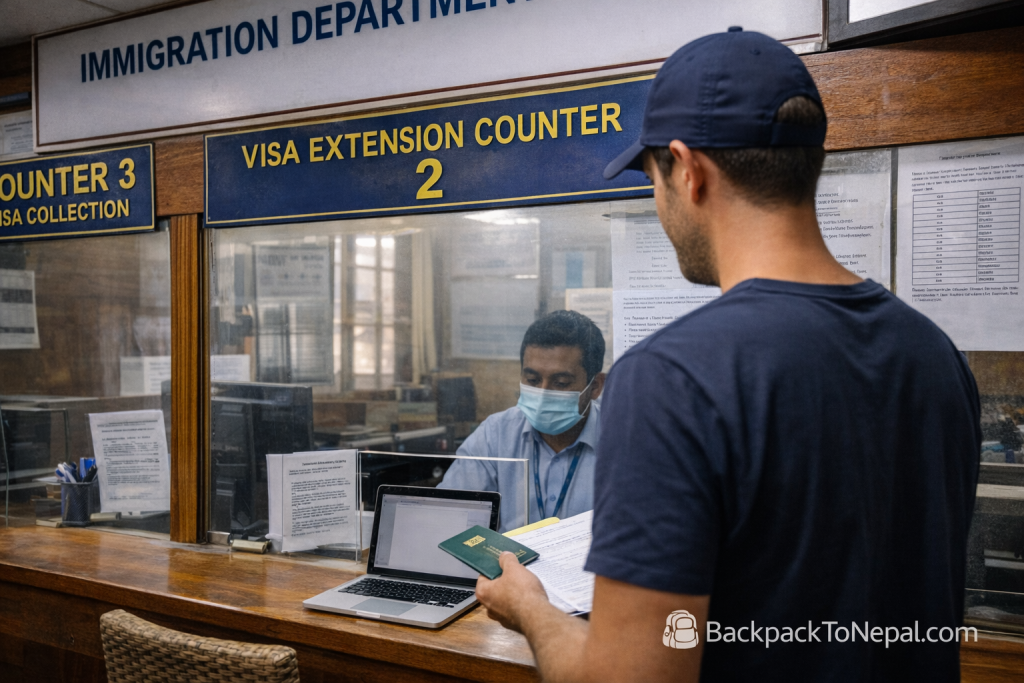
The maximum consecutive stay permitted on a tourist visa is 150 days per calendar year. In practice, most nomads cycle through 30-day visas with extensions, which can be renewed at the Department of Immigration in Kathmandu or the Immigration Office in Pokhara. Extensions cost around $30 USD for 15 days and $50 USD for 30 days. The process is relatively painless if you budget a morning for it.
Technically, you are not supposed to work for Nepali clients or companies on a tourist visa. Remote work for foreign employers or clients sits in a legal grey area that Nepal’s immigration policy has not yet formally addressed. This is the same situation that exists in many countries popular with nomads, and the practical reality on the ground is that nobody is checking your Slack messages. That said, if Nepal is considering formalising a nomad visa framework (discussions have been ongoing), checking the latest immigration guidance before you travel is always sensible.
What Does a Month in Nepal Actually Cost?
This is the part that tends to make people genuinely reconsider their current city of residence. Nepal is, by any measure, an affordable place to live well. Here is a realistic monthly breakdown for a solo digital nomad in 2026, based on a comfortable but not extravagant lifestyle.
Kathmandu Monthly Budget (Approximate)
- Accommodation (private room in a guesthouse or short-let apartment, mid-range area): $200 to $400 USD
- Co-working space membership or cafe working costs: $60 to $120 USD
- Food (mix of local restaurants, occasional Western meals, street food): $150 to $250 USD
- Local transport (taxis, ride-share apps, occasional rickshaw): $30 to $60 USD
- SIM card with data (Ncell or Nepal Telecom, 30-day plan): $10 to $15 USD
- Leisure and activities (temple visits, day trips, weekend hikes): $50 to $100 USD
- Visa extension (if needed mid-month): $30 to $50 USD
Total range: approximately $530 to $995 USD per month.
Pokhara Monthly Budget (Approximate)
- Accommodation (lakeside guesthouse with desk, private room): $180 to $350 USD
- Co-working or cafe working costs: $50 to $90 USD
- Food (local restaurants, lakeside cafes, occasional splurge): $130 to $220 USD
- Local transport (lower need than Kathmandu): $15 to $30 USD
- SIM card with data: $10 to $15 USD
- Leisure (boat hire on Phewa Lake, paragliding, day hikes): $60 to $120 USD
- Visa extension: $30 to $50 USD
Total range: approximately $475 to $875 USD per month.
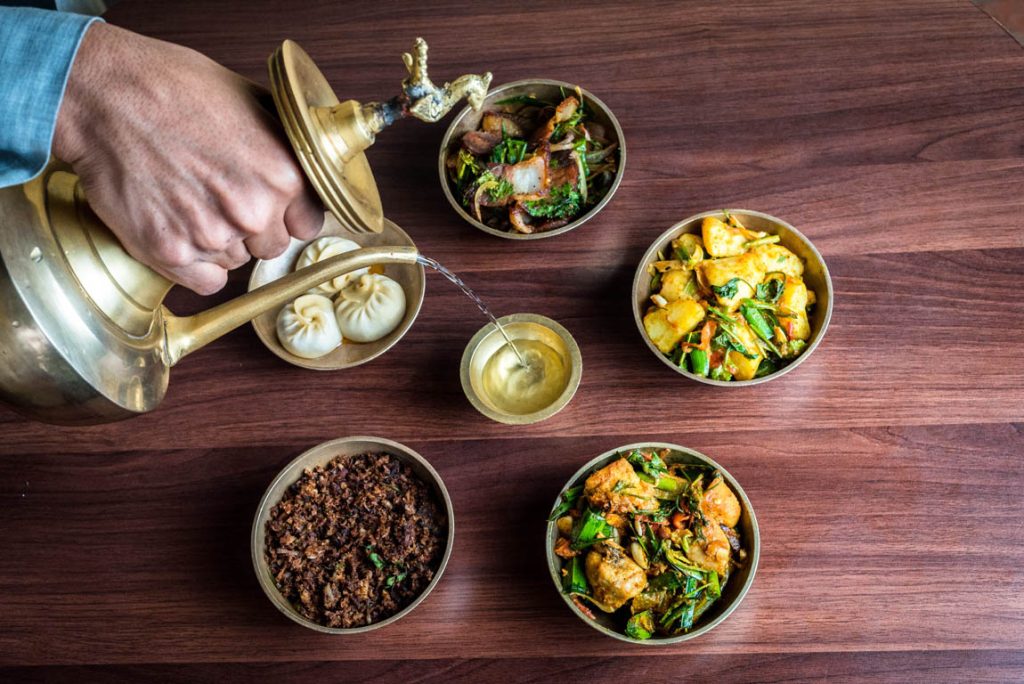
For context, a full plate of dal bhat at a local restaurant runs about 200 to 350 NPR ($1.50 to $2.70 USD). A flat white at a good cafe in Thamel or Lakeside is roughly 300 to 400 NPR ($2.30 to $3 USD). A 45-minute taxi ride across Kathmandu rarely exceeds 600 NPR ($4.50 USD) if you agree on a price upfront. The numbers add up to a lifestyle that would cost three or four times as much in London, Sydney, or New York.
Community and Social Life: You Will Not Be Alone
One of the underrated aspects of Nepal as a nomad base is the community that has grown around it. This is not yet Chiang Mai, where the nomad ecosystem has been running for over a decade, but it is warmer and more connected than its reputation might suggest.
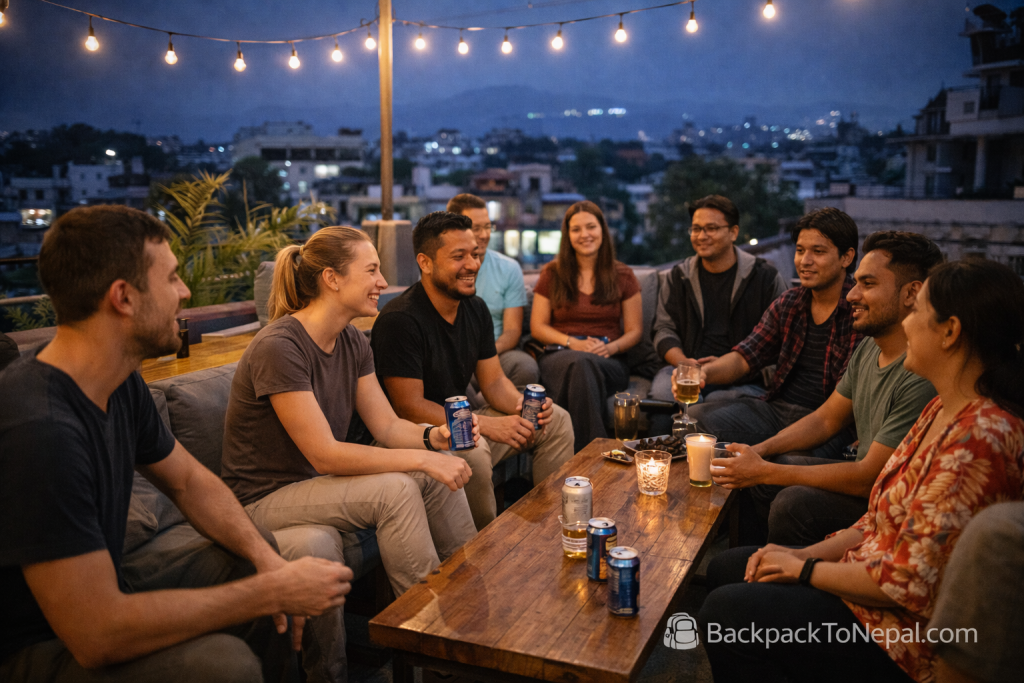
In Kathmandu, regular meetups for remote workers and entrepreneurs happen in and around the Jhamsikhel and Lazimpat areas. Facebook groups for expats and nomads in Nepal are active and genuinely useful for local tips, apartment leads, and finding people to explore with at weekends. The city also has a thriving arts and music scene, a calendar full of festivals throughout the year, and a hospitality culture that means you are rarely more than one conversation away from an invitation to something interesting.
In Pokhara, the community forms more naturally around the Lakeside strip. The yoga studios, the sunrise hikes up to the Peace Pagoda, the early morning rows on Phewa Lake: these become shared rituals that bring people together without anyone having to organise anything formally. If you are the kind of person who makes friends easily in hostels and guesthouses, Pokhara will feel like home within a week.
It is also worth noting that Nepali people are, as a general rule, among the most genuinely warm and hospitable you will encounter anywhere. Learning a handful of Nepali phrases, showing curiosity about local food and festivals, and simply smiling go a long way. The interactions you have outside the co-working space, with your guesthouse owner, your regular dal bhat spot, the family who runs the corner shop, are often the ones you carry home with you long after the trip ends.
Practical Things to Sort Before You Arrive
A few final notes to make your arrival as smooth as possible. Bring some USD cash for your visa on arrival at Tribhuvan airport: the fee is $30 for 15 days, $50 for 30 days, and $125 for 90 days. ATMs are plentiful in both Kathmandu and Pokhara but do charge fees, so withdrawing larger amounts less frequently makes sense.
Pick up a local SIM card from Ncell or Nepal Telecom at the airport or at any authorised retailer in the city. Both networks offer 4G coverage across Kathmandu and Pokhara, and data plans are inexpensive. Having mobile data as a backup to your co-working WiFi is worth the small cost, especially if you are on calls that cannot be interrupted.
Power cuts are far less frequent than they were five years ago but do still happen occasionally, particularly during monsoon season (June to September). A small power bank for your phone and a laptop with a healthy battery are sensible precautions. Most quality co-working spaces and guesthouses have UPS systems that bridge any short outages without interruption.
Finally: go easy on altitude during your first few days if you are flying into Kathmandu at 1,400 metres and then heading to Pokhara at 820 metres. Neither city is high enough to cause serious altitude sickness, but the combination of jet lag and new environments can leave you flat for a day or two. Drink water, sleep well, and give yourself a day before your first back-to-back meeting schedule kicks in.
Your Remote Office is Waiting
Nepal is not the easiest place in the world to work remotely: the visa situation is imperfect, the infrastructure has its quirks, and some days the chaos of Kathmandu will test your patience. But it is also one of the most rewarding, affordable, and genuinely memorable places you can choose to base yourself. The mountains are real. The food is extraordinary. The people are kind. The cost of a beautiful, full life here is a fraction of what you pay elsewhere.
If you have been sitting on the idea of trying Nepal as a nomad base, this is a good year to stop sitting on it. Start with a 30-day visa, book a room in Jhamsikhel or Lakeside, find a co-working space you like on your first morning, and let Nepal do the rest. Chances are you will be extending that visa before the month is out.
Related Posts
Stay Informed With the Latest & Most Important News
Previous Post
Next Post
Previous Post

Next Post
- The Digital Nomad’s Guide to Nepal: WiFi, Co-working, Visas, and Living Costs
- Nepal’s Festival Calendar 2026: Plan Your Trip Around the Celebrations

- Pokhara Travel Guide: Everything to See, Do, and Eat at Nepal’s Lakeside Gem
- Everest Base Camp vs Annapurna Circuit: Which Epic Trek Is Right for You?
- The Newari Feast: A Guide to Nepal’s Most Elaborate Food Tradition