Now Reading: Pashupatinath Temple: Where Nepal Bows Its Head and Finds Its Soul
-
01
Pashupatinath Temple: Where Nepal Bows Its Head and Finds Its Soul

There are places you visit, and then there are places that visit you.
Pashupatinath Temple is not just a monument of stone and timber rising above the banks of the Bagmati River. It is not only a UNESCO World Heritage Site. It is not simply a temple dedicated to Lord Shiva.
It is Nepal’s heartbeat.
For millions of Nepalis at home and scattered across the world, Pashupatinath is not a destination. It is belonging. It is memory. It is identity. It is the quiet name whispered before exams, before flights, before weddings, before surgeries, before farewells.
And when you walk toward its gates for the first time, you feel it immediately. The air shifts. The world softens. Something ancient is watching.
Let us walk there together.
Recommended Read: UNESCO World Heritage Sites in Nepal: Complete Guide to All 10 Cultural & Natural Treasures
Approaching the Sacred: The First Glimpse of Pashupatinath
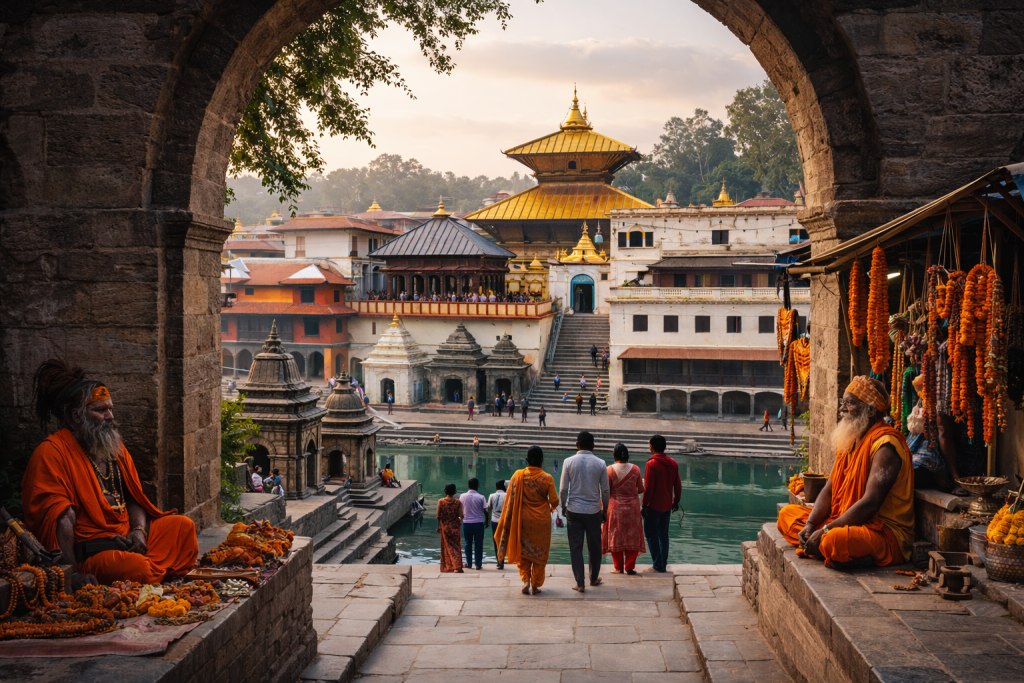
As you move through the narrow lanes of Deopatan in Kathmandu, the hum of the city begins to dissolve into temple bells. The scent of incense lingers in the air. Saffron-clad sadhus sit beneath peepal trees, their ash-covered foreheads marked with sacred lines. Vendors sell rudraksha beads and marigold garlands. Devotees walk barefoot.
Then, the Bagmati River appears.
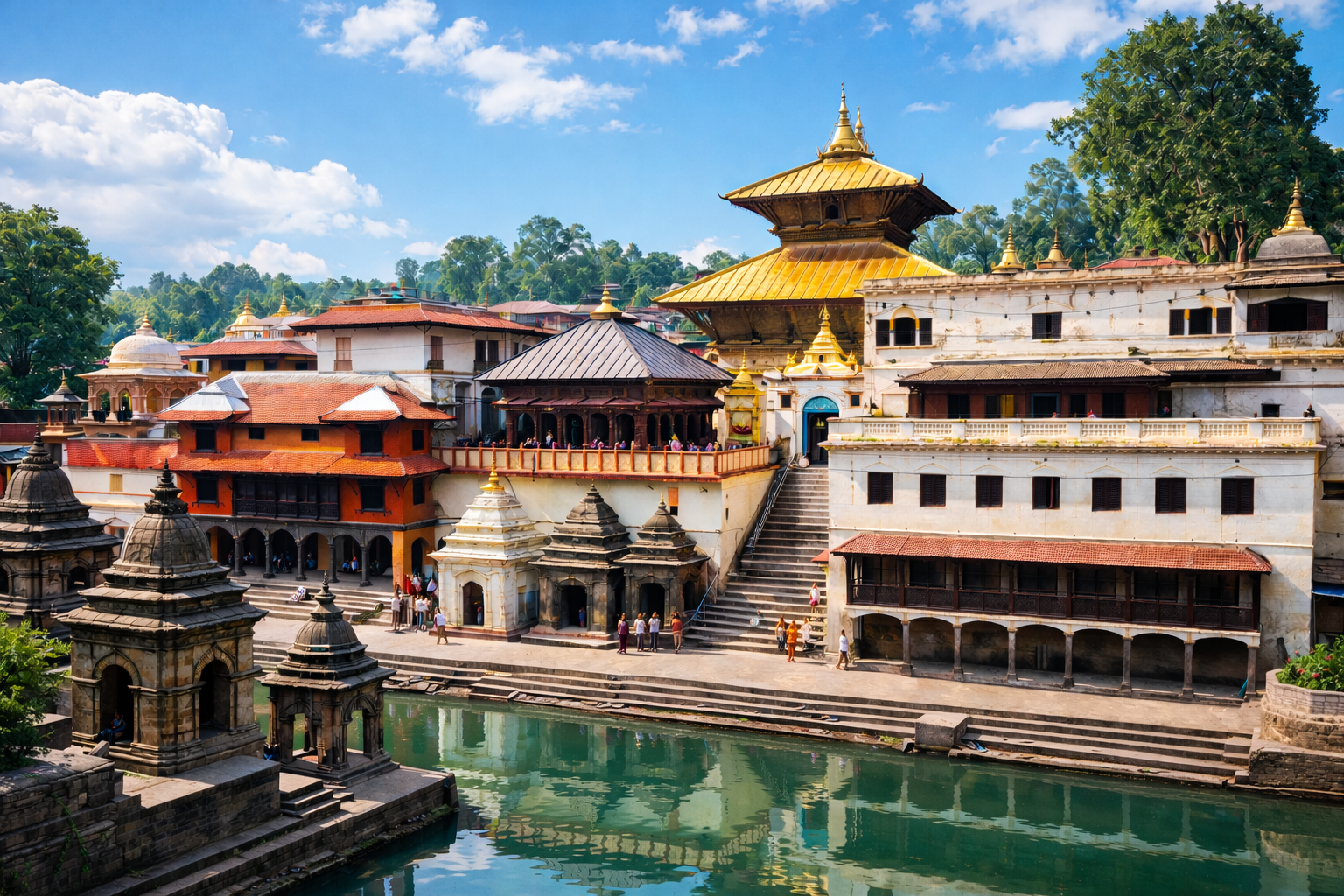
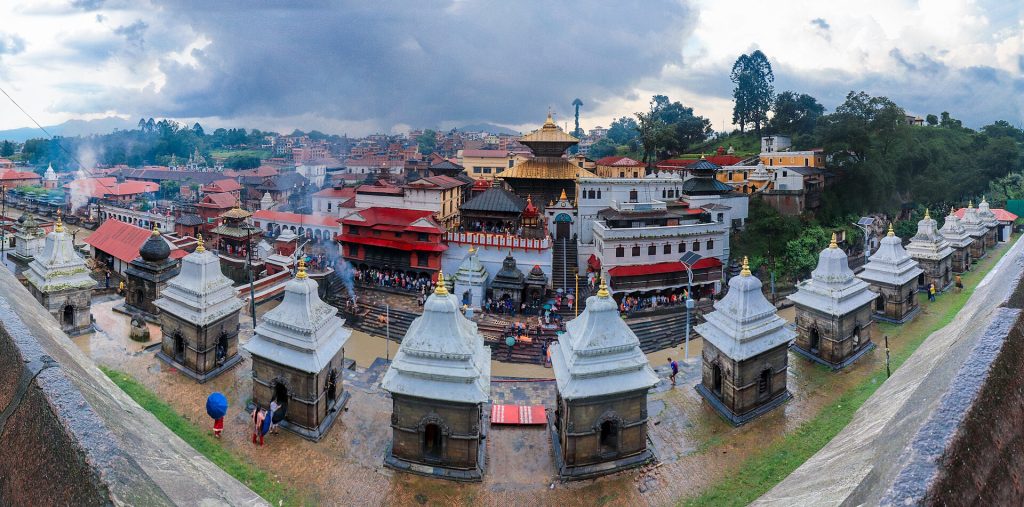
And across it, rising with quiet authority, stands the golden-roofed pagoda of Pashupatinath.
The temple’s two-tiered gilded roof catches the light. The intricate wooden struts hold centuries of craftsmanship. The silver-plated doors gleam. Prayer flags flutter softly against Himalayan winds.
You pause.
Even if you are not religious, you feel it. This is not just architecture. This is continuity.
The Origins: Legend Before History
Like many sacred spaces in Nepal, Pashupatinath begins not in textbooks, but in legend.
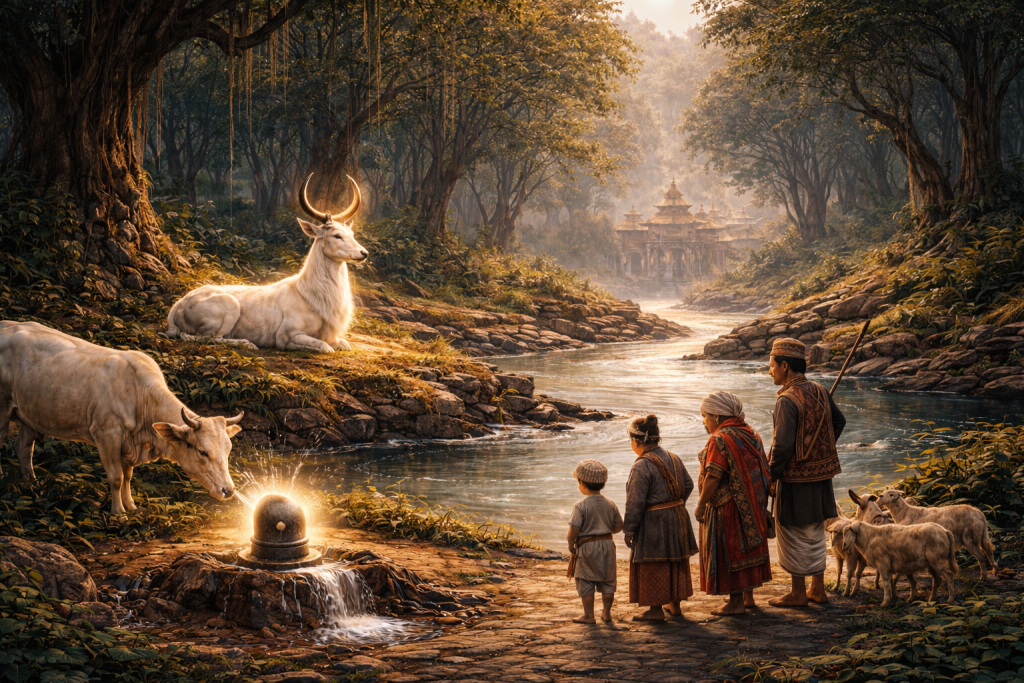
It is said that Lord Shiva once took the form of a deer and wandered into the forests of the Kathmandu Valley to escape the burdens of the cosmos. The gods searched for him. When they finally found him grazing peacefully by the Bagmati, Shiva tried to leap away. One of his antlers broke off and was buried in the earth.
Centuries later, a cowherd noticed his cow pouring milk daily over one spot in the ground. When the soil was cleared, the sacred Shiva lingam was discovered.
That lingam is believed to be the heart of Pashupatinath.
Here, Shiva is worshipped as “Pashupati” – Lord of All Living Beings. Not just humans. Not just gods. All beings.
That idea alone explains why this temple holds such a central place in Nepali consciousness. It is inclusive. Protective. Vast.
Historical Foundations: From Lichhavi to Malla
While legend provides the soul, history provides the structure.
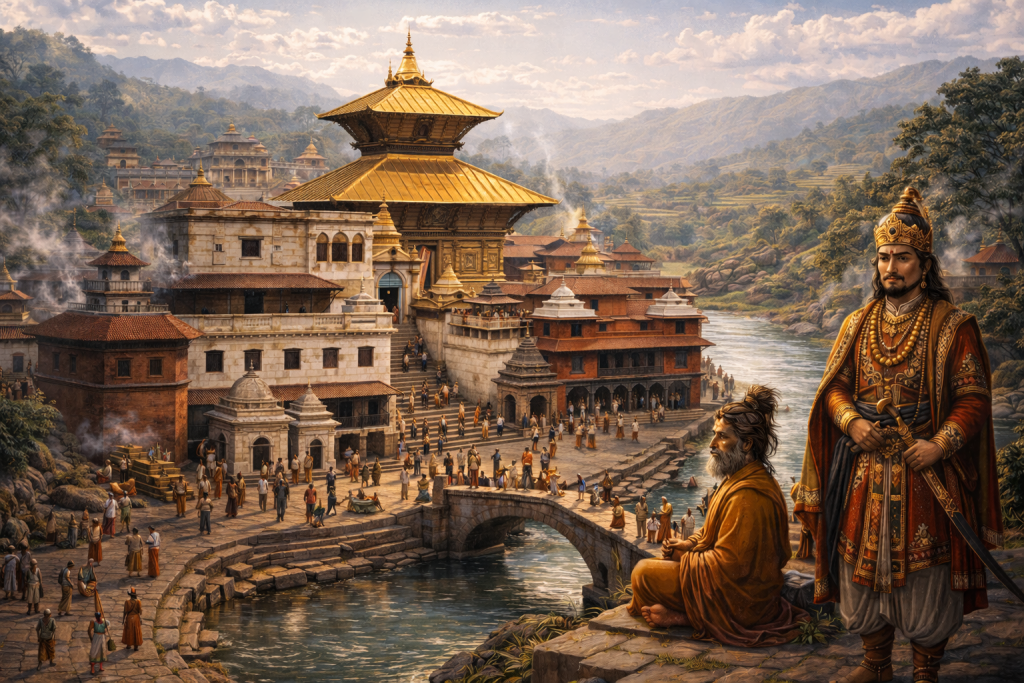
The earliest recorded evidence of Pashupatinath dates back to the Lichhavi period, around the 5th century CE. An inscription from 464 CE confirms the temple’s existence during that era. However, many historians believe the site was sacred long before formal structures were built.
The Lichhavis established the early sanctity of the temple. Later, during the Malla period, the temple complex expanded significantly. Kings invested in restoration, sculpture, ghats, and subsidiary shrines.
The present main pagoda-style temple structure is believed to have been constructed in the 17th century during the reign of King Bhupatindra Malla, although renovations continued across centuries.
Unlike many monuments that fade with time, Pashupatinath never lost its spiritual authority. Dynasties changed. Empires shifted. Political systems evolved. But the temple remained constant.
The Architecture: Sacred Geometry in Wood and Gold
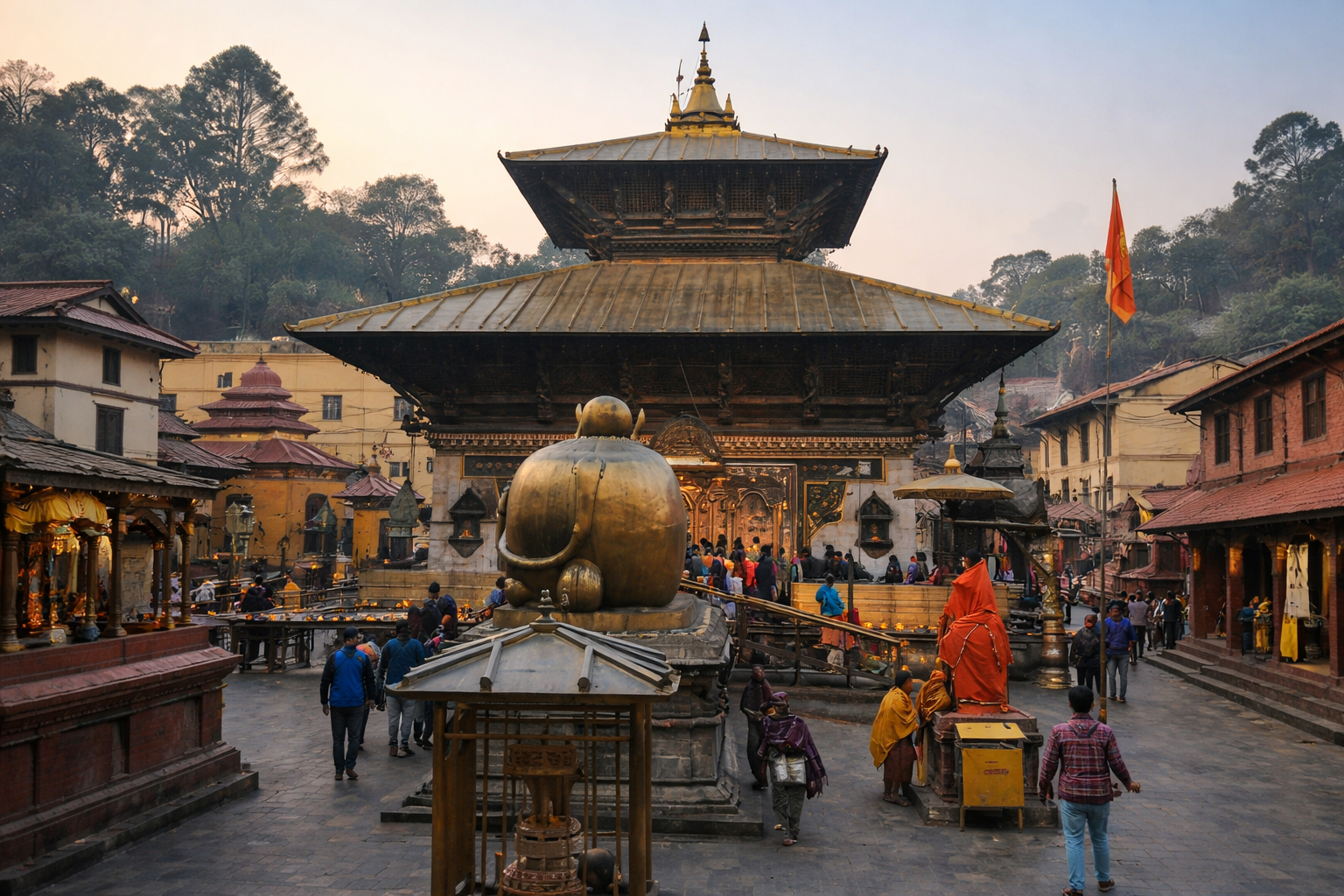
The temple is a masterpiece of traditional Nepali pagoda architecture.
The main shrine rises in two golden tiers, crowned by a golden spire. Its four silver-plated doors face the cardinal directions, symbolising universality. Inside rests the sacred four-faced Shiva lingam, each face representing a different aspect of Shiva.
Intricate wood carvings adorn the struts. Deities, guardians, and mythological beings are sculpted with astonishing detail. Every beam, every carving carries symbolism.
Surrounding the main temple are hundreds of smaller shrines, statues, and lingams. Stone bulls guard entrances. Nandi sits facing Shiva, eternally devoted.
The complex is not symmetrical in a rigid way. It feels organic, layered over centuries. You do not walk in straight lines here. You wander. You discover.
The Bagmati River and the Ghats: Life, Death, and Liberation
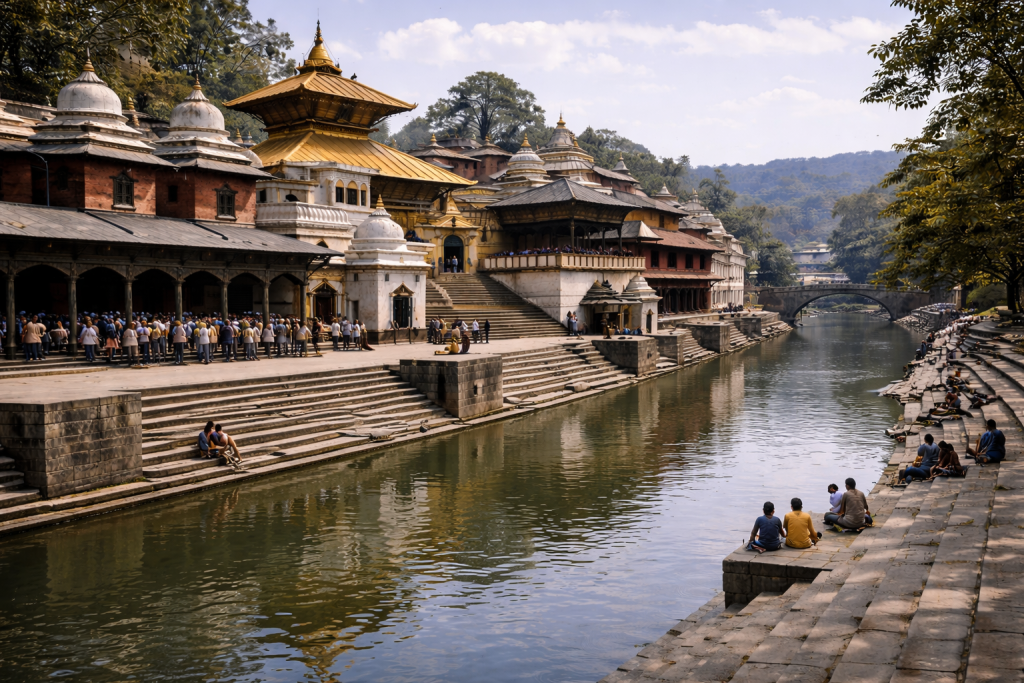
If the temple is the heart, the Bagmati River is the lifeline.
The ghats along the river are where cremation ceremonies take place. For many Nepalis, being cremated at Pashupatinath ensures spiritual liberation. Ashes are returned to the Bagmati, which eventually joins the Ganges, carrying prayers beyond borders.
Standing at Arya Ghat, you witness something profound. Funeral pyres burn beside temple bells. Grief sits beside devotion. Chanting flows with smoke.
There is no attempt to hide death here.
Instead, death is acknowledged as part of life’s sacred cycle.
For Nepalis abroad, this river holds deep emotion. Many who live overseas dream of returning one day so their final rites may be performed here. Even those who cannot return send ashes, prayers, or symbolic offerings.
Pashupatinath reminds us that identity transcends geography.
Maha Shivaratri: When Nepal Gathers as One
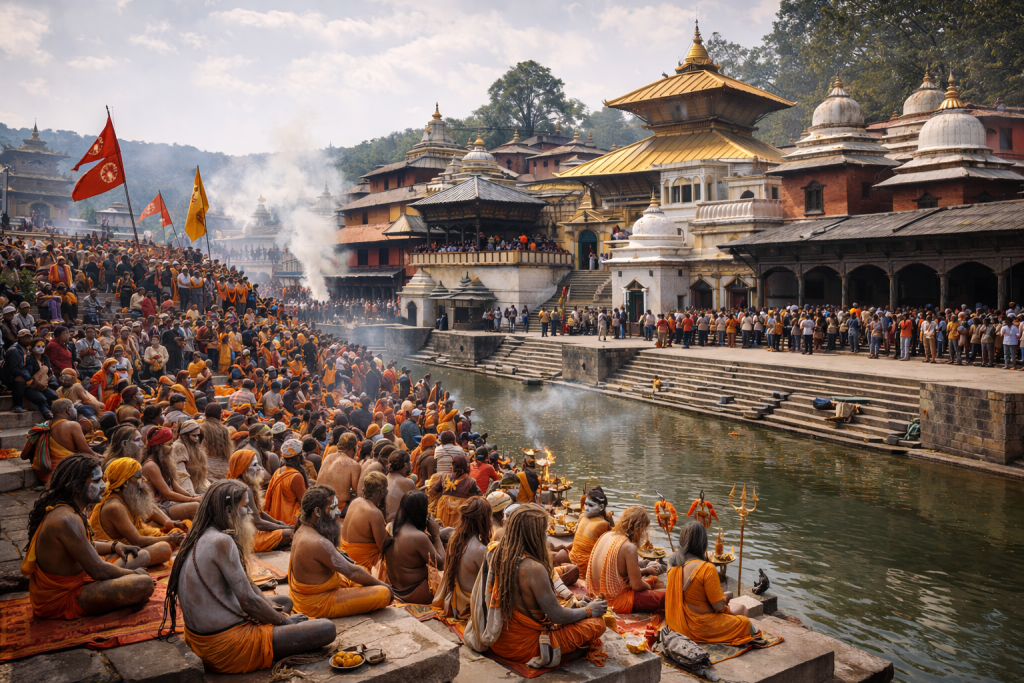
If you truly want to understand the temple’s power, imagine it during Maha Shivaratri.
Hundreds of thousands of devotees gather. Sadhus arrive from across South Asia. The night glows with oil lamps. Devotees fast, chant, and keep vigil until dawn.
Kathmandu becomes electric with devotion.
Young, old, rich, poor, rural, urban, diaspora returnees, tourists, monks, scholars, politicians, and farmers stand side by side. In that moment, distinctions dissolve.
It is not simply a festival. It is collective belonging.
Pashupatinath as Nepal’s National Deity
Nepal has changed politically over the years. From monarchy to republic. From a Hindu kingdom to a secular state.
Yet Pashupatinath remains central.
For centuries, Nepali kings were considered protectors of the temple. Royal rituals affirmed political legitimacy through divine blessing. Even today, state leaders visit during major ceremonies.
But beyond politics, the temple functions as a cultural anchor. It appears in songs, poetry, literature, proverbs, and everyday speech. Children grow up hearing stories of Pashupati. Migrant workers carry rudraksha beads blessed here. Students pray before exams. Couples visit after marriage.
For Nepalis living in the UK, the US, Australia, or the Gulf, Pashupatinath is often the first place visited upon returning home.
It represents continuity in a rapidly changing world.
The Temple Through Turbulence
Pashupatinath has endured invasions, earthquakes, political shifts, and modernisation.
The 2015 earthquake devastated many heritage sites in the Kathmandu Valley. Yet Pashupatinath stood resilient, symbolising stability during national grief.
That resilience deepened emotional attachment.
When monuments fall, people mourn stone. But when Pashupatinath stood, it felt like Nepal itself was standing.
Walking the Complex: An Immersive Journey
Let us walk slowly now.
You step through the western gate. The temple bells echo softly. Monkeys leap across rooftops. Elderly devotees sit cross-legged, counting prayer beads.
To your right, small shrines line the courtyard. Ahead, priests perform rituals. The scent of ghee lamps mixes with sandalwood smoke.
You descend toward the Bagmati. The river flows gently. A priest chants beside a pyre. Families stand in quiet farewell. Across the river, steps climb upward toward more temples carved into hillsides.
You climb those steps. From above, the golden roof glows in the fading light. The valley hums softly in the distance.
The experience is layered. It is not loud tourism. It is lived spirituality.
Why It Holds Such Value for Every Nepali
Ask a Nepali what Pashupatinath means, and you will rarely get a short answer.
For some, it is faith.
For others, it is heritage.
For many abroad, it is nostalgia.
For elders, it is peace.
For children, it is a story.
For the nation, it is continuity.
Even those who do not actively practice religion often speak of Pashupati with reverence. It represents something larger than belief. It represents cultural memory stretching back over a millennium.
When Nepalis introduce their country abroad, Pashupatinath is often mentioned first. Alongside Everest and Lumbini, it defines Nepal on the world stage.
UNESCO Recognition and Global Significance
As part of the Kathmandu Valley UNESCO World Heritage designation, Pashupatinath gained global recognition for its architectural and spiritual importance.
But UNESCO status does not define its value.
Its value was already inscribed in the hearts of millions.
UNESCO simply acknowledged what Nepalis have always known.
A Living Temple, Not a Museum
Perhaps the most powerful aspect of Pashupatinath is this: it is alive.
This is not a silent monument frozen in time. Rituals occur daily. Births are blessed. Deaths are sanctified. Festivals are celebrated. Sadhus debate philosophy. Devotees whisper prayers.
You do not observe Pashupatinath from behind ropes. You enter it. You participate in it.
And in doing so, you become part of its story.
For the Nepali Diaspora: A Spiritual Anchor Across Oceans
If you live far from Nepal, you know this feeling.
There are days when homesickness arrives quietly. A festival missed. A family ceremony watched through a screen. A smell that reminds you of home.
In those moments, many Nepalis close their eyes and think of Pashupati.
The golden roof. The bells. The Bagmati flowing.
It becomes an anchor. A reminder that no matter how far you travel, you are connected to something ancient and enduring.
Leaving Pashupatinath
When you leave the temple complex, you do not feel like you are exiting a tourist attraction.
You feel like you are stepping away from a conversation.
The bells continue behind you. The river continues to flow. Devotees continue to pray.
Pashupatinath does not need you to stay.
It has been here for centuries.
But once you have walked its courtyards, watched the Bagmati at dusk, and stood before the four-faced Shiva lingam, something shifts quietly inside you.
You carry it with you.
And that is why Pashupatinath Temple is not merely a UNESCO World Heritage Site.
It is Nepal’s soul made visible.
Stay Informed With the Latest & Most Important News
Previous Post
Next Post
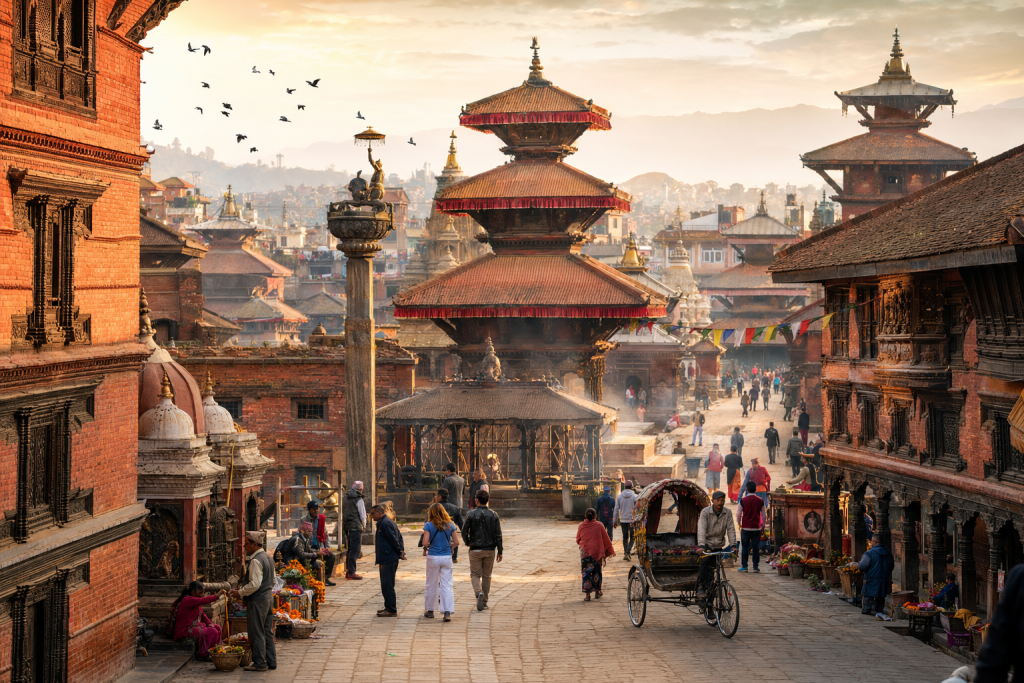
- Kathmandu Travel Guide: What to See, Where to Stay, Eat and How to Get Around
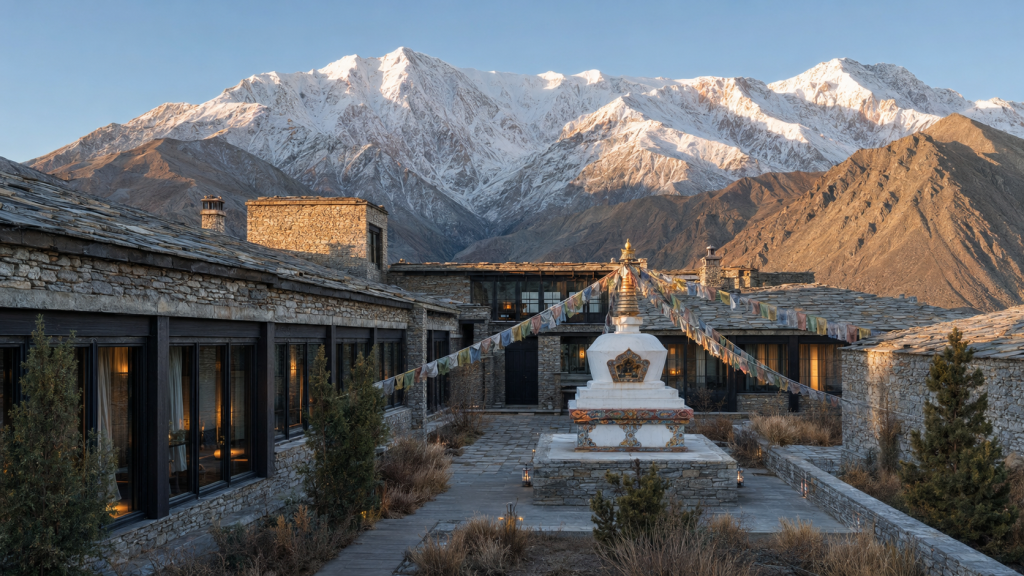
- From Mustang to the World: Shinta Mani Mustang Named the No. 1 Luxury Hotel on Earth
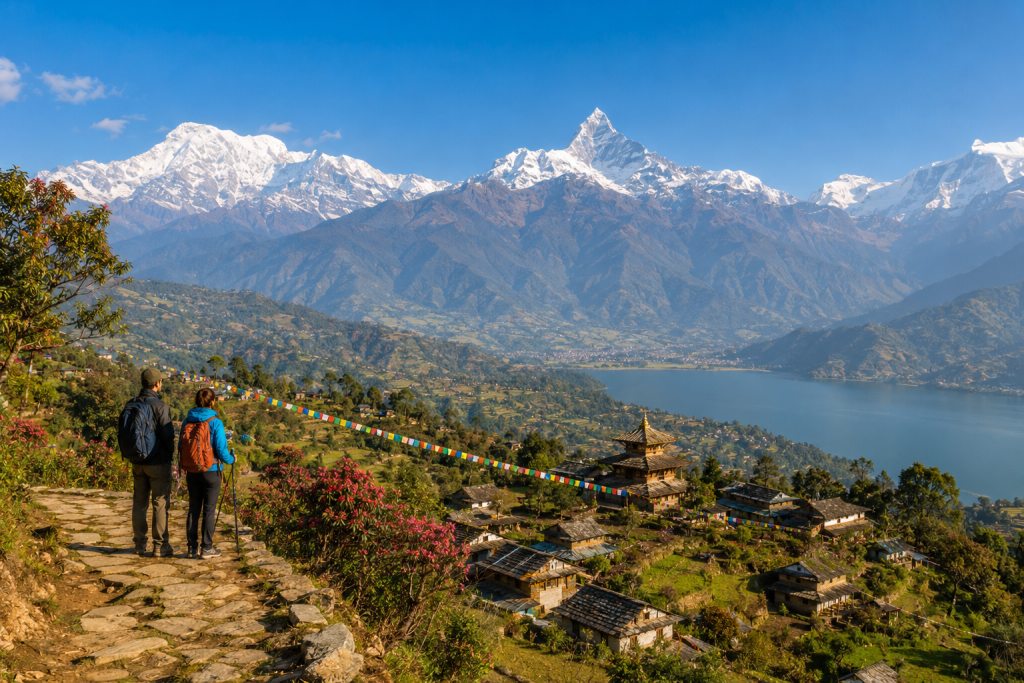
- Best Places to Visit in Nepal: A Complete Region-by-Region Guide for Every Traveller
- Trekking in Nepal: The Complete Guide to Choosing and Planning Your Himalayan Trek
- Beyond the Mountains: Why Nepal Could Become One of the World’s Great Food Destinations