Now Reading: Nepal Through the Seasons: What the Country Feels Like All Year Round
-
01
Nepal Through the Seasons: What the Country Feels Like All Year Round

People often ask about Nepal as if it exists inside a narrow window.
“When is the best time to visit?”
“Is monsoon really that bad?”
“Will I see the mountains in winter?”
They are fair questions. Travel needs planning. Time off work is limited. Flights are expensive.
But those questions also miss something important.
Nepal is not a destination that switches on and off depending on the month. It is a place where life continues, adapts, and reshapes itself quietly with the seasons. The weather changes, yes, but so do routines, moods, conversations, food, and the way days unfold.
If you spend enough time here, you stop asking when Nepal is best.
You start noticing how different it feels.
This is not about ticking off months on a calendar. It is about understanding the rhythm of a country that lives very closely with nature and time.
Spring in Nepal (March to May): Gentle Energy and New Beginnings
Spring arrives in Nepal without drama.
There is no single morning when everyone agrees winter is over. Instead, you notice small shifts. The cold loosens its grip. Doors stay open a little longer. Mornings feel softer. The air smells lighter.
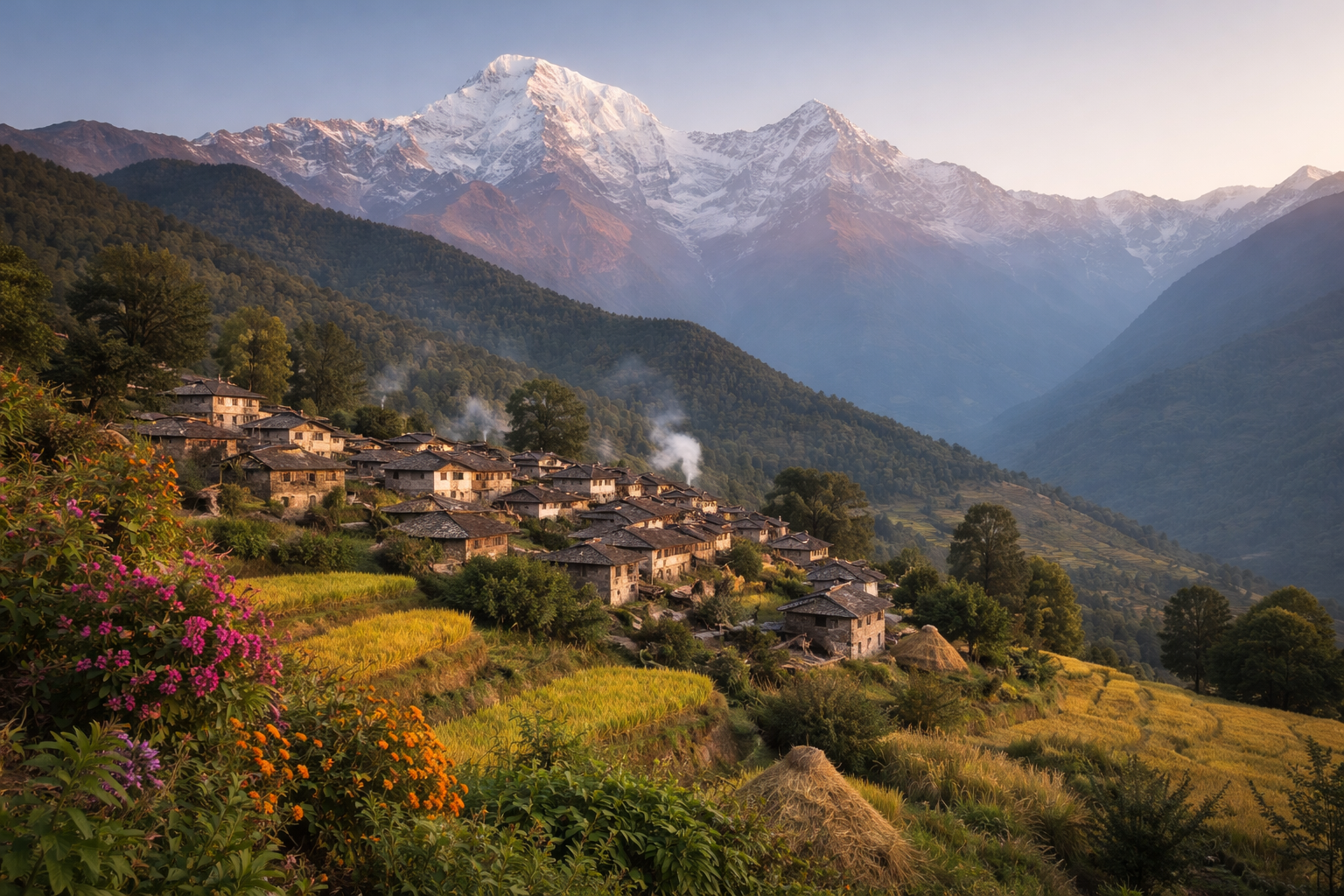
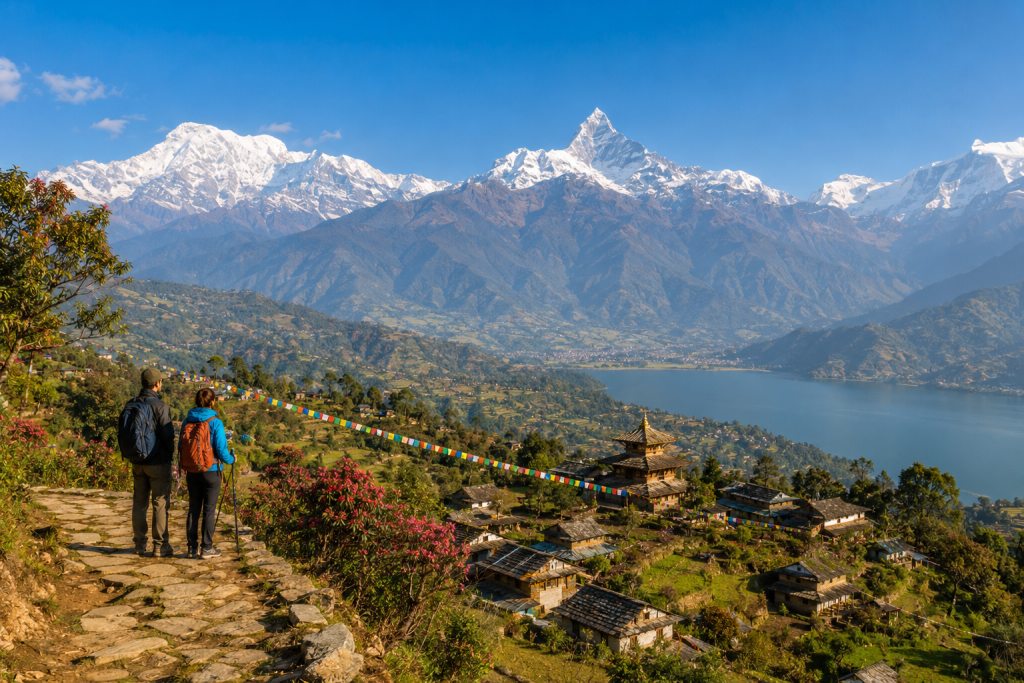
In the hills, rhododendrons begin to bloom. You see them first in patches, then suddenly everywhere. Forest paths turn colourful. Hillsides glow quietly, as if nature is stretching after a long sleep.
Spring carries movement.
Farmers prepare their land. Students finish exams and talk about plans. Cities feel busy but not overwhelming. Even traffic seems slightly more forgiving, as if everyone is in a better mood.
Days are warm, often perfectly so. Nights still carry a chill, especially in the mountains. You learn to layer without thinking. A light jacket in the morning, short sleeves by midday, something warm again after sunset.
Festivals add texture to spring. Holi brings laughter, colour, and complete chaos for a day. Nepali New Year arrives not with fireworks, but with reflection, family meals, and quiet hopes.
Spring feels hopeful in Nepal.
It is not rushed. It is not demanding. It simply invites you to be outside, to walk more, to notice things returning to life. Even the mountains feel friendlier, revealing themselves often, standing clear against blue skies without asking for attention.
If Nepal had a season that gently welcomes you in, this would be it.
Summer and Monsoon (June to August): When Nepal Becomes Real
Monsoon is the season that many travellers fear.
Flights get delayed. Roads wash out. Mountains hide behind clouds. Instagram photos become harder to capture.
But if you stay, really stay, monsoon shows you a side of Nepal that is honest and deeply human.
Rain becomes part of the day. Sometimes it is soft and steady. Sometimes loud and sudden. You learn to listen for it. You plan around it. You stop fighting it.
The countryside transforms completely. Hills that looked dusty just weeks ago turn intensely green. Rice fields fill with water, reflecting the sky. Villages move together, knee-deep in mud, planting seedlings with practised rhythm and quiet conversation.
Monsoon smells alive. Wet soil. Leaves. Smoke from kitchens when the rain pauses. Everything feels closer, more present.
Life slows, but it does not stop.
Mornings are often clear. Locals wake early, do what needs doing, and return home before afternoon clouds gather. Afternoons stretch indoors. Tea shops become social centres. Conversations last longer because there is nowhere else to be.
In cities, monsoon feels messy. Streets flood. Traffic worsens. But even here, there is resilience. Shopkeepers sweep water away again and again. Children play barefoot in puddles. Life adapts.
This season strips away expectations. You stop chasing experiences and start noticing moments. A shared umbrella. A hot plate of food while rain hits the roof. A conversation that would never have happened if the weather were perfect.
Monsoon teaches patience. And if you let it, it teaches you how Nepal really works.
Autumn in Nepal (September to November): Balance and Celebration
After the monsoon, Nepal exhales.
The rain pulls back slowly. Clouds lift. The air clears in a way that feels almost dramatic. One morning, the mountains are suddenly there again, sharp and close, as if they never left.
Autumn feels balanced.
Days are warm without being heavy. Evenings cool gently. Walking feels easy. Sleeping feels deep. Everything seems to fall into place.
This is harvest season. Fields empty. Grain dries on rooftops. Villages feel calm but purposeful. People move with a quiet sense of satisfaction.
Festivals shape this season more than any other. Dashain brings families together across the country. Cities are empty as people return to their villages. Roads fill. Buses overflow. Everyone is going somewhere meaningful.
Then comes Tihar, the festival of lights. Homes glow. Streets sparkle. Even busy towns feel tender for a few days. There is music, laughter, and an unspoken sense of gratitude.
Autumn is when Nepal feels generous.
It gives clear skies, celebration, and comfort all at once. It is easy to understand why so many people choose this season to visit. Everything looks good. Everything feels possible.
But beneath the beauty, life remains grounded. This is still a working country. Still imperfect. Still real.
And that is what makes autumn special. It does not hide reality. It simply wraps it in warmth.
Winter in Nepal (December to February): Quiet, Intimate, and Unfiltered
Winter in Nepal surprises people.
It is colder than expected, especially indoors. Houses are built for airflow, not insulation. Mornings can be sharp. Fog settles in valleys. Sunlight becomes precious.
But winter also brings stillness.
Villages slow down noticeably. There is less to do outside. People gather around fires. Stories stretch longer. Silence feels comfortable rather than empty.
Tea becomes central to daily life. So does the sun. People sit facing it, adjusting chairs as it moves across the sky. Afternoons feel golden. Evenings arrive quickly.
In the mountains, winter is serious. Higher regions become inaccessible. Life retreats inward. In lower hills and cities, winter feels introspective.
This is not a season of spectacle. It is a season of connection.
If you stay through winter, you are not just passing through. You are sharing space. You are accepted as part of the daily rhythm. Conversations deepen. Invitations feel genuine, not polite.
Winter shows Nepal without decoration.
No festivals to impress you. No dramatic weather. Just people, routine, and resilience.
And if you are open to that, winter can be the most meaningful season of all.
There Is No Best Time, Only Different Ways of Being Here
Every season in Nepal offers something different.
Spring invites you in.
Monsoon teaches patience.
Autumn celebrates life.
Winter asks you to stay.
Choosing a season is not about the weather alone. It is about what kind of experience you want, and how willing you are to adapt.
Nepal does not perform for visitors. It does not pause for convenience. It simply continues.
If you travel slowly, listen carefully, and let go of perfect plans, Nepal will meet you wherever you are in the year.
And when you leave, you will realise something quietly powerful.
You did not just visit Nepal.
You lived alongside it, if only for a while.
Related Posts
Stay Informed With the Latest & Most Important News
Previous Post
Next Post
- Kathmandu Travel Guide: What to See, Where to Stay, Eat and How to Get Around
- From Mustang to the World: Shinta Mani Mustang Named the No. 1 Luxury Hotel on Earth
- Best Places to Visit in Nepal: A Complete Region-by-Region Guide for Every Traveller
- Trekking in Nepal: The Complete Guide to Choosing and Planning Your Himalayan Trek
- Beyond the Mountains: Why Nepal Could Become One of the World’s Great Food Destinations