Now Reading: Shivapuri-Nagarjun National Park: Kathmandu Valley’s Green Refuge and the Case for Everyday Wilderness
-
01
Shivapuri-Nagarjun National Park: Kathmandu Valley’s Green Refuge and the Case for Everyday Wilderness
Shivapuri-Nagarjun National Park: Kathmandu Valley’s Green Refuge and the Case for Everyday Wilderness

Shivapuri-Nagarjun National Park does not feel remote, and that is exactly why it matters.
Rising directly from the northern and western edges of Kathmandu Valley, this park protects forests, watersheds, and wildlife within sight of traffic, temples, and expanding suburbs. It is the place where Nepal’s capital still breathes, where water still gathers before flowing into taps, and where nature persists not because it is far away, but because it has been deliberately protected.
Shivapuri-Nagarjun is not a destination you build an itinerary around.
It is a place you return to, again and again.
For travellers, residents, and first-time visitors alike, it offers something quietly essential: access to nature without escape, wilderness that fits into daily life, and proof that conservation does not only happen at the edges of maps.
Recommended Read: Nepal’s National Parks: Detailed Guide to Every Protected Landscape
Understanding Shivapuri-Nagarjun: Two Forests, One Park
Shivapuri-Nagarjun National Park lies immediately north and west of Kathmandu, covering roughly 159 square kilometres. It is composed of two distinct forested hills:
- Shivapuri (north of the valley)
- Nagarjun (west of the valley)
Though geographically separate, they are managed as a single protected area due to their shared ecological function and conservation value.
Elevation and Terrain
- Elevation ranges from around 1,350 metres to over 2,700 metres
- Steep forested slopes
- Ridge lines overlooking the valley
- Deep gullies and springs feeding major rivers
This vertical range allows subtropical forests at lower elevations to transition into temperate woodland higher up, compressed into a space close enough to reach in a single morning.
Why This Park Matters More Than It Appears
Shivapuri-Nagarjun is not famous for wildlife spectacles or dramatic landscapes. Its importance is structural.
A Critical Watershed
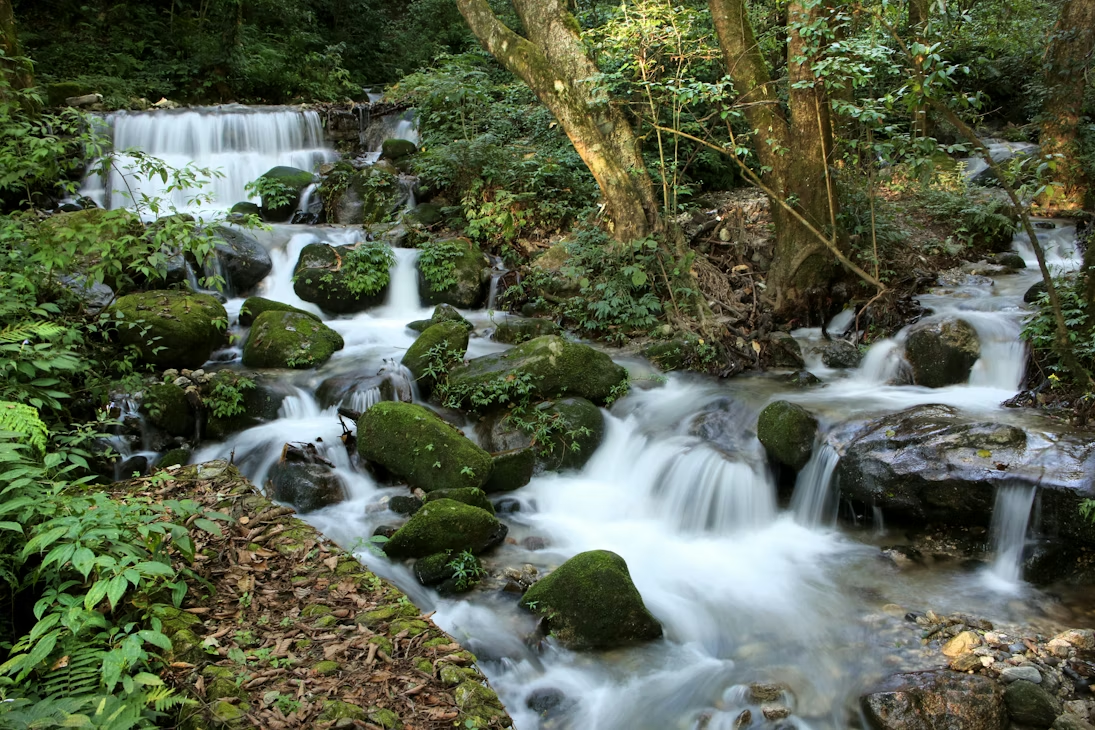
The park is one of the primary water sources for Kathmandu Valley, feeding:
- Bagmati River
- Bishnumati River
- Several smaller tributaries
Protecting forest cover here is not symbolic; it is practical. Without it, erosion, flooding, and water scarcity would intensify across the capital.
Urban Buffer Zone
As Kathmandu expands outward, this park acts as a hard ecological boundary, slowing deforestation and maintaining biodiversity within an urbanising landscape.
Few national parks in South Asia play such a direct role in urban survival.
Forest Ecology: Layers of Green Above the City
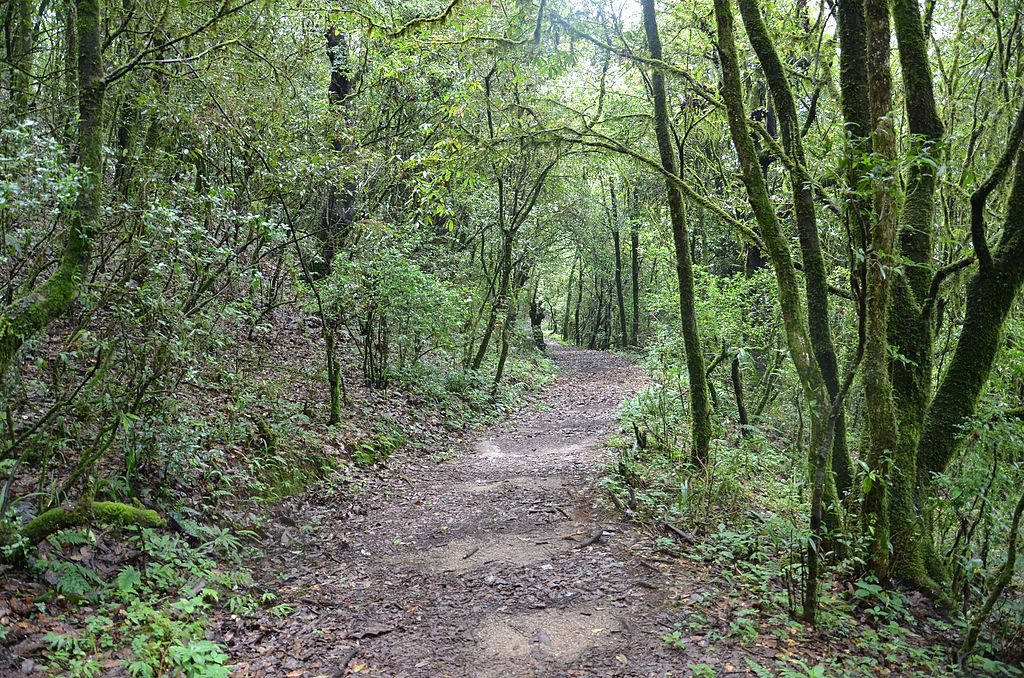
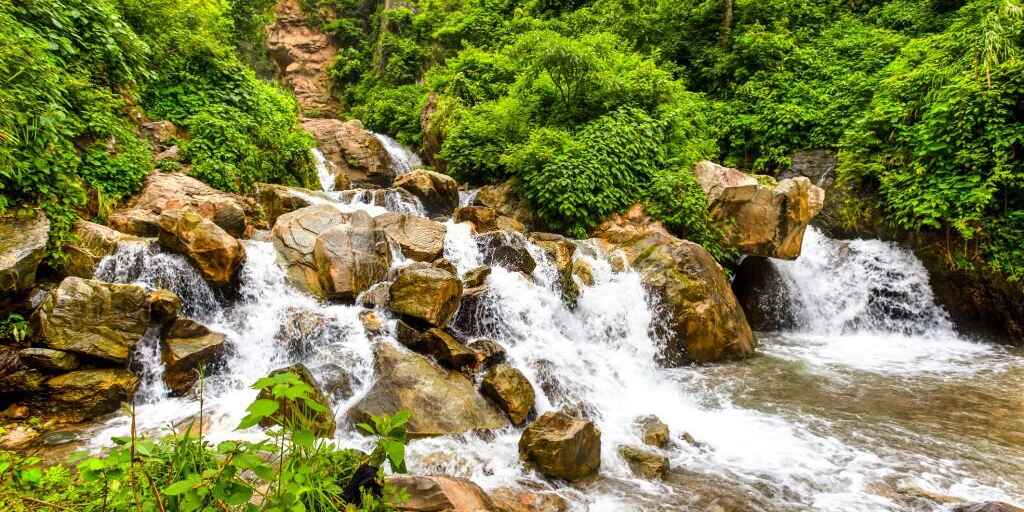
Shivapuri-Nagarjun protects a mosaic of forest types shaped by elevation, rainfall, and aspect.
Forest Composition
- Lower slopes: subtropical broadleaf forests
- Mid-elevations: oak, chestnut, and mixed woodland
- Higher ridges: temperate forests and scrub
These forests stabilise slopes, regulate microclimates, and support a surprising range of species, many of which thrive specifically because human disturbance is limited.
The experience of walking here is not dramatic, but immersive: filtered light, birdsong, damp earth, and long green corridors that make the city below feel distant.
Wildlife of Shivapuri-Nagarjun National Park
Wildlife here is adapted to proximity to roads, villages, and daily human movement.

Mammals
- Leopard (present but rarely seen)
- Himalayan black bear
- Barking deer
- Wild boar
- Langur monkeys and rhesus macaques
Encounters are often indirect: rustling leaves, fresh tracks, distant calls. This is not safari wildlife; it is coexistence wildlife.
Birds
Birdlife is one of the park’s strongest assets.
Over 300 bird species have been recorded, including:
- Spotted and kalij pheasants
- Woodpeckers
- Flycatchers
- Raptors and owls
For birders, especially those short on time, Shivapuri-Nagarjun is one of the most accessible and rewarding sites in Nepal.
Cultural and Spiritual Sites Within the Park
Despite its protected status, the park contains several important religious and cultural landmarks, woven carefully into the forest.
Notable Sites
- Budhanilkantha (sleeping Vishnu statue) near the park boundary
- Monasteries and hermitages
- Small shrines and pilgrimage paths
These sites reinforce a long-standing idea in Nepal: forests are not empty spaces, but sacred buffers between human life and the forces that sustain it.
Walking here often means sharing trails with pilgrims, monks, and local residents, each using the landscape differently, but respectfully.
Walking, Hiking, and Everyday Exploration
Shivapuri-Nagarjun is not a trekking destination; it is a walking park.
Common Activities
- Half-day and full-day hikes
- Morning forest walks
- Ridge walks with valley views
- Fitness hikes for local residents
Trails are generally well-marked and maintained, making the park accessible to a wide range of visitors.
This accessibility is part of its conservation value: people protect what they can reach and understand.
Nagarjun Forest: The Quieter Twin
While Shivapuri receives more visitors, Nagarjun remains quieter and less developed.
Nagarjun’s Character
- Dense forest
- Fewer entry points
- Less foot traffic
It offers a more enclosed, introspective experience, ideal for those seeking solitude without distance.
Best Time to Visit Shivapuri-Nagarjun National Park
One of the park’s strengths is its year-round usability.
Spring (March–May)
- Rhododendron bloom
- Active birdlife
- Clear mornings
Monsoon (June–September)
- Lush forests
- Leeches in some areas
- Dramatic cloud cover
Autumn (October–November)
- Best visibility
- Comfortable temperatures
- Peak hiking season
Winter (December–February)
- Cool, crisp air
- Quiet trails
- Occasional frost at higher elevations
Even in winter, the park remains accessible, rare for Himalayan protected areas.
Permits, Access, and Practicalities
Entry Requirements
- National park entry permit (available at gates)
- ID may be required
Getting There
- Short taxi or bus rides from central Kathmandu
- Multiple access points, depending on the route
This ease of access makes the park ideal for:
- Short stays
- Recovery days between longer journeys
- Travellers with limited time
Facilities and Expectations
Facilities inside the park are minimal by design.
What to Expect
- No restaurants or cafés inside
- Limited rest shelters
- No accommodation
Visitors are expected to:
- Carry water and snacks
- Take the waste back out
- Respect the quiet and wildlife
Shivapuri-Nagarjun is not a leisure park; it is a protected forest that happens to be accessible.
Shivapuri-Nagarjun as Slow Travel: Nature Without Distance
Slow travel is often associated with remoteness, effort, and time. Shivapuri-Nagarjun challenges that idea.
Here, slowness comes from:
- Short distances
- Repeated visits
- Familiar trails walked at different times
You notice seasonal change rather than novelty.
You return rather than move on.
This makes the park uniquely valuable for:
- Long-stay travellers
- Writers and researchers
- Anyone needing grounding between journeys
Conservation Challenges in an Urban Context
Protecting a national park beside a growing capital comes with unique pressures.
Ongoing Challenges
- Urban encroachment
- Water extraction demands
- Recreational pressure
- Invasive species
Success here depends not on isolation, but on integration, aligning conservation with urban life rather than opposing it.
Shivapuri-Nagarjun is a test case for how protected areas can survive next to cities, not away from them.
Who Shivapuri-Nagarjun National Park Is For
Ideal For
- First-time visitors to Nepal
- Long-term travellers
- Birders
- City residents seeking nature
Not Ideal For
- Wilderness purists
- Wildlife safari expectations
- Multi-day trekking itineraries
This park is about everyday nature, not an escape.
How Shivapuri-Nagarjun Fits Into a Nepal Journey
Shivapuri–Nagarjun works best as:
- An introduction to Nepal’s ecology
- A recovery space between intense journeys
- A grounding experience before departure
It pairs naturally with:
- Kathmandu Valley heritage sites
- Short stays
- Slow, observational travel
For many travellers, it becomes their most visited place in Nepal.
Final Reflection: Why Green Spaces Near Cities Matter Most
Shivapuri-Nagarjun will never be Nepal’s most dramatic national park.
It will never feature in summit lists or adventure reels.
But its value is deeper and more urgent.
It proves that conservation does not belong only to distant mountains and remote plains. It belongs where people live, where water flows into homes, and where children learn what forests look like, not in books, but out their windows.
Shivapuri-Nagarjun is not the wilderness at the end of a journey.
It is the wilderness that reminds you why the journey matters at all.
Stay Informed With the Latest & Most Important News
Previous Post
Next Post
- Kathmandu Travel Guide: What to See, Where to Stay, Eat and How to Get Around
- From Mustang to the World: Shinta Mani Mustang Named the No. 1 Luxury Hotel on Earth
- Best Places to Visit in Nepal: A Complete Region-by-Region Guide for Every Traveller
- Trekking in Nepal: The Complete Guide to Choosing and Planning Your Himalayan Trek
- Beyond the Mountains: Why Nepal Could Become One of the World’s Great Food Destinations