Now Reading: Sagarmatha (Everest) National Park: Culture, Glaciers, and Life at Altitude
-
01
Sagarmatha (Everest) National Park: Culture, Glaciers, and Life at Altitude
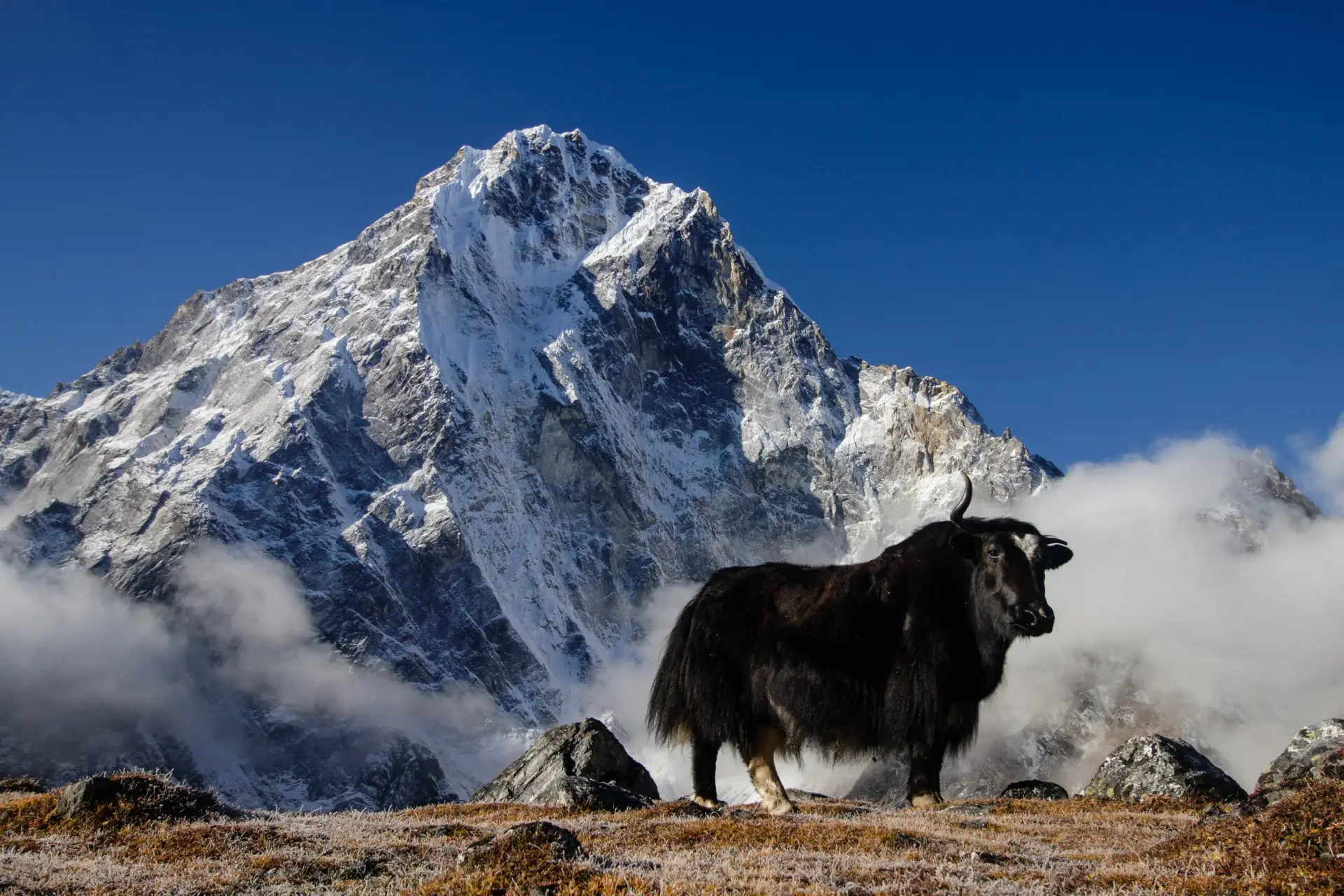

Sagarmatha National Park is often spoken about in superlatives, highest mountain, the highest trails, the ultimate trek.
But those descriptions miss what actually defines this place.
This is not just a landscape of altitude. It is a human highland, shaped by belief, adaptation, and restraint. The mountains dominate the skyline, but the story unfolds on footpaths, in stone-walled villages, inside monasteries warmed by juniper smoke, and in the quiet negotiations between survival and reverence that make life at altitude possible.
To travel through Sagarmatha is not simply to approach Mount Everest.
It is to enter a living Himalayan system, where culture and ecology are inseparable.
Recommended Read: Nepal’s National Parks: Detailed Guide to Every Protected Landscape
Understanding Sagarmatha: Geography, Elevation, and Extremes
Sagarmatha National Park lies in northeastern Nepal, bordering Tibet, and covers approximately 1,150 square kilometres of some of the most extreme terrain on Earth. Elevation ranges from around 2,800 metres at its lower valleys to 8,848.86 metres at the summit of Mount Everest.
Defining Landscapes
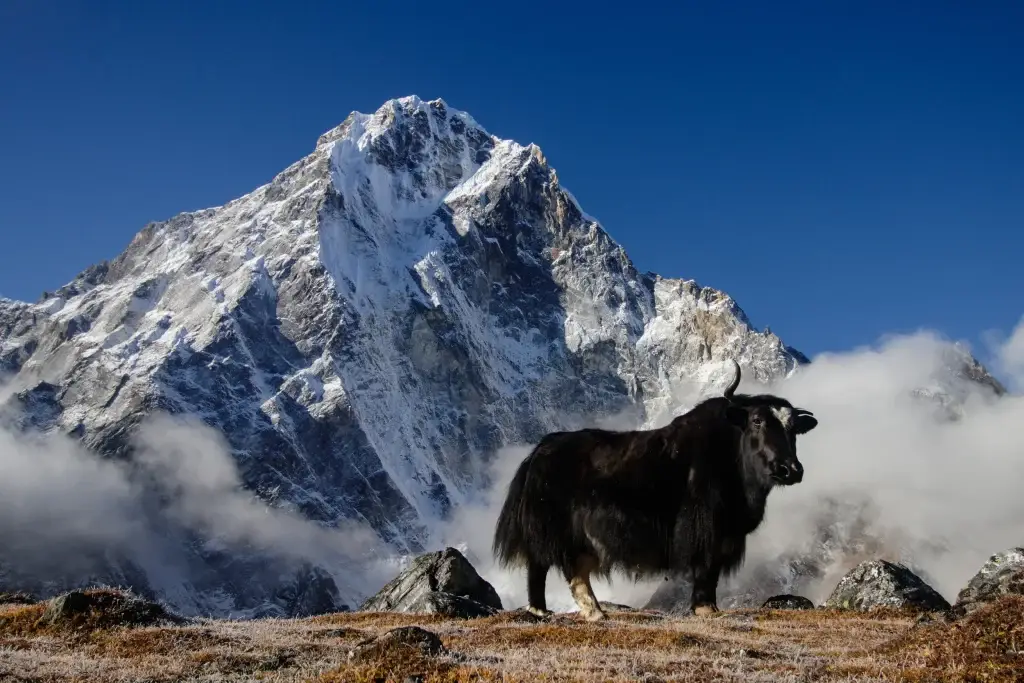
- Deep glacial valleys carved by ancient ice
- Active glaciers and icefalls
- High alpine meadows and juniper scrub
- Sacred peaks and wind-scoured ridgelines
Unlike lower-elevation parks, Sagarmatha is not defined by forests or wildlife density. It is defined by exposure to cold, wind, altitude, and time.
Here, life exists on narrow margins. Every settlement, trail, and field reflects centuries of careful adaptation.
The Sherpa Homeland: Culture at the Roof of the World
Sagarmatha is the ancestral homeland of the Sherpa people, whose identity is often misunderstood through the lens of mountaineering alone.
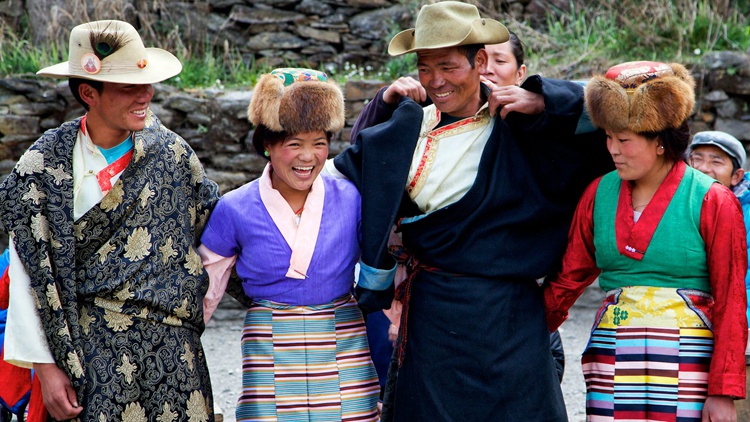
Sherpa culture is not built around Everest expeditions; it predates them by centuries.
Sherpa Society and Belief
- Rooted in Tibetan Buddhism
- Strong spiritual relationship with mountains, considered deities rather than obstacles
- Villages organised around monasteries and seasonal movement
Sacred peaks such as Everest (Sagarmatha / Chomolungma), Ama Dablam, and Thamserku are not climbed casually in local belief systems. Rituals, pujas, and prayer flags mark human presence as temporary and respectful, not dominant.
This worldview shapes how land is used, conserved, and protected.
Wildlife of Sagarmatha National Park
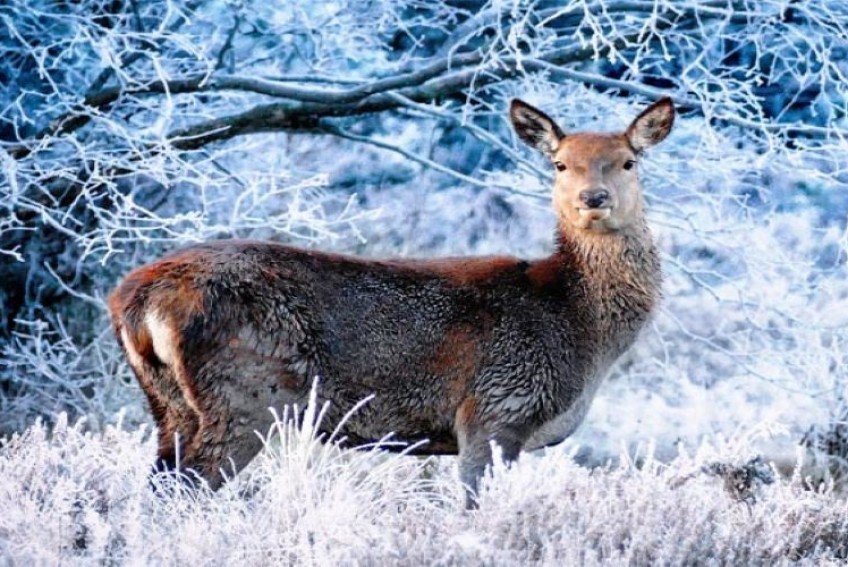
Wildlife in Sagarmatha is sparse but highly specialised, adapted to cold, oxygen-poor conditions.
Mammals
- Himalayan tahr
- Musk deer
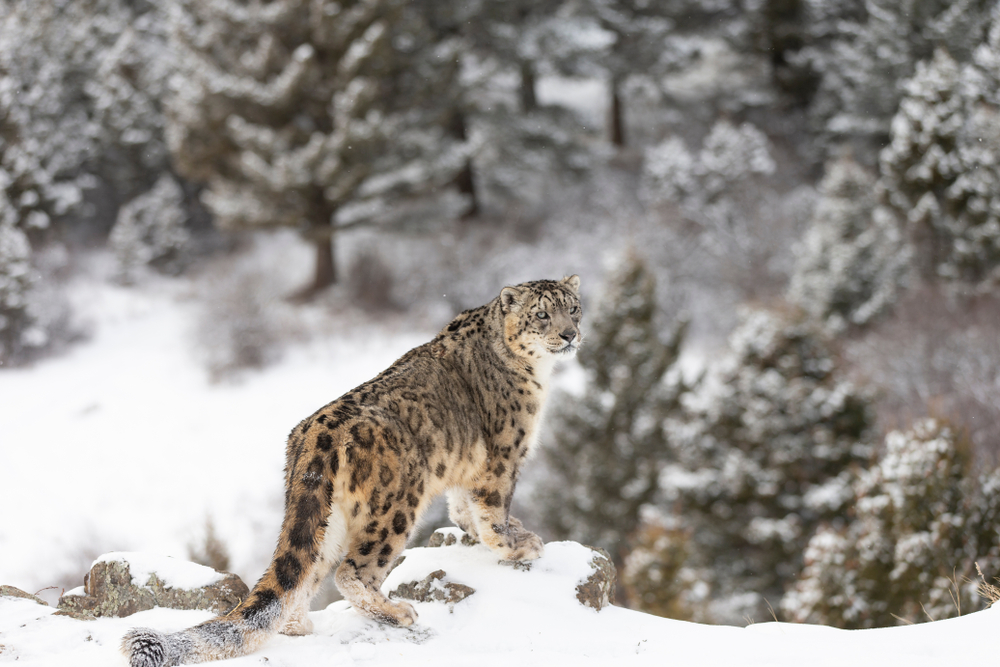
- Snow leopard (extremely rare and elusive)
- Himalayan mouse hare (pika)
Large predators exist here more as an ecological presence than a spectacle. Sightings are uncommon, but signs, tracks, scat, and movement patterns tell an ongoing story.
Birds
Birdlife is more visible, especially at mid-elevations:
- Himalayan monal
- Blood pheasant
- Snow pigeon
- Alpine chough
Birds here are often the most active life you’ll encounter above 4,000 metres.
Glaciers, Ice, and a Changing Landscape
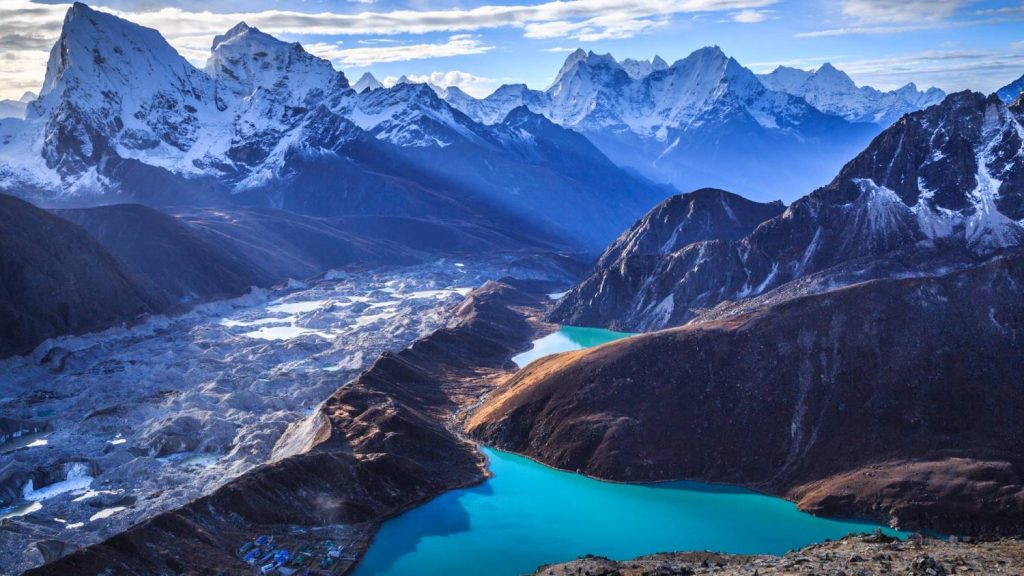
Sagarmatha’s glaciers define both its beauty and its fragility.
Key Glacial Systems
- Khumbu Glacier
- Ngozumpa Glacier (Nepal’s largest)
These glaciers are not static features. They are retreating rapidly, reshaping valleys, altering water flow, and increasing risks such as glacial lake outburst floods.
For travellers, this means:
- Trails change year to year
- Landscapes remembered from photos may already be gone
- Climate change is visible, not abstract
Walking here is also an education in environmental change at the planet’s extremes.
Trekking in Sagarmatha: Beyond Everest Base Camp
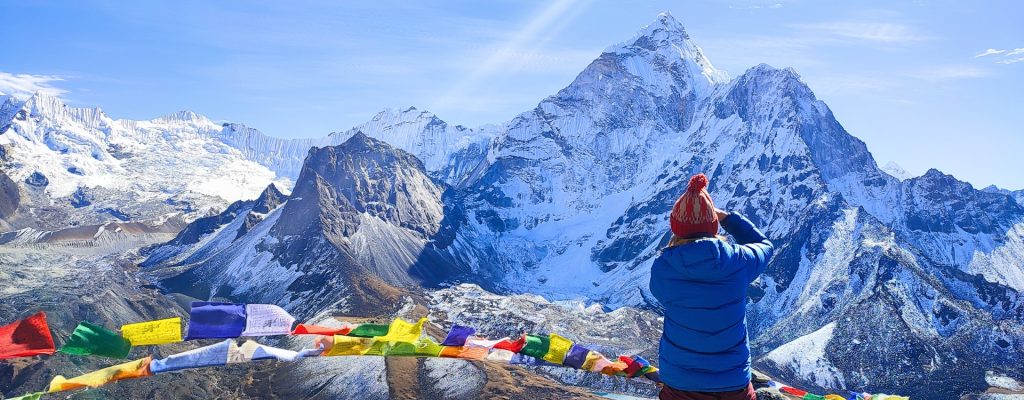
The Everest Base Camp (EBC) trek dominates conversation, but Sagarmatha offers far more than a single route.
Everest Base Camp Trek
- Well-established trail network
- Teahouse infrastructure
- Heavy seasonal traffic
EBC is best understood as a pilgrimage route, not a wilderness trek. Its value lies as much in shared experience as in scenery.
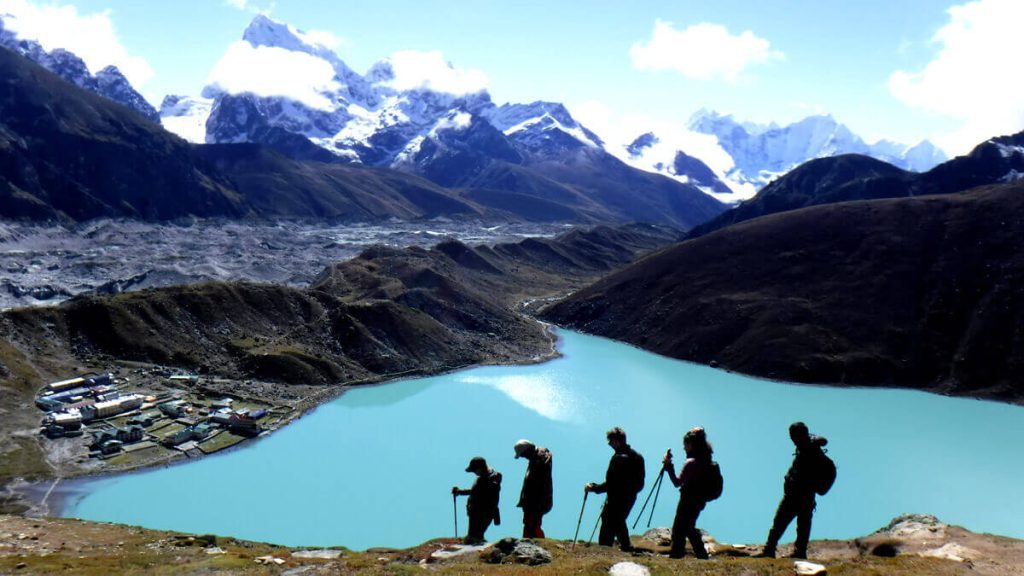
Gokyo Valley and Lakes
- Less crowded alternative
- Stunning turquoise alpine lakes
- Views of Everest, Cho Oyu, and Makalu
Three Passes Trek
- High-altitude circuit linking valleys
- Demanding but comprehensive
- Requires experience and flexibility
Each route offers a different way of understanding life at altitude, from social to solitary.
Life in the Khumbu: Villages, Farming, and Adaptation
Permanent villages in Sagarmatha sit between 3,400 and 4,000 metres, near the upper limit of human habitation.
Village Life
- Stone houses built for insulation
- Limited agriculture (potatoes, barley)
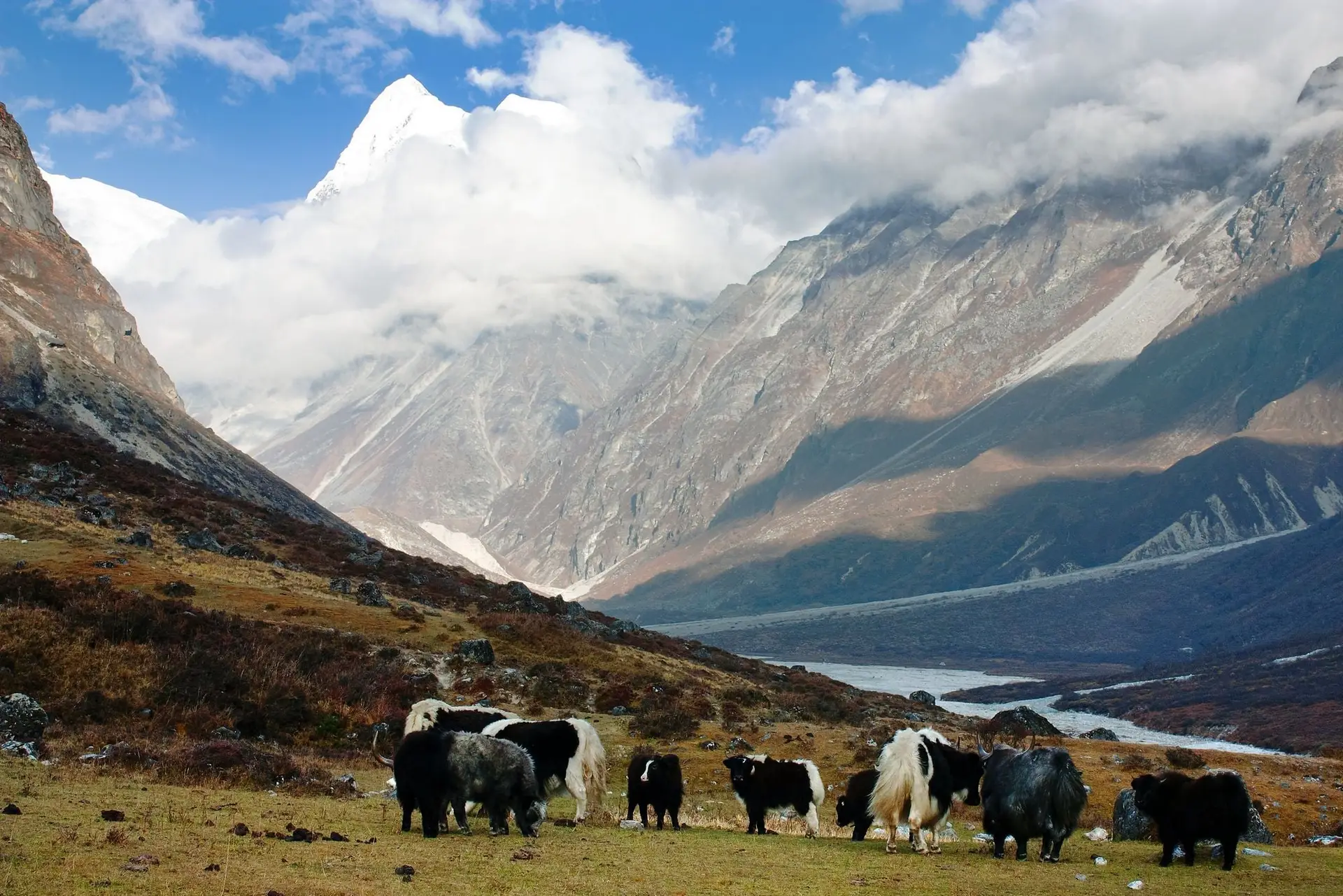
- Heavy reliance on trade, yaks, and tourism
Seasonality defines everything:
- Summer: trekking and mountaineering
- Winter: migration to lower elevations or Kathmandu
Tourism has brought income, but also dependency. Balancing opportunity with sustainability remains an ongoing challenge.
Best Time to Visit Sagarmatha National Park
Spring (April–May)
- Stable weather
- Active climbing season
- Busy trails
Autumn (October–November)
- Clear skies
- Cooler temperatures
- Peak trekking conditions
Winter (December–February)
- Very cold
- Quiet trails
- Limited services at higher elevations
Monsoon (June–September)
- Cloud cover
- Flight disruptions
- Slippery lower trails
For most travellers, late October offers the best balance of clarity and stability.
Permits, Access, and Logistics
Required Permits
- Sagarmatha National Park entry permit
- Khumbu Pasang Lhamu Rural Municipality fee
Getting There
- Flight to Lukla (weather-dependent)
- Alternative long approach treks from Jiri or Salleri
Flights are short but unpredictable. Building buffer days into itineraries is essential.
Accommodation: Teahouse Culture at Altitude
Sagarmatha’s teahouse system is among Nepal’s most developed, but comfort decreases with elevation.
What to Expect
- Simple rooms
- Shared dining halls heated by stoves
- Increasing costs with altitude
Electricity, hot water, and internet become luxuries, not expectations.
This gradual stripping away of convenience is part of the experience.
Food and Fuel: Eating Above the Tree Line
Food choices narrow as altitude increases:
- Dal bhat
- Soups and noodles
- Potatoes in various forms
Above 4,000 metres, most food is:
- Carried by porters or yaks
- Expensive
- Nutritionally functional
Eating simply is both practical and respectful of supply chains.
Health, Altitude, and Safety
Sagarmatha demands humility.
Key Risks
- Acute Mountain Sickness (AMS)
- Cold exposure
- Dehydration
Essential Practices
- Slow ascent
- Acclimatisation days
- Hydration
- Willingness to turn back
Guides are not just cultural interpreters; they are safety assets.
Sagarmatha as Slow Travel: Reframing the Everest Experience
Many travellers rush to Sagarmatha, treating it as a bucket-list challenge.
A slower approach allows:
- Rest days in villages
- Monastery visits
- Conversations with locals
- Deeper acclimatisation
The mountains are not going anywhere.
The experience improves when urgency fades.
Conservation Challenges and Responsibility
Sagarmatha faces unique pressures:
- Waste management at altitude
- Over-tourism on main routes
- Climate change impacts
Travellers contribute by:
- Minimising plastic use
- Supporting responsible lodges
- Respecting cultural norms
Presence here carries responsibility.
Who Sagarmatha National Park Is For
Ideal For
- High-altitude trekkers
- Cultural travellers
- Those willing to slow down
Not Ideal For
- Tight schedules
- Comfort-first travel
- Those seeking solitude on popular routes
Sagarmatha is not exclusive, but it is demanding.
How Sagarmatha Fits Into a Nepal Journey
Sagarmatha works best when:
- Given time
- Approached with flexibility
- Balanced with lower-altitude travel
It pairs well with:
- Kathmandu Valley
- Langtang or Terai parks for contrast
Final Reflection: Life at the Edge of Possibility
Sagarmatha is often described as the “top of the world.”
But what stays with you is not height, it is how people live here at all.
Life persists where breath is thin, soil is poor, and winter is relentless. It persists through belief, restraint, and cooperation with forces far larger than human will.
Walking through Sagarmatha is not about reaching Everest.
It is about understanding what it means to exist humbly at the limits of possibility, and leaving without pretending you mastered anything at all.
Stay Informed With the Latest & Most Important News
Previous Post
Next Post
- Kathmandu Travel Guide: What to See, Where to Stay, Eat and How to Get Around
- From Mustang to the World: Shinta Mani Mustang Named the No. 1 Luxury Hotel on Earth
- Best Places to Visit in Nepal: A Complete Region-by-Region Guide for Every Traveller
- Trekking in Nepal: The Complete Guide to Choosing and Planning Your Himalayan Trek
- Beyond the Mountains: Why Nepal Could Become One of the World’s Great Food Destinations